
Introduction
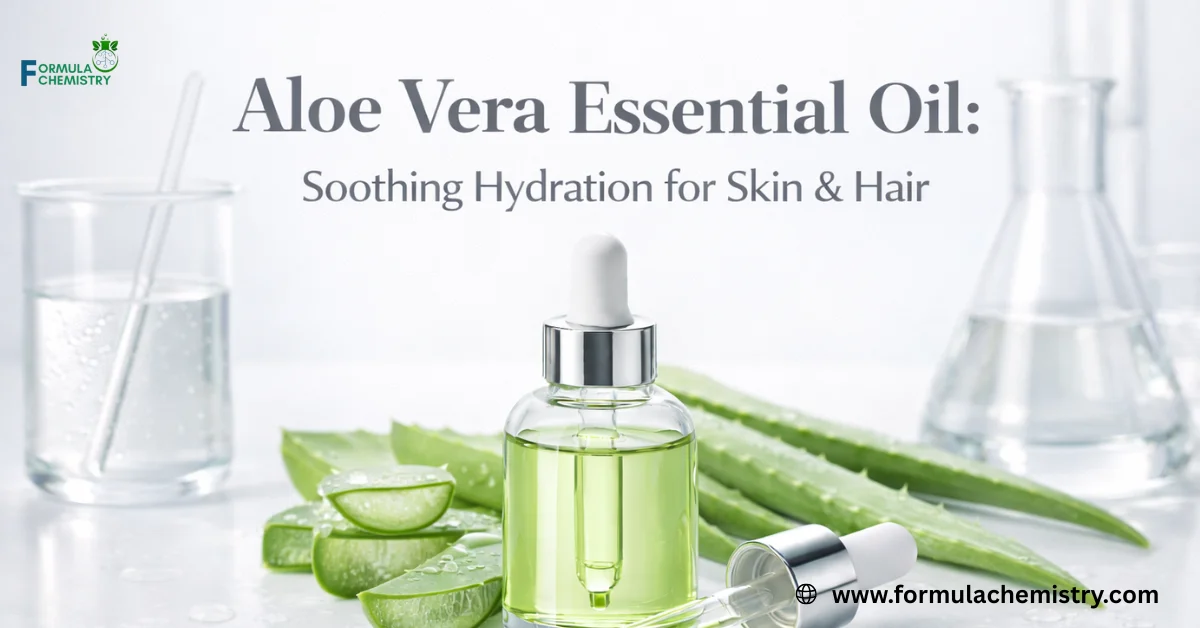
Aloe Vera has acted as a cornerstone of soothing skincare for centuries, typically recognized as a cooling gel. However, Aloe Vera Oil commonly marketed as “Aloe Vera Essential Oil” is a lipid-soluble extract which captures the plant’s healing properties in a moisturizing base.
For cosmetic formulators and skin care enthusiasts, this oil delivers a unique way to incorporate Aloe’s benefits into balms, salves, and hair oils without the preservation challenges of fresh aloe juice.
It combines the anti-inflammatory power of Aloe with the nourishing fatty acids of a carrier oil. Formula Chemistry provides practical formulation education and safety-forward guidance to help you use ingredients such as Aloe Vera Oil effectively and safely.
Quick Facts
- INCI Name: Aloe Barbadensis Leaf Extract (and) Glycine Soja (Soybean) Oil (or other carrier oil).
- Product Type: Macerated Oil (Infusion) or CO2 Extract; not a steam-distilled essential oil.
- Key Components: Vitamins A, C, E, Salicylic Acid, enzymes, and fatty acids.
- Typical Usage Rate: 1% – 100% (Can be applied directly or used as an active).
- Solubility: Oil-soluble only (do not add to water phase).
- Skin Type: Excellent for dry, sensitive, sun-damaged, or irritated skin.
- Shelf Life: Typically 12–24 months, depending on the stability of the carrier oil base.
- Safety Note: Generally safe for direct application; perform a patch test to rule out allergies to the carrier oil.
What is Aloe Vera Oil and How is it Made?
It is critical to understand that Aloe Vera does not produce a volatile essential oil through steam distillation like Lavender or Tea Tree. When you see a product labeled “Aloe Vera Essential Oil,” it is almost exclusively a macerated oil.
This means the dried or fresh Aloe leaves have been steeped in a carrier oil (such as Sunflower, Soybean, or Castor oil) to extract the lipid-soluble nutrients.
This distinction is vital for formulators. Because it is a carrier oil infusion, it does not have the strong, concentrated aroma or the volatility of true essential oils. Instead, it carries a mild, slightly green scent and the rich, emollient texture of its base oil.
Extraction Methods and Purity
The quality of Aloe Vera Oil depends heavily on the extraction method. The most common commercial method is maceration, where the plant material is soaked in warm oil for several weeks. This gently pulls out the oil-soluble vitamins and antioxidants.
High-quality macerations will use stable oils like Fractionated Coconut Oil (MCT) or Argan to ensure a long shelf life.Another, more advanced method is CO2 extraction. This uses pressurized carbon dioxide to pull active compounds from the plant material.
CO2 extracts are highly concentrated and often appear as thick, waxy substances that must be diluted. While more expensive, they offer a purer profile of the plant’s lipid constituents without the heavy volume of a carrier oil, rendering them ideal for high-performance anti-aging serums.
Benefits of Aloe Vera Oil for Skin and Hair
Aloe Vera Oil is noted for its ability to calm inflammation and accelerate skin repair. It is rich in aloesin and aloin, compounds known for their skin-brightening and soothing effects. When applied to the skin, the oil creates a protective seal that prevents transepidermal water loss (TEWL), making it superior to Aloe gel for prolonged hydration in dry environments.
For hair care, this oil is a fantastic conditioner. It penetrates the hair shaft to moisturize from within while smoothing the cuticle to reduce frizz. Unlike heavy silicones, Aloe Oil provides shine and softness without causing significant buildup. It is notably beneficial for high-porosity hair that struggles to retain moisture.
Deep Hydration and Barrier Repair
The primary benefit of Aloe Vera Oil is its capacity to support the skin’s lipid barrier. The fatty acids from the carrier oil (often Linoleic or Oleic acid) reinforce the skin’s structure, while the Aloe components reduce redness and irritation. This makes it a great option for treating conditions like eczema, psoriasis, and severe dryness.
In after-sun care, Aloe Oil fulfills a dual role. While Aloe gel cools the burn immediately, Aloe Oil applied afterwards helps prevent peeling. It keeps the damaged skin pliable and nourished, reducing the “tight” sensation associated with sunburns. It acts as a delivery system, carrying the healing phytochemicals of Aloe deep into the epidermis.
Scalp Wellness and Hair Growth
A healthy scalp is the foundation of healthy hair, and Aloe Vera Oil excels here. Its anti-inflammatory properties help soothe itchy, flaky scalps and can assist in managing dandruff. The enzymes present in Aloe help to break down dead skin cells, preventing follicle clogging, which can inhibit hair growth.
Regular scalp massages with Aloe Vera Oil can stimulate blood circulation. This increased blood flow delivers more oxygen and nutrients to the hair follicles, potentially promoting stronger and faster hair growth. Additionally, the oil coats the hair strands, reducing breakage caused by mechanical damage like brushing or styling.
How to Use and Formulate with Aloe Vera Oil
Aloe Vera Oil is incredibly versatile and easy to work with. Because it is heat-stable (depending on the carrier), it can be added to the oil phase of emulsions or used as the base for anhydrous products. It blends flawlessly with other carrier oils, butters, and essential oils.
For a simple facial serum, you can use Aloe Vera Oil at 100% or blend it with Rosehip Seed Oil for added anti-aging benefits. In emulsions like creams or lotions, it is typically added during the oil phase heating stage. If you are making a cold-process formulation, it can be added at any time.
Table: Aloe Vera Gel vs. Aloe Vera Oil
| Feature | Aloe Vera Gel | Aloe Vera Oil (Macerate) |
| Base | Water-based (Hydrophilic) | Oil-based (Lipophilic) |
| Primary Function | Humectant, Cooling | Emollient, Occlusive |
| Solubility | Water | Oil |
| Preservation | Difficult (Requires broad-spectrum) | Easier (Requires antioxidant) |
| Best For | Oily skin, acute burns, hydration | Dry skin, barrier repair, sealing |
Common Problems and Fixes
Working with natural oils necessitates attention to stability. One common issue with Aloe Vera Oil is rancidity. If the carrier oil base is unstable (like Soybean or Sunflower oil without added antioxidants), the product can oxidize quickly, smelling like crayons or old paint.
- Problem: The oil smells off or rancid after a few months.
- Fix: Ensure you add 0.5% – 1.0% Vitamin E (Tocopherol) to your oil immediately upon opening or creating it. Store in amber glass bottles away from direct sunlight.
- Problem: The oil is cloudy or has sediment.
- Fix: Sediment is natural in macerated oils. You can filter it through a coffee filter or cheesecloth. If it is cloudy due to moisture (water contamination), discard it immediately to prevent bacterial growth.
- Problem: The oil feels too greasy on the skin.
- Fix: The carrier oil might be too heavy. Cut the Aloe Oil with a “dry oil” like Isopropyl Myristate or Coco-Caprylate to improve absorption speed.
DIY Recipes and Usage Rates
For a soothing “After-Sun Body Oil,” combine 98% Aloe Vera Oil with 1% Vitamin E and 1% Lavender Essential Oil. This simple blend utilizes the Aloe to repair skin and Lavender to soothe the senses. Apply it to damp skin right after a shower to lock in moisture.
For a “Scalp Rescue Treatment,” mix 50% Aloe Vera Oil, 40% Jojoba Oil, and 10% Black Cumin Seed Oil. Massage this into the scalp 30 minutes before washing your hair. This concentration provides intensive relief for dry, itchy scalps without being difficult to wash out.
Thinking about going clean with your skincare? Explore Organic Skincare: Your Natural Glow Guide.
FAQ’s about Aloe Vera Essential Oil: Soothing Hydration for Skin & Hair
Is Aloe Vera Oil the same as Aloe Vera Gel?
No. Aloe Vera Gel is the water-soluble pulp from the leaf, used for hydration and cooling. Aloe Vera Oil is an oil-soluble extract made by macerating the leaves in a carrier oil. They have different solubilities and uses in formulation.
Can I use Aloe Vera Oil on my face?
Yes, it is generally safe for facial use. It is non-comedogenic if the carrier base (like Jojoba or Sunflower oil) is also non-comedogenic. It is excellent for sealing in moisture as the last step in a skincare routine.
Does Aloe Vera Oil help with acne?
It can help soothe the inflammation and redness associated with acne. However, because it is an oil, those with active, oily acne should use it sparingly or choose an Aloe Oil made with a light base like Grapeseed oil.
Can I make Aloe Vera Oil at home?
Yes, you can make a DIY version by drying Aloe leaves and infusing them in a carrier oil for several weeks. It is important to use dried leaves; fresh leaves contain water, which will cause the oil to mold and spoil quickly.
Is Aloe Vera Oil good for hair growth?
Yes. It nourishes the scalp, reduces dandruff, and conditions the hair shaft. While it doesn’t “grow” hair directly like a drug, creating a healthy scalp environment is vital for optimal hair growth.
Does Aloe Vera Oil expire?
Yes. Like all vegetable oils, it can go rancid. The shelf life depends on the carrier oil used, but generally, it lasts 12 to 24 months. Always smell the oil before use; if it smells sharp or crayon-like, discard it.
Can I mix Aloe Vera Oil with water?
No, oil and water do not mix without an emulsifier. You cannot simply dump Aloe Oil into a bottle of water; it will float on top. You need a solubilizer or emulsifying wax to create a lotion or cream.
Is Aloe Vera Essential Oil safe for pets?
Topical use of plain Aloe-infused oil is generally safe for dogs in small amounts, but true essential oils (like Tea Tree) added to it can be toxic. Never allow pets to ingest large amounts of Aloe, as the latex part of the plant can be toxic to them. Consult a vet first.