
Introduction
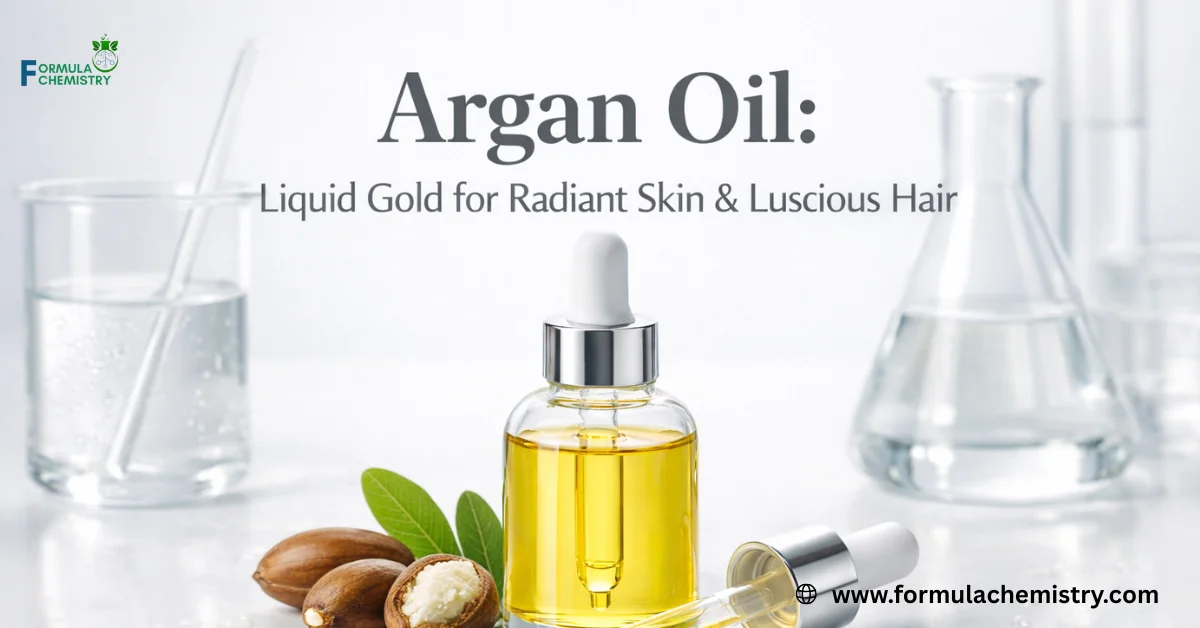
Argan Oil, frequently described as “liquid gold,” is a plant-based oil produced from the kernels of the Argania spinosa, which is endemic to Morocco. For centuries, it has been a mainstay in the beauty rituals of Berber women, prized for its ability to protect skin and hair from harsh desert conditions.
In modern cosmetic formulation, Argan Oil is esteemed not just for its marketing attraction but because of its robust chemical profile. It operates as a high-performance carrier oil that connects heavy occlusion and rapid absorption.
Formula Chemistry provides practical formulation education and safety-forward guidance to help you master ingredients like Argan Oil, guaranteeing your products are simultaneously effective and stable.
Quick Facts
- INCI Name: Argania Spinosa Kernel Oil
- Function: Emollient, Skin Conditioning Agent, Hair Conditioning Agent.
- Comedogenic Rating: 0 (Will not clog pores).
- Typical Usage Rate: 1% – 100% (Can be used neat).
- Appearance: Golden yellow liquid with a nutty, nutty aroma (unless deodorized).
- Solubility: Oil-soluble; Insoluble in water.
- Heat Stability: Moderate; best added in the cool-down phase (below 40°C) to preserve antioxidants.
- Key Components: Oleic Acid (~43-49%), Linoleic Acid (~29-36%), Vitamin E (Tocopherols).
- Safety Note: Generally safe, but derived from a nut-like kernel. Patch testing is recommended for those with severe tree nut allergies.
What Makes Argan Oil Unique in Formulation?
Argan Oil is distinct among carrier oils due to its remarkably balanced fatty acid profile. While many oils lean heavily towards either Oleic acid (rich, heavy) or Linoleic acid (dry, thin), Argan sits comfortably in the middle.
This formula provides a “dry oil” sensation that absorbs relatively quickly while still leaving a protective, cushiony feel on the skin. It is this dual aspect that makes it appropriate for a wide demographic, ranging from acne-prone teenagers to consumers seeking anti-aging solutions.
The Chemistry of Oleic and Linoleic Acids
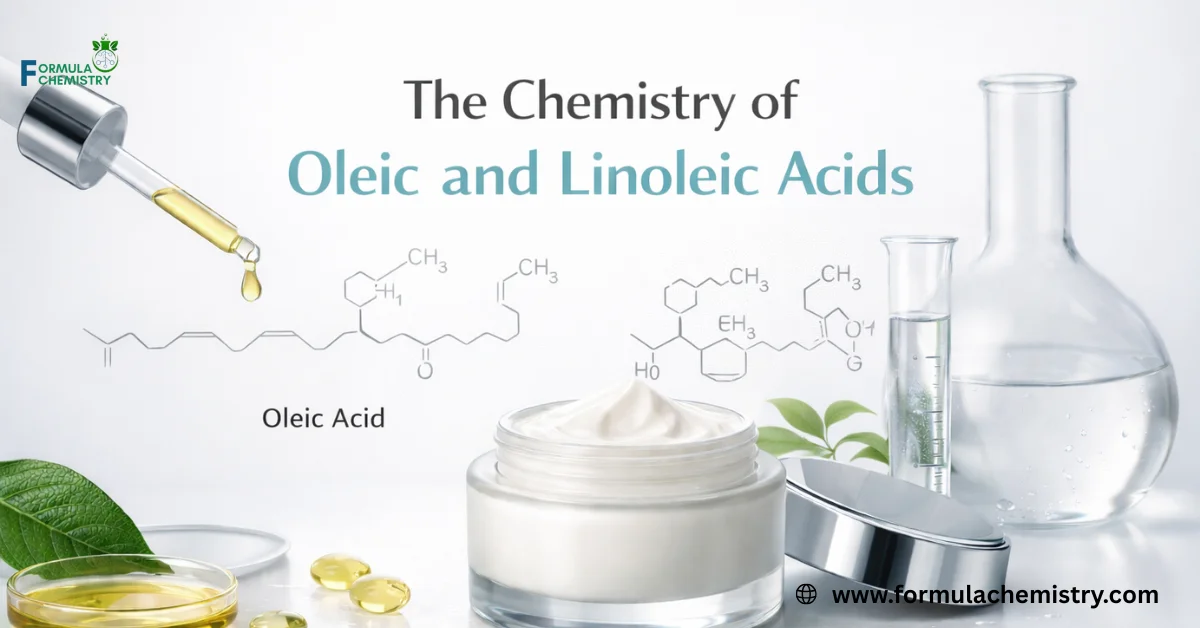
The primary lipid component of Argan Oil is Oleic Acid (Omega-9), comprising roughly 43-49% of the oil. Oleic acid is known for its ability to penetrate the stratum corneum, helping other actives sink deeper into the skin.
The secondary component is Linoleic Acid (Omega-6), making up about 29-36%. Linoleic acid is necessary for ceramide synthesis and supports the skin’s barrier function. Oils high in Linoleic acid are commonly recommended for acne-prone skin because acne patients often have a deficiency in this specific fatty acid.
Because Argan Oil contains significant amounts of both, it hydrates dry skin (via Oleic) while repairing the barrier (via Linoleic). This synergy is rare and highly valuable, lessening the need for formulators to blend multiple oils to achieve a similar effect.
Antioxidant Potency and Stability
Beyond fatty acids, Argan Oil is famous for its unsaponifiable fraction, specifically its high concentration of Tocopherols (Vitamin E). It contains significantly more Vitamin E than Olive Oil, primarily in the form of gamma-tocopherol.
This high antioxidant content offers two definite benefits. First, it provides excellent stability to the oil itself, giving it a shelf life of 1–2 years if stored correctly. Second, when applied topically, these antioxidants scavenge free radicals caused by UV exposure and pollution.
In formulation, this means Argan Oil acts as a functional active, not just a solvent. It actively contributes to the anti-aging claims of a product by protecting structural proteins like collagen and elastin from oxidative stress.
Give your hands some love with Hand Mask: Brighten and Rejuvenate Dry Tired Hands.
Benefits and Applications for Skin and Hair
The versatility of Argan Oil allows it to cross over between skincare and haircare categories effortlessly. In skincare, it acts as a non-comedogenic moisturizer that regulates sebum production.
For hair care, specifically, it is a strong ingredient for managing damage. Unlike mineral oil, which sits on the surface, Argan Oil has small enough molecules to penetrate the hair shaft, improving elasticity and reducing breakage.
Restoring Skin Barrier Function
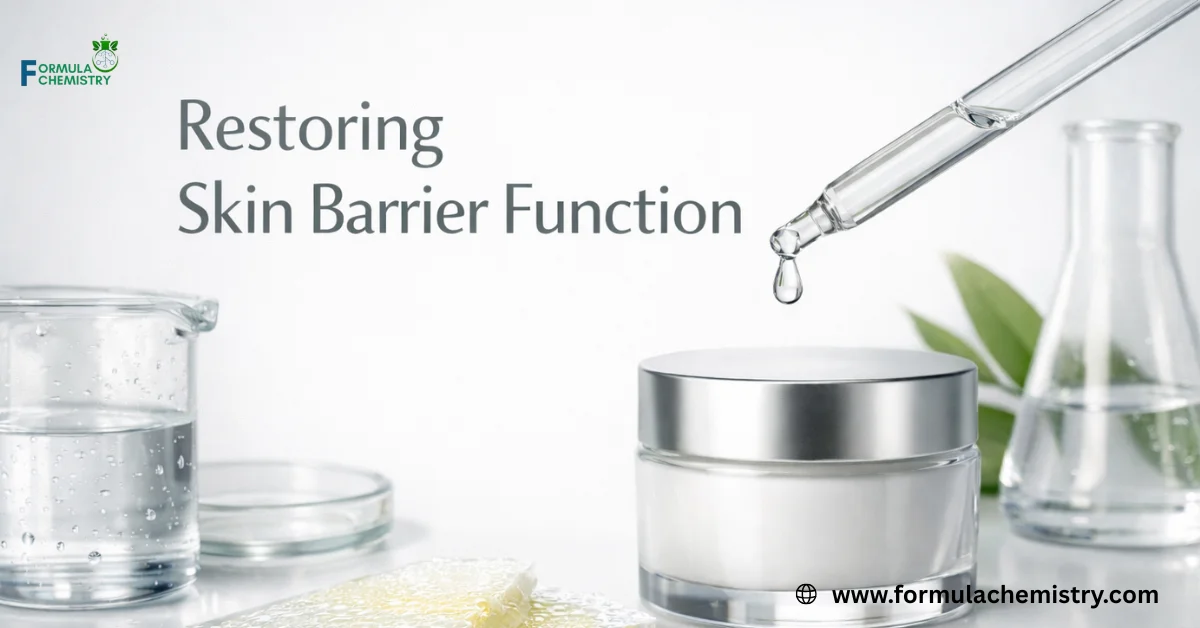
One of the most persuasive uses for Argan Oil is in barrier repair formulations. The skin barrier relies on a delicate mix of ceramides, cholesterol, and fatty acids. When this barrier is compromised, Trans-Epidermal Water Loss (TEWL) increases, resulting in dehydration.
Argan Oil helps seal in hydration and restore the lipid matrix. It is especially effective in anhydrous balms or night creams designed for eczema or psoriasis-prone skin. Its anti-inflammatory properties, driven by rare sterols like schottenol and spinasterol, further soothe irritated tissue.
For formulators, this means Argan Oil can be the “star” ingredient in soothing facial oils. It pairs exceptionally well with squalane and rosehip oil to create a comprehensive lipid replenishment system.
Strengthening and Smoothing Hair Shafts
In hair care, Argan Oil is often marketed for “shine,” but its benefits are structural. The high concentration of fatty acids helps to lubricate the hair shaft, laying down the cuticle cells. This results in reduced friction between strands, which translates to less tangling and breakage.
It is also an excellent carrier for heat protection systems. While Argan Oil itself does not block UV rays or high heat entirely, it buffers the hair against thermal damage by maintaining internal moisture levels during styling.
When formulating conditioners or leave-in serums, Argan Oil is effective at low percentages (0.5% – 2.0%) for adding slip. In pre-shampoo treatments or hair masks, it can be used at higher levels (5.0% – 10.0%) for deep conditioning.
How to Formulate with Argan Oil Successfully
Formulating with Argan Oil is generally straightforward, but attention to detail guarantees the final product feels luxurious rather than greasy. The quality of the raw material is critical; cold-pressed, organic Argan Oil retains the highest nutrient density.
When sourcing, be aware of the fragrance. Raw Argan Oil has a distinct, sometimes pungent, manure-like or nutty smell. For cosmetic elegance, many formulators prefer deodorized Argan Oil, which has been steam-treated to remove volatile compounds without destroying the fatty acids.
Incorporating into Emulsions and Anhydrous Products
In anhydrous products (like body oils or balms), Argan Oil can be the primary base. It blends fluently with other esters and hydrocarbons. To reduce the “oiliness” in a 100% oil formula, blend Argan with a lightweight ester like Isopropyl Myristate or Coco-Caprylate.
In emulsions (creams and lotions), Argan Oil should be treated as heat-sensitive due to its bioactive components. While the fatty acids are stable, the Vitamin E and sterols can degrade at high temperatures.
Add Argan Oil during the cool-down phase (below 40°C) whenever possible. If you must add it to the heated oil phase, ensure the heating duration is short and does not exceed 75°C. Always include a chelating agent in water-containing formulas to prevent metal ions from accelerating oxidation.
Table: Carrier Oil Comparison for Formulators
| Feature | Argan Oil | Jojoba Oil | Coconut Oil (Virgin) |
| Texture | Medium, silky | Light, wax-like | Heavy, greasy |
| Comedogenic Rating | 0 (Safe) | 2 (Low) | 4 (High) |
| Primary Fatty Acid | Oleic / Linoleic | Eicosenoic | Lauric |
| Absorption Speed | Moderate | Fast | Slow |
| Best Application | Anti-aging, Hair repair | Sebum control | Body butter, Soap |
Common Problems and Fixes
Even with a powerful ingredient like Argan Oil, issues can arise. Below are common formulation challenges and how to solve them.
- Problem: The product smells “off” or rancid shortly after manufacturing.
- Fix: Argan Oil is susceptible to oxidation. Ensure you are adding 0.5% Tocopherol (Vitamin E) or Rosemary Oleoresin (ROE) to the raw oil immediately upon opening the drum. Store in a dark, cool place.
- Problem: The facial oil feels overly heavy or greasy on the skin.
- Fix: The molecular weight might be too high for the target skin type. Cut the Argan Oil with 30-50% volatile silicone alternatives (like Dodecane) or lightweight esters (like Caprylic/Capric Triglyceride) to improve spreading.
- Problem: The emulsion is turning yellow over time.
- Fix: Natural Argan Oil has a yellow pigment. This is normal. If a white cream is required, use a lower percentage of Argan (<2%) or switch to a bleached/refined version, though this sacrifices some nutrient value.
- Problem: “Cloudiness” in clear oil blends during winter.
- Fix: Argan oil can solidify or become cloudy at low temperatures due to its fatty acid content. This is reversible. Gently warm the product to room temperature. Winterizing the oil (filtering out waxes) is an industrial fix for this.
If you’re curious about natural ingredients that truly make a difference, take a look at Baobab Oil.
FAQ’s about Argan Oil: Liquid Gold for Radiant Skin & Luscious Hair
Is Argan Oil safe for use on the face?
Yes, it is highly recommended for facial use. With a comedogenic rating of 0, it does not clog pores. Its balance of oleic and linoleic acids makes it appropriate for both dry and oily skin types, helping to regulate sebum production without stripping the skin.
Will Argan Oil clog pores?
No. Argan Oil is non-comedogenic. Unlike coconut oil or wheat germ oil, the molecules in Argan Oil are unlikely to cause impaction in the follicle. This is a sensible choice for an acne-prone skin formulation.
Can Argan Oil be used as a heat protectant?
While Argan Oil conditions the hair and helps it withstand heat better, it is not a replacement for a dedicated heat protectant polymer or silicone. It has a high smoke point (~420°F), but it should be used in conjunction with proven thermal shield ingredients.
What is the difference between cooking and cosmetic Argan Oil?
Culinary Argan Oil is made from roasted kernels, which gives it a nutty flavor but degrades some heat-sensitive vitamins. Cosmetic Argan Oil is cold-pressed from raw kernels to preserve the maximum amount of Vitamin E, enzymes, and fatty acids for skin benefits.
What is the shelf life of Argan Oil?
Raw, cold-pressed Argan Oil typically has a shelf life of 12 to 24 months if stored correctly. It should be kept in a cool, dark place, ideally in amber or violet glass bottles to protect it from photo-oxidation.
Does Argan Oil have a smell?
Yes, unrefined (raw) Argan Oil has a distinct earthy, nutty, or slightly sour scent. Deodorized versions are available for cosmetic use, which have little to no scent but may have slightly lower nutrient profiles due to the steam processing.
Can pregnant women use Argan Oil?
Yes, Argan Oil is widely regarded as safe for use during pregnancy. It is often used to maintain skin elasticity on the belly to help prevent stretch marks. However, always consult the healthcare practitioner before starting new topical regimens.
Is Argan Oil compatible with Retinol or Vitamin C?
Yes, Argan Oil is an excellent carrier for active compounds such as Retinol and Vitamin C. Its fatty acids help buffer the possible irritation caused by these potent actives, making the final formulation more tolerable for sensitive skin.