

Introduction
Chemical formulation is one of the most fundamental concepts in modern science. Whether you are developing a moisturizing face cream, a pharmaceutical tablet, a household cleaning product, or an industrial coating, chemical formulation is the core scientific process that makes it all possible.
At Formula Chemistry, we believe that understanding chemical formulation principles is the essential first step toward becoming a confident, knowledgeable formulator especially in cosmetic and personal care science.
What Is Chemical Formulation
Chemical formulation is the science of combining multiple chemical ingredients in precise proportions to create a stable, functional, and effective end product. It is not simply mixing substances together.
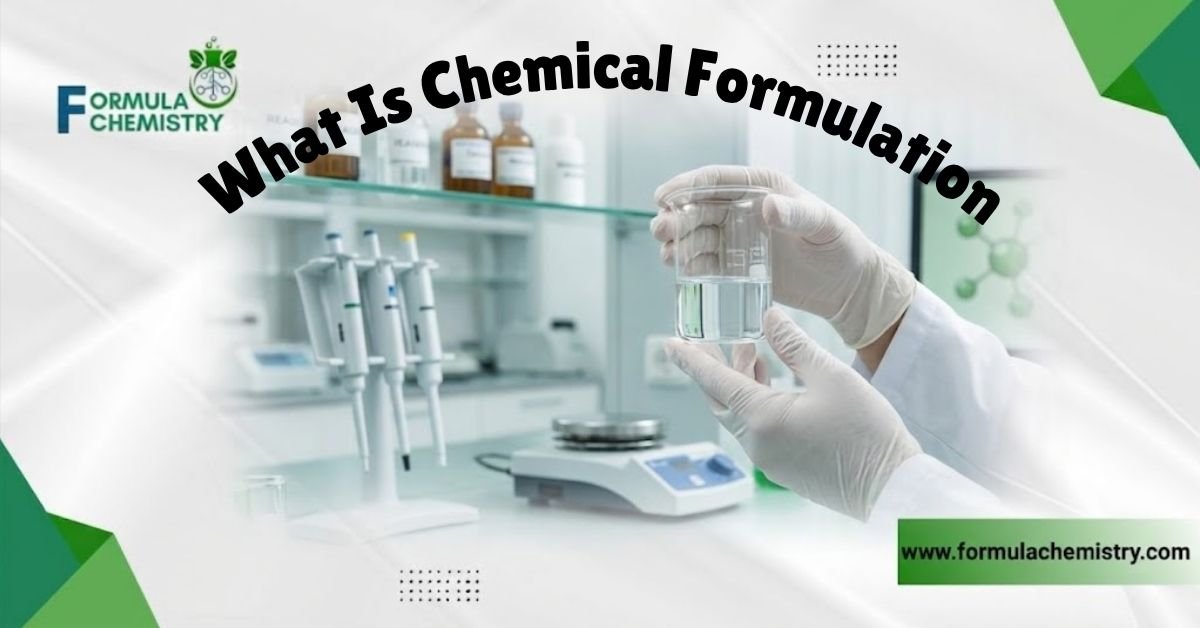
True chemical formulation requires a deep understanding of how individual ingredients behave, how they interact with each other, and how those interactions affect the performance, safety, and stability of the final product.
Why Chemical Formulation Matters in Modern Science
Chemical formulation sits at the heart of almost every product humans use daily. From the cleanser you wash your face with to the tablet you take for a headache, every product exists because a formulator made precise scientific decisions.
Without chemical formulation, ingredients would remain isolated raw materials with no practical application. Formulation transforms individual components into functional, safe, and effective products that serve real human needs.
The Core Principles of Chemical Formulation
Every successful chemical formulation is built on a set of fundamental scientific principles. Formula Chemistry considers these principles the foundation of all formulation education.
Compatibility in Chemical Formulation
Every ingredient in a chemical formulation must be chemically and physically compatible with every other ingredient. Incompatible ingredients can cause separation, discoloration, or dangerous reactions.
Before any formulation is developed, compatibility between all components must be carefully assessed and confirmed through testing.
Stability in Chemical Formulation
Stability refers to the ability of a chemical formulation to maintain its intended properties over time. This includes resistance to temperature changes, light exposure, humidity, and pH fluctuation.
A formulation that degrades or separates on the shelf has failed at stability regardless of how well it performs when freshly made.
Efficacy in Chemical Formulation
Efficacy means the chemical formulation must do exactly what it is designed to do. A sunscreen must provide UV protection. A shampoo must cleanse the hair effectively.
Efficacy must always be demonstrated scientifically through testing rather than assumed based on ingredient selection alone.
Safety in Chemical Formulation
Safety is non-negotiable in any chemical formulation. Every ingredient must be safe for its intended use at its intended concentration.
Safety considerations include skin sensitization, toxicology, allergen potential, regulatory compliance, and responsible use guidance for the end user.
Sensory Performance in Chemical Formulation
Sensory performance refers to how the product looks, feels, smells, and applies. A technically perfect chemical formulation that feels unpleasant to use will be rejected by consumers.
Texture, spreadability, absorption, and fragrance are all formulation-level decisions that directly affect consumer experience.
Types of Chemical Formulation
Chemical formulation spans a wide range of industries and applications. Understanding the different types helps contextualize where formulation science is applied.
Cosmetic and Personal Care Chemical Formulation
Cosmetic formulation is the development of skincare, haircare, body care, and color cosmetic products. This includes face creams, serums, shampoos, conditioners, and sunscreens.
Cosmetic chemical formulation is the primary focus of Formula Chemistry and represents one of the most scientifically dynamic areas of applied chemistry today.
Pharmaceutical Chemical Formulation
Pharmaceutical formulation involves the development of medicines in forms such as tablets, capsules, liquids, and injectables. It is among the most regulated forms of chemical formulation.
Every pharmaceutical formulation requires extensive clinical testing and regulatory approval before reaching the market.
Food Chemical Formulation
Food formulation is the science behind developing food and beverage products that are safe, stable, and nutritious. Food formulators work with preservatives, emulsifiers, flavor compounds, and colorants.
These formulations must meet both regulatory standards and consumer expectations for taste, texture, and appearance.
Agrochemical Formulation
Agrochemical formulation covers the development of pesticides, herbicides, fungicides, and fertilizers. These must be effective against target organisms while remaining safe for humans and the environment.
Agrochemical formulation requires a deep understanding of both chemistry and environmental science.
Industrial Chemical Formulation
Industrial formulation includes paints, coatings, adhesives, lubricants, and cleaning products. These formulations prioritize performance under demanding physical and chemical conditions.
Industrial chemical formulation is critical to manufacturing, construction, and engineering applications worldwide.
The Chemical Formulation Development Process
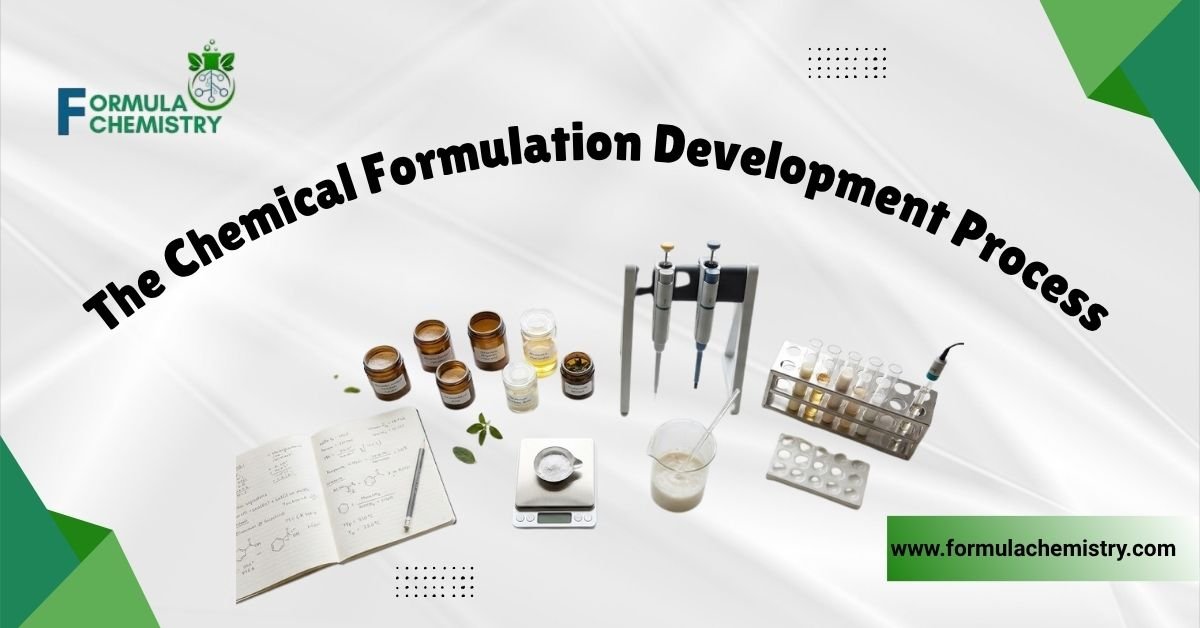
Developing a chemical formulation from concept to finished product follows a structured scientific process. Formula Chemistry outlines the key stages every formulator must understand.
Stage One Concept and Objective Definition
Every chemical formulation begins with a clear objective. The formulator must define what the product is meant to do, who will use it, and under what conditions it will be used.
This stage also involves identifying regulatory requirements, safety constraints, and performance benchmarks the formulation must meet.
Stage Two Ingredient Selection in Chemical Formulation
Once the objective is defined, ingredients are selected based on their known functionality, compatibility potential, and safety profile. Each ingredient must serve a specific purpose.
No ingredient should be included in a chemical formulation without a clear scientific rationale for its presence and concentration.
Stage Three Prototype Development
The first prototype is developed in a laboratory setting using small-scale batches. This allows the formulator to assess initial compatibility, texture, appearance, and basic performance.
Prototypes are rarely perfect on the first attempt. Iteration is a normal and expected part of chemical formulation development.
Stage Four Stability and Safety Testing
Once a promising prototype exists, it undergoes stability testing under accelerated conditions including heat, cold, and light exposure. Safety assessments are conducted in parallel.
This stage is critical and cannot be skipped in any responsible chemical formulation development process.
Stage Five Optimization and Finalization
Based on testing results, the formulation is adjusted and optimized. Final ingredient concentrations are confirmed, and the manufacturing process is documented in detail.
Only after successful optimization is a chemical formulation considered ready for scale-up and production.
Key Ingredients Used in Chemical Formulation
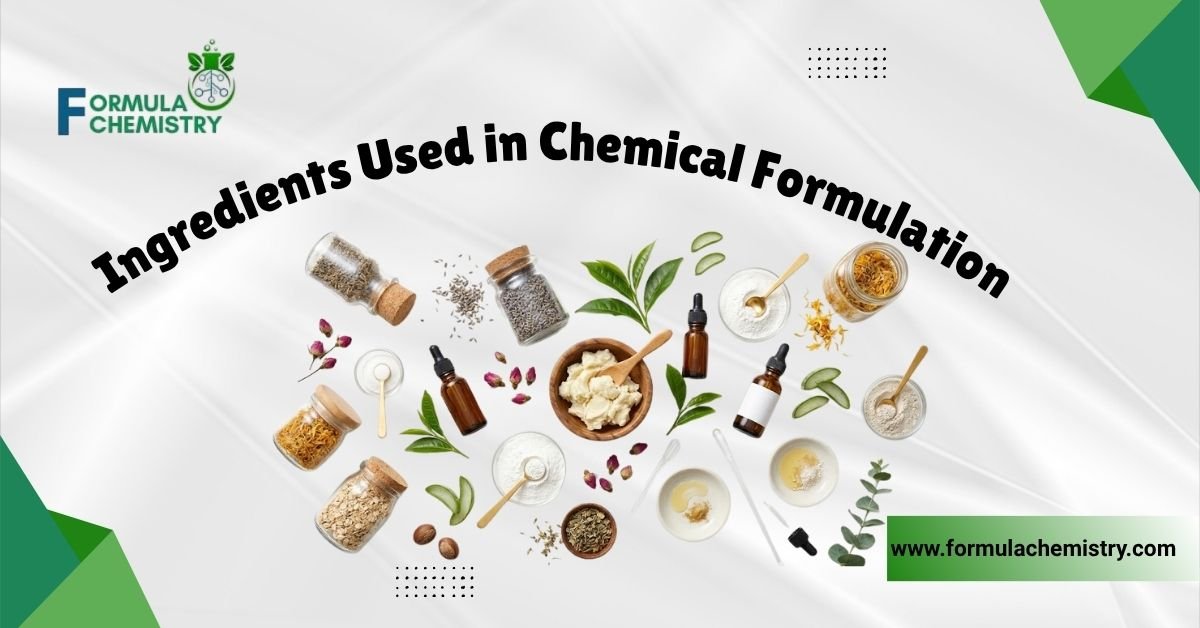
Understanding the role of different ingredient categories is essential to mastering chemical formulation at any level.
Active Ingredients in Chemical Formulation
Active ingredients are responsible for the primary function of the formulation. In skincare, actives include retinol, niacinamide, and hyaluronic acid. In pharmaceuticals, actives are the therapeutic compounds.
The concentration of active ingredients in a chemical formulation directly determines its efficacy and safety profile.
Functional Excipients in Chemical Formulation
Excipients are inactive ingredients that support the delivery, stability, and sensory properties of the formulation. They include emulsifiers, thickeners, preservatives, and solvents.
Without functional excipients, most active ingredients could not be effectively delivered or stabilized in a chemical formulation.
Preservatives in Chemical Formulation
Preservatives prevent microbial contamination in water-containing formulations. Without an effective preservation system, a chemical formulation can become unsafe within days of opening.
Preservative selection must balance efficacy against potential skin sensitization and regulatory compliance requirements.
Frequently Asked Questions About Chemical Formulation
What Are the 4 Types of Chemical Formulas?
The four main types of chemical formulas are empirical formulas, molecular formulas, structural formulas, and condensed structural formulas.
An empirical formula shows the simplest ratio of elements. A molecular formula shows the actual number of atoms. A structural formula shows how atoms are bonded. A condensed structural formula is a simplified version of the structural formula used for complex molecules.
What Do You Mean by Chemical Formulation?
Chemical formulation refers to the scientific process of combining multiple ingredients in specific proportions to create a stable, safe, and functional product.
It goes beyond simple mixing it requires understanding ingredient interactions, stability behavior, safety profiles, and performance outcomes to produce a product that consistently delivers its intended purpose.
What Are Examples of Chemical Formulations?
Common examples of chemical formulations include face creams, shampoos, sunscreens, pharmaceutical tablets, liquid medicines, pesticides, paints, adhesives, and cleaning products.
Each of these products is the result of a carefully designed chemical formulation process where every ingredient has been selected and tested for a specific purpose.
What Are the 7 Types of Chemistry?
The seven main branches of chemistry are organic chemistry, inorganic chemistry, physical chemistry, analytical chemistry, biochemistry, environmental chemistry, and industrial chemistry.
Each branch contributes differently to chemical formulation science. For example, organic chemistry underpins cosmetic ingredient synthesis, while analytical chemistry supports quality control and stability testing in formulation development.
What Are the 10 Types of Medications?
The ten common types of medications based on formulation form include tablets, capsules, liquids, suspensions, emulsions, topical creams, ointments, gels, injectables, and transdermal patches.
Each medication type represents a distinct pharmaceutical chemical formulation with unique ingredient requirements, manufacturing processes, and delivery mechanisms for the active therapeutic compound.
What Is the Difference Between a Formula and a Chemical Formulation?
A formula refers to the written representation of a chemical compound using element symbols and numbers. A chemical formulation refers to the complete product recipe including all ingredients and their concentrations.
In practical terms, a formula describes a single compound while a chemical formulation describes a complete multi-ingredient product developed for a specific functional purpose.
What Role Does pH Play in Chemical Formulation?
pH is one of the most critical parameters in chemical formulation, particularly in cosmetic and pharmaceutical applications. It affects ingredient stability, preservative efficacy, skin compatibility, and product performance.
Most skincare formulations are designed to maintain a pH between 4.5 and 5.5 to match the skin’s natural acid mantle and ensure both safety and ingredient functionality.
How Does Chemical Formulation Differ Across Industries?
Chemical formulation follows the same core principles across all industries but differs significantly in regulatory requirements, testing standards, and ingredient restrictions.
Pharmaceutical formulations face the strictest regulatory oversight, while cosmetic formulations balance safety regulations with consumer sensory expectations. Industrial formulations prioritize performance and durability over biological compatibility.