

By Dr. SamiUllah, PhD Lead Formulator, Formula Chemistry
Quick Answer: To learn how to make perfume oil, blend 20% essential oils and absolutes into 80% of a stable carrier made from Simmondsia Chinensis (Jojoba) Seed Oil (CAS 61789-91-1) and Caprylic/Capric Triglyceride, with 0.5% tocopherol against oxidation.
Age the blend for 2 to 4 weeks in amber glass, then decant it into glass or steel roller bottles; never refrigerate it, because jojoba starts to solidify below about 10°C.
Why Do Oil Perfumes Outlast Sprays on Skin?
Many people give up on homemade spray perfume because it disappears within an hour. A well made perfume oil solves that by keeping the scent on the skin instead of throwing it into the air.
Learning how to make perfume oil takes less equipment than an alcohol perfume and no maceration filter. The trade off is a quieter scent that wearers notice mainly up close, which many people actually prefer.
Carrier oils slow evaporation because aromatic molecules dissolve into a heavy, non volatile liquid. Top notes linger longer, the heart unfolds gradually, and the base can stay detectable for 6 to 8 hours on most skin.
This guide builds a 100 g batch at 20% concentration, enough for about ten 10 mL rollers. Every choice in it, from the carrier ratio to the storage temperature, comes from batches that either held up or failed on my bench.
Oil or Alcohol: Which Format Suits You?
Perfume oil and alcohol perfume use the same aromatic materials but behave very differently on skin. The carrier decides projection, feel, and how the scent evolves.
| Factor | Perfume Oil | Alcohol Perfume |
| Projection | Close to skin | Fills the air around you |
| Wear time | 6 to 8 hours | 4 to 6 hours for an eau de parfum |
| Feel on skin | Silky, slightly moist | Dries in seconds |
| Maceration | 2 to 4 weeks | 4 to 8 weeks plus chilling |
| Best format | Roller bottle | Spray bottle |
| Suits dry or sensitive skin | Usually yes | Alcohol can dry the skin |
If you want a spray with strong projection, follow our main guide on how to make perfume instead. For a light, citrus splash that you reapply through the day, a guide on how to make cologne fits better than either format.
Which Carrier Oil Makes the Best Perfume Base?
The carrier makes up 80% of a perfume oil, so it matters as much as the fragrance itself. It must be almost odorless, slow to oxidize, and light enough to spread from a roller ball.
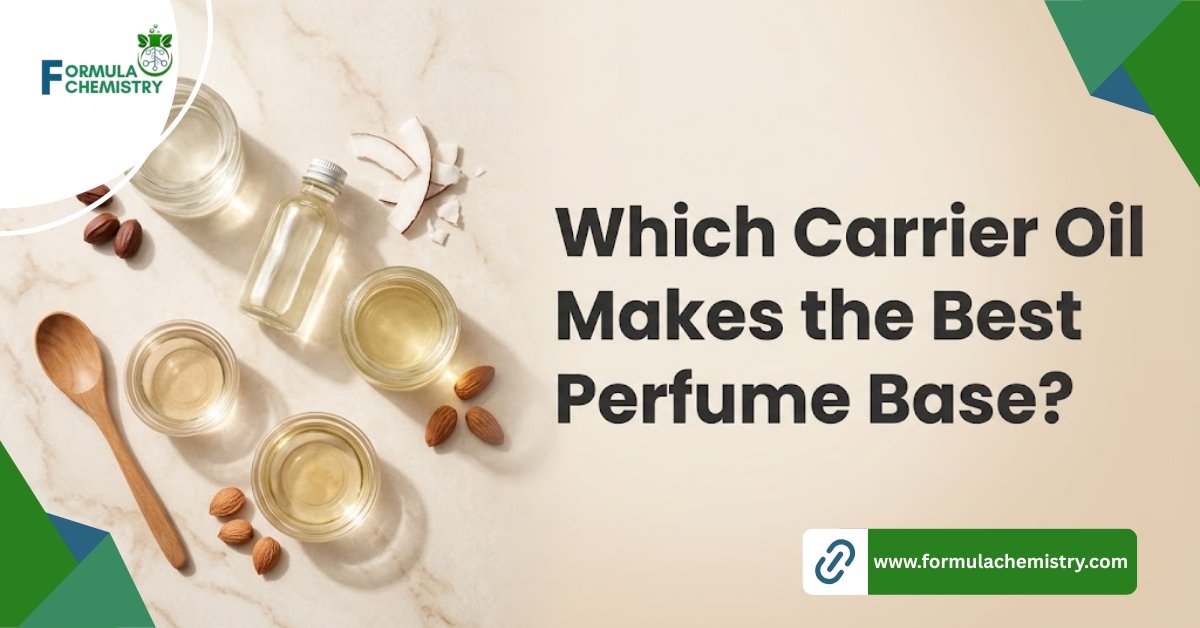
Most kitchen and massage oils fail on the second point. Unsaturated oils such as sweet almond, sunflower, and olive turn rancid within months, and that stale note grows through the whole perfume.
| INCI Name | CAS | Chemical Type | Odor | Oxidation Stability | Notes for Perfume Use |
| Simmondsia Chinensis (Jojoba) Seed Oil | 61789-91-1 | Liquid wax esters | Almost none (golden grade slightly nutty) | Very high | Clouds and firms below about 10°C |
| Caprylic/Capric Triglyceride | 73398-61-5 | Medium chain triglycerides | None | Very high | Light, fast absorbing, stays liquid when cold |
| Prunus Amygdalus Dulcis (Sweet Almond) Oil | 8007-69-0 | Unsaturated triglycerides | Faint | Low | Rancid within 6 to 12 months; nut allergy risk |
| Tocopherol | 59-02-9 | Antioxidant | None | Not applicable | Slows oxidation of carrier and citrus |
Jojoba oil is technically a liquid wax, not a true oil, and that structure makes it one of the most stable carriers available. You can read more about its properties in our profile of jojoba oil.
Caprylic/Capric Triglyceride, sold as fractionated coconut oil, keeps the blend light and fluid. Blending the two gives the stability of jojoba with a faster, less greasy finish.
Use refined or clear jojoba for perfume work. Golden jojoba carries a faint nutty note that competes with delicate florals.
Why a 5:3 jojoba to fractionated coconut blend?
Pure jojoba feels slightly heavy and firms up in cool rooms. Fractionated coconut oil on its own absorbs quickly but can feel thin, and some wearers find it carries the scent less evenly.
A ratio near five parts jojoba to three parts fractionated coconut oil balances both. It glides well from a roller, stays liquid in most indoor conditions, and leaves a soft satin finish.
How to Make Perfume Oil: The 100 g Roller Formula
This formula produces a warm floral spice: bergamot and cardamom to open, jasmine, ylang ylang, lavender, and palmarosa in the heart, and sandalwood, vetiver, patchouli, and vanilla in the base.
| Phase | INCI Name | Common Name | Percentage |
| A (Top) | Citrus Aurantium Bergamia (Bergamot) Fruit Oil | Bergamot oil FCF | 2.50% |
| A (Top) | Elettaria Cardamomum Seed Oil | Cardamom oil | 1.50% |
| A (Heart) | Lavandula Angustifolia (Lavender) Oil | Lavender oil | 3.00% |
| A (Heart) | Jasminum Grandiflorum (Jasmine) Flower Extract | Jasmine absolute | 1.50% |
| A (Heart) | Cananga Odorata Flower Oil | Ylang ylang oil | 1.50% |
| A (Heart) | Cymbopogon Martini Oil | Palmarosa oil | 3.00% |
| A (Base) | Santalum Spicatum Wood Oil | Australian sandalwood oil | 3.00% |
| A (Base) | Vetiveria Zizanoides Root Oil | Vetiver oil | 1.50% |
| A (Base) | Pogostemon Cablin Oil | Patchouli oil | 1.00% |
| A (Base) | Vanilla Planifolia Fruit Extract | Vanilla CO2 extract | 1.50% |
| B | Simmondsia Chinensis (Jojoba) Seed Oil | Clear jojoba oil | 50.00% |
| B | Caprylic/Capric Triglyceride | Fractionated coconut oil | 29.50% |
| B | Tocopherol | Vitamin E | 0.50% |
| Total | 100.00% |
Phase A totals 20.00%, split into 4.00% top, 9.00% heart, and 7.00% base. That equals 20%, 45%, and 35% of the concentrate, a slightly heavier heart than an alcohol perfume because oil already slows the top notes.
To scale, multiply each percentage by your batch weight and divide by 100. A 50 g batch uses 1.25 g bergamot, 0.75 g cardamom, 1.50 g lavender, 0.75 g jasmine, 0.75 g ylang ylang, 1.50 g palmarosa, 1.50 g sandalwood, 0.75 g vetiver, 0.50 g patchouli, 0.75 g vanilla CO2, 25.00 g jojoba, 14.75 g fractionated coconut oil, and 0.25 g tocopherol, for a total of 50.00 g.
Perfume oil weighs roughly 0.9 g per mL, so a 10 mL roller holds about 9 g. Treat that density as an estimate and confirm it with your own scale before planning fills.
What each material brings to the blend
Lavandula Angustifolia (Lavender) Oil links the spicy top to the floral heart through its linalool and linalyl acetate. Our profile of lavender essential oil covers how grade and altitude change its softness.
Jasminum Grandiflorum (Jasmine) Flower Extract gives the heart its depth and a warm, slightly animalic edge. The overview of jasmine essential oil explains why the absolute performs so differently from cheap jasmine blends.
Palmarosa adds a rosy, geraniol rich body at low cost, while ylang ylang brings creamy sweetness. Cardamom lifts the opening with a cool spice that holds up better in oil than most citrus.
Vanilla CO2 extract dissolves fully in oil, unlike an alcohol tincture, and it acts as a soft fixative. Sandalwood and vetiver carry the drydown for hours.
Mixing Your First Roll On Batch
Perfume oil needs no alcohol, no chilling, and no filtering in most cases. The whole process takes about 20 minutes plus aging time.
- Clean all glassware and the roller bottles with hot soapy water, rinse well, and dry them completely. Any trace of water can cloud the oil and invite microbial growth.
- Warm the vanilla CO2 extract gently in a 40°C water bath if it has thickened into a paste. Once it flows, weigh it into your mixing bottle.
- Add the base notes (sandalwood, vetiver, and patchouli), then the heart notes, then the bergamot and cardamom last.
- Swirl the concentrate for a minute and smell it on a blotter. This is your last easy chance to adjust before diluting.
- Weigh in the jojoba, the fractionated coconut oil, and the tocopherol. Cap and roll the bottle gently between your palms until uniform.
- Store the sealed bottle in a dark cupboard at 18 to 25°C for 2 to 4 weeks, rolling it gently every few days.
- Decant into roller bottles using a small glass funnel or pipette, leaving about 5 mm of headspace for the roller fitting.
Glass or stainless steel roller balls work best. Some essential oils attack certain plastics over time, which can leak odor into the blend or loosen the fitting.
Does perfume oil need filtering?
Usually not. Absolutes sometimes leave a faint sediment in oil, and that settles to the bottom after a week of rest.
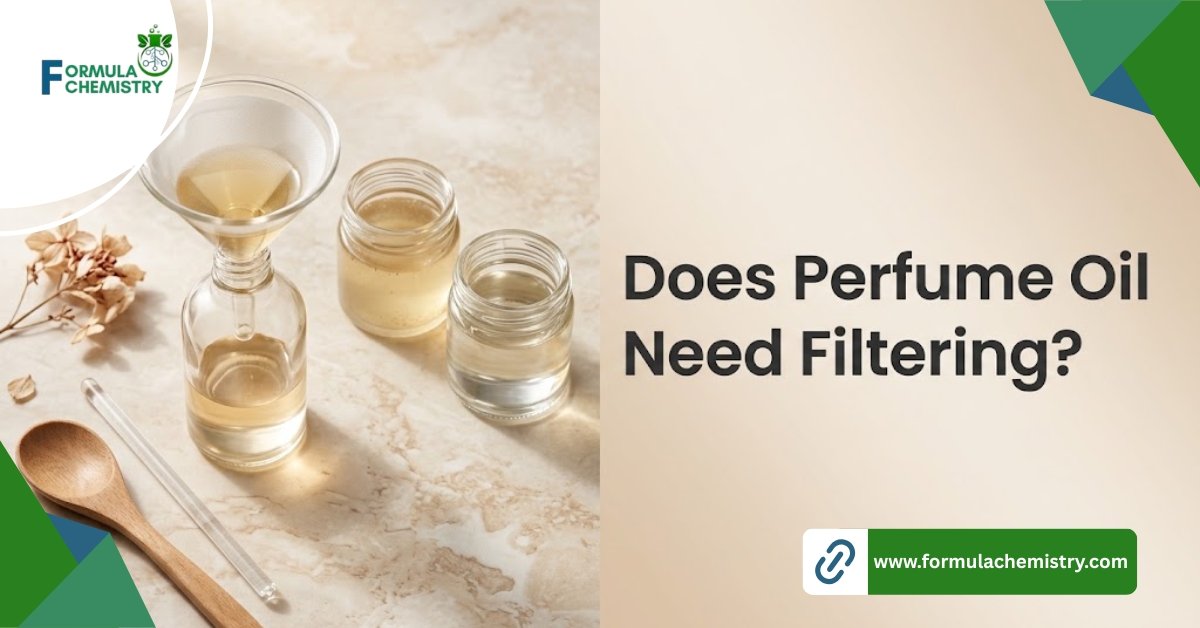
Decant the clear oil off the top and discard the last few drops. Refrigerating to force out waxes, as with alcohol perfume, does not work here because jojoba clouds and firms in the cold.
Where should you apply perfume oil?
Pulse points such as the inner wrists, the sides of the neck, and behind the ears work best. These areas run slightly warmer, which helps the oil release its scent gradually through the day.
Roll the oil on and let it absorb rather than rubbing your wrists together. Friction warms the skin and speeds the loss of top notes, although the effect is modest and the evidence for it is mostly practical rather than measured.
Reapply once in the afternoon if you want the scent to carry into the evening. A single light pass is enough, because layering too much oil makes the blend heavy and greasy.
Variations That Keep the Blend at 100%
Each version below changes strength, feel, or cost while keeping the same scent direction. Every column totals exactly 100.00%.
| INCI Name | Base 20% | Light 10% | All Jojoba | Quick Absorb | Budget |
| Citrus Aurantium Bergamia (Bergamot) Fruit Oil | 2.50% | 1.25% | 2.50% | 2.50% | 2.50% |
| Elettaria Cardamomum Seed Oil | 1.50% | 0.75% | 1.50% | 1.50% | 1.50% |
| Lavandula Angustifolia (Lavender) Oil | 3.00% | 1.50% | 3.00% | 3.00% | 3.00% |
| Jasminum Grandiflorum (Jasmine) Flower Extract | 1.50% | 0.75% | 1.50% | 1.50% | 0.00% |
| Cananga Odorata Flower Oil | 1.50% | 0.75% | 1.50% | 1.50% | 3.00% |
| Cymbopogon Martini Oil | 3.00% | 1.50% | 3.00% | 3.00% | 3.00% |
| Santalum Spicatum Wood Oil | 3.00% | 1.50% | 3.00% | 3.00% | 3.00% |
| Vetiveria Zizanoides Root Oil | 1.50% | 0.75% | 1.50% | 1.50% | 1.50% |
| Pogostemon Cablin Oil | 1.00% | 0.50% | 1.00% | 1.00% | 1.00% |
| Vanilla Planifolia Fruit Extract | 1.50% | 0.75% | 1.50% | 1.50% | 1.50% |
| Simmondsia Chinensis (Jojoba) Seed Oil | 50.00% | 55.00% | 79.50% | 30.00% | 50.00% |
| Caprylic/Capric Triglyceride | 29.50% | 34.50% | 0.00% | 49.50% | 29.50% |
| Tocopherol | 0.50% | 0.50% | 0.50% | 0.50% | 0.50% |
| Total | 100.00% | 100.00% | 100.00% | 100.00% | 100.00% |
The Light version suits office wear and anyone new to perfume oils. All Jojoba feels richer and lasts slightly longer, while Quick Absorb dries faster and stays fluid in cold rooms.
The Budget version drops jasmine absolute, usually the most expensive material in the blend, and doubles the ylang ylang. Because the heart keeps its weight, the structure stays balanced.
Safety Checks for Skin Applied Scent
Perfume oil sits on skin for hours, so its safety margin matters more than a spray that partly evaporates. Concentration, material choice, and sun exposure all play a part.
IFRA Standards set maximum levels for many materials by product category, including jasmine, ylang ylang, and citrus oils. The 51st Amendment was current at the time of writing; confirm the latest limits for leave on skin products before using the 20% version.
Expressed bergamot contains bergapten, which can trigger phototoxic reactions in sunlight. Use only bergamot labeled FCF or bergapten free, as this formula specifies.
Ylang ylang, jasmine, lavender, and palmarosa all contain declarable fragrance allergens such as linalool, geraniol, and benzyl benzoate. Anyone selling perfume oil must check current allergen labeling rules for their market.
Seven Mistakes That Spoil a Perfume Oil
Each of these shows up again and again in beginner batches. The fixes take no extra money, only attention.
Choosing a carrier that goes rancid
Sweet almond and olive oil are easy to find and feel luxurious. Their unsaturated fats oxidize within months, and the stale smell overtakes the perfume.
Use jojoba, fractionated coconut oil, or a blend of both. Add 0.5% tocopherol for extra protection.
Using regular coconut oil
Coconut oil sounds like a natural fit for a skin product. It melts at 24 to 26°C, so the perfume turns solid in cool rooms and carries a coconut scent.
Use only fractionated coconut oil, which stays liquid and has no odor. The two share a name but behave completely differently.
Applying essential oils too strong
Some tutorials suggest 30 to 50% essential oils for extra strength. At that level, many materials exceed safe skin limits and irritation becomes likely.
Stay at 20% or below for daily wear. Choose the Light version for sensitive skin or for anyone new to fragrance.
Refrigerating the blend to preserve it
Cold storage sounds like good practice for natural oils. Jojoba clouds and firms below about 10°C, and repeated temperature swings can push absolutes out of solution.
Store perfume oil at steady room temperature in a dark cupboard. Stability comes from the carrier and antioxidant, not from the fridge.
Skipping the aging period
The blend smells ready the moment you mix it, so people bottle it immediately. Fresh perfume oil often smells disjointed, with individual oils poking out.
Age it for at least 2 weeks before judging the scent. Most blends round out noticeably by the third week.
Using plastic roller fittings
Plastic rollers come in cheap multipacks. Certain essential oils, especially citrus terpenes, can soften some plastics and change the odor over time.
Buy amber or clear glass bottles with steel or glass rollers. Wipe the roller after each use to keep it clean.
Rolling perfume oil onto delicate fabric
Rolling the scent onto a scarf seems like a way to extend wear. Carrier oils leave marks on silk and light cotton that are hard to remove.
Apply to skin at the wrists, neck, and behind the ears. If you want scent on fabric, use an alcohol spray instead.
Solving Common Perfume Oil Problems
Most issues appear within the first few weeks of aging or use. The table below maps each symptom to its cause and a direct fix.
| Problem | Likely Cause | Fix |
| Cloudy or firm oil | Room below about 10°C with a jojoba heavy blend | Warm gently to room temperature; switch to the Quick Absorb version for cold climates |
| Fine sediment at the bottom | Waxes from absolutes | Let it settle for a week and decant the clear oil |
| Scent too faint | Concentration too low or base too light | Move up from the Light version to the Base 20% version |
| Stale or crayon like smell | Rancid carrier or old citrus | Replace the carrier with jojoba and fractionated coconut oil and use fresh citrus |
| Greasy feel | Too much jojoba for your skin | Use the Quick Absorb version |
| Skin redness or itching | Sensitivity to one or more materials | Stop use, wash the area, and retest each material separately |
| Roller leaks or sticks | Oil degraded a plastic fitting | Move the blend into glass bottles with steel rollers |
Record every adjustment in a notebook with the date and batch weight. Perfume oil formulas improve fastest when you change one variable at a time.
How Long Does Perfume Oil Stay Fresh?
A jojoba and fractionated coconut oil blend with tocopherol usually stays in good condition for 1 to 2 years. The carrier itself resists oxidation, so the aromatic materials set the limit.
Citrus notes fade first, while sandalwood, vetiver, and patchouli often deepen over time. Discard any batch that smells sour, crayon like, or noticeably flatter than when you made it.
Keep a sealed master bottle and fill rollers from it as needed. Each roller then stays fresh while the main supply sees minimal air.
Who Should Choose Perfume Oil?
Perfume oil suits a specific kind of wearer and a specific setting. It shines where subtlety matters more than projection.
Good candidates include:
- People with dry or sensitive skin who react to alcohol based sprays
- Office workers and anyone who prefers a scent noticed only up close
- Travelers who want a leak resistant roller instead of a glass spray bottle
It needs extra care from:
- Anyone with a known fragrance allergy or contact dermatitis
- People with nut allergies, who should avoid nut based carriers such as sweet almond oil
- Anyone spending long hours in the sun, who must use only FCF bergamot and avoid other expressed citrus
- Children, who should not use concentrated perfume oils
Always conduct a 48-hour patch test with any new formula before wider use.
Perfume Oil Questions Answered
How long does perfume oil last on skin?
A 20% perfume oil usually lasts 6 to 8 hours on skin. Base note content and skin dryness change that figure.
Oil keeps aromatic molecules on the skin rather than releasing them into the air. That gives longer wear with less projection.
What is the best carrier oil for perfume?
Jojoba oil is the most widely used carrier because it barely oxidizes and has almost no odor. Fractionated coconut oil is a close second and feels lighter.
A blend of both gives stability and a fast, satin finish. Avoid sweet almond and olive oil for long term storage.
How much essential oil per 10 mL roller?
A 10 mL roller holds about 9 g of oil, based on an estimated density of 0.9 g per mL. At 20%, that means about 1.8 g of aromatic materials.
Weigh the oils rather than counting drops. Drop size varies widely between materials and droppers.
Is perfume oil better than spray perfume?
Neither is better in every case. Perfume oil lasts longer and suits dry skin, while spray perfume projects further. Choose by setting and preference. Many people wear oil by day and spray for evenings.
Why is my perfume oil cloudy?
Cold temperatures often cloud jojoba based blends. Warming the bottle to room temperature usually clears it. Waxes from absolutes can also cause haze. Let the bottle rest and decant the clear oil.
Can I use coconut oil for perfume oil?
Regular coconut oil solidifies in cool rooms and smells of coconut. It is a poor choice for perfume oil. Fractionated coconut oil stays liquid and odorless. It works well alone or blended with jojoba.
Does perfume oil stain clothes?
Carrier oils can leave marks on silk and light fabrics. Apply the oil to the skin and let it absorb before dressing.
Alcohol perfumes are safer for scenting fabric. Test on a hidden area first if you must apply oil near clothing.
How long should perfume oil age?
Two weeks is the minimum, and four weeks gives a smoother blend. Keep the bottle sealed and dark during that time. Smell a blotter each week to track the change. The blend is ready when no single oil stands out.
Making Your Signature Scent Wearable All Day
Knowing how to make perfume oil well comes down to a stable carrier, a balanced 20% concentrate, and a few weeks of patience. That combination gives a scent that stays close, lasts for hours, and treats the skin kindly.
Formula Chemistry treats every roller as a small formulation project with weighed materials and dated records. Mix a 50 g batch of the base formula this week, age it for three weeks, and fill your first five rollers from it.