
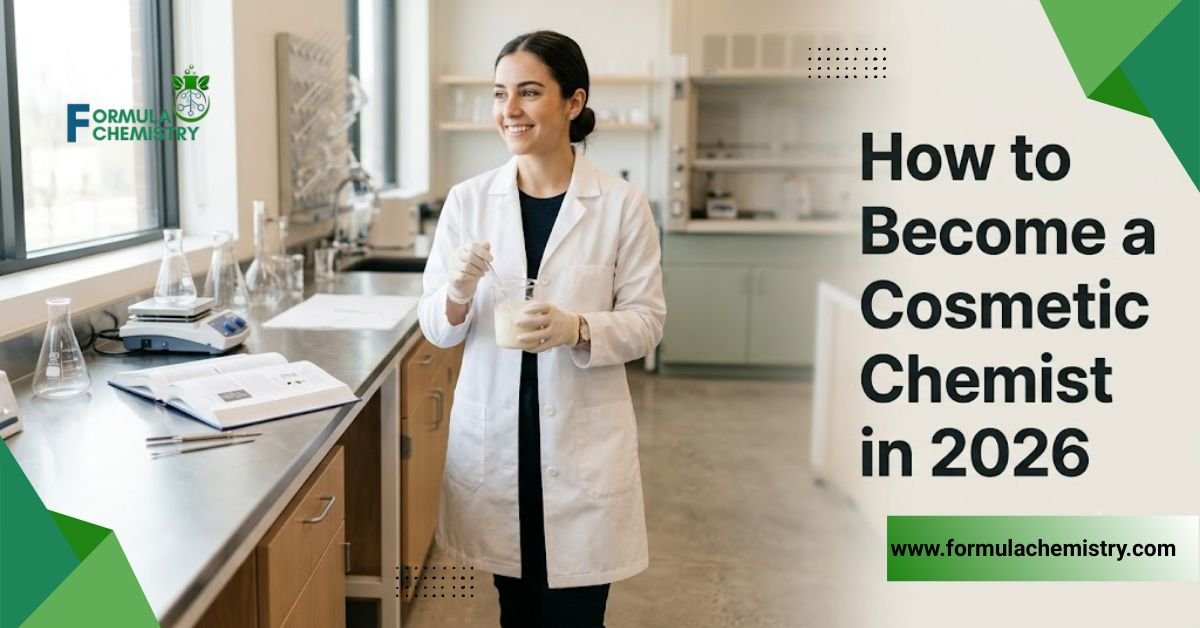
Introduction to Modern Industrial Formulation Paths
Raw chemistry graduates frequently enter the personal care industry expecting to spend their days blending pleasant botanical extracts and cosmetic pigments.
The baseline reality of commercial research and development is far more demanding, requiring a command over surfactant thermodynamics, phase inversion temperatures, and stringent preservation efficacy testing.
Understanding how to become a cosmetic chemist means developing a deep respect for industrial processing parameters and global safety mandates.
At Formula Chemistry, Dr. SamiUllah, PhD, emphasizes that modern industrial roles favor professionals who balance molecular science with rigorous quality control standards.
This comprehensive guide details the exact educational qualifications, technical bench skills, and laboratory documentation competencies required to build a verified career in personal care laboratories.
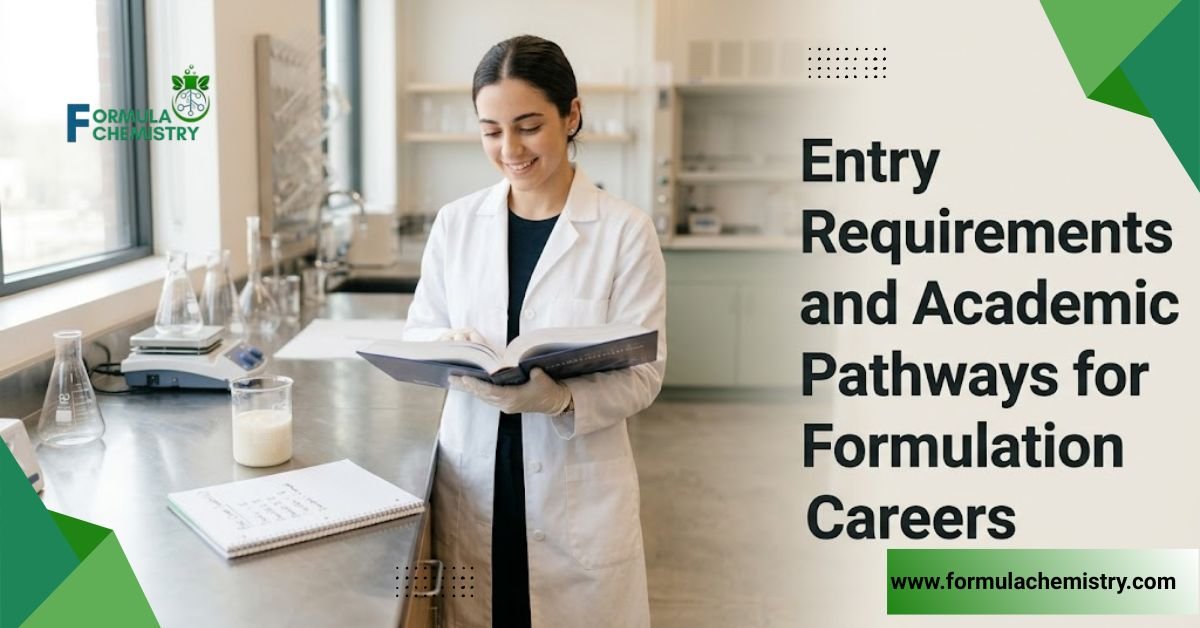
Entry Requirements and Academic Pathways for Formulation Careers
Commercial laboratories require a structured foundation in material science to prevent downstream batch failures and emulsion instability. Industrial employers prioritize candidates who demonstrate an analytical approach to raw material properties and chemical interactions.
Choosing a Chemistry Degree for Cosmetics
A traditional Bachelor of Science in chemistry remains the primary academic prerequisite for corporate research laboratories. This curriculum provides comprehensive exposure to organic reaction mechanisms, analytical instrumentation, and colloidal physics.
Alternatively, degrees in chemical engineering or biochemistry offer valuable cross-disciplinary training. Engineering pathways excel in teaching mass transport phenomena and industrial plant operations, which streamline product manufacturing scale-up procedures.
Evaluating the Cosmetic Chemist Education Path
Completing a focused cosmetic chemist education path bridges the gap between pure academic theory and commercial product execution. Specialized post-graduate diplomas or master’s degrees focus explicitly on skin physiology, polymer science, and surfactant chemistry.
These specialized programs train your mind to view ingredients through functional classifications rather than abstract molecular structures. Professional formulation demands a fluent understanding of how specific thickeners or emollients behave under varying shear and temperature thresholds.
Academic Background Comparison for Personal Care Occupations
To help visualize the trajectory, this table details how distinct educational backgrounds align with corporate laboratory roles.
| Degree Classification | Foundational Focus Areas | Entry-Level Laboratory Roles |
| Bachelor of Science in Chemistry | Organic synthesis, analytical spectroscopy, chemical thermodynamics, and molecular bonding mechanics. | Junior formulation chemist, analytical quality control technician, raw material validation specialist. |
| Bachelor of Science in Chemical Engineering | Fluid dynamics, heat transfer operations, industrial manufacturing scale-up, mass transport equations. | Process engineering specialist, manufacturing scale-up chemist, industrial plant production manager. |
| Master of Science in Cosmetic Science | Surfactant rheology, advanced skin biology, preservation efficacy testing, and emulsion stabilization mechanics. | Senior product developer, innovation chemist, clinical efficacy coordinator, cosmetic regulatory affairs officer. |
| Advanced Specialized Diploma | Practical bench formulation, reverse engineering methods, localized compliance frameworks, and ingredient tracking. | Independent brand formulator, technical sales representative, contract manufacturing advisor. |
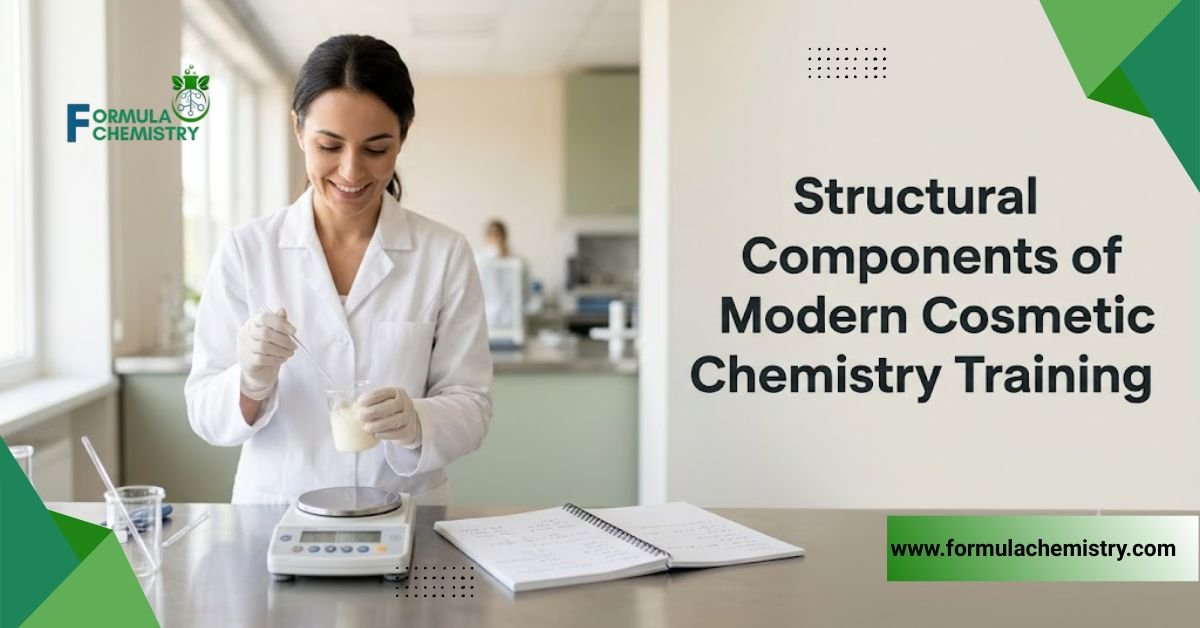
Structural Components of Modern Cosmetic Chemistry Training
Achieving bench competency requires a candidate to master precise measurements and follow standardized laboratory protocols. Specialized training must encompass both theoretical material properties and hands-on manipulation of industrial compounding machinery.
Essential Laboratory Equipment Mastery
Aspiring professionals must develop absolute fluency with high-shear homogenizers, overhead mixers, and digital viscometers. Misunderstanding the difference between propeller blades and high-shear teeth can lead to permanent batch separation during emulsification.
Accurate documentation of rotational speeds and temperature intervals is necessary for reproducible product outcomes. Chemists rely on digital pH meters calibrated daily to ensure acid-active formulations remain within safe, efficacious biological thresholds.
Regulatory Competency and 2026 MoCRA Documentation Requirements
The execution of product development in 2026 demands complete alignment with the Modernization of Cosmetics Regulation Act. This federal framework requires compounding professionals to maintain exhaustive safety substantiation files for every single commercial batch.
Regulatory compliance is no longer a separate administrative task handled after product development concludes. Modern formulators must screen raw materials against strict toxicological endpoints and establish comprehensive adverse event tracking sheets.
Dr. SamiUllah, PhD, notes that verifying raw material origin and heavy metal analysis sheets forms the basis of modern professional trust. Every candidate entering the field must know how to construct a standard Product Safety Substantiation Dossier.
Core Documentation Parameters for Ingredient Dossiers
Regulatory frameworks require precise documentation for every chemical component integrated into a cosmetic base.
| Document Title | Core Technical Contents | Operational Purpose in Laboratories |
| Certificate of Analysis | Active assay percentage, heavy metal thresholds, microbial counts, and specific gravity metrics. | Verifies raw material purity before opening container lots for manufacturing batches. |
| Safety Data Sheet | Hazard classifications, personal protective equipment codes, toxicological profiles, flashpoint data. | Guides safe laboratory handling practices and establishes fire safety protocols. |
| Stability Testing Record | Centrifuge test logs, freeze-thaw cycles, elevated temperature viscosity readings, and color shift tracking. | Confirms a finished formula maintains integrity across a three-year shelf life. |
| Preservation Efficacy Test | Inoculation logs, microbial log reduction counts, and challenge pathogen survival percentages over 28 days. | Demonstrates the preservation system successfully neutralizes bacterial and fungal contamination. |
Strategic Bench Steps on How to Become a Cosmetic Chemist
Entering the professional field requires a calculated sequence of skill acquisition, networking, and technical application. Relying solely on a degree certificate will not distinguish your application from hundreds of competing scientific resumes.
Constructing a Professional Portfolio for Cosmetic Chemist Candidates
Building a physical portfolio that showcases your technical formulation execution is incredibly valuable for prospective employers. This document must contain structured batch sheets, detailed stability tracking charts, and rationales for raw material selections.
Include professional photographs of finished emulsions showing precise droplet structures under microscopy if possible. Documenting your specific troubleshooting methodology when fixing a separated emulsion displays true professional competence.
Securing an Industry Cosmetic Chemist Mentor
Finding an experienced professional working within an active laboratory provides unparalleled guidance during your career entry. A mentor can illuminate the subtle nuances of industrial raw material sourcing that textbooks regularly omit.
Engaging with professional organizations like the Society of Cosmetic Chemists facilitates these professional connections. Attending technical seminars allows you to discuss regional raw material developments directly with veteran compounding specialists.
Alternative Professional Pathways in Personal Care
The diversification of the beauty industry has created multiple entry mechanisms for individuals with varying backgrounds. Understanding these options allows independent creators to operate safely while complying with legal manufacturing standards.
Analyzing Options on How to Become a Cosmetic Chemist Without a Degree
Operating as an independent personal care formulator is achievable through specialized vocational certifications and intense practical study. True corporate research roles require a formal science degree, but independent brand owners can master localized compounding rules.
Focus your self-directed training on green chemistry principles, plant-based emulsification systems, and non-synthetic hurdle technology. Independent operators must accept that they cannot legally claim the title of a certified chemist without academic credentials.
Professional success in this niche requires an obsessive commitment to third-party microbial testing and strict compliance with current Good Manufacturing Practices. Brand owners must establish rigorous sanitation protocols within their compounding spaces to prevent bacterial colonization.
Fundamental Formulation Parameters and Physical Constants
Every credentialed chemist must memorize core physical constants and active ranges to navigate everyday bench trials efficiently.
| Material Class | Operational pH Window | Typical Viscosity Ranges | Primary Incompatibility Factors |
| Alpha Hydroxy Acids | 3.5 to 4.2 | 500 to 5,000 centipoise | High-HLB non-ionic surfactants, strong alkaline neutralizers. |
| Anionic Surfactants | 5.5 to 6.5 | 3,000 to 12,000 centipoise | Cationic conditioning polymers, excessive sodium chloride additions. |
| Carbomer Gel Networks | 6.0 to 7.5 | 20,000 to 60,000 centipoise | High electrolyte concentrations and prolonged high-shear processing exposure. |
| Cationic Emulsions | 4.0 to 5.0 | 8,000 to 25,000 centipoise | Highly anionic thickening agents, strong natural gums. |
Analytical Instrumentation Competence in Commercial Laboratories
Advanced product development requires the constant deployment of sophisticated diagnostic machinery to verify structural batch uniformity. Candidates who enter interview cycles with theoretical knowledge of these instruments present immediate value to technical directors.
High-Performance Liquid Chromatography Applications
Chemists utilize chromatography systems to isolate and quantify active ingredient degradation over accelerated aging periods. This precise analysis ensures that anti-aging peptides or unstable vitamins maintain their declared label claims until the product expiration date.
Understanding the preparation of mobile phases and column maintenance is a necessary capability within analytical testing labs. Routine testing protects brands from costly regulatory enforcement actions stemming from under-performing active levels.
Rheological Profiling and Particle Size Analysis
Digital rheometers measure the complex flow characteristics and yield stress points of structural gel networks and polymer suspensions. This data directly correlates to how a consumer perceives product application behavior and skin feel during spreadability trials.
Particle size analyzers deploy laser diffraction metrics to evaluate the droplet distribution within sub-micron emulsions. Uniform particle sizing indicates a stable emulsification process that resists gravitational separation over extended warehouse storage cycles.
Process Engineering and Manufacturing Scale-Up Mechanics
Translating a successful 100-gram bench sample into a 5,000-kilogram commercial production run requires a firm comprehension of industrial mechanics. This transitional phase is where unseasoned formulators regularly encounter catastrophic batch gelation or structural phase separation.
Calculating Shear Energy and Vessel Dynamics
Industrial jacketed vessels transfer heat at significantly different rates than small laboratory glass beakers. Formulators must adjust cooling times and impeller speeds to account for mass-to-surface-area ratios during manufacturing transitions.
Applying excessive high-shear mixing for extended periods can inadvertently shear down long-chain polymeric thickeners, permanently reducing finished viscosity. Scale-up professionals utilize mathematical modeling to ensure uniform energy distribution throughout the structural fluid mass.
Hurdle Technology and Preservative System Strategy
Designing reliable preservation systems requires a multi-layered barrier strategy rather than a simple single-ingredient addition. Chemists manipulate water activity levels, packaging design, and system pH to support the primary organic preservative.
Relying completely on standard broad-spectrum blends without verifying raw material compatibility can leave water-based serums exposed to mold proliferation. Microbial testing labs evaluate these protective barrier systems against aggressive microbial strains to guarantee long-term safety.
Common Mistakes in Pursuing a Cosmetic Chemistry Career
Navigating the entry requirements of the personal care industry requires avoiding several prevalent strategic missteps. Review these frequent errors to streamline your progression into professional formulation environments.
- Prioritizing Esthetics Over Formula Stability: Beginners often design elegant textures without conducting rigorous oven storage tests. This mistake happens because human sensory feedback is immediate, while chemical decomposition takes weeks to manifest visually. Fix: Establish a mandatory stability testing protocol involving elevated heat chambers immediately after executing any prototype design.
- Neglecting Comprehensive Regulatory Framework Tracking: Aspiring chemists frequently formulate with regional ingredients that are strictly banned in international markets. This occurrence stems from reviewing outdated instructional blog posts instead of referencing direct government compliance databases. Fix: Cross-reference every candidate material with current European Union and local regulatory listings before starting bench compounding.
- Using Decorative Kitchen Tools for Emulsion Batching: Independent formulators regularly substitute standard hand blenders for authentic laboratory high-shear equipment. This practice fails because domestic appliances cannot generate the necessary rotational velocity to minimize emulsion droplet sizes. Fix: Invest in an entry-level overhead laboratory stirrer equipped with digital speed controls to ensure uniform particle dispersion.
- Failing to Track Precise Phase Mixing Temperatures: Formulators often combine oil and water phases at disparate thermal intervals during emulsification steps. This imbalance causes rapid crystallization of high-melting-point waxes and subsequent graininess in the finished cream. Fix: Deploy dual digital thermocouples to confirm both phase vessels match within two degrees Celsius before initiating combination protocols.
- Relying on Generic PH Indicator Strips for Quality Control: Amateur developers trust paper color scales to verify the safety margins of sensitive acid-active formulas. This habit introduces massive testing variances because product pigmentation can easily mask the visual strip reading. Fix: Utilize a benchtop digital pH meter equipped with an automatic temperature compensation probe for all product validation steps.
- Ignoring Batch Code Documentation and Traceability Logs: Independent brand owners frequently compound commercial inventory without recording distinct raw material lot identifiers. This negligence makes it impossible to isolate the source component if a contamination event occurs. Fix: Maintain a centralized laboratory batch notebook detailing the specific lot number and expiry date of every ingredient used.
Suitability Guide for Cosmetic Formulation Niches
Specializing in distinct product types requires matching your technical scientific training with specific formulation environments. Selecting an appropriate career focus depends heavily on your laboratory experience level and mastery of specific chemical classes.
Oily skin formulations and lightweight water-based hair serums are perfectly suited for entry-level chemists because they utilize clear solubilization mechanisms. These products avoid the complex structural crystallization dynamics inherent in heavy lipid-phase cream systems.
Conversely, barrier-repair emulsions designed for compromised or hypersensitive skin types require advanced formulation competencies. These advanced architectures necessitate a flawless understanding of biomimetic lipid structures and strict non-irritating surfactant selection parameters.
Experienced formulators specializing in color cosmetics or high-performance sunscreens must navigate dense mineral dispersion kinetics and complex photostability variables. Beginners should master simple single-phase solutions before attempting these multi-phase systems.
Always conduct a 48-hour patch test with any new formula before wider use.
Frequently Asked Questions
Do I need a degree to be a cosmetic chemist?
Corporate laboratories strictly require a Bachelor of Science degree in a relevant technical field. Independent formulators can manufacture beauty lines without a degree, but they cannot legally hold corporate chemist titles.
What degree is best for cosmetic chemistry?
A standard Bachelor of Science in pure chemistry remains the most widely accepted industrial credential. Analytical chemistry and chemical engineering also provide exceptional foundational skills for manufacturing environments.
Can a biologist become a cosmetic chemist?
Many corporate laboratories hire biology graduates for quality control and raw material microbial screening roles. Transitioning to full formulation roles usually requires supplementary coursework in organic chemistry and surfactant mechanics.
How long does it take to learn formulation?
Mastering basic single-phase blending techniques typically requires six months of concentrated bench practice. Developing stable commercial emulsions and complex suspension systems generally takes several years of industrial experience.
Is MoCRA compliance required for chemists?
Federal regulations mandate that all active formulators maintain explicit safety substantiation files for commercial products. Chemists must collaborate closely with regulatory teams to guarantee full batch traceability.
What equipment do entry chemists need most?
An overhead laboratory stirrer with digital speed adjustment is the most important initial bench investment. A reliable digital pH meter calibrated daily is also mandatory for verifying structural product safety.
Where do entry-level cosmetic chemists work?
Most raw graduates secure initial employment within contract manufacturing facilities or independent raw material suppliers. These high-volume testing environments provide rapid exposure to diverse product classifications.
How do I find a cosmetic chemistry mentor?
Joining professional groups like the Society of Cosmetic Chemists offers direct access to established industry veterans. Attending regional chapter meetings allows you to build organic professional relationships over time.
Key Takeaways for Aspiring Industry Formulators
- Academic validation via a formal chemistry degree remains the primary entry requirement for commercial research laboratories.
- Mastering regulatory frameworks like MoCRA ensures your physical formulations comply with modern legal safety substantiation mandates.
- Constructing a detailed laboratory portfolio displays your troubleshooting competence to prospective brand employers far better than a simple resume list.
Reviewing raw chemical data sheets daily will rapidly build your technical literacy at the bench.
This industry overview video provides practical advice on shifting your mindset, sourcing education options, and networking through the Society of Cosmetic Chemists to break into professional cosmetic formulation.