

By Dr. SamiUllah, PhD Lead Formulator, Formula Chemistry
Quick Answer
The most reliable way to learn how to make natural deodorant is to build a water-free stick from 34% coconut oil, 20% shea butter, 10% candelilla wax, 15% arrowroot powder, 8% magnesium hydroxide (CAS 1309-42-8), and 2.5% zinc ricinoleate (CAS 13040-19-2). Melt the fats and wax at 75°C, disperse the powders at 65°C, add tocopherol and essential oil below 55°C, and pour at 45 to 50°C.
Why Do So Many Homemade Deodorants Fail or Irritate Skin?
Most homemade deodorant recipes fail for the same two reasons. They rely on too much sodium bicarbonate, or they use a fat base that melts in a warm bathroom.
This guide explains how to make natural deodorant that avoids both problems, using a tested stick formula, exact percentages, and a repeatable method.
A deodorant is a cosmetic product that manages odor, and it does not stop sweating. That distinction shapes every ingredient choice below.
Formula Chemistry treats deodorant as a small formulation problem with four jobs. The stick must carry its actives, stay solid, glide without drag, and neutralize odor without disturbing skin.
On my bench, more batches have failed from poor structure than from poor odor control. A stick that crumbles or sweats oil gets abandoned by day ten, however good the actives are.
Everything here is anhydrous, meaning it contains no water. That removes the need for a preservative and simplifies storage.
You will learn how odor forms, which ingredients earn a place in the formula, and how to adjust the stick for climate and sensitive skin. A full 100 g formula and a numbered method follow.
How to Make Natural Deodorant That Controls Odor Instead of Masking It
A natural deodorant controls odor by combining odor neutralizers, moisture absorbers, and a solid carrier that deposits both on skin. Fragrance alone masks odor for a few hours and does nothing else.
Fresh sweat is nearly odorless. Eccrine glands release mostly water and salts, while apocrine glands in the underarm release lipids and proteins.
Skin bacteria then convert those precursors into volatile compounds. Corynebacterium species produce branched fatty acids such as 3-methyl-2-hexenoic acid, and Staphylococcus hominis releases sulfur thiols such as 3-methyl-3-sulfanylhexan-1-ol.
These two chemical families explain why a formula needs more than a pleasant scent. Acidic odor molecules respond to mild alkaline or adsorptive materials, while thiols bind readily to zinc salts.
What Separates a Deodorant From an Antiperspirant?
An antiperspirant uses aluminum salts that form a temporary plug in the sweat duct. In the United States it is regulated as an over-the-counter drug, which is why a cosmetic formula cannot claim to reduce sweating.
A deodorant leaves sweat flow alone. Readers who want the aluminum route explained separately can find it in our guide to homemade antiperspirant.
How Does Skin pH Affect Deodorant Performance?
Healthy underarm skin sits near pH 4.7 to 5.5, and this slightly acidic surface may help support an environment that is less hospitable to odor-producing organisms. Formulas that sit far above that range can disturb the skin barrier with repeated use.
Sodium bicarbonate reads about pH 8.3 in solution, which explains both its fast action on odor and its reputation for rashes. Formulators who ignore that number tend to hear about it from their customers.
Which Ingredients Belong in a Natural Deodorant Stick?
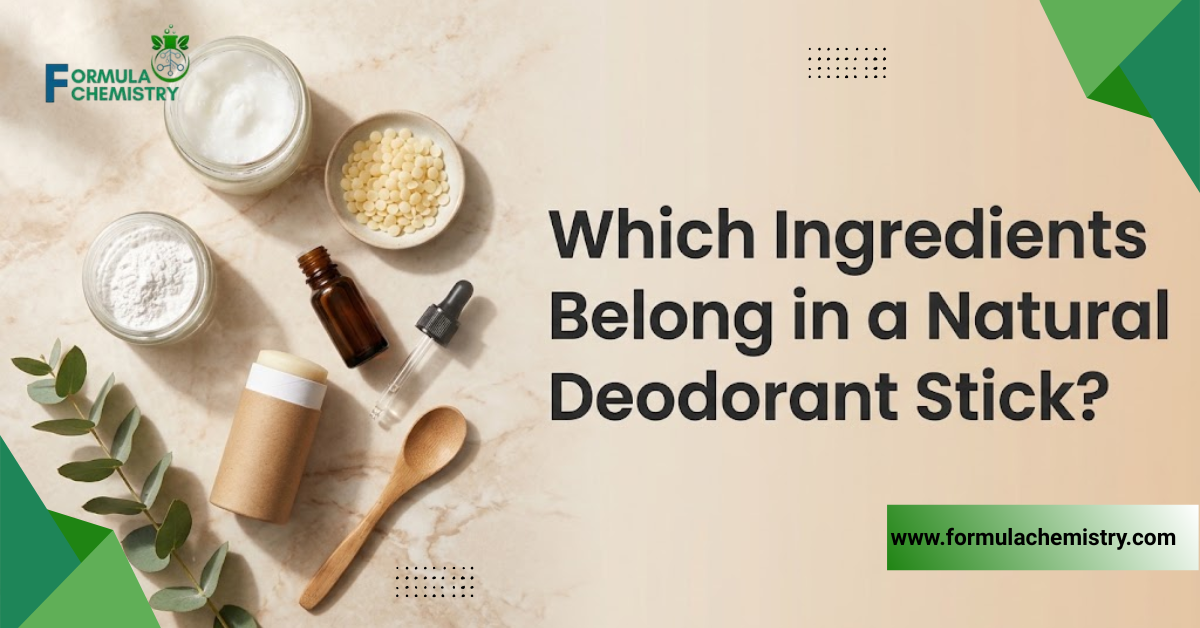
A workable stick needs five functional groups: a liquid oil, a soft butter, a wax, a powder, and an odor neutralizer. Each group solves one physical problem, and removing any of them shows up quickly in the finished stick.
Oils and Butters: The Glide Layer
Cocos Nucifera (Coconut) Oil (CAS 8001-31-8) is the backbone of most natural sticks. It contains roughly 45 to 52% lauric acid and melts between 24 and 26°C, so it glides well and softens fast in warm rooms.
Formulators who want a base built almost entirely on this oil can start with our coconut oil deodorant recipe and return here to add structure.
Caprylic/Capric Triglyceride (CAS 65381-09-1) is the liquid fraction of coconut oil. It stays fluid at room temperature and resists oxidation, and the dry feel of fractionated coconut oil keeps the stick from feeling waxy.
Butyrospermum Parkii (Shea) Butter (CAS 91080-23-8) melts between 32 and 45°C and contributes body and slip. Its stearic and oleic acid content makes it firmer than coconut oil, which is why shea butter belongs in any stick meant to survive a gym bag.
Wax: The Structure
Euphorbia Cerifera (Candelilla) Wax (CAS 8006-44-8) melts between 68 and 73°C and sets the hardness of the stick. It is plant derived and works at 8 to 12% in this type of formula.
Lower percentages give a softer stick that drags less but sweats oil in heat. Higher percentages produce a stick that resists heat and feels stiff on skin.
Powders: Absorbers and Odor Neutralizers
Maranta Arundinacea Root Powder (arrowroot) absorbs moisture and gives a silky, dry finish. It works at 10 to 20%, and it is safe in this formula only because the base is water-free, since starch feeds microbes when moisture is present.
Magnesium Hydroxide (CAS 1309-42-8, MW 58.32 g/mol) is the odor neutralizer I prefer as a default. Its water solubility is on the order of 10 mg per liter, so it neutralizes acidic odor molecules at the skin surface without the free alkalinity of baking soda.
Zinc Ricinoleate (CAS 13040-19-2, MW 660.3 g/mol) is the zinc salt of ricinoleic acid from castor oil. It binds sulfur and nitrogen containing odor molecules and works at 1 to 3%.
Antioxidant and Fragrance
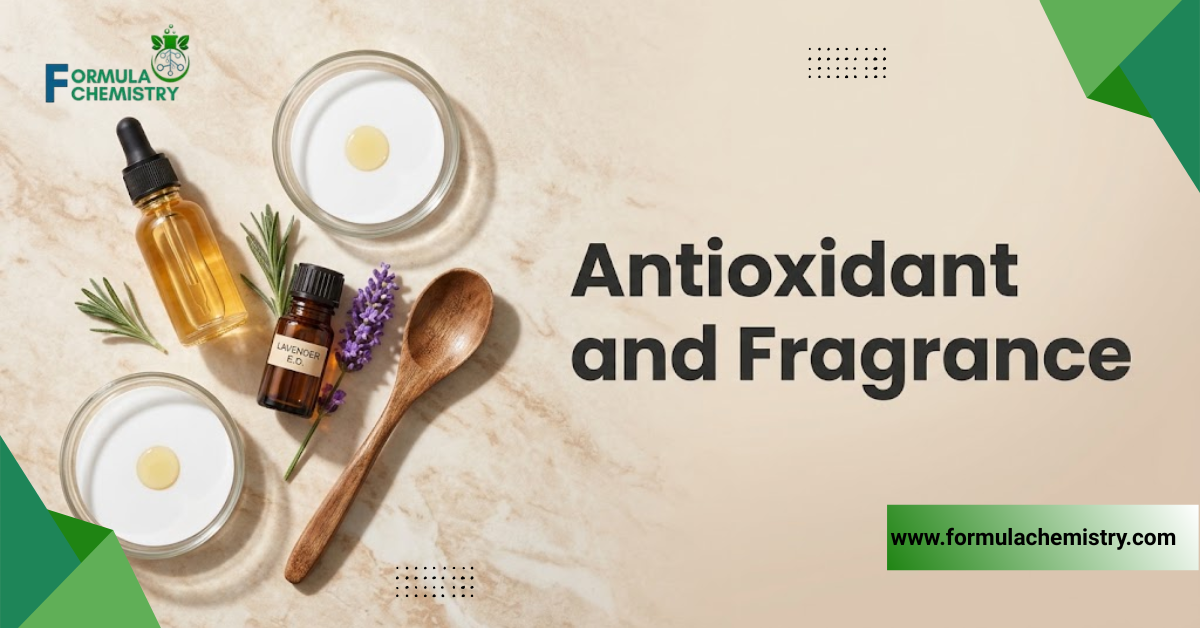
Tocopherol (CAS 59-02-9) at 0.2 to 0.5% slows oxidation of the oils and butter and extends the useful life of the stick. It is an antioxidant, not a preservative, and the two roles should never be confused.
Lavandula Angustifolia (Lavender) Oil (CAS 8000-28-0) contributes a clean scent at 0.5 to 1.0%. Its main components, linalool and linalyl acetate, are well characterized, and linalool must be declared on EU labels above 0.001% in leave-on products.
Readers who want more background on the oil can read about lavender essential oil before choosing a supplier.
The table below collects the working data for every ingredient in the base formula. Use it as a quick reference at the bench.
| Ingredient | INCI Name | CAS Number | Function | Typical Use Level |
| Coconut oil | Cocos Nucifera (Coconut) Oil | 8001-31-8 | Glide, carrier | 25 to 40% |
| Fractionated coconut oil | Caprylic/Capric Triglyceride | 65381-09-1 | Dry emollient | 5 to 12% |
| Shea butter | Butyrospermum Parkii (Shea) Butter | 91080-23-8 | Body, slip | 15 to 25% |
| Candelilla wax | Euphorbia Cerifera (Candelilla) Wax | 8006-44-8 | Hardness | 8 to 12% |
| Arrowroot powder | Maranta Arundinacea Root Powder | Varies by supplier | Moisture absorber | 10 to 20% |
| Magnesium hydroxide | Magnesium Hydroxide | 1309-42-8 | Odor neutralizer | 5 to 10% |
| Zinc ricinoleate | Zinc Ricinoleate | 13040-19-2 | Odor adsorber | 1 to 3% |
| Vitamin E | Tocopherol | 59-02-9 | Antioxidant | 0.2 to 0.5% |
| Lavender essential oil | Lavandula Angustifolia (Lavender) Oil | 8000-28-0 | Fragrance | 0.5 to 1.0% |
Baking Soda or Magnesium Hydroxide: Which Works Better for Sensitive Skin?
For most people, magnesium hydroxide is the better default because it neutralizes odor without the free alkalinity of baking soda. Sodium bicarbonate works faster, but it is also the ingredient most often tied to underarm irritation.
Sodium bicarbonate dissolves in sweat and creates a local alkaline film on skin. Coarse crystals add friction, and friction adds to the problem after shaving.
Magnesium hydroxide dissolves so little that it acts mainly as a fine, low-abrasion neutralizing solid. Paired with zinc ricinoleate, it covers both acidic and sulfur-based odor molecules.
My position is simple. Start with the magnesium-based formula, and reserve baking soda for people who already know they tolerate it.
For that group, the baking soda deodorant recipe shows a higher-bicarbonate stick. If you make a bicarbonate version yourself, cap it at 5 to 10% and grind it to a fine powder first.
| Property | Sodium Bicarbonate | Magnesium Hydroxide | Zinc Ricinoleate |
| INCI name | Sodium Bicarbonate | Magnesium Hydroxide | Zinc Ricinoleate |
| CAS number | 144-55-8 | 1309-42-8 | 13040-19-2 |
| Molecular weight | 84.01 g/mol | 58.32 g/mol | 660.3 g/mol |
| pH behavior | About 8.3 in solution | Mildly alkaline, very low solubility | Near neutral |
| Main mechanism | Neutralizes acidic odor molecules | Neutralizes acidic odor molecules | Binds sulfur and nitrogen odor molecules |
| Typical use level | 5 to 10% | 5 to 10% | 1 to 3% |
| Irritation tendency | Higher | Lower | Low |
The Formula: A 100 g Batch of Natural Deodorant Stick
This is a complete anhydrous stick formula that totals exactly 100.00%. It contains no baking soda and no water.
| Phase | INCI Name | Common Name | Percentage |
| A | Cocos Nucifera (Coconut) Oil | Coconut oil | 34.00% |
| A | Butyrospermum Parkii (Shea) Butter | Shea butter | 20.00% |
| A | Euphorbia Cerifera (Candelilla) Wax | Candelilla wax | 10.00% |
| A | Caprylic/Capric Triglyceride | Fractionated coconut oil | 9.00% |
| B | Maranta Arundinacea Root Powder | Arrowroot powder | 15.00% |
| B | Magnesium Hydroxide | Magnesium hydroxide powder | 8.00% |
| B | Zinc Ricinoleate | Zinc ricinoleate | 2.50% |
| C | Tocopherol | Vitamin E | 0.50% |
| C | Lavandula Angustifolia (Lavender) Oil | Lavender essential oil | 1.00% |
| Total | 100.00% |
To scale the batch, multiply each percentage by the batch weight in grams and divide by 100. A 500 g batch means multiplying every figure by five, so coconut oil becomes 170 g.
A 100 g batch fills roughly two 50 g tubes. Weigh everything on a scale accurate to 0.01 g, because the small percentages carry the odor control.
You will need:
- A heat-safe glass beaker and a water bath
- A digital scale accurate to 0.01 g and a thermometer
- A fine mesh sieve and a small whisk or spatula
- Empty deodorant tubes and 70% isopropyl alcohol for sanitizing
How Do You Make the Stick, Step by Step?
Follow the steps in order, and watch the temperatures rather than the clock. Temperature control decides whether the powders stay suspended and whether the shea stays smooth.
- Sanitize the tubes, beaker, and tools with 70% isopropyl alcohol and let them air dry.
- Weigh phase A into the beaker: coconut oil, shea butter, candelilla wax, and caprylic/capric triglyceride.
- Heat the beaker in a water bath to 75°C and stir until no wax flecks remain.
- Weigh phase B in a separate bowl and sift it through a fine mesh sieve to break lumps.
- Remove the beaker from the heat and let it cool to 65°C, then whisk in the powders until smooth.
- Allow the mixture to fall to 55°C, then stir in the tocopherol and lavender oil for 30 seconds.
- Pour into the tubes at 45 to 50°C, stirring the beaker between pours so the powders stay suspended.
- Chill the filled tubes in the refrigerator for 30 minutes, then cap them.
- Cure the sticks at room temperature for 24 hours before first use.
Adding powders near 65°C keeps the wax fluid long enough to wet the particles fully. Below 55°C the mass thickens fast and traps lumps.
Essential oil goes in last because its terpenes evaporate quickly at higher temperatures. Rapid chilling also matters, since slow cooling lets shea butter form coarse crystals that feel grainy.
How Do You Adjust the Formula for Heat, Humidity, and Skin Feel?
Change one variable at a time and keep a batch log. Two simultaneous changes make it impossible to know which one fixed the problem.
| Problem | Likely Cause | Adjustment |
| Stick softens in summer | Coconut oil melts near 25°C | Raise candelilla to 12% and lower coconut oil to 32% |
| Stick drags on skin | Wax level too high | Lower candelilla to 8% and raise caprylic/capric triglyceride to 11% |
| Grainy texture | Shea cooled slowly | Reheat to 75°C and chill quickly in the refrigerator |
| Oily residue | Liquid oil too high | Reduce caprylic/capric triglyceride to 6% and raise arrowroot to 18% |
| White marks on clothing | Excess powder load | Reduce arrowroot to 12% and use finer-grade magnesium hydroxide |
| Powder settles at tube bottom | Poured too hot | Pour at 45 to 50°C and stir between tubes |
How Can You Personalize the Base Formula?
For a fragrance-free version, remove the lavender oil and add 1.00% to the coconut oil, which brings it to 35.00%. Anyone prone to fragrance reactions should start here.
For heavy sweaters, raise arrowroot to 18% and lower caprylic/capric triglyceride to 6%. The extra starch absorbs more moisture, and the drier base reduces slip on skin.
For a spreadable jar cream, cut candelilla to 4% and raise shea to 26%. Apply it with clean fingertips or a small spatula.
How Do You Test Stability at Home?
Place a finished stick in a warm spot at 35 to 40°C for 72 hours. Look for oil beads on the surface, slumping, or a rancid smell.
Then move a second stick to the refrigerator for 24 hours and check for cracks. A stick that passes both checks will handle normal household conditions.
Does a Water-Free Deodorant Need a Preservative?
No, provided no water enters the formula or the tube. Microbes need available water to multiply, and an anhydrous fat and powder base sits well below the water activity of about 0.6 that supports growth.
This is why the formula uses no hydrosol, aloe juice, or witch hazel water. Adding any of them creates a water phase, and that changes the safety requirements completely.
Wet fingers can also introduce moisture, so use a stick tube rather than a jar. If you prefer a jar, always use a clean, dry spatula.
Expect a shelf life of 6 to 12 months when stored below 25°C. Shea butter and plant oils oxidize slowly, and a sharp, crayon-like smell signals that the batch has turned.
Eight Formulation Errors That Ruin Homemade Deodorant
Using Baking Soda at 20 to 30%
Many online recipes copy this range because it neutralizes odor loudly. Skin pays for that strength with pH stress and friction. Cap sodium bicarbonate at 5 to 10%, or switch to magnesium hydroxide with zinc ricinoleate.
Skipping the Sift
Arrowroot and magnesium hydroxide form small clumps that whisking alone will not break. Those clumps feel gritty and clog the glide surface. Sift every powder through a fine mesh before it meets the melted fats.
Adding Essential Oil While the Base Is Too Hot
Terpenes flash off above about 60°C, so the scent fades in the tube. Heat also degrades some of the aroma compounds. Wait until the mixture reaches 55°C before adding tocopherol and lavender oil.
Relying on Coconut Oil Without Adjusting the Wax
Coconut oil melts at 24 to 26°C, so a stick that feels perfect in winter can slump in July. This is the most common complaint I hear from new makers. Keep candelilla at 10 to 12% for warm climates, and lower coconut oil to compensate.
Letting the Stick Set Slowly
Slow cooling gives shea butter time to form large, uneven crystals. The result is a grainy, sandy stick that feels rough on skin.
Chill the filled tubes in the refrigerator right after pouring, and reheat any grainy batch to 75°C before recasting.
Adding Water-Based Ingredients
Hydrosols, aloe, and floral waters feel natural, and they also invite mold in an unpreserved product. Mold in a stick is easy to miss until it has spread.
Keep the base anhydrous, or use a full emulsion system with a broad-spectrum preservative if you want a water phase.
Overloading the Essential Oil
More scent does not mean more odor control, and it raises the sensitization risk on thin, shaved skin. Total essential oil above 1% in a leave-on underarm product is hard to justify. Hold the total at 0.5 to 1.0%, or make the stick fragrance-free.
Pouring Before the Powders Are Suspended
Powders sink in thin, hot oil, leaving a hard, dry layer at the bottom of the tube. The top of the stick then goes greasy. Pour at 45 to 50°C, and stir the beaker between every tube.
Who Should Use This Deodorant and Who Should Skip It
This stick suits adults who want an aluminum-free, minimal-ingredient deodorant and are comfortable with a solid, oil-based product. It also suits small makers who want a reliable base formula to test before scaling.
Use caution if you have fragrance sensitivities, eczema in the underarm area, or skin that has just been shaved. Start with the fragrance-free version and apply a small amount.
Shea butter comes from a tree nut, and although it is low in allergenic proteins, anyone with a tree nut allergy should confirm with a physician first. Persistent, heavy sweating that disrupts daily life deserves a medical conversation, because a cosmetic stick is not designed to address it.
If you plan to move from personal batches to selling, structured training helps. Formula Chemistry recommends starting with our list of the best cosmetic formulation courses online.
Always conduct a 48-hour patch test with any new formula before wider use.
Questions Readers Ask Before Making Natural Deodorant
How long does homemade natural deodorant last?
A water-free stick stored below 25°C typically stays usable for 6 to 12 months. Discard it if it develops a sharp, rancid smell or visible mold.
Can I make natural deodorant without baking soda?
Yes. Magnesium hydroxide and zinc ricinoleate handle odor neutralization without sodium bicarbonate, and the formula in this guide uses no baking soda at all.
Why does my homemade deodorant melt in summer?
Coconut oil melts at 24 to 26°C, so any stick high in coconut oil softens in warm rooms. Increasing candelilla wax to 12% and storing the stick in a cool place fixes most cases.
What causes underarm irritation from natural deodorant?
Common contributors include high alkalinity from baking soda, essential oil sensitization, and friction on freshly shaved skin. Switching to a fragrance-free, low-alkalinity formula may help reduce these triggers.
Can I use beeswax instead of candelilla wax?
Yes, though the stick will no longer be vegan. Beeswax is softer than candelilla, so use about 1.5 times the candelilla weight to reach similar hardness.
Is there an armpit detox period with natural deodorant?
There is no scientific basis for a detox period. Odor often changes for a few weeks after leaving antiperspirants because the underarm microbiome and sweat patterns are adjusting.
How much natural deodorant should I apply?
Two to three swipes per underarm on clean, dry skin is enough. Heavier layers leave residue on clothing without improving odor control.
Can I add essential oils other than lavender?
Yes, as long as total essential oil stays at or below 1%. Avoid cold-pressed citrus oils such as bergamot, which can cause phototoxic reactions on sun-exposed skin.
Your First Batch: What to Make, Test, and Adjust
A dependable natural deodorant depends on structure first and odor control second. Candelilla wax and shea butter hold the stick together, while magnesium hydroxide and zinc ricinoleate handle odor without the alkalinity of baking soda.
Keep the formula water-free, add fragrance below 55°C, and chill the tubes quickly. Those three habits prevent most of the failures described above.
Adjust only one variable per batch, and write down what changed. Weigh out the 100 g formula this weekend, cool the tubes quickly, and wear the finished stick for a full week before changing a single percentage.