
Quick Answer
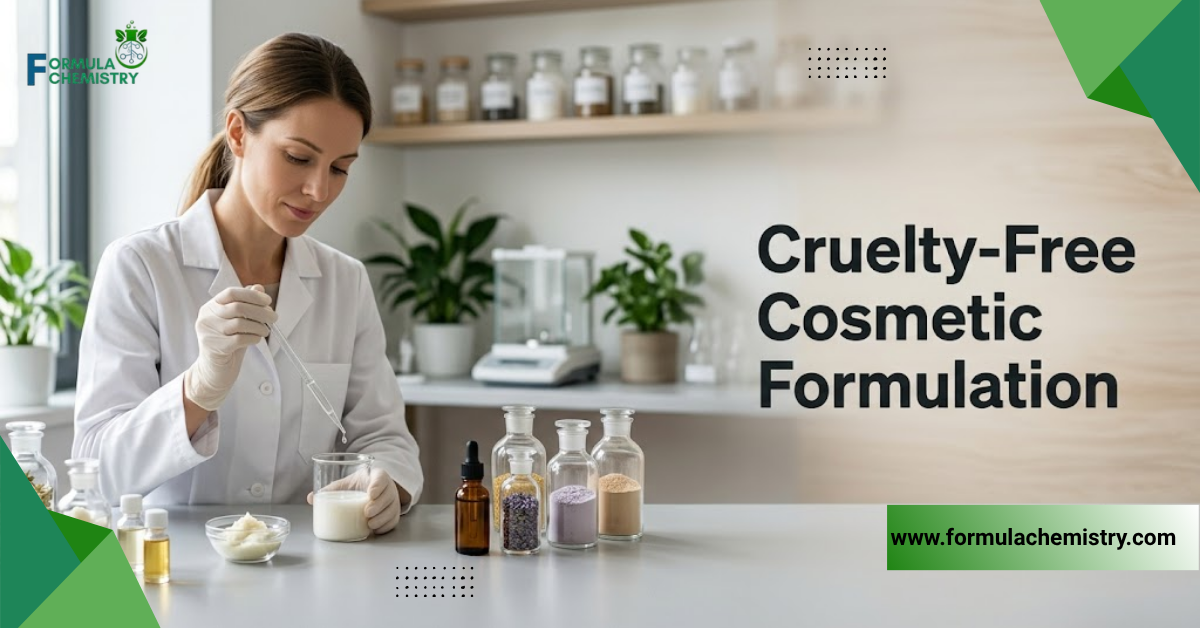
Cruelty-free cosmetic formulation means developing products with no animal testing at any stage, covering ingredients, the finished formula, and the entire supply chain, including third parties.
It relies on modern testing alternatives such as in vitro cell cultures and reconstructed human skin models to prove safety without animals.
The hardest part is the supply chain, since every ingredient supplier must also be free of animal testing, and the most trusted proof is third-party certification like Leaping Bunny, which is stricter than legal bans and audits the whole chain.
Introduction
Cruelty-free cosmetic formulation produces one of the most valued claims in modern beauty, and also one of the most misunderstood. It is not about ingredients but about testing, specifically the commitment that no animal testing happens anywhere in a product’s creation.
The claim sounds simple but hides real complexity. A brand can avoid testing its finished product yet still rely on suppliers or third parties who test, which is why genuine cruelty-free status reaches deep into the supply chain.
I approach cruelty-free formulation as a sourcing and process discipline as much as a formulation one. Building a truly cruelty-free product means choosing suppliers and testing methods as carefully as ingredients.
This guide covers what cruelty-free really means, how it differs from vegan, the testing alternatives that replace animals, the supply-chain challenge, the certifications that prove it, and the market realities like China that complicate it.
What Cruelty-Free Actually Means
Cruelty-free means that no animal testing occurred at any stage in the development of a cosmetic product. This covers the individual ingredients, the finished formula, and any testing done by suppliers or third parties on the company’s behalf.
The all-stages part is what makes it meaningful. A brand cannot claim cruelty-free simply because it did not test the final product itself, if its ingredients were animal-tested or a third party tested on its behalf.
This is a claim about process rather than contents. Where vegan describes what is in the bottle, cruelty-free describes how everything in the bottle was tested and brought to market, which is a fundamentally different kind of commitment.
The concept has a defined history. Since 1996, coalitions of animal-protection groups standardised what cruelty-free should mean, precisely because the term had been used loosely, and that standardisation is what gives certification its value today.
Cruelty-Free Versus Vegan
In cruelty-free cosmetic formulation, these two claims appear side by side so often that people assume they are the same, but they are genuinely different. Understanding the distinction is essential for anyone formulating ethical products.
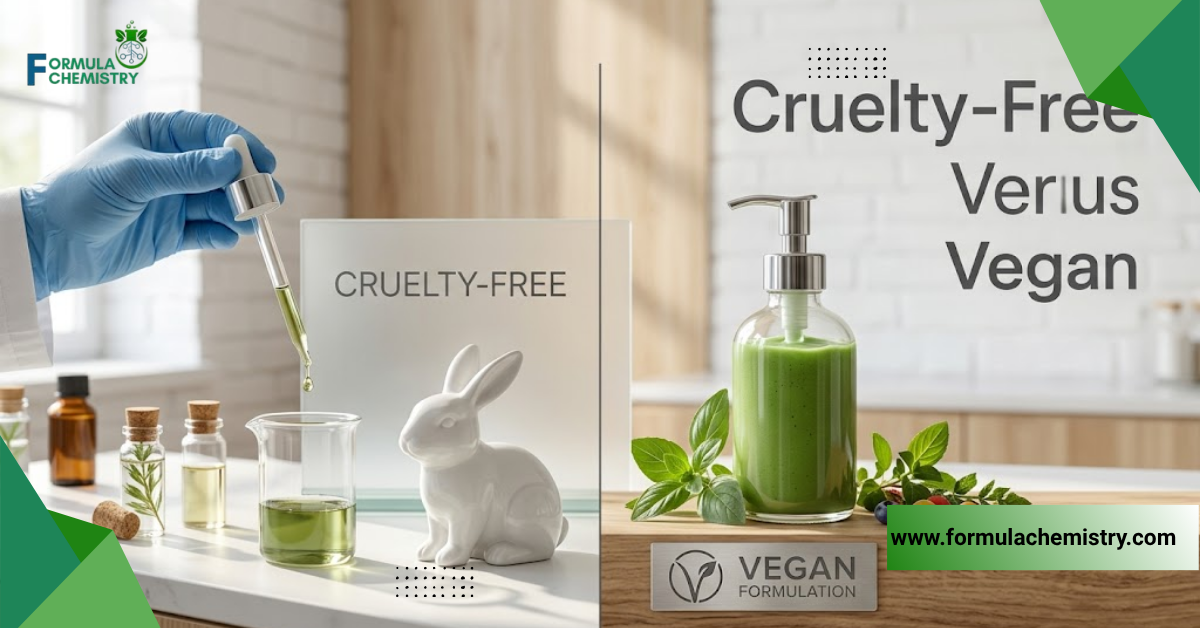
Vegan means the product contains no animal-derived ingredients, such as beeswax, lanolin, or carmine. Cruelty-free means the product and its ingredients were not tested on animals, regardless of what they are.
The two can exist independently. A cream can be cruelty-free yet contain beeswax, making it not vegan, while a fully plant-based vegan product could, in theory, be sold in a market that required animal testing, making it not cruelty-free.
For a brand wanting both, both must be pursued deliberately. Achieving vegan status is about ingredient sourcing, while achieving cruelty-free status is about testing and supply chain, and a truly ethical product satisfies both through separate verification.
The Testing Alternatives That Replace Animals
Cruelty-free formulation depends on proving a product is safe without animal testing, and modern science offers reliable ways to do exactly that. These alternatives are often faster, cheaper, and more relevant to human skin than animal tests.
In Vitro Testing
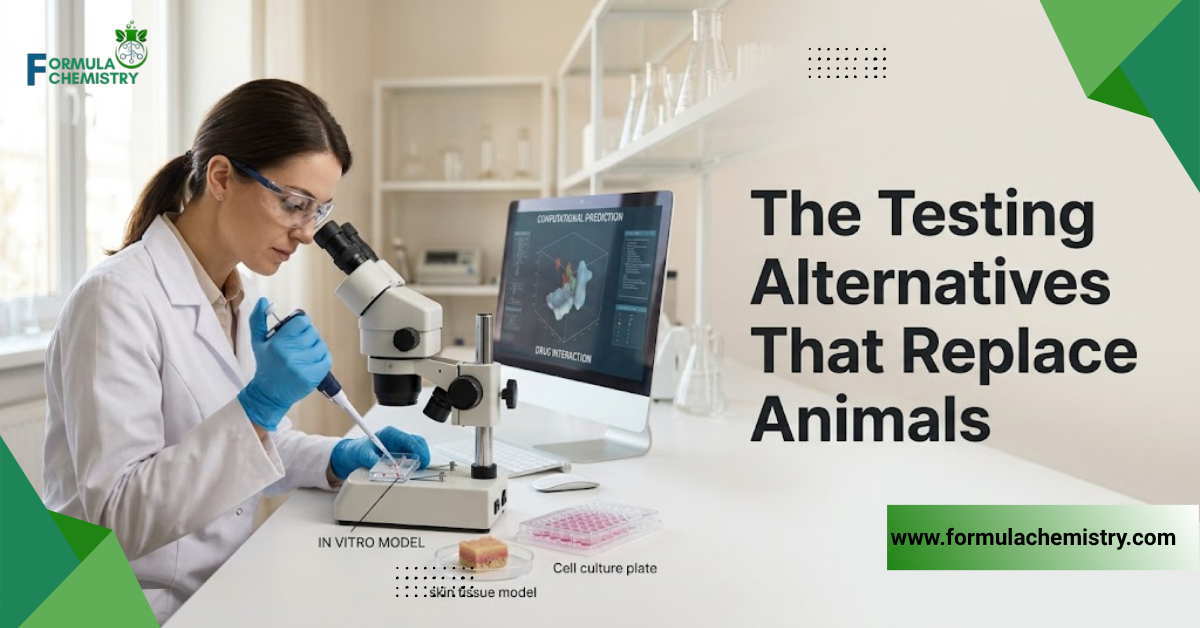
In vitro testing uses cultured cells and tissues rather than live animals to assess how ingredients behave. It can evaluate irritation, toxicity, and other safety measures in a controlled, human-relevant way.
This approach has become a backbone of cruelty-free safety assessment. Because it uses human-derived cells, it can be more predictive of human responses than testing on a different species.
Reconstructed Human Skin Models
Reconstructed human skin and epidermis models are laboratory-grown tissues that mimic real skin. They allow testing of irritation and corrosion on something structurally close to human skin, without any animal involvement.
These models are now widely accepted for specific safety endpoints. They represent one of the most significant advances in replacing animal tests, giving formulators a realistic surface on which to assess a product.
Other Modern Approaches
Several further methods round out the cruelty-free toolkit. In silico, or computer-based, modelling predicts how ingredients may behave, while read-across uses data from similar, already-assessed ingredients to infer safety.
Relying on established safe ingredients is itself a strategy. Building formulas from materials with a long history of safe use reduces the need for new testing altogether, which is often the simplest cruelty-free path.
The Supply Chain Challenge
This is the genuinely hard part of cruelty-free formulation, and the aspect brands most often underestimate. Cruelty-free is only real if it extends through the entire supply chain.
Every Ingredient and Supplier Counts
A finished product is only as cruelty-free as its ingredients. If a supplier tests a raw material on animals, or buys from someone who does, the finished product cannot honestly claim cruelty-free status.
This means vetting every supplier, not just the formula. Confirming that each ingredient’s maker adheres to no-animal-testing standards is the core work of cruelty-free sourcing, and it is where most of the effort goes.
Documentation and Cut-Off Dates
Serious cruelty-free programmes rely on documentation and a fixed cut-off date, a point beyond which neither the company nor its suppliers conduct or commission animal testing. This gives the claim a clear, auditable boundary.
Keeping supplier declarations and testing commitments on file is essential. A cruelty-free claim is only as strong as the paperwork behind it, which is why this record-keeping matters as much as the formulation itself, and something we treat as non-negotiable at Formula Chemistry.
The Certifications That Prove It
Because self-declared cruelty-free labels can be vague, third-party certification is what gives the claim credibility. A few programmes dominate, and they differ in rigour.
Leaping Bunny
Leaping Bunny, run by Cruelty Free International and the associated coalition, is widely regarded as the gold standard. It requires a fixed cut-off date, rigorous supplier audits, ongoing monitoring, and transparency across the whole supply chain.
Its strictness is the point. Leaping Bunny is tougher than many legal bans, closing loopholes those bans leave open, which is why it carries such weight with informed consumers.
PETA Beauty Without Bunnies
PETA’s programme is another widely recognised cruelty-free certification, based on a company pledge not to test on animals. It is more accessible than Leaping Bunny, though it relies more on the pledge and less on independent auditing.
Both certifications signal a cruelty-free commitment, and the right choice depends on how rigorous a verification a brand wants. Many brands pursue certification specifically because consumers increasingly distrust uncertified claims.
Why Certification Beats Self-Declaration
A logo a brand prints itself means little without verification behind it. Third-party certification carries far more trust because an outside body has audited the claim against a defined standard.
This is why certification has become so valuable. As shoppers grow more sceptical of vague marketing, a recognised certification is the clearest way to turn a cruelty-free intention into a believable claim.
The China Question and Market Realities
No honest discussion of cruelty-free formulation can skip the complication of global markets, and China in particular. It is the single biggest reason major brands fail to qualify as cruelty-free.
How China Complicates Cruelty-Free
China historically required animal testing for imported cosmetics, which meant selling there conflicted with a cruelty-free commitment. Since 2021, pre-market testing has been lifted for many general cosmetics, a significant change.
The picture is not fully resolved, though. Special-use products such as sunscreens and post-market safety checks can still involve animal testing under certain circumstances, so selling in China remains a genuine cruelty-free complication rather than a solved issue.
Evolving Pathways
The situation is improving, and dedicated pathways now exist. Leaping Bunny operates a China Qualification Program that helps certified brands sell domestically in China under specific conditions without animal testing, working with regulatory experts to keep registrations testing-free.
For a formulator or brand, the lesson is to understand each market’s rules before entering it. A cruelty-free commitment means being willing to forgo or carefully navigate markets that would otherwise require testing, which is an ethical and commercial decision as much as a formulation one.
The Business Case for Cruelty-Free
Beyond ethics, cruelty-free formulation increasingly makes commercial sense, which is worth understanding when building a brand. Consumer demand has turned a moral stance into a market advantage.
A significant share of shoppers now actively avoid brands that test on animals, and many will switch away from a preferred product on discovering it is not cruelty-free. This makes a credible cruelty-free claim a genuine competitive asset rather than just an ethical one.
The rise of certification reflects this. As consumers grow more sceptical of vague marketing, a recognised cruelty-free logo helps a product stand out and earn trust, rewarding the brands that do the supply-chain work properly.
There is a caution here too. Because the claim carries commercial value, some brands stretch it with loose or self-declared labels, which is exactly why third-party certification and transparency matter so much for genuine cruelty-free formulation.
Common Pitfalls to Avoid
A few mistakes trip up brands aiming for cruelty-free status, and each is avoidable with care. Knowing them keeps a claim honest and defensible.
The first is focusing only on the finished product. A brand may proudly not test its final formula while overlooking suppliers who test raw materials, which breaks the cruelty-free claim at the source.
The second is confusing cruelty-free with vegan. A product can be one and not the other, so treating them as interchangeable leads to inaccurate labelling and lost consumer trust.
The third is relying on a self-made logo without verification. An unaudited claim carries little weight now, so pursuing recognised certification and understanding market complications like China keeps a cruelty-free claim credible, which is the standard we hold to at Formula Chemistry.
Building a Cruelty-Free Product
Start by treating cruelty-free as a whole-supply-chain commitment rather than a finished-product claim. Vet every ingredient supplier for their animal-testing policy, and build your formula from materials that can be assessed without animal testing.
Lean on modern safety alternatives, using in vitro methods, reconstructed skin models, and established safe ingredients to substantiate safety. Keep thorough documentation, set a clear cut-off date, and maintain supplier declarations so the claim is auditable.
Then prove it credibly. Pursue recognised third-party certification like Leaping Bunny or PETA rather than relying on a self-made label, and understand the market realities, especially in China, that can undermine a cruelty-free claim.
Approach cruelty-free cosmetic formulation as ethical sourcing, modern testing, and transparent verification working together, and you can build products that stand up to genuine scrutiny.
Frequently Asked Questions
What does cruelty-free cosmetic formulation mean?
Cruelty-free cosmetic formulation means developing a product with no animal testing at any stage, including ingredients, the finished formula, and the supply chain. It relies on testing alternatives like in vitro and reconstructed skin models. It is a claim about testing, not about ingredients.
What is the difference between cruelty-free and vegan?
Cruelty-free means no animal testing was involved, while vegan means no animal-derived ingredients are present. They are separate claims, so a product can be one without the other. A truly ethical product pursues both through separate verification.
What are the alternatives to animal testing?
The main alternatives are in vitro testing using cultured human cells, reconstructed human skin and epidermis models, and in silico computer modelling. Using established safe ingredients also reduces the need for new testing. These methods are often more relevant to human skin than animal tests.
What is Leaping Bunny certification?
Leaping Bunny, run by Cruelty Free International, is widely considered the gold-standard cruelty-free certification. It requires a fixed cut-off date, supplier audits, ongoing monitoring, and supply-chain transparency. It is stricter than many legal bans, which can contain loopholes.
Is Leaping Bunny or PETA better for cruelty-free?
Both are recognised cruelty-free certifications. Leaping Bunny is generally seen as more rigorous because it involves independent supplier audits and monitoring, while PETA’s programme is pledge-based and more accessible. The right choice depends on how much verification a brand wants.
Why does selling in China affect cruelty-free status?
China historically required animal testing for imported cosmetics. Since 2021 pre-market testing has been lifted for many general cosmetics, but special-use products and post-market checks can still involve testing. This is why selling in China can conflict with a cruelty-free claim.
Does cruelty-free apply to ingredients too?
Yes, cruelty-free covers the entire supply chain, so every ingredient and supplier must also be free of animal testing. A finished product cannot be genuinely cruelty-free if its raw materials were animal-tested. This supply-chain vetting is the core challenge.
How do I certify my brand as cruelty-free?
Vet all suppliers for their animal-testing policies, set a fixed cut-off date, and keep thorough documentation, then apply to a third-party programme such as Leaping Bunny or PETA. Certification requires evidence across the supply chain. It carries far more trust than a self-declared label.
Key Takeaways
Cruelty-free cosmetic formulation means no animal testing at any stage, covering ingredients, the finished product, and the whole supply chain including third parties. It is a claim about testing rather than ingredients, which is what distinguishes it from vegan.
Modern testing alternatives make it achievable, with in vitro methods, reconstructed human skin models, and established safe ingredients substantiating safety without animals. The hardest part is the supply chain, since every supplier must also be free of animal testing, backed by documentation and a fixed cut-off date.
Third-party certification like Leaping Bunny, which is stricter than legal bans, is the most credible proof, and market realities such as China remain a genuine complication. Approach cruelty-free formulation as ethical sourcing, modern testing, and transparent verification together, and the claim will withstand real scrutiny.