
Quick Answer
Vegan cosmetic formulation means building products with no animal-derived ingredients, replacing materials like beeswax, lanolin, carmine, collagen, and keratin with plant-based, fermented, or synthetic alternatives.
The main challenge is spotting hidden animal derivatives and ambiguous-source ingredients such as glycerin, squalane, and stearic acid, which can come from either plants or animals.
Rather than always seeking a one-to-one swap, the smartest approach is to ask what effect you want and choose a plant-based ingredient that delivers it, then verify everything with supplier documentation and third-party certification.
Introduction
Formulating vegan cosmetics is less about restriction and more about knowing your ingredients deeply. Once you understand which materials are animal-derived and what replaces them, building a fully vegan product becomes straightforward.
The tricky part is that animal ingredients often hide in plain sight. They wear complex INCI names, appear as derivatives, or come from ambiguous sources that could be plant or animal, so vegan formulating is partly detective work.
I formulate vegan products regularly, and the biggest skill is not memorising a banned list but understanding sourcing. Knowing where an ingredient comes from, and what plant-based option delivers the same effect, is the whole craft.
This guide covers what vegan formulation means, the animal ingredients to replace and their alternatives, the hidden and ambiguous ones to watch, how to approach substitution, and how to verify and certify a vegan product.
What Vegan Cosmetic Formulation Means
Vegan cosmetic formulation means creating products that contain no animal-derived ingredients whatsoever. Every material must come from a plant, a mineral, a fermentation process, or a synthetic source rather than an animal.
It helps to separate three claims that often get confused. Vegan means no animal ingredients, cruelty-free means not tested on animals, and natural means derived from nature, and these are genuinely different things.
The overlaps are where people trip up. A natural product can contain beeswax or lanolin and so not be vegan, while a vegan product can be fully synthetic, and a vegan product could even, in theory, be tested on animals unless it is also cruelty-free.
For a formulator, this means vegan is a specific, ingredient-level claim. It is about what is in the bottle, verified through sourcing, rather than a general impression of being clean or ethical.
The Animal Ingredients to Replace
A defined set of animal-derived ingredients appears again and again in cosmetics. Knowing them and their vegan alternatives covers most of the work.
Waxes and Emollients
Beeswax, listed as Cera Alba, is one of the most common animal ingredients, used to structure balms and creams. Plant waxes such as candelilla and carnauba replace it well, though because they differ in hardness you adjust the amount rather than swapping one for one.
Lanolin, derived from sheep’s wool and sometimes listed as wool wax or wool grease, is a rich emollient to replace. Plant butters like shea, plant oils, and dedicated vegan lanolin alternatives provide similar softening and occlusive properties.
Proteins
Collagen and elastin in skincare are almost always animal-derived, taken from connective tissue. Plant peptides and hydrolyzed plant proteins from rice, soy, or oats offer vegan alternatives, and since topical animal collagen does not penetrate well, plant peptides are often the smarter choice anyway.
Keratin, common in hair care, comes from animal horns, hooves, and feathers. Hydrolyzed wheat or soy protein, and blends sold as phytokeratin, provide vegan substitutes that support hair without animal sourcing.
Colourants
Carmine is a bright red pigment made from crushed cochineal insects, listed as CI 75470, Natural Red 4, or cochineal. Red iron oxide gives a vegan mineral alternative with an earthier tone, and plant pigments such as beetroot powder can also add colour.
This is an easy one to miss in colour cosmetics. Any red, pink, or purple shade is worth checking, since carmine appears widely in lipsticks, blushes, and eyeshadows.
Other Common Animal Ingredients
Several more animal materials appear in formulas. Honey and propolis from bees, casein and other milk proteins, silk, shellac, and guanine are all animal-derived and need replacing with plant humectants, plant proteins, or plant and mineral alternatives.
The principle stays the same throughout. For each, identify the effect it provides, then find the plant-based, fermented, or synthetic ingredient that delivers it.
The Hidden and Ambiguous Ingredients
This is where vegan formulation gets genuinely technical, and where even experienced formulators slip. Some ingredients are not obviously animal-derived, and others could be either plant or animal depending on their source.
Ambiguous-Source Ingredients
Many common ingredients can come from either plants or animals, and the INCI name alone does not tell you which. Glycerin, stearic acid, oleic acid, squalane, and even some forms of hyaluronic acid fall into this group.
Glycerin can be made from plant oils or animal fats, so vegetable glycerin is the version to specify. Stearic and oleic acids can come from tallow or from plant oils, and squalane can come from shark liver or from olives, so the plant source must be confirmed each time.
Derivatives That Hide Their Origin
Animal ingredients also appear as derivatives with names that disguise their source. Isopropyl lanolate, for example, derives from lanolin and is never vegan, and similar derivatives of animal materials slip through unless you know to look.
The lesson is to read beyond the obvious. A formula can look vegan at a glance while carrying a derivative of an animal ingredient, which is exactly why sourcing verification matters so much.
The Squalene Versus Squalane Trap
One classic confusion deserves its own mention. Squalene and squalane sound almost identical but differ, and squalane in particular can be sourced from shark liver, sometimes sold as marine squalane, or from olives and sugarcane fermentation.
Olive-derived and fermented squalane are the vegan choices, and they are widely available as direct substitutes. Always confirm the source rather than assuming, since the name gives no clue on its own.
How to Approach Vegan Substitution
The instinct is to hunt for a perfect one-to-one replacement, but the better mindset is more flexible. This shift makes vegan formulation easier and often produces better results.
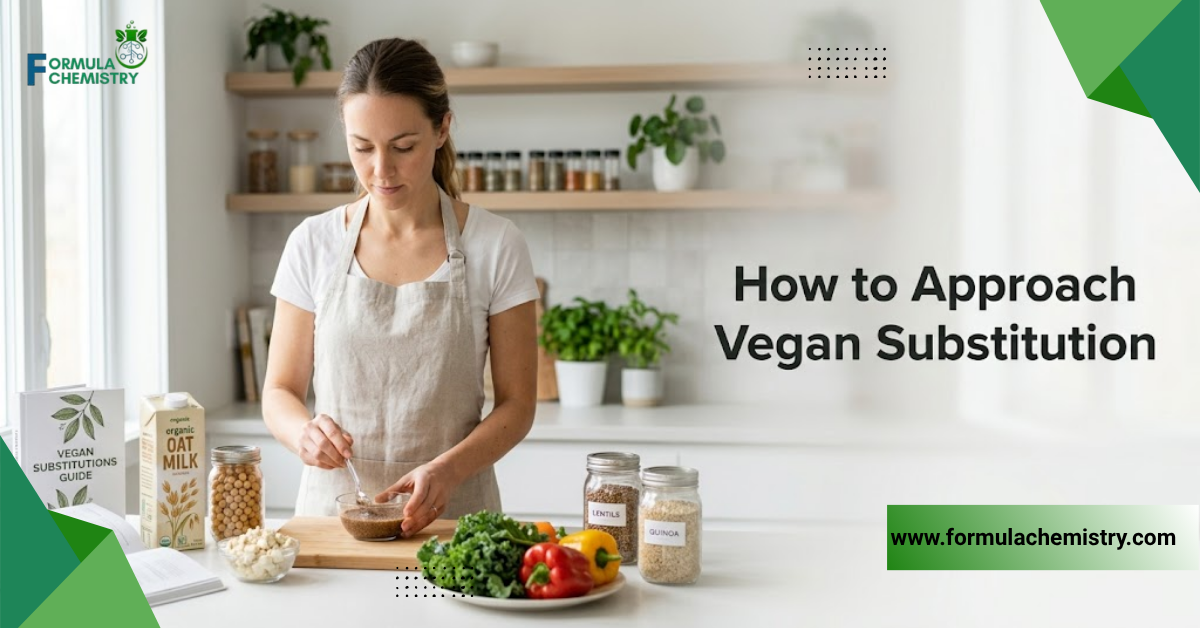
Rather than asking what replaces this exact animal ingredient, ask what effect you want from it. If you used an animal protein for conditioning, a plant protein or a different conditioning agent may deliver that effect more sustainably.
Some swaps genuinely are one-to-one, like olive squalane for shark squalane. Others are functional replacements, where a plant-based ingredient achieves the same goal by a different route, and both approaches are valid.
Expect to adjust as you substitute. Because vegan alternatives differ in properties, you often change the percentage used or tweak the surrounding formula to match the original performance, which is normal reformulation rather than a problem, and something we plan for at Formula Chemistry when converting a formula to vegan.
Do Vegan Formulas Perform as Well?
A common worry is that removing animal ingredients means weaker products, and the evidence says otherwise. Effectiveness comes from formulation quality, not from whether an ingredient is animal-derived.
Many vegan replacements are better studied and more consistent than what they replace. Fermented hyaluronic acid, plant squalane, and standardised botanical actives perform on par with, and often more reliably than, their animal-derived counterparts.
Vegan formulas also work with all the usual actives. Retinol, vitamin C, niacinamide, and acids are not animal-derived and sit comfortably in vegan products, so there is no loss of performance in the active department.
There can even be advantages. Plant-based formulas are often simpler and more transparent, and some avoid common animal-sourced irritants, though as always individual skin varies and sensitivities differ from person to person.
Verifying and Certifying a Vegan Product
Formulating vegan is only half the job, since you must be able to prove it. Verification and certification are what turn a vegan formula into a credible vegan claim.
Supplier Documentation
The foundation is knowing the source of every single ingredient. Because so many materials are ambiguous, you confirm with each supplier whether their glycerin, squalane, stearic acid, or other questionable ingredient is plant-derived.
Keeping this documentation matters for both formulation and claims. A vegan claim is only as reliable as the sourcing evidence behind it, so good records are part of responsible vegan formulating.
Third-Party Certification
For consumer trust, third-party certification carries far more weight than a self-declared label. Recognised vegan certifiers include the Vegan Society and V-Label, which verify that a formula contains no animal ingredients.
It is worth knowing which certification does what. Vegan certifications confirm no animal ingredients, while Leaping Bunny certifies cruelty-free status, and a brand wanting both claims pursues both certifications, since one does not imply the other.
Building Your Vegan Formulation
Start by auditing any existing formula against the animal ingredients to replace, then work through the hidden and ambiguous ones with your suppliers. This two-pass approach catches both the obvious and the concealed.
Substitute by effect rather than by rigid one-to-one matching, choosing plant-based, fermented, or synthetic alternatives that deliver what you want, and expect to adjust percentages as you go. Lean on the fact that vegan actives and modern plant alternatives perform every bit as well as what they replace.
Above all, verify and document your sourcing, and pursue recognised certification if you want a defensible claim.
Approach vegan cosmetic formulation as careful sourcing plus thoughtful substitution, confirm everything with suppliers, and you can build genuinely vegan products that match anything animal-derived on performance.
Frequently Asked Questions
What does vegan cosmetic formulation mean?
Vegan cosmetic formulation means creating products with no animal-derived ingredients, using plant-based, fermented, or synthetic materials instead. It replaces ingredients like beeswax, lanolin, carmine, collagen, and keratin. It is a specific, ingredient-level claim distinct from natural or cruelty-free.
What is the difference between vegan and cruelty-free?
Vegan means the product contains no animal-derived ingredients, while cruelty-free means it was not tested on animals. They are separate claims, so a product can be one without the other. For both, look for separate third-party certifications.
What are common animal ingredients to avoid?
The most common are beeswax, lanolin, carmine, collagen, elastin, keratin, honey, propolis, silk, shellac, and casein. Watch also for ambiguous-source ingredients like glycerin, stearic acid, and squalane. Derivatives such as isopropyl lanolate are also animal-derived.
What is a vegan substitute for beeswax?
Plant waxes such as candelilla and carnauba are the main vegan substitutes for beeswax. Because they are harder than beeswax, you generally use less and adjust the formula to match. They structure balms and creams effectively.
Is squalane vegan?
It depends on the source. Squalane can come from shark liver, sometimes sold as marine squalane, or from olives and sugarcane fermentation, which are vegan. The INCI name does not reveal the source, so always confirm it with the supplier.
Do vegan formulas work as well as animal-based ones?
Yes, effectiveness comes from formulation quality rather than ingredient origin. Fermented hyaluronic acid, plant squalane, and botanical actives often perform as well as or better than animal-derived materials. Vegan formulas also work with actives like retinol and vitamin C.
How do I know if an ingredient is plant or animal-derived?
Many ingredients such as glycerin, stearic acid, and squalane can be either, and the INCI name alone does not say. Confirm the source with your supplier through documentation. This sourcing verification is the core of vegan formulating.
How do I certify a product as vegan?
Verify the source of every ingredient with supplier documentation, then apply for third-party certification from a recognised body such as the Vegan Society or V-Label. Certification carries more credibility than a self-declared label. For cruelty-free status, pursue Leaping Bunny separately.
Key Takeaways
Vegan cosmetic formulation means building products with no animal-derived ingredients, replacing materials like beeswax, lanolin, carmine, collagen, and keratin with plant-based, fermented, or synthetic alternatives. It is a specific ingredient-level claim, distinct from natural and cruelty-free.
The real skill is spotting hidden and ambiguous ingredients, since glycerin, stearic acid, and squalane can be plant or animal-derived, and derivatives like isopropyl lanolate disguise their origin. Substitute by the effect you want rather than forcing one-to-one swaps, and expect to adjust percentages as you reformulate.
Vegan formulas match animal-based ones on performance, since effectiveness comes from formulation quality, not origin. Verify every ingredient’s source with suppliers, keep documentation, and pursue recognised third-party certification like the Vegan Society or V-Label to turn a vegan formula into a credible, defensible claim.