

Quick Answer
Ayurvedic skincare formulation draws on the ancient Indian tradition of using botanicals like turmeric, neem, sandalwood, and multani mitti, often matched to skin type through the framework of the three doshas.
Its signature preparation is ubtan, a powdered blend of herbs, flours, and clays mixed fresh with a liquid such as rose water, milk, or aloe before use.
Because traditional ubtans are dry, anhydrous powders, they generally need no preservative, though any water-based Ayurvedic formula must be preserved and tested like any modern cosmetic.
Introduction
Ayurvedic skincare is one of the oldest beauty traditions in the world, built on botanicals, rituals, and a deep attention to individual skin type. Formulating with it means blending that heritage with the discipline of modern cosmetic science.
Ayurvedic skincare formulation offers a remarkable toolkit. Turmeric, neem, sandalwood, saffron, and clays have been used for centuries, and they translate surprisingly well into contemporary formulas when handled with care.
I approach Ayurvedic formulation with respect for the tradition and the standards of modern practice. Honouring the botanicals and rituals while applying proper preservation, stability, and safety testing is what makes an Ayurvedic product both authentic and reliable.
This guide covers the principles behind Ayurvedic skincare, its key botanicals, the ubtan tradition, how to translate it into modern formulas, and how to keep it safe and stable.
| Ingredient | Function | Weight % | Amount (g) |
|---|
All amounts are by weight. Weigh every ingredient, including liquids, on a scale accurate to 0.01 g.
The Principles Behind Ayurvedic Skincare
Ayurveda is an ancient system of wellness from India, and its approach to skin is rooted in individualisation. Rather than one routine for everyone, it matches ingredients to a person’s nature and their skin’s needs.
The Doshas as a Skin-Type Framework
Central to Ayurveda are three doshas, Vata, Pitta, and Kapha, which in skincare work as a traditional way of describing skin types. Vata is associated with dry, delicate skin, Pitta with sensitive, reactive skin, and Kapha with oily, richer skin.
This framework guides ingredient choice in the tradition. A formulator working in the Ayurvedic style selects cooling, soothing botanicals for Pitta-type skin, nourishing ones for Vata-type dryness, and clarifying ones for Kapha-type oiliness.
Seasonality and Freshness
Ayurvedic tradition also adjusts formulas to the season and prizes freshness. Ingredients and their binding liquids traditionally change with the weather, richer in winter and lighter or more cooling in summer.
This emphasis on freshness shapes how the products are made. Many are prepared in small batches close to use, which is part of why the powdered, mix-fresh format became so central to the tradition.
The Key Ayurvedic Botanicals
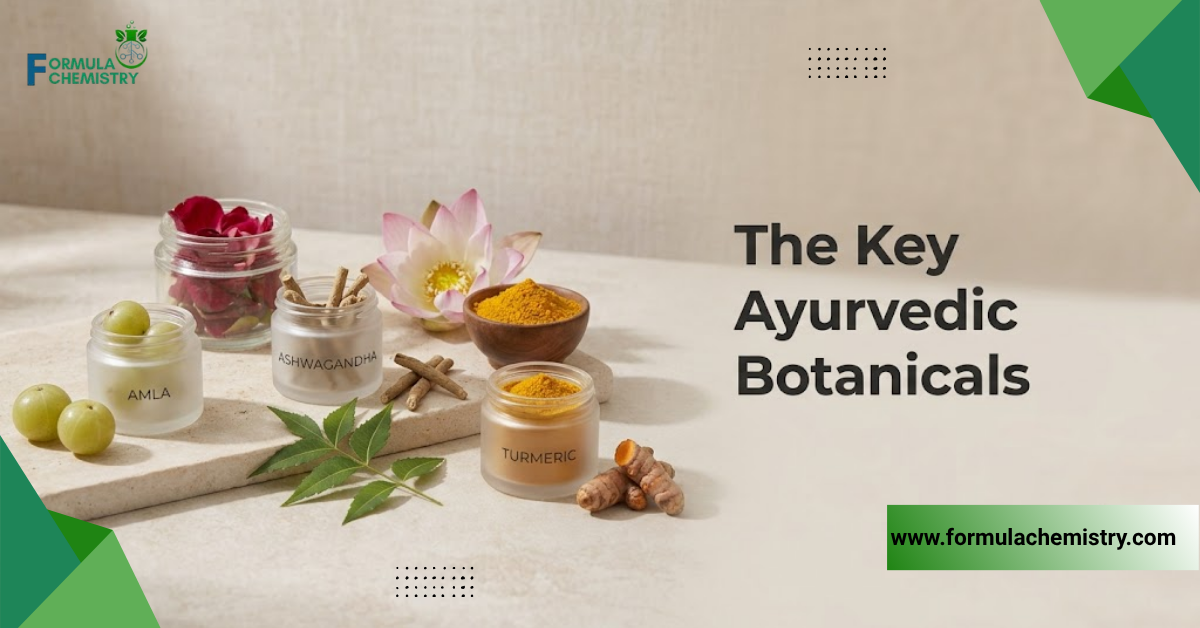
A defined palette of botanicals forms the heart of any Ayurvedic skincare formulation. Each has a traditional role and a place in modern formulas.
Turmeric
Turmeric, known as haldi, is perhaps the most iconic Ayurvedic skincare ingredient. It is traditionally valued for supporting a brighter, more even-looking complexion, and it appears in countless face packs and ubtans.
Its one practical challenge is staining. Turmeric can leave a yellow tint, so formulators often use it carefully or choose forms less prone to staining, balancing tradition with practicality.
Neem
Neem is a classic botanical traditionally chosen for oily and blemish-prone skin. It has long been used in cleansing preparations where a clarifying, purifying character is wanted.
In modern terms, neem suits formulas aimed at the appearance of clearer, fresher skin. It pairs naturally with clays and other clarifying ingredients.
Sandalwood
Sandalwood, or chandan, is prized for its cooling, soothing quality and its fragrance. It is traditionally used to calm the look of irritation and to refine the appearance of skin texture.
Its soothing reputation makes it a natural fit for sensitive, Pitta-type formulas. It works in both powder and oil forms within Ayurvedic preparations.
Multani Mitti and Clays
Multani mitti, known in English as Fuller’s earth, is a mineral clay central to Ayurvedic skincare. Sourced traditionally from regions like Rajasthan, it absorbs excess oil and gently exfoliates, making it a cornerstone of cleansing packs.
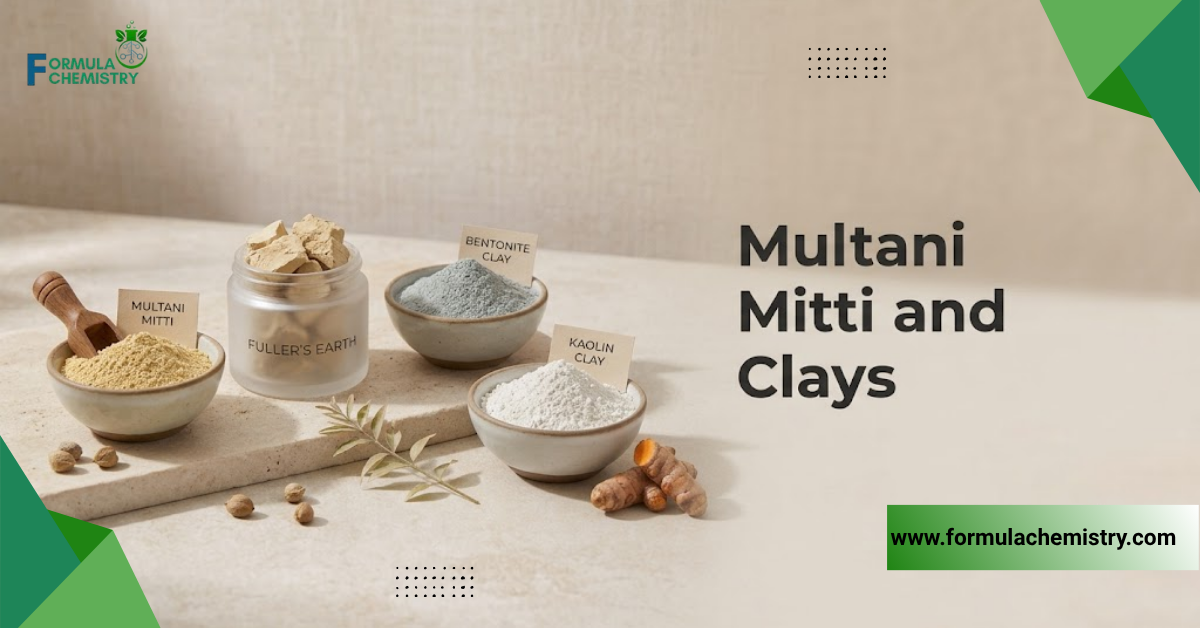
Because it is drying, tradition advises balancing it for dry skin. Mixing multani mitti with milk, yogurt, or a nourishing liquid rather than water softens its effect for Vata-type skin.
The Wider Palette
Many more botanicals fill out the tradition. Saffron, chickpea or gram flour, rice, masoor dal, orange peel, rose petals and rose water, aloe vera, and the celebrated kumkumadi facial oil all appear across Ayurvedic formulas.
Each brings its own traditional role, from the gentle exfoliation of flours to the hydration of aloe and rose water. Together they give the formulator a rich, flexible palette to build from.
The Ubtan Tradition
No discussion of Ayurvedic skincare formulation is complete without ubtan, its signature preparation. Understanding ubtan unlocks much of the tradition.
What an Ubtan Is
An ubtan is a powdered blend of herbs, flours, pulses, and clays, traditionally sun-dried and hand-pounded into a fine powder. It functions all at once as a cleanser, an exfoliant, and a mask.
There is no single ubtan recipe. Its ingredients and proportions traditionally vary with skin type, season, and the concern being addressed, which is exactly what makes it such a flexible, personalised format.
Mixing Fresh Before Use
The defining ritual of ubtan is mixing the powder fresh with a liquid just before application. Water suits oily skin, while milk, yogurt, rose water, or aloe add nourishment and cooling for drier or sensitive skin.
This mix-fresh approach is both traditional and practical. It keeps the botanicals in their most stable, powdered state until the moment of use, which has real formulation advantages.
Why Ubtans Need No Preservative
Here is where tradition meets modern formulation science neatly. Because a traditional ubtan is a dry, anhydrous powder containing no water, it does not support microbial growth and therefore does not require a preservative.
This is the same principle behind any anhydrous product. The powder stays stable and preservative-free in its jar, and preservation only becomes a question if water or a water-based liquid is built into the formula rather than added at the moment of use.
Translating Tradition Into Modern Formulas
The art of modern Ayurvedic formulation is honouring the tradition while meeting today’s standards. This means keeping the botanicals and rituals authentic while applying proper cosmetic science.
Keeping Anhydrous Formats Simple
The most faithful modern Ayurvedic products are often powdered ubtans and cleansing grains, sold dry for the user to mix fresh. These stay true to tradition and need no preservative, making them elegant and stable.
Anhydrous facial oils, such as the kumkumadi-style blends, are another natural fit. Built from oils and botanical extracts, they carry the tradition into a stable, modern format that simply needs an antioxidant to protect the oils.
Formulating Water-Based Ayurvedic Products
When tradition is translated into creams, cleansers, or lotions that contain water, modern rules apply fully. These formulas need a proper preservative system, pH balancing, and stability testing exactly like any water-based cosmetic.
This is where many home Ayurvedic preparations fall short, and where a formulator adds real value. A turmeric-and-aloe cream is a lovely idea, but it must be preserved and tested to be safe, which is a standard we hold firmly at Formula Chemistry when modernising a traditional formula.
Respecting the Botanicals
Sourcing quality matters as much as the recipe. Fresh, genuine botanicals, unbleached multani mitti, organically grown turmeric, and undyed rose petals give both authenticity and performance, while poor-quality herbs undermine a formula.
Standardising and testing these natural ingredients is part of modern practice. Assessing microbial load, stability, and irritancy, as formulation studies of herbal face packs do, turns a traditional blend into a reliable product.
Formulating for Each Skin Type
The Ayurvedic tradition of matching ingredients to the doshas translates cleanly into skin-type formulation. Building for each type is where the dosha framework becomes practical.
For Dry, Vata-Type Skin
Dry skin in the Ayurvedic view needs nourishment and gentle handling. Formulas lean on nourishing binders like milk, yogurt, and honey, richer oils, and soothing botanicals, while going easy on drying clays like multani mitti.
An ubtan for dry skin might pair a little multani mitti with gram flour, sandalwood, and a milk or malai base rather than water. The aim is to cleanse and brighten the look of skin without stripping it.
For Sensitive, Pitta-Type Skin
Sensitive, easily reddened skin calls for cooling and calming ingredients. Sandalwood, rose water, and aloe are the classic choices, chosen to soothe the appearance of irritation rather than stimulate it.
Formulas for this type stay gentle and simple. Avoiding harsh exfoliation and potent, potentially irritating botanicals keeps a Pitta-type formula comfortable, which is the traditional instinct for reactive skin.
For Oily, Kapha-Type Skin
Oily, richer skin suits clarifying, oil-absorbing ingredients. Multani mitti, neem, and clarifying flours come into their own here, mixed with water rather than nourishing liquids to keep the formula light.
This is where the classic clay-and-neem ubtan shines. It absorbs excess oil and refines the look of the skin, which is exactly what oily, Kapha-type skin traditionally calls for.
A Modern Ubtan Formula Framework
Building a modern ubtan is a matter of choosing from a few ingredient roles and blending them as a stable, anhydrous powder. This framework keeps it authentic yet reliable.
The base is usually a flour or pulse, such as gram flour, rice, or oats, providing gentle exfoliation and body, a structure we often start from at Formula Chemistry when modernising an ubtan. To this you add clays like multani mitti for oil absorption, and active botanicals like turmeric, sandalwood, or neem for their traditional roles.
Finishing touches complete the blend, from rose petal powder for fragrance to saffron for a traditional flourish.
Kept as a dry powder in an airtight jar, this stays stable and preservative-free, ready for the user to mix fresh with the liquid that suits their skin, which is Ayurvedic skincare formulation at its most practical.
Keeping Ayurvedic Formulas Safe and Effective
Blending old and new means holding the tradition to modern safety standards. A few principles keep Ayurvedic formulas both authentic and sound.
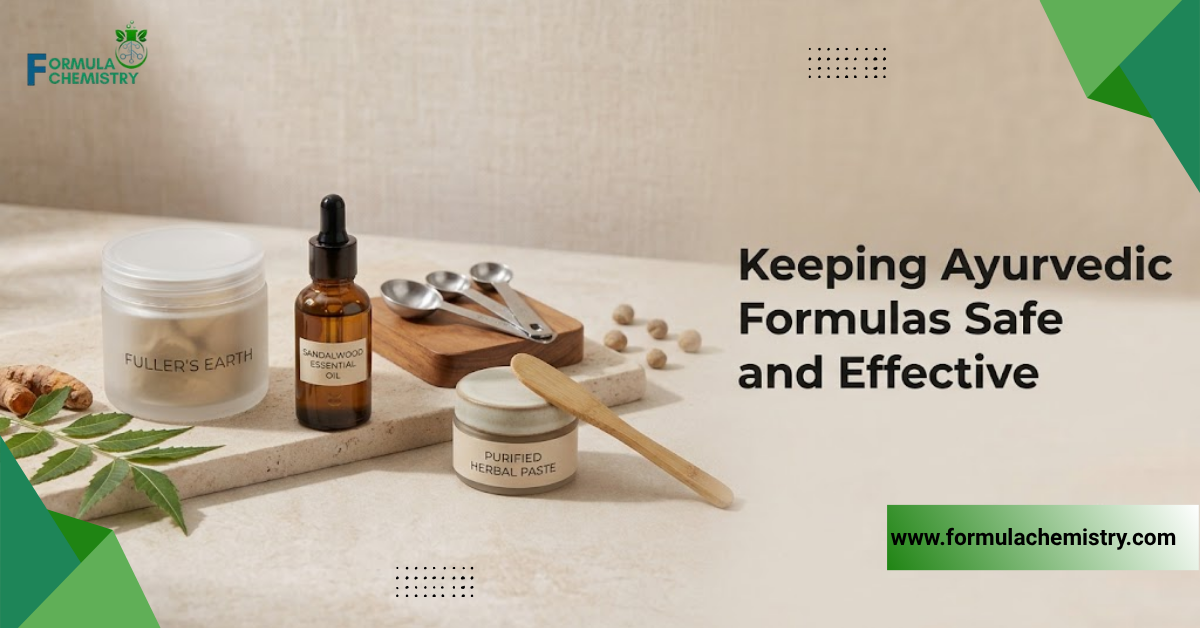
Preserve anything containing water, and keep genuinely anhydrous powders and oils preservative-free with an antioxidant where needed. This single distinction handles most of the preservation question.
Patch testing matters especially with potent botanicals. Turmeric, neem, and essential-oil-bearing ingredients can irritate some skin, so testing before regular use is wise, and keeping formulas gentle respects sensitive skin.
Finally, keep claims honest and cosmetic. Ayurvedic botanicals can support the appearance of glowing, even, refreshed skin, and they are best described that way rather than with medical promises, since skincare formulation is about the look and feel of skin. For any genuine skin condition, a professional is the right port of call.
Frequently Asked Questions
What is Ayurvedic skincare formulation?
Ayurvedic skincare formulation is the practice of creating products using the botanicals and principles of Ayurveda, the ancient Indian wellness tradition.
It features ingredients like turmeric, neem, sandalwood, and multani mitti, often matched to skin type through the doshas. Its signature preparation is the powdered ubtan.
What is an ubtan?
An ubtan is a traditional Ayurvedic powder blend of herbs, flours, pulses, and clays, used as a cleanser, exfoliant, and mask. It is mixed fresh with a liquid such as water, milk, or rose water before application. There is no single recipe, as it varies with skin type and season.
Do Ayurvedic products need preservatives?
Dry, anhydrous ubtans and powders do not need preservatives, because without water they do not support microbial growth. However, any water-based Ayurvedic formula, such as a cream or lotion, needs a proper preservative system just like any modern cosmetic. The distinction is whether water is present.
What are the main Ayurvedic skincare ingredients?
Key ingredients include turmeric for brightness, neem for oily and blemish-prone skin, sandalwood for soothing, and multani mitti clay for cleansing and oil absorption. Saffron, gram flour, rose water, aloe vera, and kumkumadi oil are also widely used. Each has a traditional role.
What are doshas in skincare?
Doshas are the three constitutional types in Ayurveda: Vata, Pitta, and Kapha, used in skincare as a traditional framework for skin types. Vata relates to dry skin, Pitta to sensitive skin, and Kapha to oily skin. Ingredients are chosen to suit each type.
How do I make an Ayurvedic face pack at home?
Blend powdered botanicals such as multani mitti, turmeric, sandalwood, and neem, then mix a portion fresh with water for oily skin or milk for dry skin into a paste. Apply for around ten to fifteen minutes, then rinse. Patch test first and moisturise after.
Is turmeric good for skincare formulation?
Turmeric is a classic Ayurvedic ingredient traditionally valued for supporting a brighter, more even-looking complexion. Its main formulation challenge is a tendency to stain, so it is used carefully. It appears in most traditional ubtans and face packs.
Can Ayurvedic ingredients be used in modern cosmetics?
Yes, Ayurvedic botanicals translate well into modern formulas, either as anhydrous powders and oils that stay preservative-free, or in water-based creams that are properly preserved and tested. The key is honouring the tradition while applying modern safety and stability standards.
Key Takeaways
Ayurvedic skincare formulation combines a rich tradition of botanicals, turmeric, neem, sandalwood, multani mitti, and more, with the framework of the doshas as a way of matching ingredients to skin type. Its signature format is ubtan, a powdered blend mixed fresh with a liquid before use.
The tradition aligns neatly with modern formulation science in one key way. Because traditional ubtans are dry and anhydrous, they need no preservative, while any water-based Ayurvedic product must be preserved, pH-balanced, and stability-tested like any modern cosmetic.
The best Ayurvedic formulation honours the heritage while meeting today’s standards. Source genuine botanicals, keep anhydrous formats simple, preserve anything with water, patch test potent herbs, and keep claims cosmetic and honest, so a centuries-old tradition becomes a safe, effective, modern product.