

Quick Answer
Skincare Formulation for sensitive skin is built on two principles: keep it simple and leave out the triggers. The single most important step is making products fragrance-free, since fragrance and essential oils are the leading cause of skin reactions, followed by avoiding alcohol, sulfates, and high-strength actives.
The best sensitive-skin formulas pair calming ingredients like centella asiatica, panthenol, allantoin, and colloidal oatmeal with barrier lipids such as ceramides, because a stronger barrier is less likely to overreact in the first place.
Introduction
Sensitive skin reacts easily, stinging, reddening, or flaring in response to products that other skin types tolerate without a thought. Formulating for it is as much about restraint as about active ingredients.
The guiding idea of formulation for sensitive skin is gentleness. A sensitive-skin formula succeeds by soothing the skin, supporting its barrier, and above all avoiding the triggers that set off a reaction.
I formulate for reactive skin often, and the biggest lesson is that less is more. A short, clean ingredient list of well-tolerated materials beats a complex formula whenever skin is easily provoked.
This guide covers what sensitive skin needs, the triggers to leave out, the calming and barrier ingredients to build with, the principle of minimal formulation, and how to keep products gentle and safe.
Understanding Sensitive Skin
Sensitive skin is a reactive skin type that responds to irritants more readily than normal skin. It can sting, burn, itch, flush, or break out in response to products, environment, or ingredients that would not bother most people.
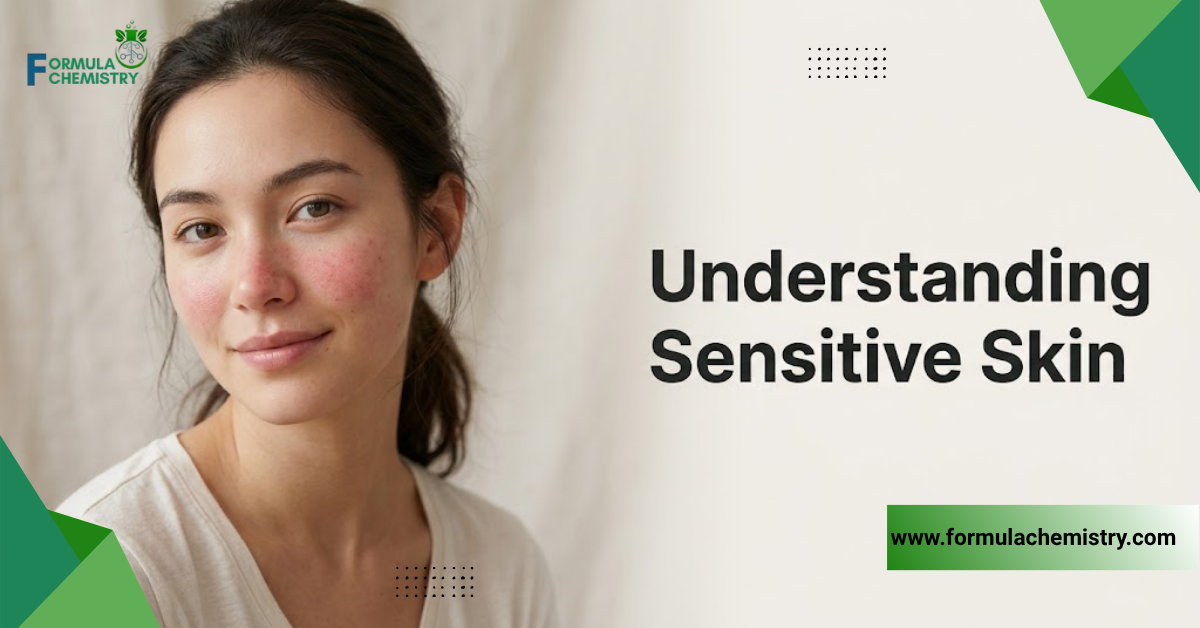
Often at the root is a compromised barrier. When the skin barrier is weak, it lets irritants in and water out, creating a loop in which the skin stays reactive and easily provoked.
This points to the whole strategy. Calming the skin helps in the moment, but strengthening the barrier addresses the underlying reason the skin overreacts, so good sensitive-skin formulation does both.
It is worth distinguishing sensitivity from specific conditions. Sensitive skin is a reactive type, whereas conditions like eczema and rosacea are distinct concerns with their own needs, though the gentle principles here support all of them.
The Triggers to Leave Out
In formulation for sensitive skin, what you leave out matters as much as what you add. A defined set of common triggers causes most reactions, and avoiding them is the foundation of gentle formulation.
Fragrance Is the Biggest Trigger
Fragrance is the single most important thing to remove, whether synthetic parfum or natural essential oils. It is the leading cause of cosmetic contact dermatitis, so a truly fragrance-free formula removes the biggest variable at once.
An important detail trips people up here. Unscented is not the same as fragrance-free, since an unscented product can still contain a masking fragrance, so the words to look for and to formulate to are fragrance-free.
Alcohol, Sulfates, and Dyes
Several other common ingredients irritate reactive skin. Drying alcohols such as denatured or SD alcohol, harsh sulfate surfactants like sodium lauryl sulfate, and synthetic dyes are all best left out of sensitive-skin formulas.
These strip or provoke the skin in different ways. Alcohols and sulfates compromise the barrier, while dyes can cause allergic reactions, so a gentle formula avoids all three.
High-Strength Actives
Potent actives at high concentrations are a common trigger. Strong retinol, high-percentage glycolic or lactic acid, and concentrated benzoyl peroxide can overwhelm sensitive skin, especially without gradual acclimation.
This does not ban actives entirely. It means using them gently, at lower strengths and with careful introduction, or choosing milder alternatives, rather than the high concentrations reactive skin cannot handle.
Long Botanical Lists
Counterintuitively, a formula packed with botanical extracts can be a problem. A long ingredient list that reads like a garden multiplies the number of potential allergens, and natural does not mean non-irritating.
Simplicity is safer. Fewer, well-chosen ingredients give sensitive skin fewer chances to react, which leads directly to the principle of minimal formulation.
The Calming Ingredients to Build With
A well-regarded set of soothing ingredients forms the heart of formulation for sensitive skin. Each calms the look and feel of irritation gently.
Centella Asiatica
Centella asiatica, often called cica, is one of the most valued soothing botanicals. Its bioactive compounds, including madecassoside, help calm the appearance of redness and irritation while supporting the barrier.
It suits reactive and sensitive skin especially well. One caution is that people with Compositae plant allergies may react to it, so patch testing remains wise even with a gentle ingredient.
Panthenol and Allantoin
Panthenol, or pro-vitamin B5, soothes and supports skin repair, reducing the feel of discomfort. Allantoin is another gentle soother that calms the look of irritation and is exceptionally well tolerated.
These two pair beautifully and carry almost no irritation risk. Combining them boosts their calming, comforting effect, which is why they appear together in so many sensitive formulas.
Colloidal Oatmeal
Colloidal oatmeal is a finely milled oat preparation rich in beta-glucans and avenanthramides. It soothes irritation, relieves the feel of dryness, and helps reinforce the skin’s moisture barrier.
Well established and gentle, it is recognised as a skin-protectant ingredient. It suits sensitive skin across the board and rarely causes problems of its own.
Other Gentle Soothers
The palette extends further. Bisabolol, derived from chamomile, aloe vera, and licorice root all help quiet the look of redness and irritation, though those from botanical sources warrant the usual patch test.
Chosen carefully, these round out a soothing formula. The key is using a few well-tolerated soothers rather than stacking many botanical extracts.
The Barrier Ingredients That Address the Root
Soothing calms symptoms, but barrier repair tackles the reason sensitive skin overreacts. Building the barrier is what makes reactive skin more resilient over time.
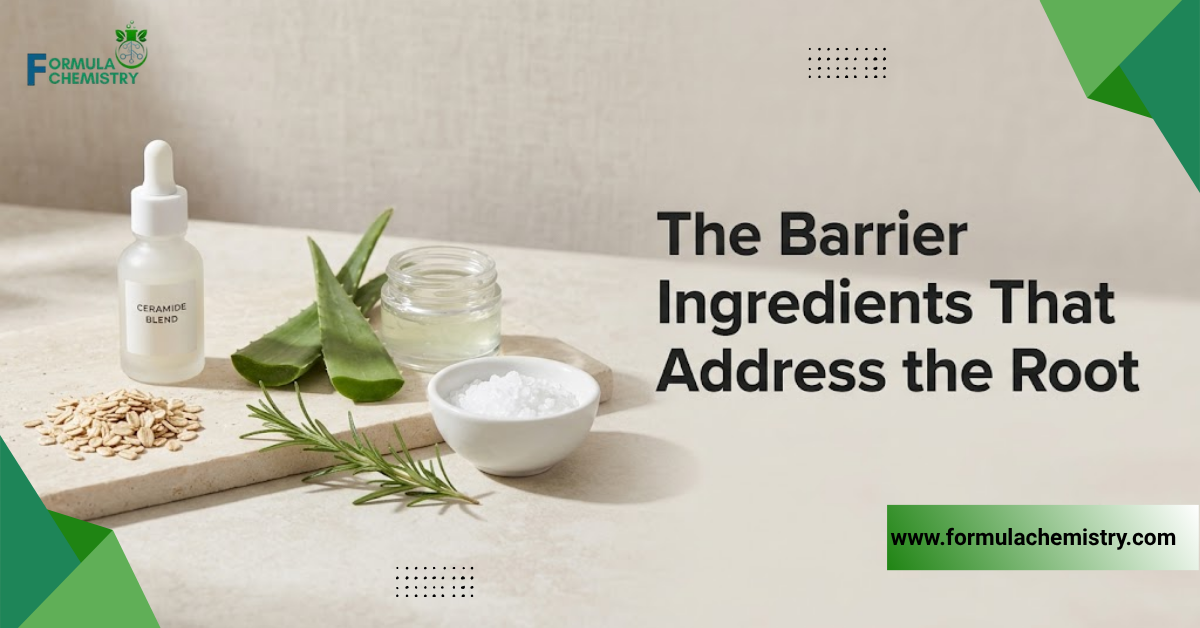
Ceramides are the priority, ideally formulated with cholesterol and free fatty acids to mimic the skin’s natural lipid balance. This combination rebuilds the barrier that, when weak, lets irritants in and keeps sensitive skin reactive.
Niacinamide supports the barrier too and is generally well tolerated, helping strengthen the skin over time. Gentle humectants like hyaluronic acid and glycerin, and soft emollients like squalane, hydrate without irritation.
The logic is the same one dry skin uses, and for good reason. A stronger, better-hydrated barrier is simply less prone to overreacting, so pairing barrier lipids with soothers is the most effective sensitive-skin strategy, an approach we lean on at Formula Chemistry for reactive skin.
The Principle of Minimal Formulation
More than any single ingredient, the mindset that serves formulation for sensitive skin best is simplicity. Every ingredient in a formula is a potential trigger, so fewer ingredients mean fewer risks.
A short, focused ingredient list is a feature, not a limitation, for sensitive skin. Some of the best sensitive-skin products contain only a handful of ingredients, each chosen to soothe, hydrate, or support the barrier.
This shapes how you formulate. Rather than adding every beneficial ingredient you can, you choose the few that matter most and leave everything else out, which keeps the formula both effective and low-risk.
It also makes reactions easier to trace. When a simple formula is tolerated, you know why, and if a reaction does occur, a short list makes the culprit far easier to identify.
Simple Formulas for Sensitive Skin
A few gentle formulas cover the sensitive-skin essentials, each built on a short list of well-tolerated ingredients. Treat these as frameworks to adapt and patch test.
A Gentle Cleanser
A mild cleanser for sensitive skin avoids sulfates entirely, using gentle surfactants or a simple cream or oil cleanser instead. Kept fragrance-free and short, it removes the day without stripping or provoking the skin.
The goal is to cleanse while leaving the barrier intact. A cleanser that leaves skin feeling tight is too harsh for sensitive skin, so gentleness is the measure of success.
A Soothing Barrier Serum or Cream
A calming treatment can pair a soother like centella asiatica or panthenol with barrier support from niacinamide and hyaluronic acid, in a simple fragrance-free base. This addresses both the symptoms and the underlying barrier.
Kept minimal, it delivers real benefit with little risk, which is how we approach reactive skin at Formula Chemistry. A short formula of a soother, a humectant, and a barrier ingredient is often all sensitive skin needs.
A Fragrance-Free Moisturiser
A gentle moisturiser combines barrier lipids like ceramides with soothing allantoin or colloidal oatmeal and a humectant, in a light, fragrance-free cream or gel-cream. It hydrates, soothes, and strengthens in one step.
This is the anchor of a sensitive-skin routine. A well-built barrier moisturiser, used consistently, does more than any active to keep reactive skin calm and comfortable.
Building a Gentle Routine
A sensitive-skin routine is deliberately simple, focused on cleansing gently, soothing, and supporting the barrier. Restraint is the whole point.
- Cleanser: a mild, sulfate-free, fragrance-free cleanser that does not leave skin tight
- Soothing serum: a simple formula with centella, panthenol, or allantoin
- Moisturiser: a fragrance-free barrier cream with ceramides and a soother
- Sunscreen: a gentle broad-spectrum sunscreen; mineral filters often suit reactive skin
- Everything fragrance-free: across every product, with minimal ingredient lists
This kind of routine keeps reactive skin calm while strengthening it over time. Adding fewer, gentler products serves sensitive skin far better than a crowded regimen, which is the essence of good formulation for sensitive skin.
Keeping Sensitive-Skin Formulas Safe
Beyond ingredient choice, a few habits keep sensitive-skin products genuinely gentle. These protect both the formula and the person using it.
Preserve water-based products properly, choosing well-tolerated preservatives, since an unpreserved formula is a safety risk and contamination can itself irritate skin. Phenoxyethanol is generally well tolerated, while formaldehyde-releasing preservatives are best avoided.
Patch testing is essential with sensitive skin, even for gentle formulas. Testing on the inner forearm over several days, and introducing one product at a time, makes any reaction easy to catch and trace before it affects the face.
Finally, keep claims and expectations realistic and cosmetic. Gentle formulation supports calmer, more comfortable, less reactive-looking skin, and for persistent or severe reactions, or a suspected skin condition, a dermatologist is the right next step rather than more products.
Frequently Asked Questions
What is the most important rule for sensitive skin formulation?
The most important rule is to make products fragrance-free, since fragrance and essential oils are the leading cause of skin reactions. Beyond that, keep the ingredient list short and avoid alcohol, sulfates, and high-strength actives. Simplicity and avoiding triggers are the foundation.
What ingredients should I avoid for sensitive skin?
Avoid fragrance and essential oils, drying alcohols, sulfates, synthetic dyes, and high concentrations of actives like retinol and exfoliating acids. Long lists of botanical extracts also raise the risk of reaction. Fewer, gentler ingredients are safer.
Is fragrance-free the same as unscented?
No, and this is an important distinction. Unscented products can still contain a masking fragrance to hide other ingredient smells, while fragrance-free means no fragrance is added. For sensitive skin, always choose or formulate fragrance-free.
What are the best soothing ingredients for sensitive skin?
Well-tolerated soothers include centella asiatica, panthenol, allantoin, colloidal oatmeal, and bisabolol. These calm the look and feel of irritation gently. Pairing them with barrier lipids like ceramides addresses the underlying sensitivity.
Why does my sensitive skin react even to gentle products?
Sensitive skin often has a weakened barrier that lets irritants in and moisture out, keeping it reactive. Even gentle products can trigger a compromised barrier. Strengthening the barrier with ceramides and soothers, and simplifying your routine, usually helps over time.
How many ingredients should a sensitive-skin formula have?
Fewer is better, since every ingredient is a potential trigger. Many excellent sensitive-skin products contain only a handful of well-chosen ingredients. A short list reduces risk and makes any reaction easier to trace.
Can I use actives like retinol on sensitive skin?
Yes, but gently. Use lower strengths, introduce them slowly with acclimation, or choose milder alternatives, rather than high concentrations. Pair them with soothing and barrier ingredients, and always patch test first.
How do I patch test a new product?
Apply a small amount to a discreet area such as the inner forearm once or twice daily for three to five days, watching for any reaction. Introduce only one new product at a time. This makes it easy to identify a trigger before applying to the face.
Key Takeaways
Formulation for sensitive skin rests on simplicity and avoiding triggers. Making products fragrance-free is the single most important step, since fragrance and essential oils are the leading cause of reactions, followed by leaving out alcohol, sulfates, dyes, and high-strength actives.
The best formulas pair calming ingredients, centella asiatica, panthenol, allantoin, and colloidal oatmeal, with barrier lipids like ceramides, cholesterol, and fatty acids. Soothing calms the symptoms while barrier repair addresses the reason sensitive skin overreacts in the first place.
Above all, keep formulas minimal, since fewer ingredients mean fewer risks and easier troubleshooting. Preserve water-based products gently, patch test everything, and keep claims