
Introduction
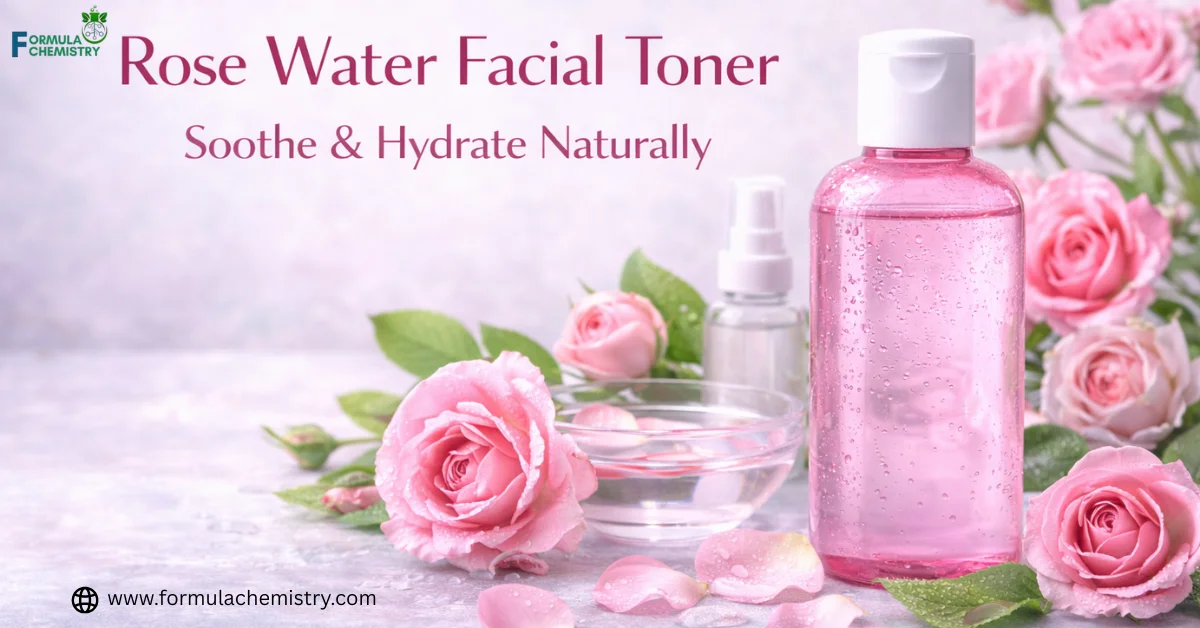
Rose hydrosol, often referred to as “rose water,” is the aromatic water remaining after the steam distillation of Rosa damascena or Rosa centifolia petals during essential oil production.
Unlike simple water mixed with fragrance, true rose hydrosol contains the hydrophilic (water-soluble) components of the plant material and micro-amounts of essential oil.
This makes it a potent, biocompatible ingredient for skincare formulations and daily toning routines. At FormulaChemistry, we focus on the science of botanical extracts to help formulators understand how these “floral waters” interact with the skin barrier.
Quick Facts
- What it is: The co-product of rose essential oil distillation, containing water-soluble plant actives.
- Who it’s for: Suitable for all skin types, especially dry, sensitive, or mature skin.
- How to use: As a facial mist, a water-phase replacement in emulsions, or a clay mask activator.
- Typical usage range: 1% to 100%, depending on the application.
- pH/Solubility: Generally has a pH of 4.0 to 6.0; it is fully water-soluble.
- Compatibility: Works well with humectants like glycerin and hyaluronic acid.
- Common Mistake: Confusing it with “rose-scented water,” which is often just water, alcohol, and synthetic perfume.
- Safety Note: Always ensure the product contains a broad-spectrum preservative if it is not being used immediately after opening.
The Composition of Distilled Rose Water
The chemical profile of rose hydrosol is distinct from that of rose essential oil. While the oil is rich in citronellol and geraniol, the hydrosol contains higher concentrations of phenethyl alcohol, which provides its characteristic scent and mild antiseptic properties.
This molecular makeup allows it to hydrate the stratum corneum without the intensity or possible irritation of undiluted essential oils.
FormulaChemistry provides practical formulation education and safety-forward direction to ensure that natural ingredients like hydrosols are used competently and responsibly.
What Are the Main Benefits of Rose Hydrosol for Skin?
Hydration and pH Balancing
One of the most important roles of rose hydrosol is its ability to restore the skin’s acidic mantle. The natural pH of skin sits around 4.7 to 5.7. Many cleansers are alkaline, which has the potential to disrupt this barrier. Applying rose hydrosol helps bring the skin back to its optimal pH level quickly.
As a humectant-supporting ingredient, it provides a “wet” base for hyaluronic acid or glycerin to grab onto. When applied to damp skin, it helps pull moisture into the upper layers of the epidermis, resulting in a plumper, more radiant appearance.
Soothing Anti-Inflammatory Properties
Rose hydrosol contains tannins and polyphenols that provide astringent and anti-inflammatory effects. This makes it a great option for reducing the appearance of redness and soothing heat-related irritation, such as light sunburn or flushing.
Because it is gentler than many other botanical extracts, it is frequently used in formulations created for rosacea-prone or hypersensitive skin.
It provides a refreshing feeling that physically lowers the skin’s surface temperature while chemically calming the inflammatory response.
| Feature | Rose Hydrosol | Rose Essential Oil |
| Concentration | Dilute/Water-based | Highly Concentrated/Oil-based |
| Primary Use | Toner, Water Phase | Active Treatment, Fragrance |
| Usage Rate | Up to 100% | 0.1% to 1% |
| pH Note | 4.0 – 6.0 | N/A (Anhydrous) |
| Skin Feel | Refreshing, Light | Rich, Potent |
Enhancing Formulations with Rose Distillates
Incorporating Hydrosols into Emulsions
In professional cosmetic science, rose hydrosol is often used to replace a portion of the distilled water in the water phase (cool-down or heated phase) of creams and lotions. This adds a natural, subtle fragrance without the need for synthetic “parfum.”
When formulating with rose hydrosol, it is vital to account for its natural pH. Since it is slightly acidic, it may impact the stability of certain thickeners like Carbomer, which require a higher pH to bloom. Always test the final pH of your emulsion to ensure it stays within the 5.0 to 5.5 range for skin compatibility.
Synergistic Ingredients for Glowing Skin
To maximize the “glow” factor, rose hydrosol should be paired with specific actives. Combining it with Niacinamide (Vitamin B3) can help improve skin texture and color, while pairing it with Aloe Vera juice improves its soothing capabilities.
- For Dry Skin: Mix rose hydrosol with 2% Glycerin and 1% Panthenol.
- For Oily Skin: Combine with Witch Hazel (alcohol-free) to improve pores.
- For Mature Skin: Use as a base for Vitamin C (Sodium Ascorbyl Phosphate) serums.
Common Problems and Fixes
- Problem: The hydrosol smells “sour” or “vinegary.”
- Fix: This indicates microbial decay or oxidation. Who should avoid: Anyone should avoid using a hydrosol that has changed scent. Always discard and use a fresh, preserved batch.
- Problem: Cloudiness or “blooms” appearing in the liquid.
- Fix: This is likely mold or yeast growth. Ensure you are using a broad-spectrum preservative like Geogard ECT or Potassium Sorbate/Sodium Benzoate at the correct dosage.
- Problem: Skin feels tight after use.
- Fix: Hydrosols are water-based. Follow immediately with a facial oil or moisturizer to “lock in” the hydration.
Safety and Best Practices for Botanical Waters
Preservation and Storage Standards
Because rose hydrosol is 100% water-based and contains organic plant matter, it is a “utopia” for microbial growth. Many “natural” hydrosols sold on the market are unpreserved, meaning they have a very short shelf life (often only weeks if not refrigerated).
Formula Chemistry recommends that any hydrosol used in a commercial or long-term DIY product be treated with a preservative system. Even if the manufacturer claims it is “self-preserving” due to the distillation process, the moment the bottle is opened and exposed to air, the risk of contamination increases.
Key warning: Never add unpreserved hydrosol to a lotion without adjusting your preservative load to account for the extra organic material.
Quality Sourcing and Identification
To ensure you are getting a high-quality floral elixir, check the INCI (International Nomenclature of Cosmetic Ingredients) name. It should ideally list Rosa damascena Flower Water. If you see “Aqua” followed by “Fragrance” or “Geraniol,” you are likely looking at a reconstituted product rather than a true steam-distilled hydrosol.
True hydrosols have a complex, earthy, and slightly herbaceous rose scent, rather than a “candy-like” sweet smell. Higher quality distillates are often produced in copper stills, which can help remove certain sulfurous notes from the plant material, resulting in a cleaner aroma.
Usage ranges for rose hydrosol are flexible; however, for those with extremely reactive skin, a patch test is always recommended.
While rare, some individuals may be sensitive to the natural terpene components found in the rose petals. At FormulaChemistry, our editorial team emphasizes that natural does not always mean non-irritating, so start with a small area before full-face application.
FAQs about Rose Hydrosol: Refreshing Floral Elixir for Hydrated, Glowing Skin
Can I use rose hydrosol every day?
Yes, rose hydrosol is gentle enough for daily use. It can be used morning and night as a toner, or throughout the day as a refreshing mist to hydrate the skin.
Is rose hydrosol the same as rose water?
Often, the terms are used interchangeably, but “rose water” can sometimes mean water infused with rose essence or oils. “Rose hydrosol” specifically refers to the product of steam distillation.
Does rose hydrosol need to be refrigerated?
If it does not contain a preservative, refrigeration is mandatory to slow microbial growth. If it is properly preserved, it can be stored in a cool, dark cupboard.
Can I use it on top of makeup?
Absolutely. It acts as an excellent setting spray or a midday refresher to prevent makeup from looking “cakey” or dry.
Is it safe for acne-prone skin?
Yes, it is non-comedogenic and has mild antiseptic properties that can help soothe the inflammation associated with breakouts without blocking pores.
What is the shelf life of a typical rose hydrosol?
Unpreserved hydrosols may only last 3–6 months in the fridge. Properly preserved professional-grade hydrosols typically have a shelf life of 12–24 months.
Can it be used on the hair?
Yes, it is a popular hair mist for adding light hydration and a natural scent to the hair, and it can help balance the pH of the scalp after shampooing.
Who should avoid rose hydrosol?
Who should avoid:
Those with a known allergy to the Rosaceae family should avoid this ingredient. Always perform a patch test if you have a history of botanical sensitivities.
Would you wish me to create a sample formulation for a Rose and Hyaluronic Acid Hydrating Toner using these guidelines?