

Introduction
A stick deodorant fails when the formulator treats odor control like a perfume problem. A do it yourself deodorant needs absorbency, odor binding, skin comfort, controlled glide, and a wax system that does not collapse in warm storage.
This formula gives you an aluminium free stick deodorant with zinc ricinoleate, magnesium hydroxide, triethyl citrate, and a structured oil wax base. You will learn how the actives work, how to balance wax ratios, how to reduce irritation risk, and how to process the stick without graininess or drag.
Formula Chemistry builds deodorant formulas around odor chemistry first. Fragrance comes last because fragrance can mask odor, but it cannot replace a functional deodorant system.
What A Deodorant Formula Can And Cannot Do
A deodorant reduces body odor. It does not reduce sweat flow unless it contains approved antiperspirant actives such as aluminium salts. Sweat is mostly odorless when fresh. Underarm odor develops when skin microbes break down sweat components into volatile odor molecules.
An aluminium free deodorant should focus on odor adsorption, pH management, moisture feel, and skin comfort. It should not claim to stop sweating.
This formula is designed for odor control and a dry skin feel. It is not designed to treat medical odor conditions, excessive sweating, psoriasis, hidradenitis suppurativa, or infected skin.
Complete Deodorant Formula
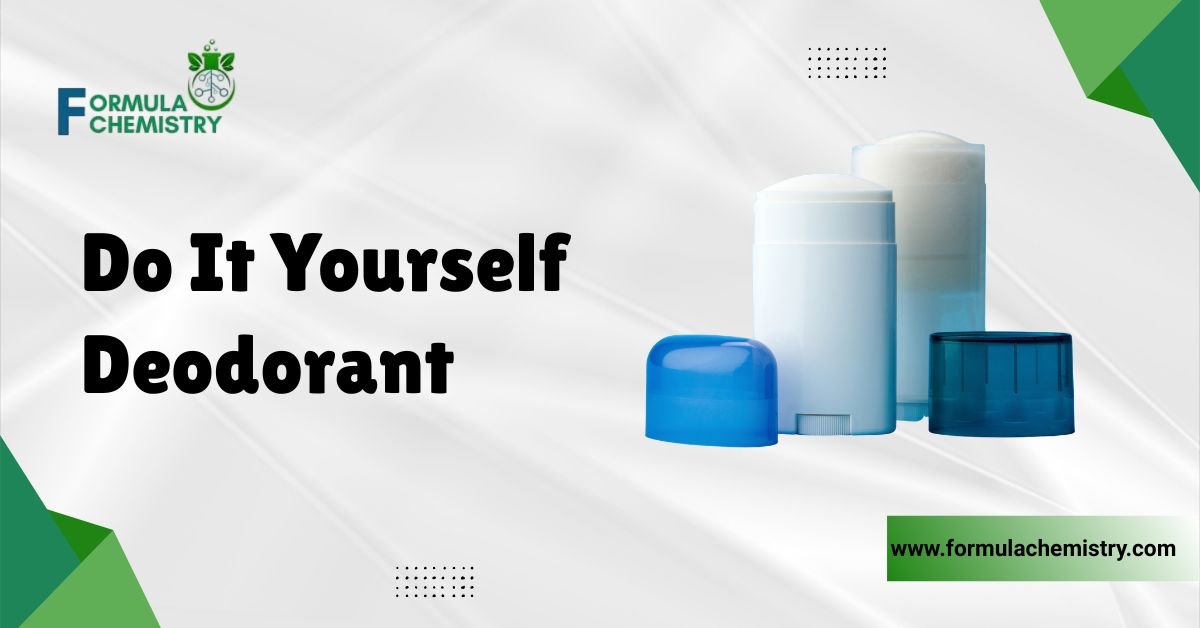
This formula makes a firm anhydrous deodorant stick with moderate glide, low white drag, and a dry finish. It is designed for tube filling rather than jar packing.
| Phase | INCI Name | Common Name | Percentage Weight |
| A | Helianthus Annuus Seed Wax | Sunflower Wax | 8.00% |
| A | Cera Alba | Beeswax | 6.00% |
| A | Cetyl Alcohol | Cetyl Alcohol | 6.00% |
| A | Butyrospermum Parkii Butter | Shea Butter | 7.00% |
| A | Caprylic/Capric Triglyceride | Medium Chain Triglyceride | 18.00% |
| A | Coco Caprylate/Caprate | Coco Caprylate | 12.00% |
| A | Ricinus Communis Seed Oil | Castor Oil | 5.00% |
| B | Magnesium Hydroxide | Magnesium Hydroxide | 10.00% |
| B | Zinc Ricinoleate | Zinc Ricinoleate | 3.00% |
| B | Triethyl Citrate | Triethyl Citrate | 4.00% |
| B | Maranta Arundinacea Root Powder | Arrowroot Powder | 10.00% |
| B | Tapioca Starch | Tapioca Starch | 6.00% |
| C | Tocopherol | Vitamin E | 0.50% |
| C | Bisabolol | Bisabolol | 0.50% |
| C | Parfum | Low Allergen Fragrance | 1.00% |
| C | Kaolin | Kaolin Clay | 3.00% |
| Total | 100.00% |
For any batch size, multiply each percentage by the target batch weight. For a 300 g batch, 8.00% sunflower wax equals 24 g.
Ingredient Breakdown By Phase of DIY deodornat
Phase A Structural Base
Helianthus Annuus Seed Wax gives the stick firmness and heat resistance. It was selected because it builds a clean, dry structure without the extreme brittleness of some high melt waxes.
At 8.00%, sunflower wax gives enough backbone for a twist up stick. Higher levels can increase drag and reduce payoff.
Cera Alba gives flexibility to the wax system. Beeswax helps bind oils and reduces the brittle snap that can appear when plant waxes carry the whole structure.
At 6.00%, beeswax improves glide without making the formula feel sticky. A vegan version needs a different wax system and fresh stability testing.
Cetyl Alcohol improves slip and reduces waxy drag. It also gives a creamier deposit than wax alone.
At 6.00%, cetyl alcohol helps the stick glide across underarm skin without crumbling. Too much cetyl alcohol can create a soapy drag in an anhydrous deodorant stick.
Butyrospermum Parkii Butter gives cushion and reduces the dry feel from powders. It was used at a restrained level because underarm products should not feel oily.
At 7.00%, shea butter softens the wax network. Higher levels can make the stick smear or feel heavy in hot weather.
Caprylic/Capric Triglyceride gives clean emollient movement. It was chosen because it spreads well and has a lighter feel than many vegetable oils.
Coco Caprylate/Caprate gives fast glide and a dry finish. It helps counterbalance castor oil and powders.
Ricinus Communis Seed Oil helps disperse zinc ricinoleate and improves adhesion. It also gives the stick a smoother payoff during application.
Phase B Deodorant Actives And Powders
Magnesium Hydroxide supports odor control by creating conditions that are less favorable for odor development. It is gentler for many users than high levels of sodium bicarbonate.
At 10.00%, magnesium hydroxide gives functional deodorant support without the harshness often seen in baking soda heavy formulas. It must be dispersed well to avoid gritty patches.
Zinc Ricinoleate binds odor molecules. It does not kill microbes and does not stop sweat.
At 3.00%, zinc ricinoleate gives odor binding support while keeping the stick workable. It needs sufficient heat and mixing to disperse into the oil wax system.
Triethyl Citrate supports deodorant performance by interfering with odor formation pathways on the skin surface. It is commonly used in aluminium free deodorant systems for odor management.
At 4.00%, triethyl citrate adds functional support without turning the stick too soft. It can reduce firmness, so the wax system must account for it.
Maranta Arundinacea Root Powder improves dryness and skin feel. Arrowroot powder helps absorb surface moisture but does not stop sweating.
Tapioca Starch gives a silkier powder feel than arrowroot alone. It also helps reduce tack from oils and butter.
Kaolin adds soft absorbency and improves the dry touch. It is kept at 3.00% because too much clay can make the stick drag.
Phase C Cool Down Additions
Tocopherol slows oxidation in the oil phase. It is not a preservative and does not protect against bacteria, yeast, or mold.
Bisabolol supports skin comfort in a cosmetic sense. It is included because underarm skin is exposed to friction, shaving, and repeated product use.
Parfum gives a low level scent profile. Use only a fragrance approved for leave on underarm products and follow the supplier limit.
Aluminium Free Actives In Do It Yourself Deodorant
A do it yourself deodorant should use a blend of actives rather than relying on one powder. Odor control improves when the formula combines odor binding, pH support, and absorbency.
| Active | Main Function | Typical Use Level | Formulation Note |
| Magnesium Hydroxide | Odor control support | 5.00% to 15.00% | Lower irritation risk than baking soda |
| Zinc Ricinoleate | Odor binding | 1.00% to 5.00% | Needs good dispersion |
| Triethyl Citrate | Odor formation support | 2.00% to 5.00% | Can soften sticks |
| Arrowroot Powder | Moisture feel | 5.00% to 15.00% | Can drag if too high |
| Tapioca Starch | Soft dry finish | 3.00% to 10.00% | Improves slip |
Do not use sodium bicarbonate as the main active for sensitive skin formulas. It can work for odor control, but high levels often create irritation because its alkalinity is poorly matched to underarm skin.
Magnesium hydroxide is a better starting point for many home formulators. It gives a milder deodorant profile when the powder is fine, clean, and evenly dispersed.
Wax Ratios And Stick Hardness in DIY Deodorant
The wax and fatty structuring system controls whether the stick twists up cleanly, glides smoothly, and survives warm storage. This formula uses 20.00% total hard structure from sunflower wax, beeswax, and cetyl alcohol.
| Stick Type | Total Structuring Range | Texture Result | Best Use |
| Soft balm deodorant | 10.00% to 15.00% | Scoopable or soft stick | Jars |
| Creamy stick | 16.00% to 20.00% | Easy glide | Cool climates |
| Firm stick | 20.00% to 25.00% | Better tube stability | Standard use |
| Hot weather stick | 25.00% to 30.00% | Strong heat resistance | Warm storage |
A deodorant stick needs more structure than a lip balm because it covers a larger skin area and carries more powder. Powder increases drag, so the wax system must stay firm without becoming stiff.
If the stick bends, increase wax by 2.00% and reduce liquid emollient by 2.00%. If the stick drags, reduce wax by 1.00% to 2.00% and increase coco caprylate.
Technical Data And Formulation Considerations
This formula is anhydrous, so direct pH testing does not apply. pH only has meaning in a water containing system or a defined water dispersion.
Magnesium hydroxide can affect the pH of moisture on the skin surface during use. That is why the formula avoids sodium bicarbonate and keeps the active system balanced.
The target filling temperature is 72°C to 76°C. This range keeps the wax system fluid enough while reducing powder settling.
Powder dispersion quality determines final comfort. Gritty deodorant usually comes from coarse magnesium hydroxide, poor mixing, or adding powders when the base is too cool.
The finished stick should remain firm at room temperature and show no oil beads after 7 days. Oil sweating means the wax network cannot hold the emollient load.
Step By Step Method of Do It Yourself Deodorant
1. Prepare Tools And Packaging
Clean and dry the beaker, spatula, thermometer, mixer, balance, and deodorant tubes. Keep all packaging ready before heating because powdered stick systems thicken fast.
Use clean, dry tools only. Water droplets can create local texture defects even though the formula is anhydrous.
2. Pre Blend The Powders
Combine magnesium hydroxide, arrowroot powder, tapioca starch, and kaolin in a dry beaker. Break up visible clumps with a clean spatula.
Sieve the powder blend if the raw materials look lumpy. Fine powder dispersion gives a smoother underarm feel.
3. Melt Phase A
Add sunflower wax, beeswax, cetyl alcohol, shea butter, medium chain triglyceride, coco caprylate, and castor oil to the main vessel. Heat to 82°C to 85°C until fully melted.
Mix at 300 to 500 rpm during melting. Hold the batch for 5 minutes after the last wax particles disappear.
4. Add Zinc Ricinoleate And Triethyl Citrate
Add zinc ricinoleate and mix until evenly dispersed. Keep the temperature near 80°C because zinc ricinoleate needs a hot oil phase for better distribution.
Add triethyl citrate after the zinc ricinoleate has dispersed. Mix for 3 to 5 minutes until the batch looks uniform.
5. Add The Powder Blend
Add the pre blended powders slowly while mixing at 500 to 700 rpm. Keep the batch between 76°C and 80°C during powder addition.
Scrape the vessel walls and bottom often. Powder pockets create gritty streaks and uneven deodorant performance.
6. Cool And Add Phase C
Cool the batch to 72°C to 74°C. Add tocopherol, bisabolol, and fragrance.
Mix gently for 2 minutes after the final addition. Avoid whipping air into the batch because air pockets weaken the stick.
7. Fill The Tubes
Pour at 72°C to 76°C while the batch is still fluid. Stir gently between fills to keep powders suspended.
Fill each tube slightly above the center dip. The stick may contract during cooling and need a small top off.
8. Cool And Set
Let the sticks cool at room temperature for 3 to 4 hours. Do not freeze the sticks because rapid cooling can cause cracks and uneven wax crystallization.
Allow the sticks to rest for 24 to 48 hours before testing glide. Wax systems become firmer after the first day.
Preservation System Rationale of DIY Deodorant
This formula does not need a broad spectrum preservative because it contains no water. Microbial growth needs available water, and this stick is an anhydrous product.
Good manufacturing practice still matters. Wet tools, contaminated powders, dirty packaging, or poor storage can damage product quality.
Tocopherol is included for oxidation control. It helps slow rancid odor in oils but does not function as a microbial preservative.
Stability Testing Plan for DIY Deodorant
Test the finished sticks at room temperature, 40°C, and low temperature. Check hardness, sweating, cracking, odor change, powder drag, and tube function.
A bench stability screen should run for at least 8 to 12 weeks before sale. Personal use batches should still be monitored for odor change, oil beads, and unusual texture shifts.
Weigh filled sticks at the start and after warm storage. Weight change can show fragrance loss or volatile loss.
Apply the stick to clean skin or a test surface after each storage condition. A stick that survives heat but drags badly still needs reformulation.
Substitution Options And Trade Offs
Candelilla wax can replace beeswax for a vegan structure. Use less than the beeswax amount because candelilla is harder and more brittle.
Mango butter can replace shea butter for a drier glide. This change can reduce greasiness and improve hot weather feel.
Zinc ricinoleate can be reduced to 2.00% if the stick feels too stiff. Replace the removed percentage with medium chain triglyceride.
Fragrance can be removed for sensitive skin versions. Replace it with medium chain triglyceride to keep the formula total at 100.00%.
Do not replace magnesium hydroxide with sodium bicarbonate at the same level. That substitution changes skin feel, alkalinity, and irritation risk.
Scale Up Considerations for DIY Deodorant
Large batches keep powders suspended less easily than small beaker batches. Use slow continuous mixing during filling to prevent powder settlement.
Filling temperature needs tighter control at scale. If the batch cools during filling, the final units may become harder, grainier, and less uniform.
Check the first, middle, and last filled sticks. Differences between them usually show powder settling or temperature drift.
Use batch records for wax lot, fragrance lot, powder lot, filling temperature, and cooling time. Deodorant stick performance depends heavily on raw material consistency.
Common Mistakes about DIY Deodorant
- Using baking soda as the main active. It may control odor, but it often irritates underarm skin, so use magnesium hydroxide for a milder system.
- Adding too much powder. The stick feels dry and scratchy, so keep total powder balanced with emollients and cetyl alcohol.
- Ignoring zinc ricinoleate dispersion. Poor dispersion weakens odor binding, so add it into a hot oil wax phase and mix well.
- Pouring too cool. The batch thickens and traps powder clumps, so fill while it remains fluid.
- Using too much fragrance. Underarm skin can react quickly, so keep fragrance low and supplier approved for leave on use.
- Skipping warm testing. A stick can look perfect at room temperature and still sweat oil at 40°C.
- Calling it an antiperspirant. Aluminium free deodorant controls odor, so do not claim sweat reduction.
- Freezing the sticks to set them faster. Rapid cooling can create cracks, grain, and weak stick structure.
Suitability Guide for DIY Deodorant
This formula suits users who want an aluminium free deodorant stick for cosmetic odor control. It is best for normal underarm skin that tolerates waxes, powders, and light fragrance.
Sensitive skin users should make a fragrance free version first. Bisabolol can support comfort, but it cannot cancel irritation from fragrance, shaving, or excessive powder.
Freshly shaved underarms may sting with many deodorants. Wait before applying any new deodorant after shaving, waxing, or strong exfoliation.
Users with psoriasis, eczema, hidradenitis suppurativa, open skin, broken skin, or recurring inflammation should ask a qualified clinician before using deodorant on affected areas. Cosmetic deodorant is not a treatment product.
Beginner formulators can make this stick if they can weigh accurately, control heat, and disperse powders. A 100 g pilot batch is the correct starting size.
Always conduct a 48-hour patch test with any new formula before wider use.
FAQ’s about Do It Yourself Deodorant
How can I make homemade deodorant?
Make homemade deodorant by combining a firm wax base, light emollients, odor control actives, and absorbent powders. Heat the wax and oils, disperse the actives fully, pour into tubes, and allow the sticks to set for 24 to 48 hours.
What can I use instead of deodorant?
You can use gentle cleansing, breathable clothing, and fragrance free absorbent body powder for short term odor management. These options may reduce odor feel, but they will not perform like a well formulated deodorant stick.
What’s the best deodorant for psoriasis?
The best choice is usually fragrance free, alcohol free, and low irritation, but psoriasis affected skin needs medical guidance. Do not apply deodorant over cracked, painful, bleeding, or actively inflamed skin unless a clinician says it is suitable.
Can people with HS use deodorant?
People with hidradenitis suppurativa should ask a dermatologist before using deodorant on affected areas. Avoid applying deodorant over open lesions, draining areas, or painful inflamed skin.
Can people with HS use deodorant?
Some people with HS tolerate mild fragrance free deodorants on unaffected skin. The product should be stopped if it causes stinging, rubbing discomfort, or worsening irritation.
What do Koreans use for psoriasis?
Psoriasis care in Korea can include dermatologist prescribed treatments, gentle cleansing, moisturizers, and medical follow up. Cosmetic deodorant or skincare should not be presented as psoriasis treatment.
What organ is linked to psoriasis?
Psoriasis is an immune mediated skin condition, and it can be associated with wider inflammation in the body. A dermatologist or physician should assess symptoms rather than relying on cosmetic product choices.
What vitamin am I lacking if I have psoriasis?
Psoriasis is not diagnosed by assuming one vitamin deficiency. A clinician may check vitamin D or other markers when relevant, but supplements should not replace medical care.
Which deodorant do dermatologists recommend?
Dermatologists often suggest fragrance free, low irritation deodorants for sensitive underarm skin. For heavy sweating, they may discuss antiperspirants or medical options based on the person’s skin condition.
How to cure psoriasis permanently on skin?
There is no cosmetic deodorant that cures psoriasis permanently. Psoriasis needs medical diagnosis and management, especially when it affects sensitive areas such as the underarms.
Key Takeaways
- A deodorant controls odor, while an antiperspirant reduces sweat with approved antiperspirant actives.
- This do it yourself deodorant uses magnesium hydroxide, zinc ricinoleate, and triethyl citrate for aluminium free odor control support.
- The formula uses 20.00% total structuring materials for a firm tube stick.
- Powder level must stay balanced because too much powder causes drag and irritation risk.
- Zinc ricinoleate needs a hot oil wax phase and good mixing for proper dispersion.
- Fragrance should stay low and must be approved for leave on underarm use.
- This anhydrous formula does not need pH adjustment or a broad spectrum preservative.
- Medical skin conditions need professional care, not cosmetic deodorant claims.
Make a small pilot batch, test it for glide and warm stability, then adjust wax and powder levels by small percentages only after real use testing.