
Introduction
A good lip balm is not made by melting random wax, butter, and oil together. Making lip balm correctly means building a controlled wax crystal network that grips enough emollient to feel smooth without sweating, dragging, cracking, or turning grainy in the tube.
This guide gives you a complete free formula, wax ratio logic, emollient selection notes, flavour handling, and the processing method neededlip to make a stable lip balm with a clean glide and protective after feel.
Formula Chemistry treats lip balm as a structured anhydrous system. That matters because a balm with no water still needs professional thinking around melting points, oxidation, sensory balance, and safe lip use.
What A Lip Balm Must Do
A lip balm must form a flexible film on the lips. The formula should reduce water loss from the lip surface and improve the feel of dryness without making drug style healing claims.
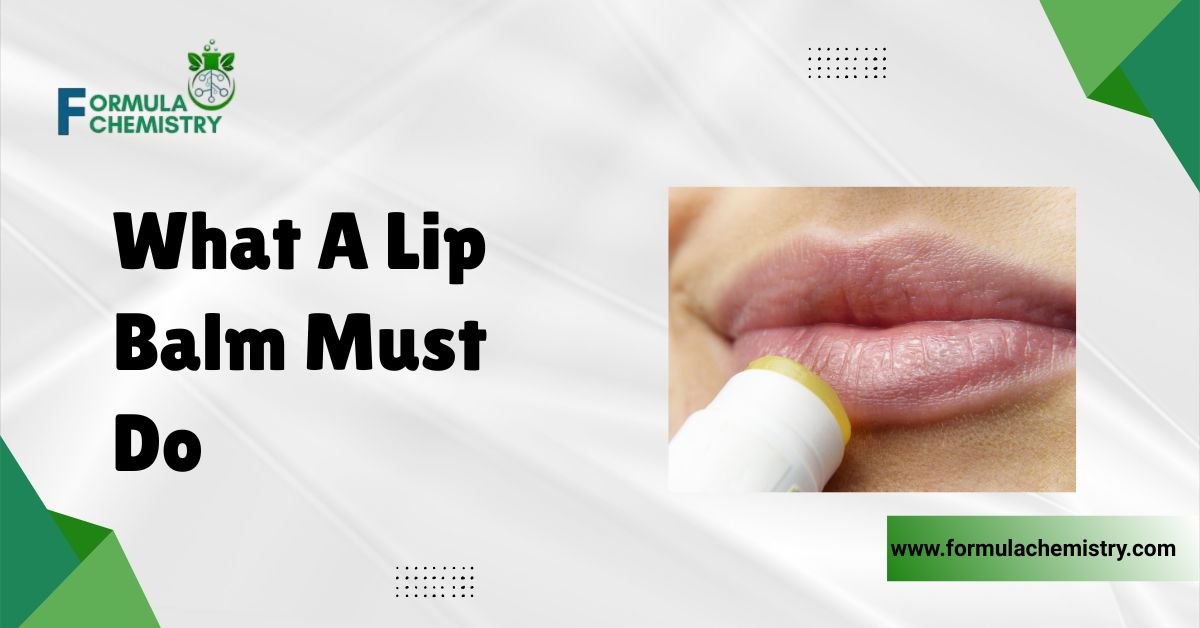
The balm must glide smoothly at skin temperature. If the wax level is too high, the stick drags and feels stiff. The balm must also stay firm in a pocket, bag, or warm bathroom. If the oil level is too high, the stick bends, melts, or sweats.
A strong lip balm balances three things: structure, payoff, and comfort. Wax gives structure, butters give body, and emollients give movement.
Ingredient Breakdown of Lip Balm by Phase
Phase A Structural Base
Cera Alba is the main structuring wax in this formula. Beeswax was chosen because it gives a flexible stick, good oil binding, and a softer glide than many high melt plant waxes.
At 18.00%, beeswax gives enough firmness for a tube balm without making the product feel hard. It also helps the balm keep its shape during normal use.
Euphorbia Cerifera Cera raises the melting point and improves heat resistance. Candelilla wax is used at a lower level because it is harder and more brittle than beeswax.
At 5.00%, candelilla wax improves snap and firmness. Higher levels can make the balm feel dry and overly stiff on application.
Theobroma Cacao Seed Butter gives body, cushion, and a smooth occlusive feel. Cocoa butter also helps the balm hold shape because it has a firm crystalline structure.
At 15.00%, cocoa butter supports structure without becoming the whole texture. Too much cocoa butter can make lip balm feel waxy or grainy if cooling is poorly controlled.
Butyrospermum Parkii Butter softens the wax base. Shea butter was selected because it improves comfort and reduces the dry rub that can come from wax heavy systems.
At 10.00%, shea butter gives richness without making the balm collapse. Higher levels can increase grain risk because shea butter contains different fat fractions that crystallize at different rates.
Phase B Emollient Blend
Simmondsia Chinensis Seed Oil gives a stable, elegant slip. Jojoba oil was chosen because it is a liquid wax ester, not a typical triglyceride oil.
Jojoba oil improves glide and oxidative stability. It also reduces the greasy feel that can appear when lip balm contains too much soft oil.
Helianthus Annuus Seed Oil gives softness and spread. High oleic sunflower oil is preferred over standard sunflower oil because it has better oxidation resistance.
This oil helps the balm feel comfortable on dry lips. It should be fresh and protected from heat, light, and air.
Ricinus Communis Seed Oil gives shine and adhesion. Castor oil is used because it has a heavier, more cushiony feel than many plant oils.
At 14.00%, castor oil helps the balm stay on the lips. Too much castor oil can make a balm feel sticky, so it must be balanced with lighter emollients.
Coco Caprylate/Caprate improves spread and reduces heaviness. It was chosen to make the balm glide cleanly without relying only on plant oils.
This ester gives a lighter skin feel. It also helps the stick release product smoothly during application.
Phase C Cool Down Additions
Tocopherol is included to slow oxidation in the oil phase. It is not a preservative because this formula contains no water.
At 0.50%, tocopherol protects the oils from early rancid odor. It should be added during cool down to reduce unnecessary heat exposure.
Aroma means a lip safe flavour oil. The flavour must be supplier approved for lip products and used within the supplier’s recommended limit.
At 0.80%, the flavour gives a noticeable taste impression without overwhelming the balm. Do not use food extracts, baking flavours, or essential oils unless they are confirmed safe for lip use.
Stevia Rebaudiana Extract is used as a cosmetic sweetener. It does not make the balm taste like candy, but it softens the bitter edge some waxes and oils can leave.
At 0.20%, stevia works as a background sweetness modifier. Too much can create an uneven taste or gritty residue if the material is not oil dispersible.
Complete Lip Balm Formula
This formula makes a firm tube-style balm with smooth glide, moderate shine, and a soft protective after feel. It is suitable for small batch production and bench testing.
| Phase | INCI Name | Common Name | Percentage Weight |
| A | Cera Alba | Beeswax | 18.00% |
| A | Euphorbia Cerifera Cera | Candelilla Wax | 5.00% |
| A | Theobroma Cacao Seed Butter | Cocoa Butter | 15.00% |
| A | Butyrospermum Parkii Butter | Shea Butter | 10.00% |
| B | Simmondsia Chinensis Seed Oil | Jojoba Oil | 16.00% |
| B | Helianthus Annuus Seed Oil | High Oleic Sunflower Oil | 12.50% |
| B | Ricinus Communis Seed Oil | Castor Oil | 14.00% |
| B | Coco Caprylate/Caprate | Coco Caprylate | 8.00% |
| C | Tocopherol | Vitamin E | 0.50% |
| C | Aroma | Lip Safe Flavour Oil | 0.80% |
| C | Stevia Rebaudiana Extract | Oil Dispersible Stevia | 0.20% |
| Total | 100.00% |
For any batch size, multiply the percentage by the target batch weight. For a 200 g batch, 18.00% beeswax equals 36 g.
Wax Ratios For Making Lip Balm
The wax system controls firmness, heat resistance, payoff, and drag. A tube balm usually needs a total wax level between 18.00% and 28.00%, depending on wax type and climate.
This formula uses 23.00% total wax. That level gives a reliable tube balm without turning the texture into a hard stick.
| Balm Style | Total Wax Range | Texture Result | Best Use |
| Soft pot balm | 8.00% to 15.00% | Soft scoopable texture | Jars and tins |
| Creamy tube balm | 16.00% to 22.00% | Easy glide | Cool climates |
| Firm tube balm | 22.00% to 28.00% | Better heat resistance | Standard tubes |
| Hot climate balm | 28.00% to 35.00% | Very firm stick | Warm storage |
Beeswax gives a more flexible balm than candelilla wax. Candelilla gives firmness fast, but it can make the balm feel brittle when used too high.
For most beginner formulas, beeswax should be the main wax. Candelilla can be added as a firmness corrector rather than used as the whole wax system.
Emollient Selection For Lip Balm
Emollients decide how the balm moves across the lips. A good blend uses light, medium, and adhesive emollients in the same formula.
Jojoba oil gives elegant slip. Castor oil gives shine and cling.
High oleic sunflower oil gives softness. Coco caprylate gives a lighter, less greasy glide.
| Emollient | Main Sensory Role | Formulation Risk | Best Level |
| Jojoba Oil | Smooth stable slip | Higher cost | 8.00% to 20.00% |
| Castor Oil | Shine and adhesion | Stickiness | 5.00% to 18.00% |
| High Oleic Sunflower Oil | Softness | Oxidation if poor quality | 5.00% to 20.00% |
| Coco Caprylate | Light glide | Can soften stick | 3.00% to 12.00% |
Do not make the whole oil phase from one oil. Single oil balms often feel flat because they lack sensory contrast.
Flavours And Sweeteners
Lip balm flavour must be lip-safe. A pleasant scent does not automatically make a material suitable for repeated lip exposure.
Use supplier-approved flavour oils within the stated use level. Keep most flavours between 0.30% and 1.00% unless the supplier gives a lower maximum.
Do not use peppermint essential oil casually in lip balm. It can create a cooling feel, but it can also irritate sensitive lips when used too high.
Sweetener should be oil-dispersible if the formula has no water. Powdered sugar, honey, glycerin, and water based extracts do not belong in a standard anhydrous stick balm.
Technical Data And Formulation Considerations
This formula is anhydrous, so pH does not apply. pH can only be measured in a water-containing system or a meaningful aqueous dispersion.
The target melting behavior is a firm stick that softens on contact with the lips. The balm should not liquefy at room temperature or leave visible oil beads after cooling.
The ideal filling temperature is 68°C to 72°C. Filling too hot can increase the risk of sinkholes, while filling too cool can create lines and a poor surface finish.
The balm should be tested at room temperature (40°C) and at low temperatures. A good stick should remain uniform, resist sweating, and apply without gritty particles.
Step-by-Step Method for Making Lip Balm
1. Prepare Tubes And Tools
Clean and dry the filling beaker, spatula, thermometer, scale, and lip balm tubes. Moisture should not enter the batch because the formula has no water phase.
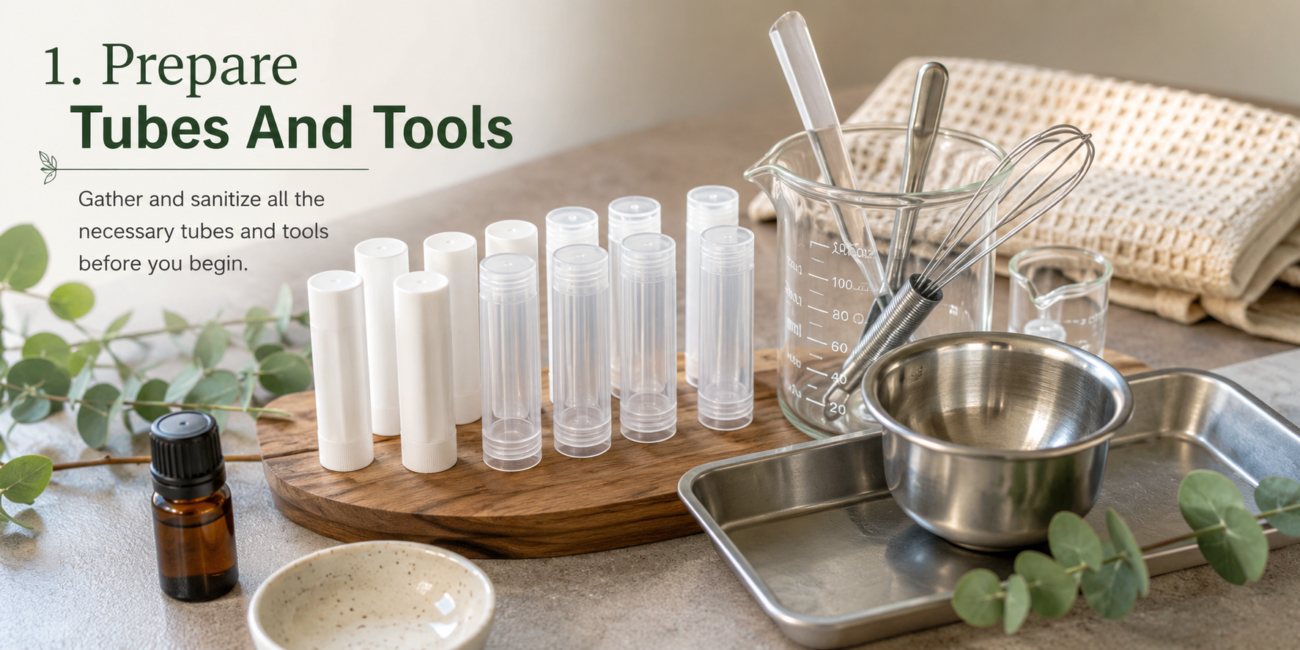
Arrange the tubes upright before heating. Lip balm sets quickly, so the filling area must be ready before the melt is finished.
2. Weigh Phase A
Weigh beeswax, candelilla wax, cocoa butter, and shea butter into a heat safe vessel. Record every weight before heating so any error can be corrected before melting.
Use a scale accurate to at least 0.01 g for lab batches. Small flavour and sweetener additions need precision.
3. Melt The Structural Base
Heat Phase A to 80°C to 85°C using a water bath or controlled hot plate. Stir slowly until all wax and butter particles are fully melted.
Hold the melted phase for 5 minutes after it looks clear. This helps the wax network form more evenly during cooling.
4. Add Phase B Emollients
Add jojoba oil, high oleic sunflower oil, castor oil, and coco caprylate to the melted base. Mix at 200 to 300 rpm until the batch is uniform.
Keep the temperature near 75°C after adding oils. If the batch drops too low, wax crystals can start forming before filling.
5. Cool Before Phase C
Cool the batch to 70°C to 72°C with gentle stirring. This range protects the flavour better than prolonged high heat.
Do not whip air into the balm. Air bubbles create weak spots and poor-looking stick surfaces.
6. Add Flavour, Sweetener, And Tocopherol
Add tocopherol, lip safe flavour oil, and oil-dispersible stevia. Mix until the batch looks fully uniform.
Check that no sweetener particles are sitting at the bottom of the vessel. Poor dispersion causes gritty application and uneven taste.
7. Fill The Tubes
Pour at 68°C to 72°C. Fill each tube slightly above the center well because cooling can create a small dip.
If the balm shrinks, top off with a small amount of the same melted batch. Do this while the first fill is still slightly warm for better bonding.
8. Cool And Cap
Let the tubes cool at room temperature for 30 to 60 minutes. Do not freeze them because rapid cooling can increase graininess and surface cracking.
Cap the tubes after the balm is fully firm. Label the batch with date, formula code, and flavour used.
Preservation System Rationale of lip balm
This formula does not need a broad spectrum preservative because it contains no water. Bacteria, yeast, and mold need available water to grow.
Good manufacturing practice still matters. Dirty tubes, wet tools, and contaminated flavour oils can create quality problems even in a low risk anhydrous formula.
Tocopherol supports oxidation control, not microbial preservation. It slows rancid odor development in vulnerable oils but does not protect against microbial contamination.
Stability And Shelf Life Notes about lip balm
The main stability risks are graininess, sweating, rancidity, melting, and flavour fading. These issues come from poor wax balance, poor cooling, unstable oils, or excessive heat exposure.
Graininess often comes from butters that crystallize unevenly. Shea butter and cocoa butter both need controlled heating and room temperature cooling.
Sweating happens when the wax network cannot hold the liquid oils. Increase total wax by 2.00% to 3.00% if the balm beads oil in warm testing.
Rancidity shows as a stale, crayon like, or paint like odor. Use fresh oils, add tocopherol, and avoid storing bulk oils near heat and light.
Substitution Options And Trade Offs about lip balm
Candelilla wax can be replaced with carnauba wax at a lower level. Carnauba is harder, so start with 2.00% to 3.00% rather than a direct 5.00% replacement.
Mango butter can replace shea butter for a smoother, less rich feel. This change may reduce grain risk and improve glide.
Caprylic capric triglyceride can replace coco caprylate. The balm will feel richer and slightly slower to absorb.
Avocado oil can replace high oleic sunflower oil for a heavier feel. This change suits richer balms but may reduce freshness of glide.
Scale Up Considerations for lip balm
Scale up changes the cooling profile. A 2 kg batch stays hot longer than a 100 g batch, so flavour exposure and wax crystallization need closer control.
Use steady low speed mixing during filling. Strong mixing can introduce air, while no mixing can allow flavour and sweetener to distribute unevenly.
Check the first 10 filled units for sinkholes, cracks, and weight consistency. Adjust filling temperature before completing the whole batch.
Common Mistakes in making lip balm
- Using too much wax. The balm becomes hard and draggy, so reduce wax by 2.00% and replace it with a medium emollient.
- Using too little wax. The stick bends or melts easily, so increase wax by 2.00% to 3.00% after warm testing.
- Adding food flavouring. Water based or alcohol based flavours can separate, so use only lip safe oil soluble flavour.
- Overheating the flavour. Heat can weaken aroma, so add flavour during cool down near 70°C.
- Ignoring oil freshness. Old oils create rancid odor, so use fresh materials and store oils away from heat and light.
- Cooling too fast. Rapid cooling can create cracks and graininess, so let filled tubes set at room temperature.
- Using honey in a tube balm. Honey is water based and sticky, so it does not belong in this anhydrous stick format.
Suitability Guide for making lip balm
This lip balm formula suits normal, dry feeling, and weather exposed lips. It can contribute to a smoother feel and a more comfortable surface appearance.
Very sensitive lips may need a flavour free version. Fragrance, flavour, mint, citrus, and spice materials often cause discomfort before the wax base does.
People who prefer vegan formulas can redesign the wax system without beeswax. Candelilla, sunflower wax, rice bran wax, or berry wax can work, but the ratios need new stability testing.
Beginner formulators can make this balm because it uses one heated oil phase and a short cool down phase. Accuracy still matters because small changes in wax level strongly affect stick texture.
Always conduct a 48-hour patch test with any new formula before wider use.
FAQ’s about making lip balm
How do I make homemade lip balm?
Melt wax, butter, and oils together, then add lip safe flavour and antioxidant during cool down. Pour the mixture into clean tubes or tins and let it set at room temperature.
Which ingredient is best for lip balm?
No single ingredient makes the best lip balm. A strong formula uses wax for structure, butter for body, oil for glide, and a safe flavour system for user appeal.
How to make 3 ingredient lip balm?
Use beeswax, cocoa butter, and jojoba oil as a simple three ingredient balm. Start with 20.00% beeswax, 30.00% cocoa butter, and 50.00% jojoba oil, then adjust firmness after testing.
Which is the best homemade lip balm?
The best homemade lip balm is firm enough to hold shape and soft enough to glide without pressure. A balanced formula performs better than a balm made only from wax and coconut oil.
How to make your lips 💋 pink?
A cosmetic lip balm cannot permanently change natural lip color. It can improve surface comfort and shine, which may make lips look fresher when dryness is the cause of dull appearance.
How to make 2 ingredient lip balm?
Use beeswax and jojoba oil for a basic two ingredient balm. Start with 25.00% beeswax and 75.00% jojoba oil for a tube, then increase wax if the stick is too soft.
Can dark lips turn pink again?
Lip color depends on genetics, sun exposure, irritation, habits, and overall skin tone. A balm can support softness and reduce the look of dryness, but persistent color changes need professional evaluation.
What is the rarest lip type?
There is no recognized cosmetic chemistry category for the rarest lip type. Lip shape terms are aesthetic descriptions, not formulation categories.
How to remove dark lips?
Cosmetic care can help the lips look smoother by reducing dryness, irritation, and sun related dullness. Avoid harsh scrubs, stop irritating flavours, and use a suitable lip balm with daytime sun protection when needed.
Key Takeaways
- Making lip balm requires wax ratio control, not random melting of oils and butters.
- A 23.00% total wax level gives this formula a firm tube texture.
- Beeswax gives flexibility, while candelilla wax raises firmness.
- Jojoba oil improves stable glide, while castor oil adds shine and adhesion.
- Lip safe flavour oil should stay within supplier limits.
- This anhydrous formula does not need pH adjustment.
- Tocopherol slows oxidation but does not preserve against microbes.
- Room temperature cooling reduces cracking and graininess.
Make a 100 g pilot batch, test firmness at room temperature and 40°C, then adjust wax by small percentages instead of rebuilding the whole formula.