

Quick Answer
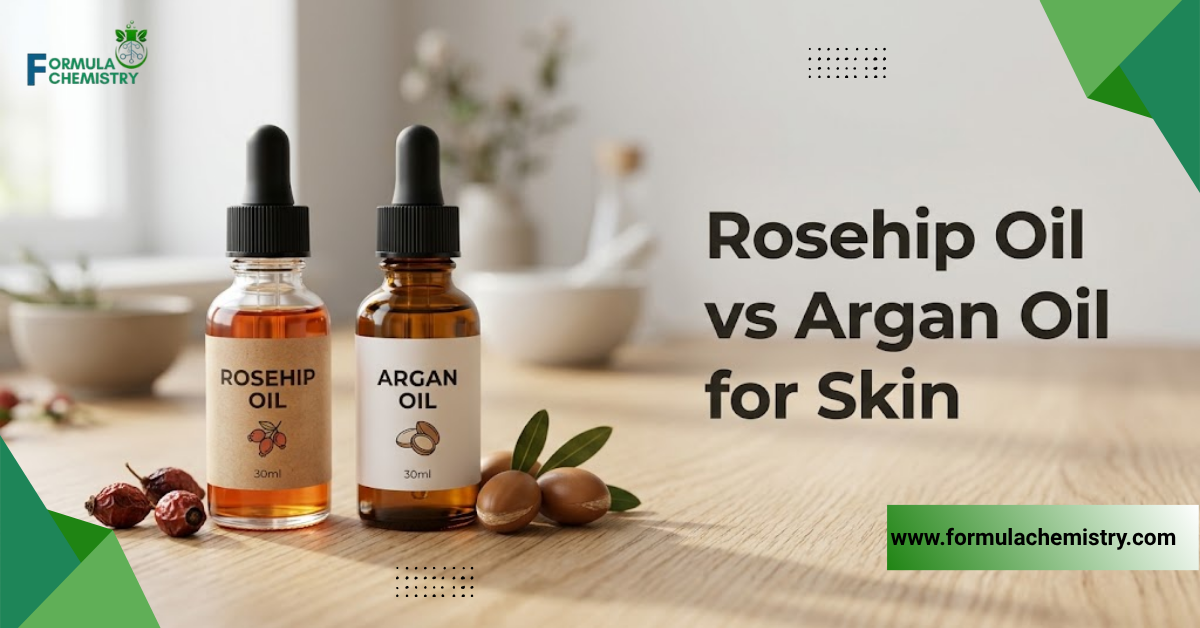
In rosehip oil vs argan oil, the honest distinction is that argan is a gentle daily moisturiser rich in vitamin E, while rosehip is a targeted treatment oil containing vitamin C and a naturally occurring form of vitamin A.
Rosehip is light, fast-absorbing, and associated with the appearance of scars, tone, and fine lines, though its vitamin A content is low, variable, and degrades in light.
Argan is richer, suits daily use morning or night on most skin types, and the two solve different problems rather than competing, which is why many people use argan by day and rosehip at night.
Introduction
The rosehip oil vs argan oil question is really a question of jobs, not rivals. One oil is a dependable everyday moisturiser, and the other is a targeted treatment reached for specific concerns.
The rosehip oil vs argan oil debate matters because both are cold-pressed, plant-derived facial oils with loyal followings, and both sit at the premium end of natural skincare. What separates them is their active profile and what each is actually good at.
I work with both, and I never think of one as beating the other. Argan is the reliable daily oil, and rosehip is the specialist you add when appearance concerns such as tone and texture are the goal.
This guide covers what each oil is, how their very different profiles shape their use, the vitamin A story that needs honest handling, which suits which skin, and how to choose or combine them.
What Argan Oil Is
Argan oil is cold-pressed from the kernels of the Moroccan argan tree, Argania spinosa. It is a true triglyceride oil, roughly 45% oleic acid and 35% linoleic acid, with a heavy dose of vitamin E.
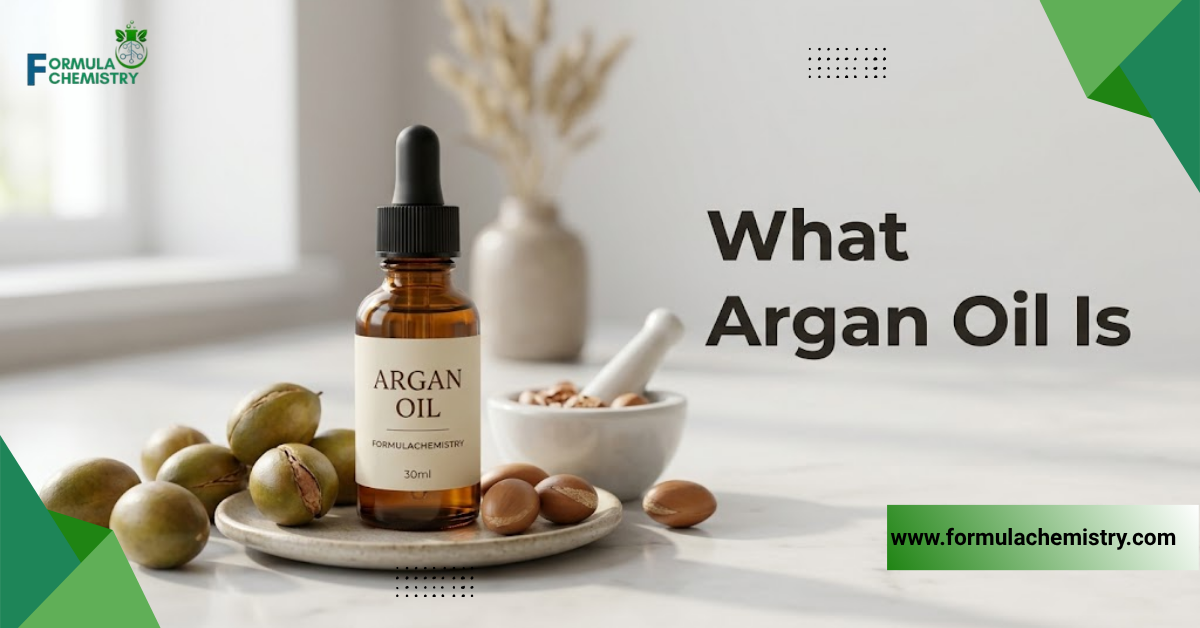
That composition makes it a generalist. Argan hydrates without feeling heavy, absorbs reasonably quickly, and helps protect the skin against environmental stress thanks to its antioxidant vitamin E content.
Why Argan Works as a Daily Oil
Argan’s strength is versatility and gentleness. With a comedogenic rating of around 0, it suits almost all skin types, and it can be used morning or night without any light sensitivity.
It also works beyond the face, on hair and nails, which makes it the kind of oil people reach for every day. As a daily moisturiser that simply nourishes and protects, argan is hard to beat.
What Rosehip Oil Is?
Rosehip oil is cold-pressed from the seeds of wild rose species such as Rosa canina and Rosa rubiginosa. Its profile is strikingly different from argan, being roughly 45% linoleic acid and around 33% alpha-linolenic acid, an omega-3 fatty acid.
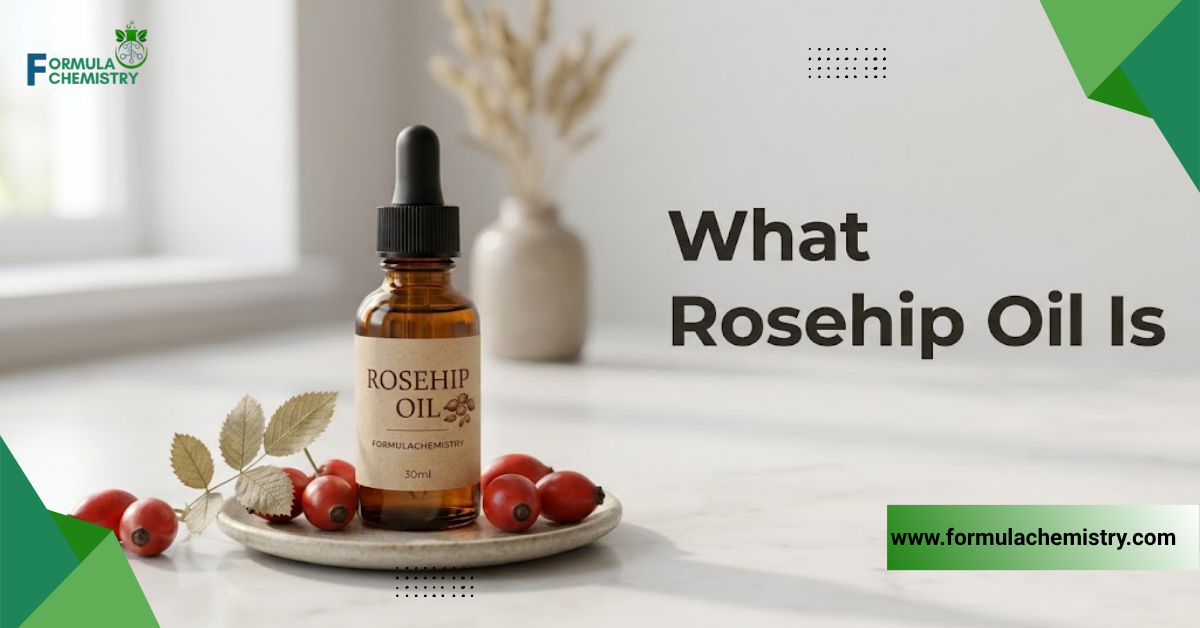
Beyond fatty acids, rosehip carries vitamin C and a naturally occurring form of vitamin A, which is the source of its reputation as a renewing, treatment-style oil. It is light, absorbs quickly, and is often described as a dry oil.
Why Rosehip Is a Treatment Oil
Rosehip is a specialist rather than a generalist. Its combination of linoleic acid, vitamin C, and natural vitamin A is associated with the appearance of improved tone, texture, and fine lines over time.
This is why it is used as a targeted evening oil rather than an all-purpose moisturiser. It is reached for when the goal is the look of renewed, more even skin, not simply daily hydration.
Rosehip Oil vs Argan Oil: The Comparison
The rosehip oil vs argan oil comparison aligns them as cold-pressed facial oils, then diverges on almost everything else. The table below sets out the real differences.
| Property | Rosehip oil | Argan oil |
| Botanical source | Rosa canina or rubiginosa seeds | Argania spinosa kernels |
| Main fatty acids | ~45% linoleic, ~33% linolenic | ~45% oleic, ~35% linoleic |
| Key actives | Vitamin C, natural vitamin A | Vitamin E, polyphenols |
| Role | Targeted treatment oil | Daily moisturiser |
| Skin feel | Light, dry-touch, fast-absorbing | Slightly richer, still light |
| Best for | Tone, texture, the look of scars and lines | Daily hydration, most skin types |
| Comedogenic rating | Around 1 | Around 0 |
| Light sensitivity | Sun-sensitive, use at night | Safe morning or night |
| Shelf life | Short, ~6 to 9 months opened | ~6 to 12 months opened |
Read the role and light-sensitivity rows together, because they explain how to use each. Argan is the anytime daily oil, while rosehip is the evening treatment reserved for specific appearance goals.
Neither is better in the abstract. Argan wins on versatility and daily gentleness, while rosehip wins as a targeted oil for tone and texture.
The Vitamin A Story, Handled Honestly
Rosehip is often called nature’s retinol, and this claim deserves accurate handling rather than hype. Rosehip does contain a naturally occurring form of vitamin A, which is the basis for its renewing reputation.
What Is Actually True
The vitamin A in rosehip is genuine, and it is associated with the appearance of improved skin texture and fine lines with consistent use. Its high linoleic acid content also supports the skin barrier and suits skin that tends toward congestion.
What Gets Overstated
The important caveat is concentration. The natural retinoic acid in rosehip is present at low and highly variable levels, often a tiny fraction of a percent, and it degrades quickly with heat and light exposure.
This means rosehip is not equivalent to a formulated retinol product, and its effects are gentler and less predictable. It is fair to describe rosehip as supporting the appearance of renewed skin, and inaccurate to treat it as a substitute for a dedicated retinoid.
Presenting it honestly is something we insist on at Formula Chemistry, since overselling a natural oil helps no one.
Which to Choose for Your Skin
Skin type and goal usually make the decision clear. Each oil has territory where it is the sensible pick.
- Daily all-over hydration: argan, for its gentle, versatile, anytime nature
- Dry or sensitive skin: argan, for its richer, protective feel
- The look of scars, tone, or fine lines: rosehip, for its vitamin A and C profile
- Oily or congestion-prone skin: rosehip, for its high linoleic acid and light texture
- Morning use under sunscreen: argan, since rosehip is better kept to night
- Evening treatment step: rosehip, working with the skin’s overnight renewal
- Hair and nails: argan, which works well beyond the face
Combination skin can use either, and many people benefit from both. The two are complementary tools, not competitors, which is the honest way to think about the choice.
Using Both Together
Because they do different jobs, argan and rosehip pair naturally in a routine. A common and sensible approach uses argan in the morning and rosehip at night.
Argan by day provides gentle hydration and antioxidant vitamin E, and it is safe under sunscreen with no light sensitivity. Rosehip by night works alongside the skin’s natural overnight renewal, when its light sensitivity is not a concern.
Layering and Formulating
In a formula, argan suits daily moisturisers, lightweight lotions, and multipurpose oils, while rosehip suits treatment serums and night oils aimed at tone and texture. Blending the two is also possible, giving daily nourishment and a treatment element in one product.
Rosehip’s fragility is the thing to plan around. Because its actives degrade with light and heat, formulate and store it in dark glass, keep it cool, and consider an antioxidant such as vitamin E to protect it, an approach Formula Chemistry applies to all oxidation-prone oils.
How They Feel and Absorb
In a rosehip oil vs argan oil choice, skin feel and absorption often decide which oil a person actually enjoys using daily. Both are lighter than heavy oils, but they differ in a way worth knowing.
Rosehip is frequently called a dry oil because it absorbs quickly and leaves little residue, sinking in fast with a light finish. That quick-absorbing quality is part of why it suits oily and congestion-prone skin and layers well under other products.
Argan feels slightly richer while still absorbing well, sitting a moment longer as it delivers its oleic acid and vitamin E. It reads as nourishing rather than dry, which is exactly what drier skin appreciates.
For daytime use under makeup or sunscreen, argan’s quick, non-greasy finish works well. For a night treatment, rosehip’s light absorption lets it layer cleanly into an evening routine without feeling heavy.
Cost and Sourcing Considerations
In rosehip oil vs argan oil terms, both sit at the premium end, and quality varies sharply with sourcing, so buying well matters. Cold-pressed, unrefined material protects the actives you are paying for in each.
Choosing Good Argan
For argan, single-origin, cold-pressed cosmetic-grade oil retains the most vitamin E and antioxidants, and the roasted culinary version is not suitable for skincare. A reputable supplier and a recent production date are the signals to look for.
Choosing Good Rosehip
Rosehip demands even more care because its actives are fragile. Choose cold-pressed, unrefined oil in dark glass, check for a fresh production date, and buy quantities you will use within its short window, since old rosehip loses much of what makes it worthwhile.
Shelf Life and Stability
The two oils differ in how well they keep, and rosehip is the more delicate. Rosehip oxidises relatively quickly, often lasting only around 6 to 9 months once opened, and its actives are sensitive to light and heat.
Argan is somewhat more stable, generally lasting around 6 to 12 months opened when stored well. Both benefit from dark glass, cool storage, and protection from sunlight, but rosehip demands that care more urgently.
For a formulator, this shapes packaging and expiry planning. A rosehip-based product needs protective packaging and a realistic shelf life, while an argan-based one is a little more forgiving, though neither is as durable as a wax like jojoba.
Deciding Between Rosehip and Argan
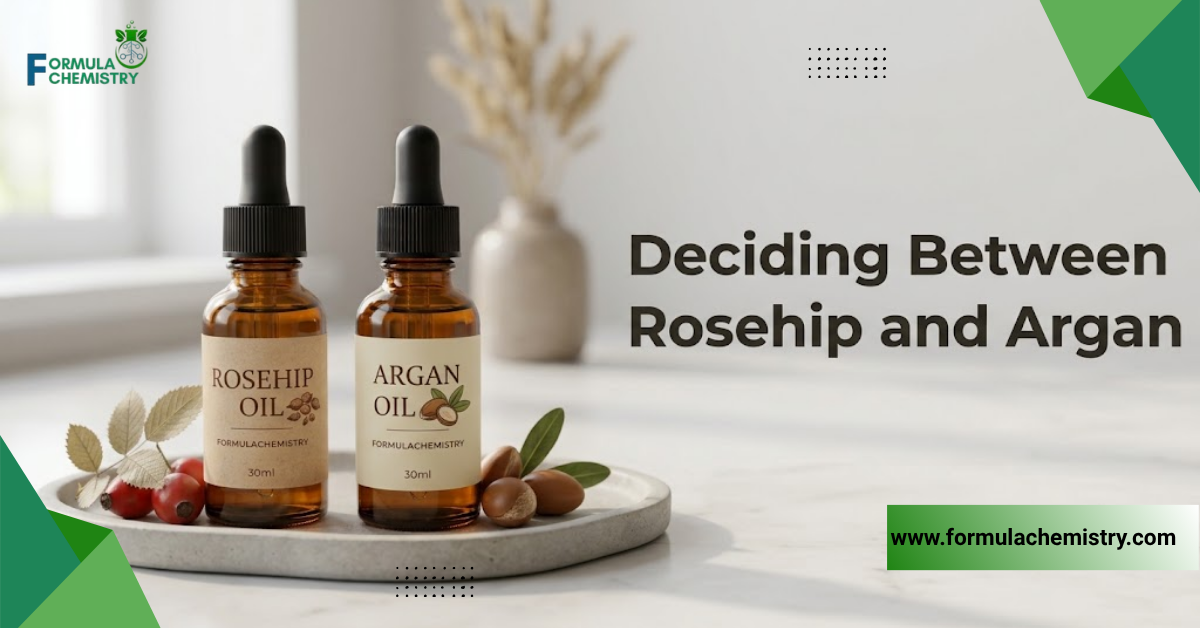
Choose argan oil when you want a gentle, versatile daily moisturiser that suits most skin types, works morning or night, and nourishes with vitamin E. It is the everyday oil that does many jobs well and asks little in return.
Choose rosehip oil when you want a targeted evening treatment for the appearance of tone, texture, scars, or fine lines, and you understand its actives are natural, gentle, and less predictable than a formulated retinoid. It is the specialist, best used at night and stored with care.
For many people, the fullest approach is both, with argan by day and rosehip by night. They solve different problems, so pairing them covers daily nourishment and targeted renewal at once.
Decide what you want your oil to do rather than which is fashionable. Match argan to daily hydration and rosehip to appearance-focused treatment, keep rosehip for the evening, store both carefully, and patch test before adding either to your routine.
Frequently Asked Questions
What is the difference between rosehip oil and argan oil?
Argan oil is a gentle daily moisturiser rich in vitamin E and oleic acid, while rosehip oil is a targeted treatment oil rich in vitamin C, linoleic acid, and a natural form of vitamin A. Argan suits everyday hydration, and rosehip suits the appearance of tone and texture. They do different jobs.
Which is better for wrinkles, rosehip or argan oil?
Rosehip is more associated with the appearance of fine lines because it contains a natural form of vitamin A and vitamin C. Its effect is gentle, and its vitamin A content is low and variable, so it is not a substitute for a formulated retinoid. Argan supports the skin with antioxidant vitamin E.
Which is better for acne scars?
Rosehip oil is the oil more often chosen for the appearance of acne scars, thanks to its vitamin A, vitamin C, and high linoleic acid. It is important to note that oils support the look of skin rather than removing scars. Results are gradual and vary between individuals.
Is rosehip oil really nature’s retinol?
Rosehip contains a naturally occurring form of vitamin A, which is the basis for the nickname, but the concentration is low and variable and degrades in light. It can support the appearance of renewed skin, yet it is gentler and less predictable than a dedicated retinol product. The comparison is loose rather than literal.
Can I use rosehip and argan oil together?
Yes, and they pair very well because they do different jobs. A common approach uses argan in the morning for gentle hydration and rosehip at night as a treatment oil. This covers daily nourishment and targeted renewal in one routine.
Which oil is better for oily skin?
Rosehip tends to suit oily and congestion-prone skin because of its high linoleic acid and light, dry-touch feel. Argan is also low on the comedogenic scale but is richer and higher in oleic acid. Both can work, with rosehip often the lighter option.
Why should rosehip oil be used at night?
Rosehip’s natural vitamin A content makes it sun-sensitive, so it is best applied in the evening. Argan has no such sensitivity and can be used morning or night. Using rosehip at night also aligns with the skin’s natural overnight renewal.
Which oil lasts longer once opened?
Argan generally lasts around 6 to 12 months once opened, while rosehip is more fragile at around 6 to 9 months. Rosehip’s actives degrade faster with light and heat. Both should be stored in dark glass in a cool place.
Key Takeaways
In rosehip oil vs argan oil, argan is a gentle, versatile daily moisturiser rich in vitamin E, while rosehip is a targeted treatment oil with vitamin C and a natural form of vitamin A. Argan suits everyday hydration on most skin types, and rosehip suits the appearance of tone, texture, and fine lines.
Rosehip’s vitamin A is genuine but low, variable, and light-sensitive, so it supports the look of renewed skin rather than acting like a formulated retinoid, and it is best used at night.
Argan is more stable and can be used morning or night, though neither oil keeps as long as a wax such as jojoba.
The two solve different problems, so pairing them, argan by day and rosehip by night, is often the smartest approach. Choose from what you want your oil to do, store both carefully in dark glass, and patch test before adding either to your routine.