

Quick Answer
This cosmetic ingredient comparison hub gathers side-by-side guides to the ingredient choices formulators face most often, from emulsifiers and preservatives to butters, waxes, humectants, and facial oils.
Each comparison explains what separates two similar ingredients, how they behave differently in a formula, and how to choose or substitute between them. Use the master table below to see every pairing at a glance, then follow the category blocks into the detailed guide for the decision you are making right now.
How to Use This Hub
Choosing between two similar ingredients is one of the most common problems in formulation, and it rarely comes down to which is better. It comes down to which is right for a specific formula, skin type, or claim.
This cosmetic ingredient comparison hub organises the most useful guides by category. Rather than reading them all, jump to the decision in front of you, whether that is picking an emulsifier for a face cream or replacing beeswax in a vegan balm.
Each linked guide follows the same logic, explaining the real differences, the practical consequences, and how to substitute one ingredient for another without breaking a formula. Together they form a decision toolkit rather than a glossary, and every one is built on verified data and bench-level reasoning at Formula Chemistry.
What Actually Separates Two Similar Ingredients
Before the individual comparisons, it helps to know the handful of factors behind almost every cosmetic ingredient comparison and choice. The same criteria recur across every category in this hub.
- Function and mechanism, meaning what the ingredient actually does and how it does it
- Concentration and use level, since the right percentage often matters more than the choice itself
- Skin feel and sensory profile, which frequently decides a finished product
- Compatibility, including pH range, charge, and interaction with other ingredients
- Stability and shelf life, covering heat sensitivity, oxidation, and storage
- Certification and positioning, such as natural, vegan, or COSMOS status
- Substitution ratio, because similar ingredients are rarely swapped one for one
Notice that natural against synthetic is only one line on that list. A good ingredient choice weighs all of these together, which is exactly what each detailed guide below works through.
The Master Comparison Table
The table below summarises every comparison in this hub, with the core distinction for each pairing. Follow any row into its full guide for the complete decision.

| Comparison | Category | Core distinction |
| BTMS-50 vs BTMS-25 | Conditioning emulsifier | Active content differs, so they are not a one-to-one swap |
| Cetyl vs cetearyl alcohol | Fatty alcohol | Single C16 versus a C16 and C18 blend, feel and firmness |
| Olivem 1000 vs Polawax | Emulsifier | Natural and skin-mimicking versus synthetic and self-thickening |
| Optiphen vs phenoxyethanol | Preservative | Optiphen is a phenoxyethanol blend, not a rival |
| Natural vs synthetic preservatives | Preservative | Origin does not determine safety or effectiveness |
| Glycerin vs hyaluronic acid | Humectant | Penetrating and reliable versus surface plumping |
| Hyaluronic acid vs sodium hyaluronate | Humectant | Salt affects solubility, weight affects penetration |
| Vitamin C vs niacinamide | Active | Compatible, with pH the only real consideration |
| Niacinamide vs retinol | Active | Gentle support versus potent renewal |
| Shea vs cocoa butter | Butter | Soft and penetrating versus hard and occlusive |
| Beeswax vs candelilla wax | Wax | Animal versus vegan, with a key substitution ratio |
| Jojoba vs argan oil | Carrier oil | Sebum-like wax versus nutrient-dense oil |
| Rosehip vs argan oil | Carrier oil | Treatment oil versus daily moisturiser |
Emulsifiers and Conditioning Agents
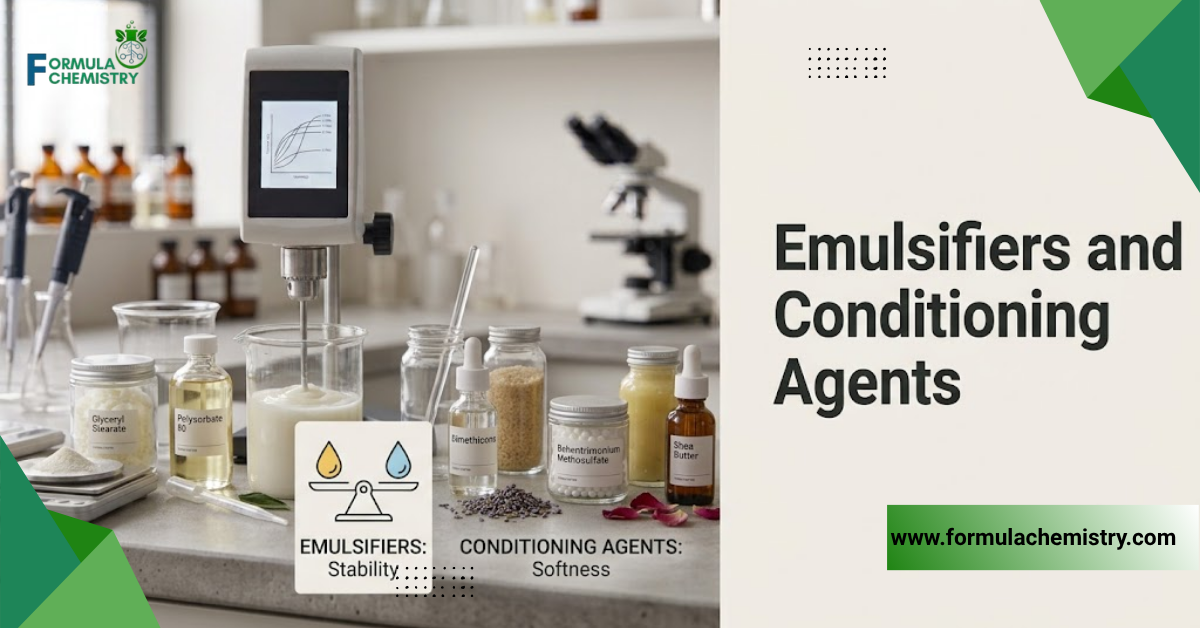
Emulsifiers bind oil and water into a stable cream or lotion, and the choice shapes texture, stability, and skin feel more than almost any other ingredient. This category also covers the conditioning emulsifiers that build hair products.
Emulsifier Choices
For a primary oil-in-water emulsifier, the natural versus traditional decision often comes down to Olivem 1000 vs Polawax. Olivem 1000 is olive-derived, COSMOS-validated, and forms skin-mimicking liquid crystal structures but needs a separate thickener, while Polawax is a synthetic, self-thickening emulsifying wax that is forgiving and rich but cannot carry a natural claim.
Conditioning Emulsifiers
For hair conditioners and creams, the BTMS-50 vs BTMS-25 comparison is essential, since the two differ in active content rather than quality.
BTMS-50 conditions more and thickens less; BTMS-25 does the reverse, and because their actives differ, they cannot be swapped one for one without recalculating.
Fatty Alcohols
Supporting these systems are the fatty alcohols, where cetyl alcohol vs cetearyl alcohol is the everyday choice.
Cetyl is a single C16 alcohol that stays lighter and silkier, while cetearyl is a C16 and C18 blend that thickens and firms more, with the added catch that cetearyl’s blend ratio varies between suppliers.
Preservatives
Preservation is where formulas succeed or fail on safety, and the choices here carry more weight than their small percentages suggest. Two comparisons anchor this category.
Choosing a Preservative System
The Optiphen vs phenoxyethanol guide corrects a common misunderstanding, since Optiphen is a blend built around phenoxyethanol rather than a competitor to it.
Phenoxyethanol alone is strong against bacteria but weak against fungi, while Optiphen adds caprylyl glycol to cover that gap, making it closer to a complete system in one product.
The Natural Preservative Debate
Stepping back, the natural vs synthetic preservatives guide tackles the myths on both sides. Origin does not determine safety; naturals genuinely tend toward narrower coverage and greater pH sensitivity.
The fears around parabens are largely overstated, and greenwashing muddies the whole picture, so a preservative should be judged on evidence and a challenge test rather than its story.
Humectants
Humectants attract and hold water, and the two comparisons here cover both the choice between different humectants and the finer choice between forms of the same one.
Glycerin Against Hyaluronic Acid
The glycerin vs hyaluronic acid guide compares the two most used humectants in skincare. Glycerin is a small molecule that penetrates and hydrates reliably even in low humidity.
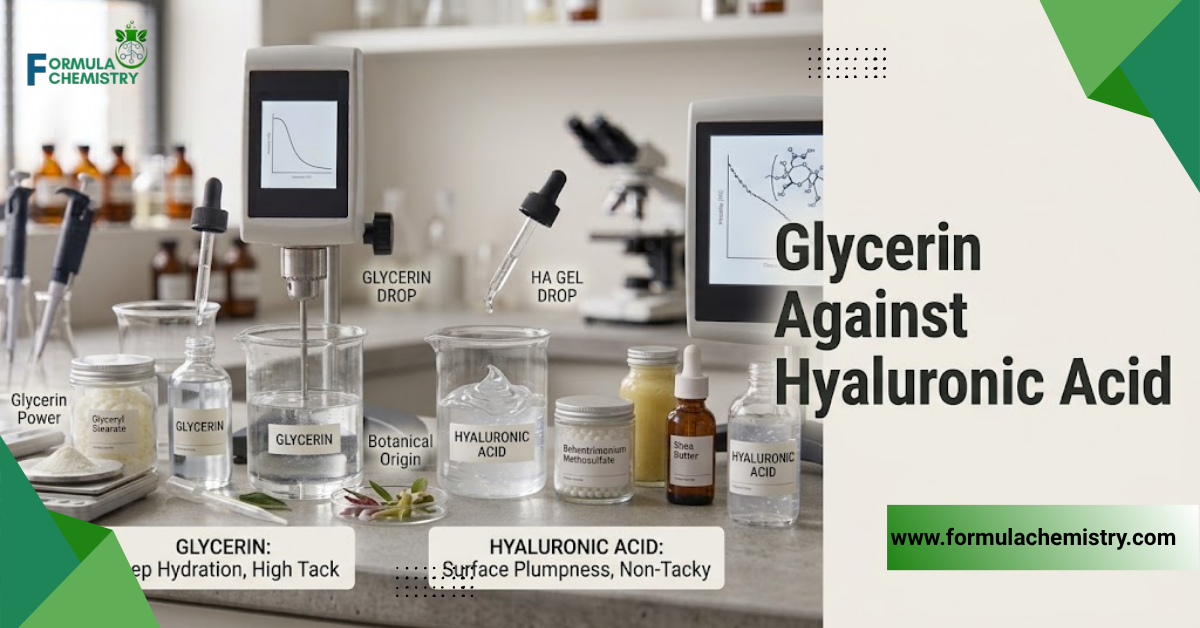
While hyaluronic acid sits more at the surface for immediate plumping but can draw water from deeper skin in dry air unless sealed with an occlusive.
The Two Forms of Hyaluronic Acid
Going deeper, the hyaluronic acid vs sodium hyaluronate guide separates two things the industry often confuses. Sodium hyaluronate is the salt form.
This improves solubility and stability, while penetration depth is actually a molecular weight effect rather than a salt effect, so the two decisions are independent.
Active Ingredients
Active ingredients drive the results consumers notice, and the comparisons here are as much about compatibility as about which is stronger.
Can You Combine Vitamin C and Niacinamide
The vitamin C vs niacinamide guide answers a question rooted in an old myth. The two do not cancel out at skincare temperatures, since that idea came from 1960s high-heat lab studies, and the only real consideration is pH, solved by layering or by using a neutral-pH vitamin C derivative.
Niacinamide Against Retinol
For anti-aging, the niacinamide vs retinol guide weighs a potent active against a gentle one. Retinol has the stronger evidence for the appearance of fine lines but can irritate; niacinamide is gentler and supports the barrier, and the two work well together because niacinamide helps reduce retinol’s irritation.
Butters and Waxes
Butters and waxes give structure, richness, and protection to balms, creams, and lip products, and the choices here shape both feel and firmness.
Shea Against Cocoa Butter
The shea butter vs cocoa butter guide traces every difference back to fatty acids. Shea is soft, higher in oleic acid, penetrating, and low on the comedogenic scale, which suits facial products, while cocoa is hard, brittle, more occlusive, and rated comedogenic 4, which suits firm body products and balms.
Beeswax Against Candelilla Wax
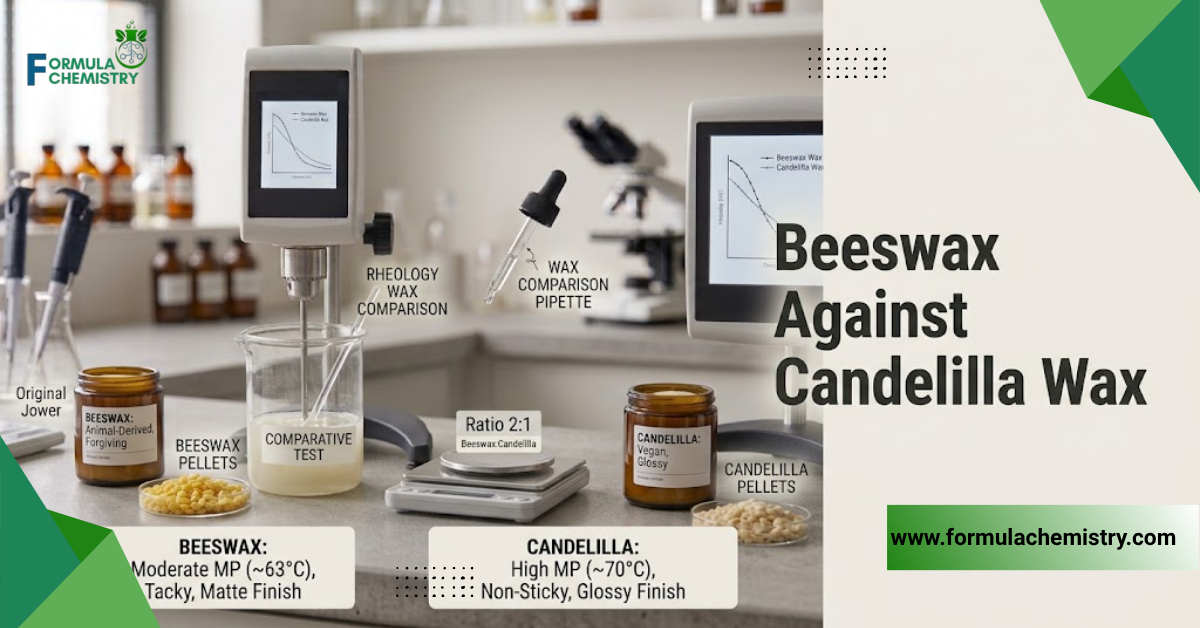
The beeswax vs candelilla wax guide is the go-to for vegan reformulation. Beeswax is animal-derived and candelilla is the leading vegan substitute, but because candelilla carries roughly twice the stiffening power, the rule of thumb is to use about half as much and move the difference into the oils.
Carrier and Facial Oils
Carrier oils dilute actives and stand alone as facial oils, and the two comparisons here share argan as a reference point while pulling in different directions.
Jojoba Against Argan
The jojoba oil vs argan oil guide starts with a surprise, since jojoba is technically a liquid wax ester that mimics sebum rather than a true oil. It is light, balancing, and lasts for years, while argan is a nutrient-dense triglyceride rich in vitamin E that nourishes dry and mature skin but oxidises sooner.
Rosehip Against Argan
The rosehip oil vs argan oil guide frames the two as different tools rather than rivals. Argan is a gentle daily moisturiser, while rosehip is a targeted evening treatment oil whose natural vitamin A is genuine but low and light-sensitive, so it supports the appearance of tone and texture rather than acting like a formulated retinoid.
How to Approach Any Cosmetic Ingredient Comparison
Once you have used a few of these guides, a repeatable cosmetic ingredient comparison method emerges that works for any two ingredients, even pairings not yet in this hub. It turns a confusing choice into a short checklist.
Start with function, confirming the two ingredients genuinely do the same job before comparing them. Then compare their mechanism and active content, since two ingredients with the same purpose often differ in strength or how they work.
Next, weigh skin feel, compatibility, and stability against your specific formula and claims, because the right choice is always relative to the product. Finally, check the substitution ratio rather than assuming a one-to-one swap, and confirm any change with a small test batch.
That sequence, function first and test batch last, is the thread running through every guide in this hub. Master it once, and you can reason through ingredient choices confidently rather than guessing.
Ingredient Substitution Quick Reference
Substitution is where similar ingredients most often trip people up, because the names imply interchangeability that the chemistry does not support. This quick reference summarises the substitution catch in each pairing.
| Swap | The catch |
| BTMS-25 to BTMS-50 | Halve the amount to match active, then rebuild fatty alcohol |
| Cetyl to cetearyl alcohol | Expect more firmness; reduce slightly to hold texture |
| Polawax to Olivem 1000 | Add a thickener, since Olivem does not self-thicken |
| Phenoxyethanol to Optiphen | Optiphen already contains phenoxyethanol plus caprylyl glycol |
| Beeswax to candelilla | Use about half, move the difference into oils |
| Cocoa to shea butter | Softens the product; add a wax to restore firmness |
| High to low molecular weight HA | Changes penetration, not solubility |
The pattern across every row is the same. Similar ingredients are seldom a one-to-one swap, so match the active or the effect rather than the weight, and confirm the change in a test batch before committing.
This is the single habit that separates a reliable reformulation from a broken one. Each detailed guide in this cosmetic ingredient comparison hub works the specific ratio through in full, so follow the relevant one before you make a swap.
Frequently Asked Questions
What is a cosmetic ingredient comparison?
A cosmetic ingredient comparison examines two similar ingredients side by side to show how they differ in function, feel, stability, and use.
It helps formulators choose the right ingredient for a specific product rather than assuming two similar materials are interchangeable. This hub collects such comparisons by category.
How do I choose between two similar ingredients?
Start by confirming they do the same job, then compare mechanism, use level, skin feel, compatibility, stability, and certification against your formula. Check the substitution ratio rather than assuming a one-to-one swap. Always confirm the choice with a small test batch.
Can I always substitute one ingredient for a similar one?
Not at equal weight in most cases. Many similar ingredients differ in active content or strength, such as BTMS-50 and BTMS-25, or candelilla and beeswax. Match the active or the effect rather than the weight, and test the result before scaling.
Are natural ingredients better than synthetic ones?
Not automatically, since origin does not determine safety or effectiveness. Some natural ingredients are effective, and some are irritating, just as some synthetics are gentle and well-studied.
Each choice should be judged on evidence and performance rather than on the natural or synthetic label.
Which comparison should I read first?
Start with the decision in front of you, using the master table to find it. If you are formulating a cream, the emulsifier and preservative guides are usually most urgent. If you are choosing actives or oils, jump to those categories instead.
Do these comparisons apply to both formulators and consumers?
Yes, though at different depths. Formulators use them for ingredient selection and substitution, while consumers use them to understand what is in their products and which suits their skin. Each guide covers both the bench and the skin perspective.
Why do similar ingredients feel so different on skin?
Small differences in structure, chain length, molecular weight, or fatty acid profile change how an ingredient absorbs, spreads, and feels. For example, cetyl and cetearyl alcohol differ by one fatty alcohol, yet feel distinct. The detailed guides explain these differences on a case-by-case basis.
How often is this hub updated?
New comparisons are added as common formulation questions arise, and existing guides are revised as data and regulations change. The master table always reflects the current set. Check back for new pairings across emulsifiers, actives, preservatives, and oils.
Key Takeaways
This cosmetic ingredient comparison hub brings together side-by-side guides for emulsifiers, preservatives, humectants, actives, butters, waxes, and oils, each explaining what truly sets two similar ingredients apart and how to choose between them. The master table lets you find any pairing at a glance and follow it into the full guide.
Almost every ingredient choice comes down to the same factors: function, use level, skin feel, compatibility, stability, certification, and the substitution ratio. Natural against synthetic is only one of those lines, and rarely the deciding one.
Use the guide that matches your decision, follow the function-first and test-batch-last method, and treat similar ingredients as distinct rather than interchangeable.
Whether you are formulating a cream, preserving a lotion, or choosing a facial oil, the right comparison turns a guess into a confident, evidence-based decision, which is exactly what this hub is built to support at Formula Chemistry.