

Quick Answer
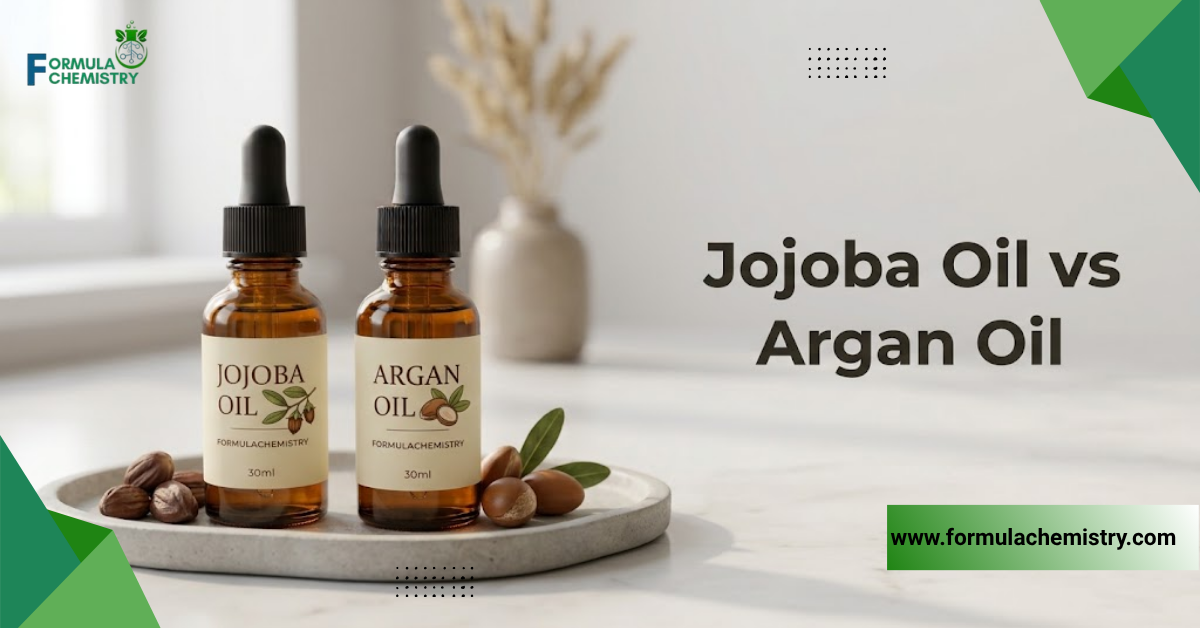
The core difference between jojoba oil vs argan oil is that jojoba is technically a liquid wax ester that mimics human sebum, while argan is a nutrient-dense triglyceride oil rich in vitamin E.
Jojoba is lightweight, balancing, and exceptionally stable with a shelf life of several years, which suits oily, acne-prone, and sensitive skin.
Argan is richer and more nourishing with a shorter shelf life of around 12 to 18 months, which suits dry and mature skin, and many formulators use jojoba as an everyday base and argan as a richer treatment oil.
Introduction
The jojoba oil vs argan oil question is one of the most common in natural skincare, and the honest answer starts with a surprise. Jojoba is not really an oil at all, and that single fact explains most of what separates the two.
Both are described as facial oils, both are well tolerated, and both have strong reputations, which is why the jojoba oil vs argan oil comparison comes up so often. Yet they behave differently on skin because they are built differently at the molecular level.
I formulate with both regularly, and I rarely choose between them on quality. The choice is about what a formula needs, whether that is sebum-like balance or deep antioxidant nourishment.
This guide covers what each one actually is, how their chemistry shapes skin feel and shelf life, which suits which skin type, the comedogenic question, and how to choose or combine them in a formula.
What Jojoba Oil Is
Jojoba oil is pressed from the seeds of Simmondsia chinensis, a desert shrub native to the Sonoran Desert of North America. Despite the name, it is technically a liquid wax ester rather than a true oil, and that distinction is the key to everything it does.
Human sebum, the oil our skin naturally produces, is largely made of wax esters. Jojoba is structurally over 97% similar to the wax ester fraction of sebum, which is why skin recognises and accepts it so readily.
Why the Wax Ester Structure Matters
Because it mimics sebum, jojoba absorbs easily, forms a light protective film, and helps balance the skin’s own oil production. Skin that reads as oily can actually calm down when given a sebum-like oil, since it is less prompted to overproduce.
The wax structure also explains jojoba’s remarkable stability. Lacking the glycerin backbone of a triglyceride, it does not go rancid the way ordinary oils do, giving it a shelf life of five years or more.
What Argan Oil Is
Argan oil is extracted from the kernels of the Moroccan argan tree, Argania spinosa. Unlike jojoba, it is a true triglyceride oil, three fatty acids bonded to a glycerol backbone, which puts it in the same structural family as most cosmetic oils.
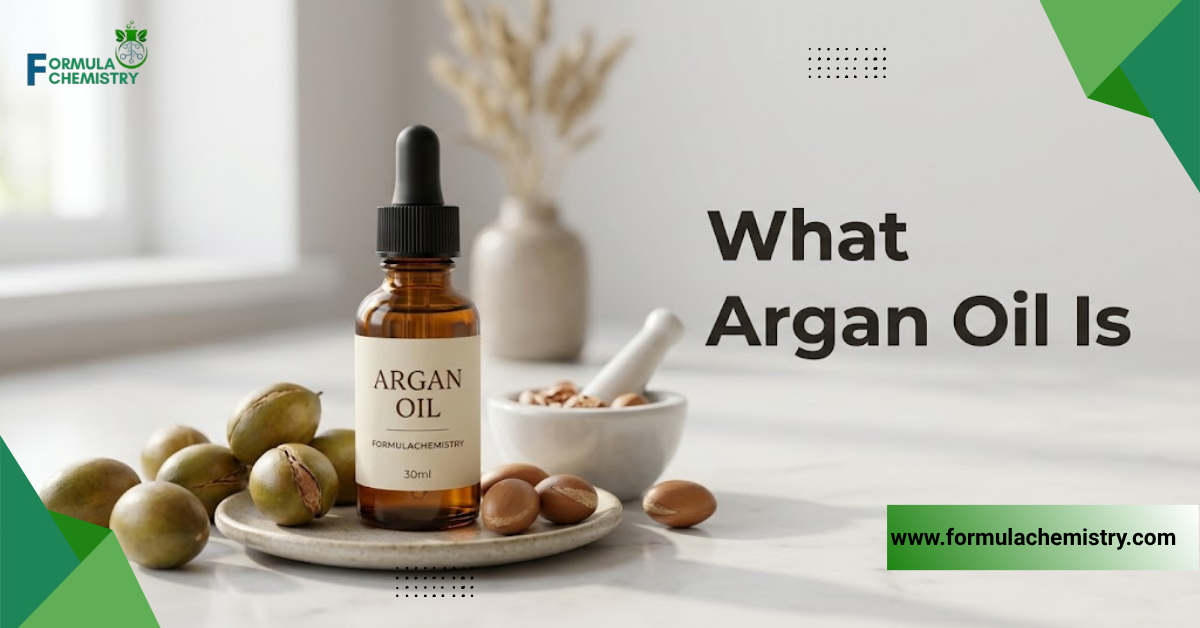
Its reputation rests on its nutrient density. Argan is exceptionally rich in tocopherol, better known as vitamin E, along with carotenoids, polyphenols, squalene, phytosterols, and a balance of oleic and linoleic fatty acids.
Why the Nutrient Profile Matters
That concentration of antioxidants and fatty acids is what makes argan such a nourishing oil. It supports the skin barrier, helps soften dry and rough patches, and delivers antioxidant protection that suits mature and stressed skin.
The triglyceride structure has a trade-off, though. Because it contains unsaturated fatty acids on a glycerol backbone, argan oxidises over time and carries a shorter shelf life than jojoba, generally around 12 to 18 months when stored well.
Jojoba Oil vs Argan Oil: The Comparison
The two align as facial oils and diverge on structure, feel, and stability. The table below sets them side by side.
| Property | Jojoba oil | Argan oil |
| Botanical source | Simmondsia chinensis seeds | Argania spinosa kernels |
| Structure | Liquid wax ester | Triglyceride oil |
| Sebum similarity | Very high, mimics sebum | Lower, a true oil |
| Key nutrients | Vitamin E and B, some antioxidants | High vitamin E, polyphenols, squalene |
| Skin feel | Light, fast-absorbing | Slightly richer, nourishing |
| Best for | Oily, acne-prone, sensitive, all types | Dry, mature, dull skin |
| Comedogenic rating | Around 2 | Around 0 |
| Shelf life | Several years | ~12 to 18 months |
| Oil production balance | Yes, regulates sebum | Less balancing, more nourishing |
Read the structure and skin-type rows together, because they carry the decision. Jojoba is the sebum-mimicking balancer, and argan is the nutrient-dense nourisher, which is the honest way to separate them.
Neither is superior overall. Jojoba wins on balance, stability, and versatility, while argan wins on antioxidant richness and deep nourishment.
How They Feel and Behave on Skin
Skin feel is where the jojoba oil vs argan oil choice is often decided, and many formulators make the final call here. Jojoba feels light and almost dry-touch, absorbing quickly and leaving little residue, which is why it disappears into the skin so cleanly.
Argan feels slightly richer and more emollient, sitting a little longer as it delivers its fatty acids and antioxidants. It reads as nourishing rather than light, which is exactly what dry skin wants.
Both are genuinely lightweight compared with heavier oils, and both rebuild the skin’s lipid layer. The difference is one of degree and purpose, with jojoba leaning toward balance and argan toward replenishment.
For hair, the same logic applies. Jojoba suits the scalp because it mimics sebum and helps regulate oil, while argan suits the hair shaft, smoothing and nourishing dry, damaged lengths.
The Comedogenic Question
Pore-clogging potential matters most for acne-prone skin, and both oils sit low on the comedogenic scale. The commonly cited ratings put argan around 0 and jojoba around 2, though published ratings vary between sources and are only a rough guide.
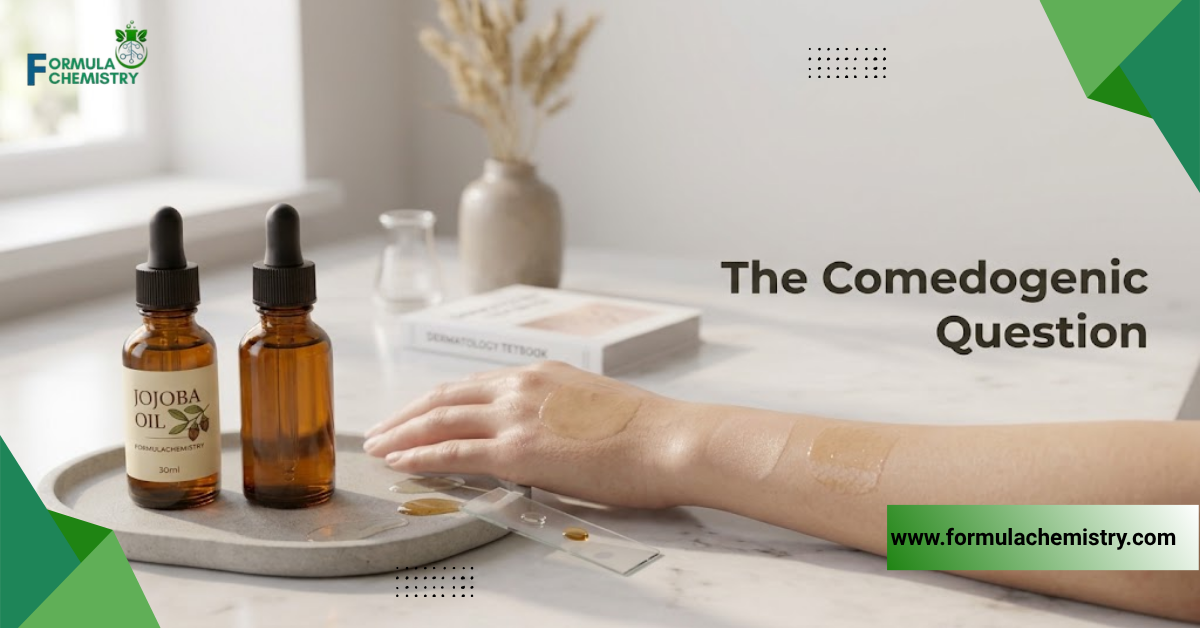
In practice, both are considered suitable for acne-prone skin, and jojoba’s sebum-balancing behaviour gives it a particular reputation for oily and breakout-prone complexions. Its ability to signal the skin to moderate its own oil is a genuine advantage here.
Argan’s very low rating and high linoleic acid content also make it a reasonable choice for acne-prone skin that needs more nourishment. Skin low in linoleic acid can benefit from an oil that supplies it, which argan does.
The sensible approach is to patch test either oil before regular use. Comedogenic ratings are population averages rather than guarantees, and individual skin responds in its own way.
Which to Choose for Your Skin or Formula
Skin type and product goal usually settle the decision quickly. Each oil has clear territory where it is the stronger pick.
- Oily or acne-prone skin: jojoba, for its sebum-balancing, lightweight nature
- Sensitive or reactive skin: jojoba, for its close match to the skin’s own lipids
- Dry skin: argan, for its richer, more nourishing profile
- Mature or dull skin: argan, for its vitamin E and antioxidant density
- Combination skin: jojoba, for its balancing effect across zones
- A stable base oil for a formula: jojoba, for its multi-year shelf life
- An antioxidant treatment layer: argan, for its nutrient concentration
Many of the best routines use both rather than choosing. Jojoba works as a daily, barrier-supporting foundation, while argan serves as a richer treatment for dry patches, mature skin, or overnight nourishment.
Formulating With Jojoba and Argan
In a jojoba oil vs argan oil decision for formulating, both are simple to work with and belong in the oil phase or added to an anhydrous blend. Their differences shape how you use them rather than how you handle them.
Using Jojoba as a Stable Base
Jojoba’s outstanding stability makes it an excellent carrier and base oil, since it resists rancidity and extends the working life of a blend. It also carries actives and essential oils well and rarely interacts badly with other ingredients.
Because it is light and non-greasy, jojoba suits facial serums, lightweight lotions, and products where a clean finish matters. It is one of the most reliable oils to build a formula around, which is why Formula Chemistry reaches for it so often as a foundation.
Using Argan as a Nourishing Active
Argan is better treated as a nourishing, antioxidant-rich addition than as the bulk of a formula. Its vitamin E content supports the blend, and its fatty acids enrich creams and serums aimed at dry or mature skin.
Its shorter shelf life is the one thing to plan around. Keep argan in dark glass, protect it from heat and light, and consider adding an antioxidant such as vitamin E to formulas that rely on it, a habit we follow at Formula Chemistry to protect oxidation-prone oils.
Sourcing and Quality Signals
Quality varies enormously between suppliers, and knowing what to look for protects both your formula and your claims. Both oils reward buying carefully rather than cheaply.
Choosing Good Jojoba
Look for cold-pressed, unrefined golden jojoba for the fullest profile, though refined clear jojoba is useful where you want no colour or scent. Its stability means it stores well regardless, but genuine cold-pressed material carries more of the minor nutrients.
Because jojoba is expensive to produce, adulteration with cheaper oils does occur. Buying from a reputable supplier and checking for a genuine wax ester profile protects you from a diluted product.
Choosing Good Argan
For argan, cold-pressed and unrefined cosmetic-grade oil retains the most vitamin E and antioxidants, and the culinary roasted version is not what you want for skincare. Origin and processing matter more here because argan’s actives are what you are paying for.
Argan’s shorter shelf life makes freshness a real concern. Buy in quantities you will use within its window, confirm a recent production date, and store it correctly from the moment it arrives.
Shelf Life and Storage
The stability gap is one of the most practical points in the jojoba oil vs argan oil comparison. Jojoba’s wax structure means it can last several years without going rancid, which makes it forgiving to store and slow to spoil.
Argan, as a triglyceride, oxidises more readily and typically lasts around 12 to 18 months. It rewards careful storage in a cool, dark place and in dark glass, since light and heat accelerate its decline.
For a formulator, this difference influences both shelf life and cost planning. A jojoba-based product is inherently more stable, while an argan-rich one needs tighter attention to antioxidants, packaging, and expiry.
Deciding Between Jojoba and Argan
Choose jojoba oil when you want a light, balancing, exceptionally stable oil that suits oily, acne-prone, sensitive, or combination skin, or when you need a dependable base to build a formula around. Its sebum-mimicking structure makes it the most versatile single facial oil.
Choose argan oil when you want deep nourishment and antioxidant richness for dry, dull, or mature skin, and you are willing to manage its shorter shelf life. Its vitamin E and fatty acid profile make it a rewarding treatment oil.
For many products and routines, using both is the smartest answer. Let jojoba be the balancing foundation and argan the nourishing treatment, and you cover both barrier support and antioxidant care.
Decide from your skin’s needs or your formula’s goal rather than reputation alone. Match jojoba to balance and stability and argan to nourishment and antioxidants, patch test before regular use, and store each oil to suit its very different stability.
Frequently Asked Questions
What is the difference between jojoba oil and argan oil?
Jojoba oil is technically a liquid wax ester that mimics human sebum, while argan oil is a nutrient-dense triglyceride oil rich in vitamin E. Jojoba is lighter, balancing, and very stable, whereas argan is richer, more nourishing, and shorter-lived. Their structures explain nearly every difference.
Which is better, jojoba or argan oil for skin?
Neither is universally better, since they suit different skin. Jojoba suits oily, acne-prone, sensitive, and combination skin thanks to its sebum-balancing nature, while argan suits dry, dull, and mature skin thanks to its antioxidant richness. Many people use both.
Is jojoba or argan oil better for the face?
It depends on your skin. For oily or acne-prone faces, jojoba is often the better choice because it balances oil production. For dry or mature faces, argan offers deeper nourishment. Both are lightweight enough for facial use.
Which oil is better for acne-prone skin?
Both are suitable, with commonly cited comedogenic ratings of around 0 for argan and 2 for jojoba. Jojoba’s sebum-balancing behaviour gives it a strong reputation for oily and breakout-prone skin. Argan’s linoleic acid can also benefit acne-prone skin that needs nourishment.
Why does jojoba oil last so much longer than argan?
Jojoba is a wax ester without the glycerin backbone of a true oil, so it does not go rancid the way triglyceride oils do, lasting several years. Argan is a triglyceride that oxidises over time, giving it a shelf life of around 12 to 18 months. Storage in dark glass helps both.
Is jojoba oil really not an oil?
Correct, jojoba is technically a liquid wax ester rather than a triglyceride oil. This is why it so closely resembles human sebum and why it is exceptionally stable. It behaves like an oil in use but differs chemically.
Can I use jojoba and argan oil together?
Yes, and combining them is a popular approach. Jojoba provides a light, balancing, stable base while argan adds antioxidant-rich nourishment. Using jojoba daily and argan as a treatment layer covers both balance and deep nourishment.
Which oil is better for hair?
Jojoba suits the scalp because it mimics sebum and helps regulate oil, making it useful for oily or flaky scalps. Argan suits the hair shaft, smoothing and nourishing dry, damaged lengths. Many hair routines use both for different roles.
Key Takeaways
The heart of jojoba oil vs argan oil is structure: jojoba is a liquid wax ester that mimics sebum, while argan is a nutrient-dense triglyceride rich in vitamin E. That single difference explains why jojoba balances and lasts for years, and why argan nourishes but oxidises within around 12 to 18 months.
Match the oil to the need. Jojoba suits oily, acne-prone, sensitive, and combination skin and makes an exceptionally stable formula base, while argan suits dry, dull, and mature skin as a rich antioxidant treatment.
For the fullest result, use both, with jojoba as a balancing daily foundation and argan as a nourishing treatment layer. Choose based on your skin type or formula goal, patch test first, and store each oil according to its very different stability.