

Introduction
A solid conditioner bar fails when the formulator treats it like a lotion with less water. A hair conditioner bar needs a different structure because it must melt on wet hair, deposit cationic conditioning agents, rinse cleanly, and still remain firm in a humid bathroom.
This guide gives you a complete bench ready formula, explains BTMS ratios, shows how butter selection affects glide, and gives processing details that prevent greasy drag, crumbling, sweating, and weak conditioning.
Formula Chemistry approaches conditioner bars as anhydrous cationic systems first and haircare formats second. That order matters because the structure determines the user experience before the marketing concept does.
What A Conditioner Bar Must Do On Hair
A conditioner bar must soften wet hair through controlled deposition. The positive charge from Behentrimonium Methosulfate helps the formula adsorb onto the negatively charged areas of the hair surface.
The bar must also provide slip during rinsing. Slip comes from the combined action of cationic conditioning agents, fatty alcohols, esters, and selected butters.
A good bar should not leave waxy resistance after rinsing. That problem usually comes from too much hard butter, too much fatty alcohol, or poor melting during manufacture.
Complete Hair Conditioner Bar Formula
This formula is designed for dry, normal, wavy, curly, and moderately textured hair. It gives a firm bar with good wet glide, controlled richness, and a rinse feel that does not collapse into greasiness.
| Phase | INCI Name | Common Name | Percentage Weight |
| A | Behentrimonium Methosulfate, Cetyl Alcohol, Butylene Glycol | BTMS 50 | 40.00% |
| A | Cetearyl Alcohol | Cetearyl Alcohol | 18.00% |
| A | Theobroma Cacao Seed Butter | Cocoa Butter | 10.00% |
| A | Mangifera Indica Seed Butter | Mango Butter | 8.00% |
| A | Cocos Nucifera Oil | Coconut Oil | 5.00% |
| A | Coco Caprylate/Caprate | Coco Caprylate | 6.00% |
| A | Hydrogenated Ethylhexyl Olivate, Hydrogenated Olive Oil Unsaponifiables | Olive Derived Emollient Wax | 5.00% |
| B | Panthenol | D Panthenol | 2.00% |
| B | Hydrolyzed Rice Protein | Hydrolyzed Rice Protein | 2.00% |
| B | Tocopherol | Vitamin E | 0.50% |
| B | Benzyl Alcohol, Salicylic Acid, Glycerin, Sorbic Acid | Geogard ECT | 1.00% |
| B | Lavandula Angustifolia Oil | Lavender Essential Oil | 0.50% |
| B | Lactic Acid | Lactic Acid 80% Solution | 1.00% |
| B | Tapioca Starch | Tapioca Starch | 1.00% |
| Total | 100.00% |
For any batch size, multiply the percentage by the target batch weight. For a 500 g batch, 40.00% BTMS 50 equals 200 g.
Ingredient Breakdown By Phase for Hair Conditioner Bar
Phase A Conditioning Base
Behentrimonium Methosulfate is the primary conditioning active in this formula. BTMS 50 is chosen because it provides conditioning, emulsifying support, and built in fatty structure through cetyl alcohol.
At 40.00%, BTMS 50 gives strong detangling without making the bar brittle. Lower levels often feel underpowered on curly or processed hair.
Cetearyl Alcohol builds hardness and improves wet slip. It was chosen over cetyl alcohol alone because the mixed fatty alcohol profile gives a creamier rub out.
At 18.00%, cetearyl alcohol supports firmness without turning the bar into a waxy block. Too much cetearyl alcohol causes slow melt and dull residue.
Theobroma Cacao Seed Butter gives hardness and heat resistance. It was selected in a controlled amount because cocoa butter gives structure but can feel heavy if pushed too high.
Mangifera Indica Seed Butter softens the cocoa butter profile. Mango butter improves glide and reduces the brittle snap that cocoa butter can create in solid formats.
Cocos Nucifera Oil improves quick melt during use. Coconut oil also reduces the dry drag that can appear when a bar contains high fatty alcohol content.
Coco Caprylate/Caprate gives a lighter, silicone like slip without using silicone. It helps the bar move through wet hair instead of sitting on the surface as a dense wax film.
Hydrogenated Ethylhexyl Olivate, Hydrogenated Olive Oil Unsaponifiables add structure and a smoother cushion. This material was chosen over beeswax because it gives better cosmetic elegance and less tack.
Phase B Cool Down Additions
Panthenol supports hair feel and helps improve the appearance of softness. It is added below 70°C because prolonged high heat is poor handling practice for panthenol.
Hydrolyzed Rice Protein contributes a light film forming effect. It is used at 2.00% because higher levels can make some hair feel stiff.
Tocopherol protects the oil phase from early oxidation. It is not a preservative and should never be counted as microbial protection.
Benzyl Alcohol, Salicylic Acid, Glycerin, Sorbic Acid is included because conditioner bars contact wet hands and sit in humid use conditions. Even a low water bar can collect water on the surface during use.
Lavandula Angustifolia Oil gives a light fragrance profile. Keep the level low because conditioner bars stay in close contact with wet scalp areas during application.
Lactic Acid helps bring the final bar slurry into a hair friendly acidic range. It also supports a smoother cuticle feel when the bar is used correctly after shampoo.
Tapioca Starch reduces surface tack and improves demolding. It also softens the initial rub feel when the bar meets wet hands.
BTMS Ratios For A Hair Conditioner Bar
BTMS 50 usually performs well in solid conditioner bars between 25.00% and 45.00%. The right level depends on hair type, bar hardness, and how much fatty alcohol sits beside it.
| Hair Need | BTMS 50 Range | Fatty Alcohol Range | Best Use |
| Fine hair | 25.00% to 32.00% | 12.00% to 16.00% | Light conditioning |
| Normal hair | 32.00% to 38.00% | 15.00% to 18.00% | Balanced use |
| Dry hair | 38.00% to 45.00% | 16.00% to 20.00% | Stronger slip |
| Coarse or curly hair | 40.00% to 48.00% | 16.00% to 22.00% | Higher deposition |
A 40.00% BTMS 50 level gives about 20.00% active behentrimonium methosulfate if the supplied material contains 50.00% active matter. That makes this formula rich enough for dry hair without turning the bar into a sticky paste.
Do not raise BTMS and fatty alcohol together without reducing butter. That mistake creates a bar that looks stable but drags on wet hair.
Butter Selection And Texture Control for Hair Conditioner Bar
Butter selection decides how the bar melts. Cocoa butter gives hardness, mango butter gives glide, shea butter gives richness, and kokum butter gives a dry firm break.
For this formula, cocoa butter and mango butter are paired because they balance firmness and application comfort. Cocoa butter alone would make the bar firmer but less elegant on wet hair.
| Butter | Main Contribution | Formulation Risk | Best Level |
| Cocoa Butter | Hardness and heat resistance | Heavy feel | 5.00% to 12.00% |
| Mango Butter | Smooth glide | Softening of bar | 5.00% to 15.00% |
| Shea Butter | Rich after feel | Greasy drag | 3.00% to 10.00% |
| Kokum Butter | Firm dry texture | Brittle snap | 3.00% to 8.00% |
Do not build a conditioner bar around butter alone. Butters support the format, while cationic conditioning agents do the main hair conditioning work.
Technical Data And Formulation Considerations for Hair Conditioner Bar
The target finished pH for the bar slurry is 4.2 to 4.8. Test pH by dispersing 10 g of finished melted bar into 90 g of distilled water at room temperature, then measure after full dispersion.
This method gives a practical use dilution reading. Measuring pH directly in an anhydrous bar gives unreliable results because pH requires an aqueous medium.
The finished bar should feel firm after 24 hours and reach final hardness after 48 to 72 hours. Fatty alcohol crystallization continues after pouring, so early softness does not always mean the batch failed.
The formula should not be homogenized at high shear. Slow overhead mixing gives a smoother cationic melt and reduces the risk of aeration, graininess, and unstable cooling.
Step-by-Step Method for Hair Conditioner Bar
1. Prepare The Work Area
Sanitize the bench, utensils, molds, thermometer probe, and mixing vessel. Dry every tool fully because water droplets can create local soft spots in a solid bar.
Weigh every ingredient accurately to 0.01 g for small lab batches. Small errors show quickly in conditioner bars because the structure depends on narrow ratios.
2. Melt Phase A
Add BTMS 50, cetearyl alcohol, cocoa butter, mango butter, coconut oil, coco caprylate, and olive derived emollient wax to a heat safe vessel. Heat to 75°C to 80°C using a water bath or controlled hot plate.
Mix at 300 to 500 rpm until the phase becomes fully clear or evenly molten. Hold for 10 minutes after visual melting so the fatty alcohols and conditioning base fully combine.
3. Cool With Gentle Mixing
Remove the vessel from heat and continue mixing at 250 to 350 rpm. Cool the batch to 68°C before adding heat-sensitive materials.
Scrape the sides often because fatty alcohols start crystallizing at the vessel wall first. Uneven cooling can create grainy bars.
4. Add Phase B Ingredients
Add panthenol, hydrolyzed rice protein, tocopherol, preservative, lavender essential oil, lactic acid, and tapioca starch. Mix at 300 rpm until uniform.
Keep the batch between 60°C and 68°C during this stage. If the batch thickens too quickly, return it to gentle heat for a short time and keep it below 70°C.
5. Check The pH Slurry
Take 10 g of the melted batch and disperse it into 90 g of distilled water. Stir until the sample is evenly cloudy, then cool to 25°C before testing.
Adjust the main batch only if the slurry falls outside pH 4.2 to 4.8. Use tiny additions of lactic acid solution to reduce pH or a 10.00% arginine solution to raise it.
6. Pour Into Molds
Pour the formula at 58°C to 62°C. This range gives enough fluidity for clean filling while reducing settling of starch and powders.
Tap the mold gently to release trapped air. Do not overwork the surface because rapid cooling can create dull streaks.
7. Cool And Cure
Let the bars set at room temperature for 4 hours. Move them to a cool room for another 12 to 24 hours before demolding.
Allow the bars to cure for 48 to 72 hours before packaging. This waiting period gives a harder bar and a cleaner rub out.
How To Use The Finished Bar
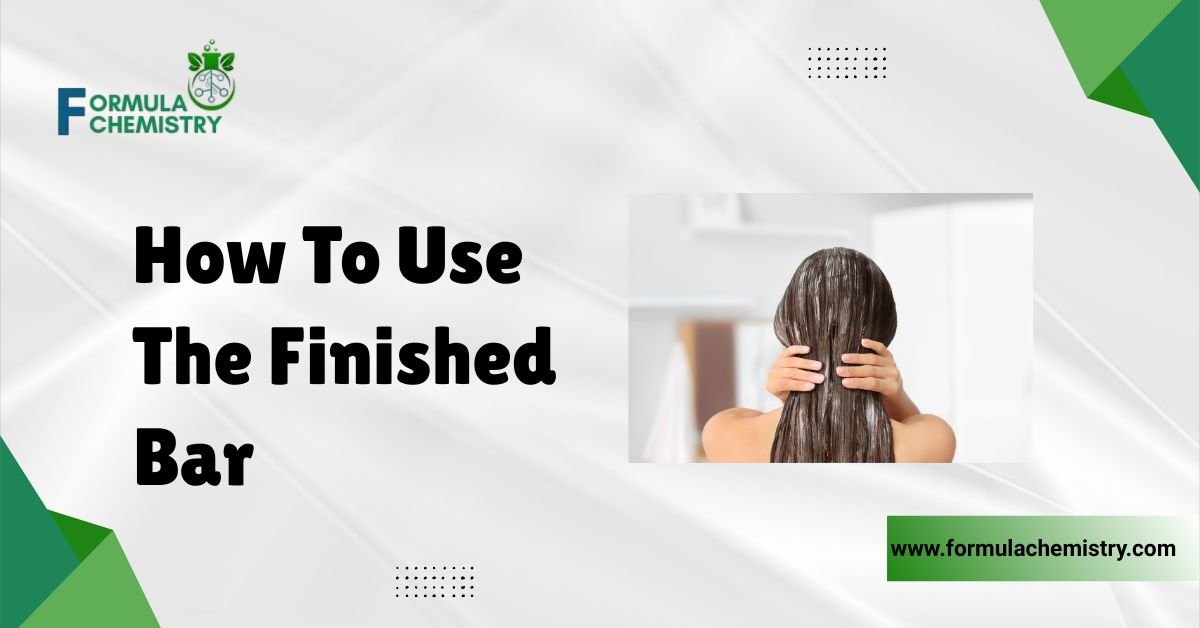
Shampoo first, rinse well, and keep the hair wet. Glide the conditioner bar down the hair length from mid lengths to ends. Use fewer passes on fine hair and more passes on coarse or curly hair. Leave the product on for 1 to 3 minutes, then rinse until the hair feels smooth but not coated.
Store the bar on a draining dish between uses. Standing water shortens bar life and increases surface softness.
Preservation And Water Exposure
This formula is low water, not sterile. The preservative is included because the bar repeatedly contacts water during use.
Geogard ECT is suitable here because the formula targets an acidic pH and contains ingredients that will be exposed to wet bathroom conditions. The level remains at 1.00%, which is suitable for many rinse-off cosmetic systems.
Preservative choice must follow local regulations and supplier limits. Never remove preservation from a conditioner bar that will be used with wet hands.
Stability Testing Plan
Test three bars at room temperature, 40°C, and freeze thaw cycling. Check odor, color, hardness, sweating, cracking, surface bloom, and wet glide.
A good lab test period is 8 to 12 weeks before selling. For personal use, observe the bar for odor change, visible growth, excessive softening, or rancidity.
Record pH slurry readings at week 0, week 4, and week 8. The target range should stay close to pH 4.2 to 4.8.
Substitution Options And Trade Offs
BTMS 25 can replace BTMS 50 only with formula redesign. BTMS 25 carries less active conditioning material, so a direct one to one swap weakens performance.
Shea butter can replace mango butter for a richer feel. This change may suit coarse hair but can feel heavy on fine hair.
Caprylic capric triglyceride can replace coco caprylate. The bar will feel richer and less dry, but slip may feel less refined.
Cetearyl alcohol can be reduced by 3.00% if the bar feels too waxy. Add the removed percentage to coco caprylate or mango butter to keep the total at 100.00%.
Scale Up Notes
Scale up requires slower cooling and stronger mixing control. Large batches hold heat longer, so the crystallization window changes.
Use an anchor mixer or propeller mixer at low to moderate speed. Avoid high shear because it can introduce air and disturb the cationic melt structure.
Pour temperature matters more at scale. A batch poured too hot can settle, while a batch poured too cool can form lines, lumps, and poor mold fill.
Common Mistakes about Hair Conditioner Bar
- Using too little BTMS. The bar may look correct but will not detangle well, so raise BTMS 50 before adding more butter.
- Adding too much butter. The bar becomes rich but greasy, so keep total butter controlled and use lighter emollients for glide.
- Skipping pH slurry testing. Hair feel becomes inconsistent, so always test a 10.00% dispersion before final approval.
- Pouring too hot. Powders and heavier materials can settle, so pour near 58°C to 62°C.
- Using high shear mixing. The bar can trap air and cool unevenly, so use steady low to moderate mixing.
- Demolding too early. The bar may dent, crack, or smear, so wait until fatty alcohol crystallization has developed.
- Removing preservative. The bar will contact wet hands and bathroom water, so keep a suitable preservation system in place.
Suitability Guide for Hair Conditioner Bar
This hair conditioner bar suits normal, dry, wavy, curly, and moderately coarse hair. It is especially useful when the hair needs slip, easier combing, and a smoother wet feel after shampooing.
Fine hair can use this formula with fewer passes. Very fine or low porosity hair may prefer a lighter version with less butter and lower BTMS.
Oily scalps should apply the bar only from mid lengths to ends. Direct scalp use can feel heavy because the formula contains fatty alcohols, butters, and cationic conditioning agents.
Beginner formulators can make this formula if they already understand accurate weighing, controlled heating, and pH slurry testing. New formulators should make a 100 g trial batch before scaling.
Always conduct a 48-hour patch test with any new formula before wider use.
FAQ’s about Hair Conditioner bar
Are conditioner bars good for your hair?
Conditioner bars can be good for hair when they use cationic conditioning agents rather than only oils and waxes. A well made bar can improve wet combing, reduce friction, and support a smoother feel after rinsing.
Is there a hair conditioner bar?
Yes, a hair conditioner bar is a solid version of rinse off conditioner. It is usually built with BTMS, fatty alcohols, butters, emollients, and small amounts of targeted hair care additives.
How do I use a conditioner bar?
Use it after shampoo on clean wet hair. Glide the bar over the hair lengths, leave it for 1 to 3 minutes, then rinse until the hair feels soft and clean.
How to make conditioner bar for hair?
Melt the conditioning base, fatty alcohols, butters, and emollients together under controlled heat. Add cool down ingredients below 70°C, check the pH by slurry testing, then pour into molds and cure.
How often should I use a conditioner bar?
Most hair types can use a conditioner bar after every shampoo. Fine hair may need it only once or twice weekly, while dry or curly hair may use it more often.
Do I apply conditioner first or shampoo?
Shampoo normally comes first because it removes soil, oil, and styling residue. Conditioner follows because it deposits softening agents on the clean hair surface.
How to use a hair bar?
Wet the hair bar and glide it over wet hair or rub it between wet hands first. Apply only the amount needed because solid bars can deposit more product than expected.
How long does a conditioner bar last?
A conditioner bar often lasts 30 to 60 washes depending on size, hair length, and storage. It lasts longer when kept dry between uses on a draining soap dish.
Key Takeaways
- A conditioner bar needs cationic conditioning, not just oils and butters.
- BTMS 50 at 40.00% gives strong detangling for dry and textured hair.
- Cocoa butter improves hardness, while mango butter improves glide.
- The target slurry pH is 4.2 to 4.8 for a hair friendly rinse feel.
- Gentle mixing gives a smoother bar than high shear processing.
- A preservative is sensible because the bar repeatedly contacts water during use.
- Cure the bar for 48 to 72 hours before judging hardness.
Make a small pilot batch, test the pH slurry, and adjust the BTMS, butter, and fatty alcohol balance only after you evaluate the wet hair feel.