
Introduction
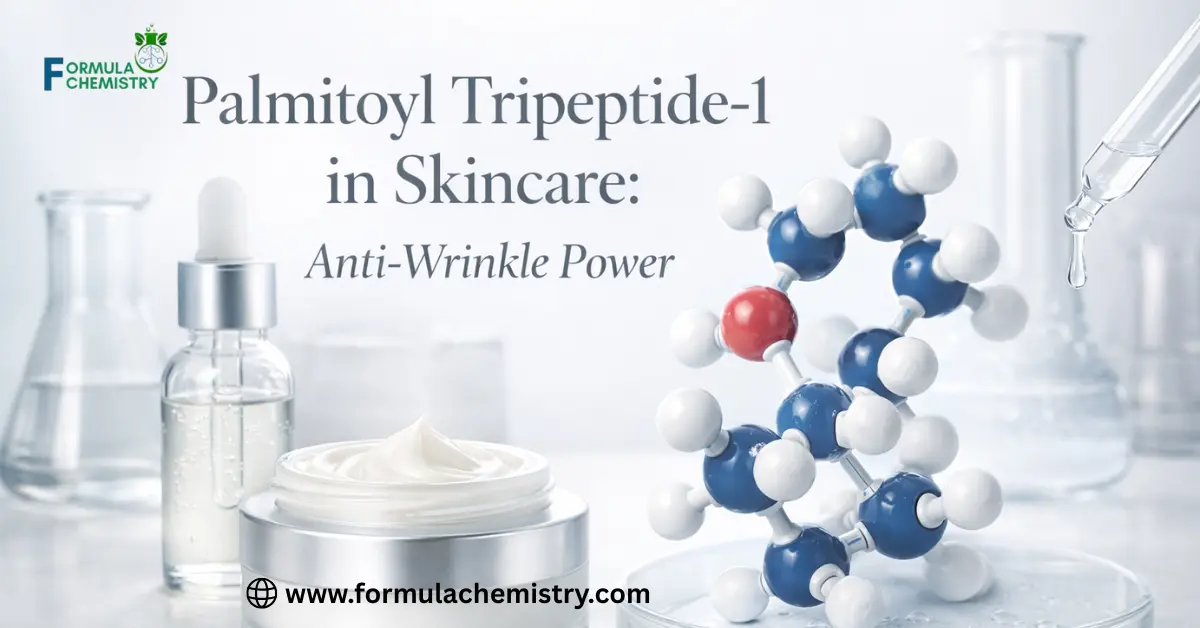
Palmitoyl Tripeptide-1, also known as pal-GHK or oligopeptide, is a synthetic fatty acid-linked peptide that serves as a messenger for skin repair.
As part of the Matrixyl 3000 complex, it is widely recognized in the cosmetic industry for its ability to stimulate collagen and glycosaminoglycan synthesis.
At FormulaChemistry, we focus on the science of these “matrikines” small molecules that signal skin cells to produce new structural components to help formulators create effective, evidence-based anti-aging topicals.
Quick Facts
- What it is: A messenger peptide (palmitoyl-Gly-His-Lys) used to stimulate collagen production and repair the skin matrix.
- Who it’s for: Individuals targeting fine lines, wrinkles, loss of elasticity, and thinning skin.
- How to use: Incorporate into the water phase or post-emulsification phase of serums, creams, and lotions.
- Typical usage range: 0.001% to 0.01% for the pure peptide, or 1% to 3% if using a commercial solution blend.
- pH/Solubility: Water-soluble; performs best in formulas with a pH of 4.0 to 7.0.
- Compatibility: Highly compatible with hyaluronic acid and niacinamide; use caution when pairing with strong proteolytic enzymes.
- Common Mistakes: Overheating the peptide during production or using it in highly acidic formulas (pH < 3.5) which may cause hydrolysis.
- Safety Note: Generally non-irritating, but a patch test is always recommended for end-users with sensitive skin.
| Ingredient | Function | Weight % | Amount (g) |
|---|
All amounts are by weight. Weigh every ingredient, including liquids, on a scale accurate to 0.01 g.
Mechanisms of Dermal Repair
Palmitoyl Tripeptide-1 works by mimicking the pieces of collagen that naturally occur when the skin’s structural proteins break down.
When these fragments are detected by fibroblasts, the cells are “tricked” into believing that collagen has been lost, triggering a restorative response.
This process is important for maintaining the dermal-epidermal junction (DEJ). FormulaChemistry provides practical formulation education and safety-forward help to ensure these active molecules are handled correctly to preserve their bioactivity.
By promoting the production of Collagen I and III, this peptide helps densify the skin and reduce the depth of static wrinkles.
What is the Science Behind Palmitoyl Tripeptide-1?
Understanding the molecular structure of Palmitoyl Tripeptide-1 is key for effective formulation. It consists of a three-amino acid chain (Glycine-Histidine-Lysine) attached to palmitic acid.
This lipid attachment is important because it improves the peptide’s oil solubility, allowing it to penetrate the skin’s lipophilic stratum corneum more effectively than a bare peptide chain.
Collagen Stimulation and the Extracellular Matrix
The primary function of this peptide is the up-regulation of the extracellular matrix (ECM). Research indicates that it specifically targets the synthesis of Type I collagen, which offers structural support, and fibronectin, which helps anchor cells to the matrix.
In professional skincare, this peptide is often used as a gentler alternative to retinoids. While retinoids increase cell turnover, Palmitoyl Tripeptide-1 focuses on the underlying scaffolding.
This makes it a key element in “pro-aging” formulations where the goal is long-term physical integrity rather than immediate surface exfoliation.
Formulation Compatibility and Stability
When working with Palmitoyl Tripeptide-1, stability is the most essential factor for the formulator. It is a strong molecule but can be sensitive under extreme environments. I
t is often sold as part of a glycerin or water-based blend, which eases the incorporation process for small-batch or industrial production.
| Feature | Specification |
| Usage Range | 1% – 3% (solution) |
| Optimum pH | 5.0 – 6.5 |
| Solubility | Water-soluble |
| Thermostability | Avoid heating above 60°C |
| Incompatibilities | Strong acids, strong bases, proteolytic enzymes |
Who should avoid:
Individuals with a known allergy to any component of the peptide blend or those with extremely compromised skin barriers should consult a professional before use.
Discover gentle, effective care with Bakuchiol Skincare: The Natural Hero Your Routine Needs.
Benefits of Palmitoyl Tripeptide-1 in Anti-Aging
The rewards of incorporating this peptide into a skincare routine are cumulative. Unlike temporary film-formers, Palmitoyl Tripeptide-1 works on the biological level to improve skin health.
Regular use leads to a visible reduction in wrinkle volume and a significant improvement in skin roughness.
Visible Wrinkle Reduction and Firming
The most documented benefit is the reduction of fine lines, particularly around the eyes and mouth. By strengthening the skin’s internal support system, the peptide helps “plump” the skin from within.
This leads to a finer surface texture and increased tolerance to mechanical stress, such as facial expressions.
Furthermore, it aids in the synthesis of hyaluronic acid within the dermis. This internal hydration boost complements external humectants, leading to a more broad approach to skin moisture.
FormulaChemistry emphasizes that while results aren’t overnight, the safety profile of this peptide allows for long-term, daily application without the “purging” often seen with other actives.
Synergistic Effects with Other Actives
Palmitoyl Tripeptide-1 is rarely used in isolation. It is frequently paired with Palmitoyl Tetrapeptide-7 to form a synergistic effect that addresses both collagen loss and chronic inflammation (“frequently called inflammaging”).
- Common Problems and Fixes:
- Problem: Peptide precipitation in the formula. Fix: Ensure the pH is above 4.0 and the peptide is added during the cool-down phase.
- Problem: Lack of visible results. Fix: Check the usage range; ensure it is at least 1% of the total formula for commercial blends.
- Problem: Formula instability. Fix: Use a chelating agent like Disodium EDTA to prevent metal ions from degrading the peptide chain.
Formulation Guidelines and Safety Issues
Creating an effective product with Palmitoyl Tripeptide-1 requiresnecessitates close scrutinyng preservation and delivery systems.
Because peptides are essentially amino acid chains, they can be vulnerable to microbial attack if the preservation system is weak. FormulaChemistry recommends a strong, broad-spectrum preservative system for any water-based serum or cream containing this active.
Incorporation and Processing Steps
The peptide should be added to the formulation during the cool-down phase, typically below 40°C. This prevents any thermal degradation of the amino acid sequence. It is also important to maintain the pH between 4.0 and 7.0 to prevent hydrolysis of the peptide bond.
- Prepare the oil and water phases separately.
- Emulsify and cool the mixture to 40°C.
- Add Palmitoyl Tripeptide-1 and stir until homogeneous.
- Adjust the final pH to approximately 5.5 for optimal skin compatibility.
Safety and Usage Precautions
While Palmitoyl Tripeptide-1 is noted for its low irritation potential, safety remains critical in cosmetic science. Patch testing is a non-negotiable step for any new product to ensure the end-user does not have a rare sensitivity to the peptide or the carrier solvent.
Key warnings:
Do not apply pure peptide powder directly to the skin; it must be diluted according to the usage ranges provided.
Who should avoid:
Pregnant or breastfeeding individuals should always consult their physician before starting new active skincare, though peptides are generally considered low-risk.
At FormulaChemistry, we focus on the integrity of the formulation and the safety of the consumer above all else.
FAQs about Palmitoyl Tripeptide-1 in Skincare: Anti-Wrinkle Power
What is Palmitoyl Tripeptide-1?
It is a synthetic messenger peptide that combines a three-amino acid chain with palmitic acid to stimulate collagen production in the skin.
Is it the same as Matrixyl?
Palmitoyl Tripeptide-1 is one of the two primary active peptides found in the well-known Matrixyl 3000 blend, the other being Palmitoyl Tetrapeptide-7.
Can I use it with Vitamin C?
Yes, it is generally compatible with Vitamin C derivatives. However, if using pure L-Ascorbic Acid at a very low pH, it is better to apply them at different times of the day to avoid peptide degradation.
How long does it take to see results?
Visible improvements in the skin texture and fine lines typically require consistent application for 4 to 8 weeks, as collagen synthesis is a slow biological process.
Does it cause sun sensitivity?
No, Palmitoyl Tripeptide-1 does not increase the skin’s sensitivity to UV rays, making it safe for both morning and evening use.
Is it vegan?
Most Palmitoyl Tripeptide-1 used in modern cosmetics is synthetically derived and considered vegan-friendly, but always check with the specific ingredient supplier.
What happens if the pH is too low?
If the pH falls below 3.5, the peptide may undergo hydrolysis, breaking the amino acid bonds and rendering the ingredient ineffective.
Can I use it with Retinol?
Yes, peptides and retinol are an excellent combination. The peptide supports the skin’s structure while retinol promotes cell turnover, frequently resulting in enhanced anti-aging benefits.
The editorial team at FormulaChemistry is committed to providing accurate, science-based information for formulators and skincare enthusiasts as well.
Through understanding the chemistry of ingredients like Palmitoyl Tripeptide-1, you can make more knowledgeable decisions for your skin health.