

Introduction
The short answer to whether a skincare routine can remove visible pores is no; pores are a structural necessity of human skin. However, while you cannot physically delete them from your anatomy, their appearance is highly malleable.
Pores are the openings of hair follicles and serve as the exit point for sebum (oil) and sweat. When these openings become clogged with debris or lose the structural support of collagen, they appear significantly larger and more noticeable.
At FormulaChemistry, we focus on the physiological mechanisms behind skin texture to provide science-based guidance on managing these structural features.
By dealing with the main causes of pore “stretching” specifically sebum overproduction and follicular debris a properly formulated routine can make pores appear nearly invisible to the naked eye.
Quick Answer
- What it is: A systematic approach to managing pore diameter through exfoliation, sebum control, and collagen support.
- Who it’s for: Individuals with oily or combination skin, or those experiencing age-related skin laxity.
- How to use: Integrate oil-soluble acids (BHA) and retinoids to keep the follicular lining clear.
- Typical usage range: Salicylic acid is effective at 0.5% to 2% for daily or targeted use.
- pH/Compatibility: BHA products perform best at a pH of 3.0 to 4.0; avoid mixing high-strength acids with copper peptides in the same step.
- Common mistakes: Using physical scrubs to “scour” pores, which causes micro-tears and inflammatory swelling.
- Safety note: Always perform a 24-hour patch test when introducing high-potency keratolytic agents.
The Biological Function of Pores
Pores are not like doors; they do not have muscles that allow them to “open” and “close.” Instead, they function as essential channels for skin health. Each pore contains a sebaceous gland that produces the lipids necessary for the skin’s barrier function. When these channels are clear, the pore remains at its tightest biological diameter.
Visible enlargement frequently happens because of “clogging” or “sagging.” In the first instance, a mixture of oxidized sebum and dead keratinocytes forms a plug.
In the second, the degradation of the dermal matrix (collagen and elastin) causes the pore walls to lose tension, resulting in an elongated, “droplet-shaped” appearance.
See what’s shaping tomorrow’s beauty standards in The Future of Skincare: Professional Perspectives on the 2026 Routine.
What Factors Influence Pore Visibility?
Although genetics play the primary role in determining your baseline pore size, environmental and behavioral factors dictate how prominent they appear daily. Knowing these variables is the first step in formulating a corrective routine.
FormulaChemistry emphasizes that effective skincare is about managing the environment of the skin rather than fighting its natural biology.
Sebum Production and Keratinization
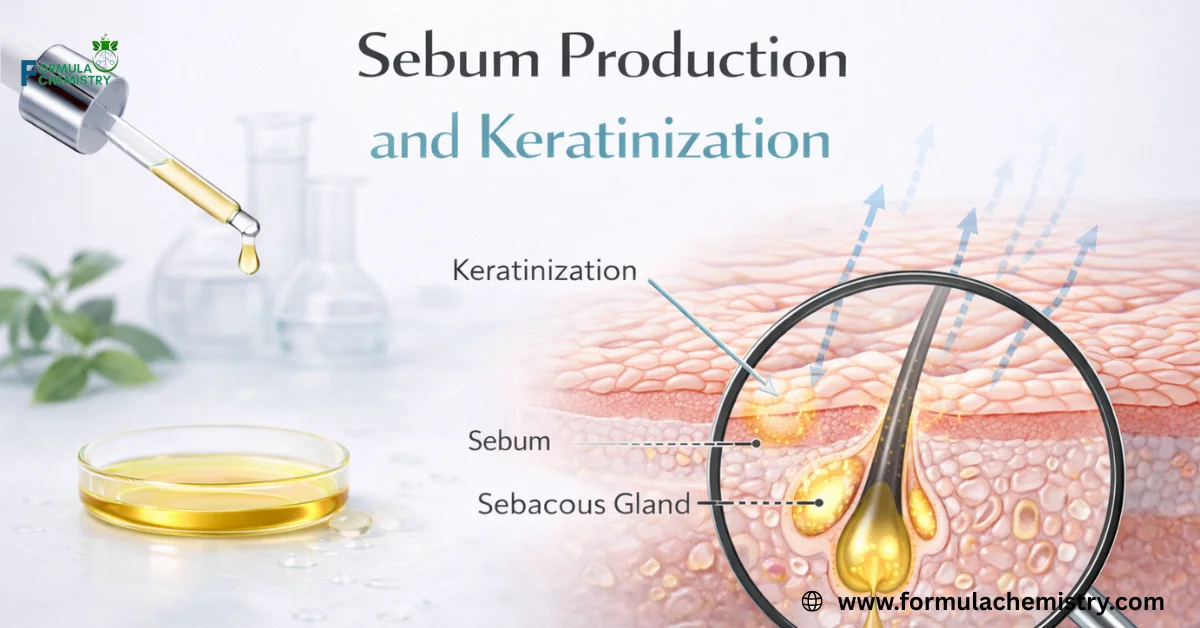
The most common cause of visible pores is the overproduction of sebum. When the skin produces more oil than necessary, the excess collects in the pore.
If the process of desquamation (the sloughing of dead skin cells) is inefficient, these cells mix with the oil. This creates a “bottleneck” effect that distorts the shape of the pore opening.
Over time, this constant internal pressure can permanently stretch the follicular wall. This is particularly prevalent in the T-zone, where sebaceous glands are more numerous and active. Keeping a regular routine that regulates oil flow is critical for preventing this long-term architectural change.
Photoaging and Loss of Elasticity
As we age, the skin loses its structural scaffolding. Collagen and elastin provide the “shrink-wrap” effect that keeps pores looking tight and circular.
UV damage accelerates the disintegration of these proteins, leading to what dermatologists call “actinic elastosis.”
When the surrounding tissue loses its bounce, the pore no longer has the support to stay small. This results in “stretched” pores that look like fine lines or pits.
Those who should avoid aggressive treatments for this type of pore visibility are those with compromised barriers or severe rosacea, as inflammation will only further worsen the dermal matrix.
| Ingredient | Primary Function | Usage Rate | pH Note |
| Salicylic Acid | Clears follicular debris | 0.5% – 2.0% | pH 3.0 – 4.0 |
| Niacinamide | Regulates sebum flow | 2.0% – 5.0% | pH 5.0 – 7.0 |
| Retinol | Increases cell turnover | 0.1% – 1.0% | pH 5.0 – 6.0 |
| Zinc PCA | Reduces oiliness | 0.1% – 1.0% | pH 4.0 – 6.0 |
Which Ingredients Actually Minimize Pore Appearance?
To effectively reduce the look of pores, a formulation must address both the contents of the pore and the health of the pore wall.
This needs a multi-dimensional approach using keratolytic agents, sebum regulators, and cellular communicators.
Formula Chemistry provides practical formulation education to help users identify which actives are truly functional versus those that are merely marketing claims.
The Power of Beta-Hydroxy Acids (BHA)
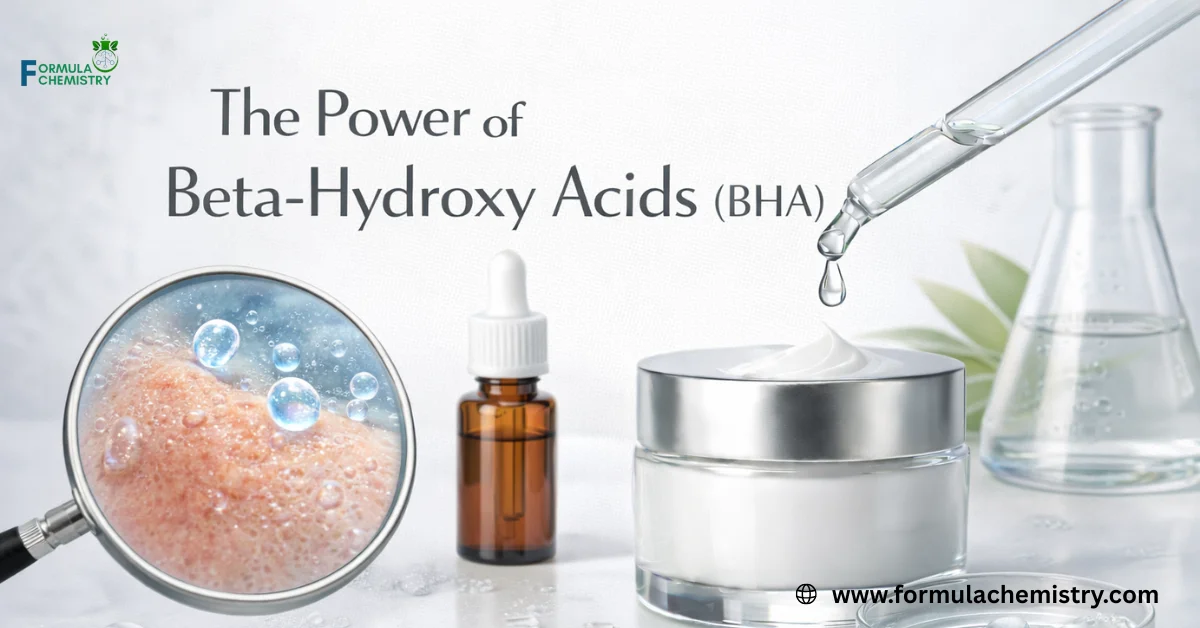
Salicylic acid is the gold standard for pore management because it is oil-soluble. Unlike Alpha-Hydroxy Acids (AHAs), which work on the skin’s surface, BHAs can penetrate the lipid environment of the pore.
Once inside, they dissolve the “glue” holding dead skin cells together, allowing the sebum to flow freely rather than oxidizing into a blackhead.
- Common problems and fixes: * Problem: Skin feels dry or “tight” after using BHA. Fix: Lower frequency to 2–3 times a week and apply a ceramide-rich moisturizer.
- Problem: Pores look larger during the first week. Fix: This is often “purging,” where debris is moving to the surface; continue use for 4 weeks.
- Problem: Redness and stinging. Fix: Look for pH notes on your product; a pH below 3.0 may be too acidic for daily use.
Retinoids and Niacinamide for Texture
Retinoids (including Retinol, Retinal, and Tretinoin) are important for long-term pore refinement. They work by normalizing the skin’s shedding process and stimulating collagen production.
By strengthening the dermal wall, retinoids prevent the “sagging” effect that makes pores look larger with age.
Niacinamide (Vitamin B3) supplements this by physically reducing the amount of sebum the skin produces.
Key warnings for Niacinamide include avoiding high-percentage “booster” serums (10% or higher) if you have sensitive skin, as these may paradoxically cause irritation and pore-accentuating redness. Usage ranges of 2% to 5% are generally considered the “sweet spot” for efficacy without irritation.
How to Construct a Pore-Refining Routine
A successful routine is built on consistency and the avoidance of “over-stripping.” Many people attempt to “dry out” their pores, which often triggers a rebound effect where the skin produces even more oil to compensate for the lost moisture.
At FormulaChemistry, we advocate for a measured approach which respects the acid mantle while targeting follicular congestion.
The Value of Proper Cleansing
The foundation of pore management is a deep cleanse that removes environmental pollutants and oxidized oils without disrupting the skin’s lipid barrier.
Double cleansing using an oil-based cleanser followed by a water-based one is highly effective for those who wear sunscreen or makeup.
The oil cleanser dissolves the sebum plug “like dissolves like,” while the second cleanser removes any remaining residue.
When not to use harsh sulfate-based cleansers is when your skin already feels stripped or “squeaky clean.”
This sensation indicates that the barrier is compromised, which can lead to inflammation. Inflamed skin swells, which actually makes the pore openings look more pronounced rather than less.
Protection and Long-term Maintenance
Sunscreen is perhaps the most underrated “pore-minimizing” product. Since UV rays destroy the collagen that keeps pores tight, daily SPF 30+ is mandatory for preventing permanent pore enlargement.
Without sun protection, the use of BHAs or Retinoids is counterproductive, as these ingredients can increase photosensitivity.
FormulaChemistry provides safety-forward guidance by notifying users that skincare is a marathon. Permanent changes in skin texture take approximately 8 to 12 weeks to manifest, corresponding to the rate of cellular turnover.
Persistence in applying sebum-regulating actives and protecting the skin from environmental degradation is the only way to maintain a “poreless” look over time.
Those who should avoid chemical sunscreens are those with heat-activated melasma, who may find mineral (Zinc Oxide) filters more soothing.
FAQs about Can a Skincare Routine Remove Visible Pores?
Can I permanently shrink my pores?
No. Pore size is genetically determined and structurally necessary for skin function. You can merely reduce their appearance by keeping them clear and retaining skin elasticity.
Does “pore vacuuming” work?
Vacuum devices and pore strips provide a temporary “clean” look by removing the top of the sebaceous filament, but they can cause capillary damage and do not address the cause of the clog.
What is the difference between a blackhead and a sebaceous filament?
A blackhead is a clog that should be treated. A sebaceous filament is a normal collection of oil and skin cells that helps channel sebum; everyone has them, and they should not be squeezed.
Will cold water close my pores?
No. Pores do not have muscles to open or close. Cold water may slightly reduce swelling or inflammation, making skin look temporarily tighter, but it has no permanent effect on pore size.
Can I use Salicylic Acid and Retinol together?
It is generally recommended to use them at different times of day (BHA in the morning, Retinol at night) to avoid irritation, as both are potent actives.
Are “pore-minimizing” primers safe?
Yes, most use silicones to fill in the “divots” of the pores for a smooth surface. However, ensure you double cleanse at night to prevent the primer from causing congestion.
How long does it take to see results from a pore routine?
Surface-level improvement from BHA can be seen in 1–2 weeks, but structural improvements from retinoids or niacinamide usually take 8–12 weeks of regular use.
Does steaming your face help clear pores?
Steam can soften the hardened oils (sebum) inside the pore, making them easier to remove with gentle cleansing, but too much heat can cause redness and broken capillaries.