

Quick Answer
DIY skincare for dry skin works best when it combines all three types of hydrating ingredients: humectants to attract water, emollients to smooth and soften, and occlusives to seal moisture in.
The core routine layers a humectant serum with hyaluronic acid and glycerin onto damp skin, followed by a rich emollient cream with ceramides and shea butter, then an occlusive to lock everything in.
The most common mistake is using a humectant alone, since without an occlusive to seal it, it can pull water out of the skin in dry air.
Introduction
Dry skin is defined by a lack of oil, and caring for it is about restoring both moisture and the barrier that holds it in. A single hydrating product rarely solves it, because true hydration needs several kinds of ingredients working together.
The most useful framework is simple. Dry skin needs humectants to draw water in, emollients to soften and repair, and occlusives to seal it all, and a routine that uses only one of these leaves the job half done.
I formulate for dry skin often, and the biggest improvement usually comes not from a richer cream but from layering correctly. Getting the order and the combination right transforms how well hydration lasts.
This guide covers what dry skin actually needs, the three ingredient classes and how to layer them, a full routine, simple hydrating formulas, and the mistakes that leave dry skin dry.
Understanding Dry Skin
Dry skin produces less sebum than other skin types, which leaves it short of the natural oils that keep skin soft and sealed. This is why it feels tight, looks dull, and can flake or show fine lines more readily.
A key distinction matters here. Dry skin lacks oil, while dehydrated skin lacks water, and although they overlap, they are different, since even oily skin can be dehydrated.
Understanding this shapes the whole approach. Dry skin needs both water, through humectants, and oil, through emollients and occlusives, so the routine must supply and then seal moisture rather than simply adding water.
The barrier is central to all of it. Dry skin’s weakened barrier lets moisture escape, so alongside hydrating, a good routine works to rebuild and reinforce that protective layer with barrier lipids.
| Ingredient | Function | Weight % | Amount (g) |
|---|
All amounts are by weight. Weigh every ingredient, including liquids, on a scale accurate to 0.01 g.
The Three Ingredient Classes for Dry Skin
The foundation of DIY skincare for dry skin is understanding three groups of hydrating ingredients that work together. Each does a different job, and dry skin needs all three.

Humectants
Humectants attract water into the outer layer of skin, either from the environment or from deeper down. Glycerin, hyaluronic acid, panthenol, urea, and beta-glucan are common humectants that plump and hydrate the skin’s surface.
They come with one important caveat. Without something to seal them, humectants can draw water away from the skin in very dry air, so they always need an emollient or occlusive layered on top to hold the moisture in.
Emollients
Emollients smooth and soften by filling the microscopic gaps between skin cells, improving texture and flexibility. Squalane, cholesterol, fatty acids, plant oils, and shea butter are emollients that help repair the feel of dry, flaky skin.
Barrier lipids sit in this group and matter most for dry skin. Ceramides, which make up roughly half of the skin’s natural barrier, help rebuild that barrier and are among the most valuable emollient ingredients for dry skin.
Occlusives
Occlusives form a protective film on the surface that seals everything in and prevents water loss. Richer butters, heavier oils, and classic occlusives create the final lock that dry skin relies on to stay hydrated.
Occlusives are the step people most often skip, and the one dry skin needs most. Heavier occlusives suit night-time and harsh weather, while lighter ones like squalane work for daytime, sealing hydration without feeling too heavy.
How to Layer for Maximum Hydration
The order in which you apply these ingredients decides how well they work. Layering them correctly is often more effective than reaching for a richer product.
The rule is to move from lightest and most water-based to richest and most sealing. Apply humectants first, onto damp skin, then emollients, then occlusives, so each layer supports the next.
Applying humectants to slightly damp skin is a small detail that makes a real difference. It gives them water to bind, which is especially important in dry climates where the air offers little moisture to draw on.
The sequence flows naturally into a routine. A humectant serum goes on first, a rich emollient cream follows, and an occlusive balm or oil seals it all, which is exactly how the full routine below is built.
The Full Dry Skin Routine
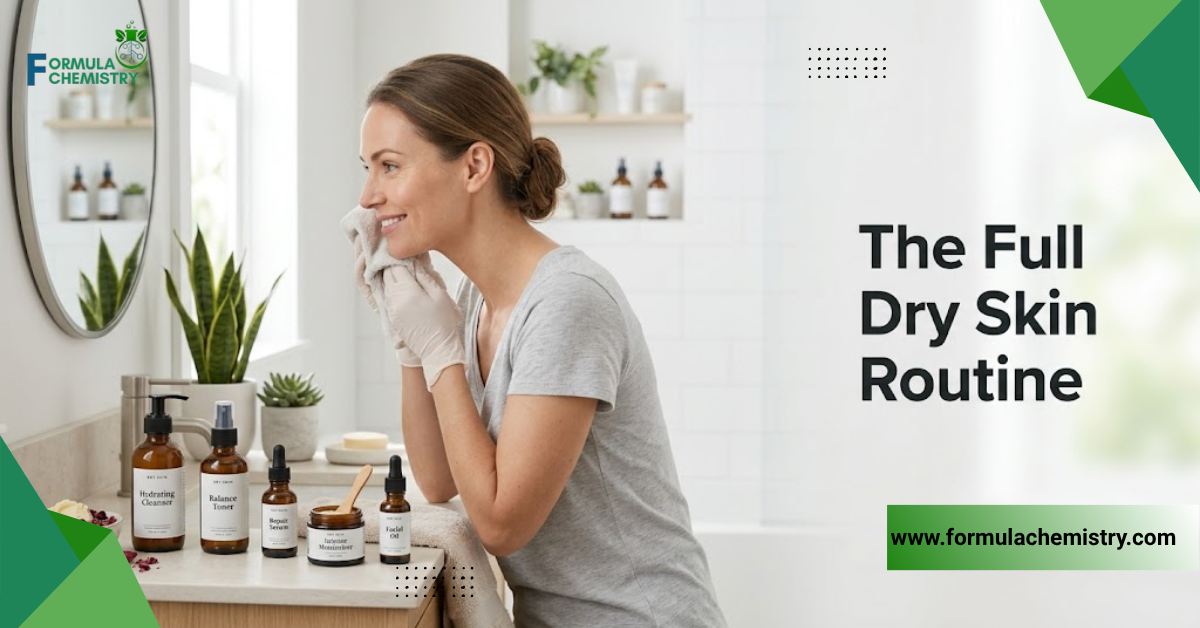
A complete DIY skincare for dry skin routine is about supplying and sealing moisture at every step. It is gentle, layered, and richer at night.
Morning Routine
- Gentle cream or oil cleanser: cleanses without stripping the skin’s natural oils
- Humectant serum: hyaluronic acid and glycerin on damp skin to draw in water
- Rich moisturiser: a cream with ceramides, niacinamide, and emollients
- Broad-spectrum SPF 30 or higher: ideally a moisturising, ceramide-containing sunscreen
Evening Routine
- Gentle cleanse: the same non-stripping cleanser, or a cleansing balm
- Humectant serum: applied again to damp skin as the hydrating base
- Rich night cream: a more intensive emollient cream to repair overnight
- Occlusive seal: a facial oil or overnight balm over the top to lock moisture in
Weekly Additions
- Gentle exfoliation: a mild acid once or twice a week, never more, followed by intense hydration
- Hydrating mask: a rich, humectant-and-emollient mask for an extra moisture boost
The night routine is where dry skin recovers most. Layering a humectant, a rich cream, and an occlusive before sleep lets the skin rebuild its barrier while moisture is sealed in.
Simple Hydrating Formulas for Dry Skin
With the ingredient classes understood, a few DIY skincare for dry skin formulas cover the essentials. Treat these as frameworks to adapt to how dry your skin is.
A Hydrating Humectant Serum
A hydrating serum can be built around hyaluronic acid and glycerin in a water base, with panthenol and beta-glucan for extra moisture and soothing, plus a suitable preservative. This is the humectant layer that goes onto damp skin first.
Keep it light and fluid so it layers cleanly under a cream. This serum draws water into the skin, and the richer products that follow seal it in, which is the partnership dry skin depends on.
A Rich Barrier Moisturiser
A nourishing cream can be built as an emulsion carrying ceramides, shea butter, squalane, and glycerin, with an emollient oil phase for softness. This is the emollient and barrier-repair heart of the routine.
Make it as rich as your skin needs. Very dry skin benefits from a higher oil phase and added butters, while a milder dryness needs something lighter, and both should feel cushioning rather than greasy.
An Occlusive Facial Oil or Balm
A simple sealing step can be an anhydrous oil blend or balm, built from nourishing oils and a little wax for a balm, protected with an antioxidant. Applied last, it locks in the hydration beneath.
This final layer is what sets a dry-skin routine apart. Even a few drops of a sealing oil over a cream noticeably improves how long the skin stays hydrated, which is a step we never leave out at Formula Chemistry when formulating for dry skin.
Adjusting for Severity and Season
Dry skin is not static, and a good routine flexes with how dry the skin is and what the weather is doing. Recognising this keeps the skin comfortable year-round.
Very Dry or Flaking Skin
When skin is very dry, cracked, or flaking, the answer is more sealing, not more scrubbing. Layer more generously, lean on heavier occlusives at night, and pause any exfoliation until the barrier recovers.
An overnight occlusive balm over a rich cream can make a real difference to very dry skin, a technique we often use at Formula Chemistry for the driest skin.
This kind of intensive sealing, sometimes called slugging, traps moisture against the skin while it repairs, and it suits the driest skin especially well.
Adjusting for Season and Climate
Skin usually runs drier in winter and in dry or air-conditioned environments, and a little less so in humid warmth. The routine should shift to match, adding richness and sealing when the air is dry.
In cold, dry conditions, occlusives become more important, since they protect against the moisture loss harsh weather drives. In milder, more humid weather, you can often lighten the occlusive step while keeping the humectant and emollient layers.
A Note on Dehydrated Skin
If your skin lacks water rather than oil, the focus shifts slightly toward humectants and lightweight hydration rather than heavy oils. Dehydrated skin needs water bound and sealed, but not necessarily the rich occlusives that truly dry skin craves.
This is why identifying your skin correctly matters. Matching the routine to whether you lack oil, water, or both is what makes hydration genuinely effective rather than hit or miss.
The Mistakes That Leave Dry Skin Dry
A handful of errors undermine otherwise good DIY skincare for dry skin routines. Each one is easy to fix once you spot it.
Using a humectant without sealing it tops the list. Applying hyaluronic acid or glycerin and stopping there can backfire in dry air, so always layer an emollient or occlusive on top to trap the water.
Over-cleansing and stripping come next. Harsh, foaming cleansers, hot water, sulfates, and drying alcohols remove the little oil dry skin has, so gentle cream or oil cleansers are essential.
Over-exfoliating is a third mistake. Dry skin has a thin, fragile barrier, so scrubbing or using strong acids too often damages it further, and gentle exfoliation once or twice a week is plenty.
The last error is relying on a single product to do everything. One moisturiser cannot match the results of layering a humectant, an emollient, and an occlusive, so combining the three is what genuinely relieves dry skin.
Building Your Dry Skin Routine
Start by thinking in three layers rather than one product. Draw water in with humectants on damp skin, soften and repair with emollients and ceramides, and seal it all with an occlusive, and dry skin stays hydrated far longer.
Keep everything gentle and rich, avoiding anything stripping or harsh. Favour cream and oil cleansers, layer generously at night, and treat the occlusive seal as essential rather than optional, since it is the step dry skin misses most.
Above all, remember the goal is to supply and hold moisture while rebuilding the barrier. DIY skincare for dry skin succeeds when humectants, emollients, and occlusives work together, so build in all three, layer them in order, patch test new formulas, and dry skin becomes soft, comfortable, and resilient.
Frequently Asked Questions
What is the best routine for dry skin?
The best routine layers all three hydrating ingredient types: a humectant serum with hyaluronic acid and glycerin on damp skin, a rich moisturiser with ceramides and shea butter, then an occlusive to seal it in. Cleanse gently and add sunscreen in the morning. Layering beats any single rich product.
What is the difference between dry skin?
Dry skin lacks oil because it produces less sebum, while dehydrated skin lacks water. They can overlap, and even oily skin can be dehydrated. Dry skin needs both oil, through emollients and occlusives, and water, through humectants.
Should dry skin use facial oils?
Yes, facial oils are excellent occlusives and emollients for dry skin, sealing in moisture applied beneath them. Use them as the last step over a humectant serum and cream. Even a few drops noticeably improve how long skin stays hydrated.
How often should dry skin be exfoliated?
Gently, once or twice a week at most, using a mild chemical exfoliant rather than a harsh scrub. Dry skin has a fragile barrier, so over-exfoliating damages it and worsens dryness. Always follow exfoliation with intense hydration.
Can I layer humectants and occlusives together?
Yes, and you should, since they do complementary jobs. Apply the humectant first on damp skin to draw in water, then the occlusive on top to seal it. This layering is the core principle of hydrating dry skin effectively.
Key Takeaways
DIY skincare for dry skin depends on combining three ingredient classes: humectants like hyaluronic acid and glycerin to attract water, emollients like ceramides and squalane to soften and repair, and occlusives to seal moisture in. Using only one leaves the job half done.
Layering order matters as much as the ingredients. Apply humectants to damp skin first, then emollients, then occlusives, and remember that a humectant without a seal can backfire in dry air by drawing water out of the skin.
Keep the routine gentle and rich, avoid stripping cleansers and over-exfoliation, and never skip the occlusive step dry skin needs most. Supply water, soften and repair, then seal, patch test new formulas, and dry skin becomes soft, comfortable, and resilient.