
Introduction
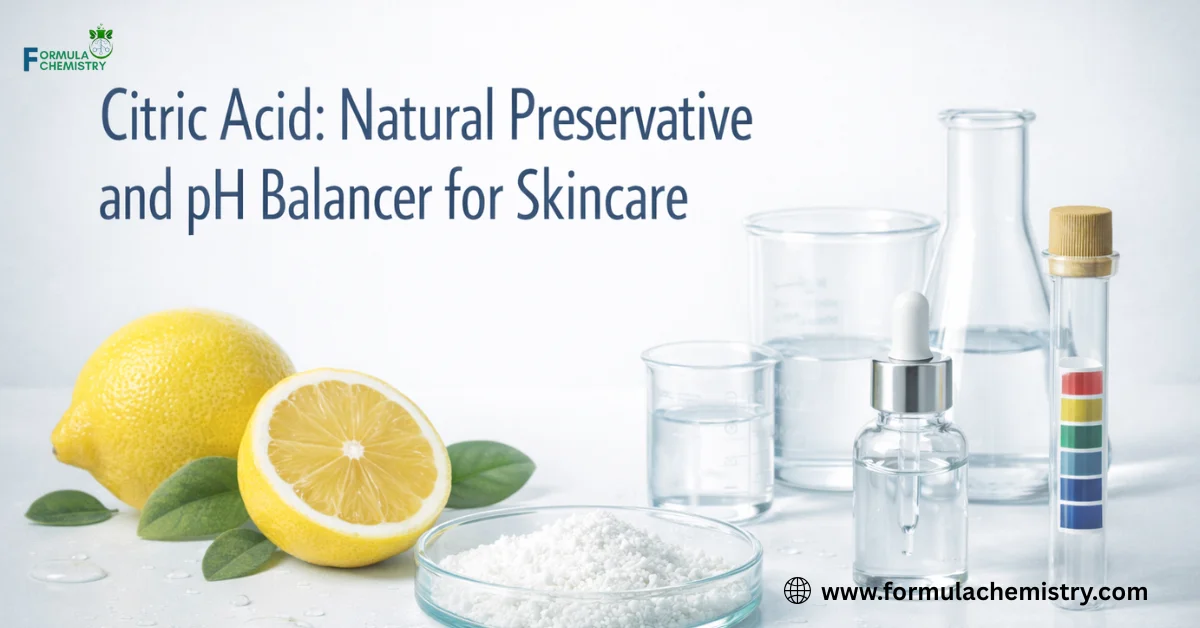
Citric Acid is a weak organic acid found naturally in citrus fruits like lemons and limes. In cosmetic formulation, it is arguably the most ubiquitous pH adjuster used to acidify products.
Although often categorized simply as a “pH down” agent, its utility goes far beyond simple acidity control. As an Alpha Hydroxy Acid (AHA), it possesses exfoliation properties that can renew skin texture when used at specific concentrations.
Furthermore, it acts as an effective chelating agent, binding metal ions that can degrade formulation stability. For formulators, mastering Citric Acid is the first step toward creating professional-grade products.
Quick Facts
- INCI Name: Citric Acid
- Chemical Family: Alpha Hydroxy Acid (AHA) / Tricarboxylic Acid
- Primary Function: pH Adjuster, Chelating Agent, Exfoliant, “Preservative Booster”
- Solubility: Highly soluble in water; soluble in alcohol.
- Typical Usage Rate: 0.1% – 1.0% (for pH adjustment); up to 10% (for exfoliation).
- Optimal pH Range: Effectiveness varies; exfoliation peaks at pH 3.5 – 4.0.
- Preparation: Best used as a 50% solution (1 part acid to 1 part distilled water) for exact dosing.
- Safety Note: Always check the final pH of your product. A pH below 3.5 can cause significant irritation and requires strict sun protection warnings.
- Storage: Hygroscopic powder; keep tightly sealed to prevent clumping.
What Makes Citric Acid Critical for Stability?
Citric Acid is fundamentally a stability tool. Most cosmetic preservatives, particularly natural ones like Sodium Benzoate and Potassium Sorbate, are pH-dependent. They require an acidic environment (usually pH 4.5 – 5.5) to convert into their active acid forms. Without Citric Acid to lower the pH, these preservatives remain inactive, leaving the product vulnerable to microbial proliferation.
Beyond activating preservatives, Citric Acid prevents the hydrolysis of other delicate ingredients. Many botanical extracts and actives degrade rapidly in alkaline environments. By maintaining a slightly acidic pH, which mimics the skin’s natural “acid mantle,” Citric Acid ensures the endurance and efficacy of the entire formulation.
The Science of Chelation
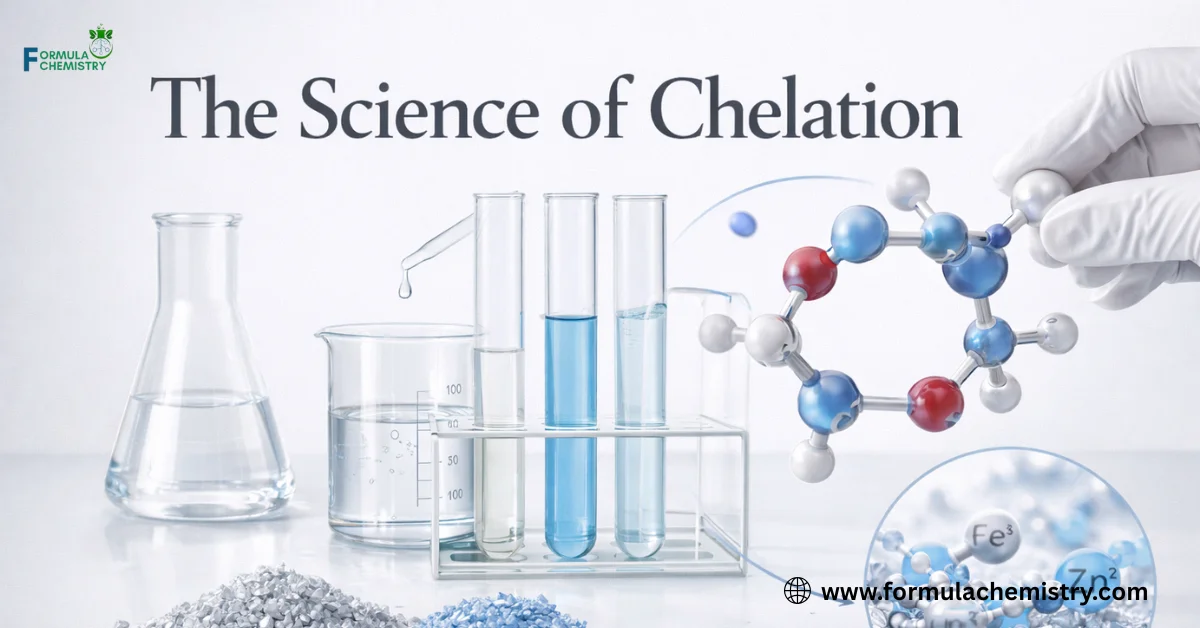
One of the most overlooked functions of Citric Acid is chelation. Water, even distilled water, can contain trace metal ions (like iron or copper) picked up from manufacturing equipment or raw materials.
These ions act as catalysts for oxidation, leading to rancidity in oils, discoloration of extracts, and degradation of fragrances.Citric Acid possesses a distinct molecular structure that allows it to “claw” or bind these metal ions, rendering them inert.
By sequestering pro-oxidant metals, it boosts the efficacy of antioxidants and preservatives. This is why you often see it paired with Disodium EDTA or Sodium Phytate in high-performance formulas.
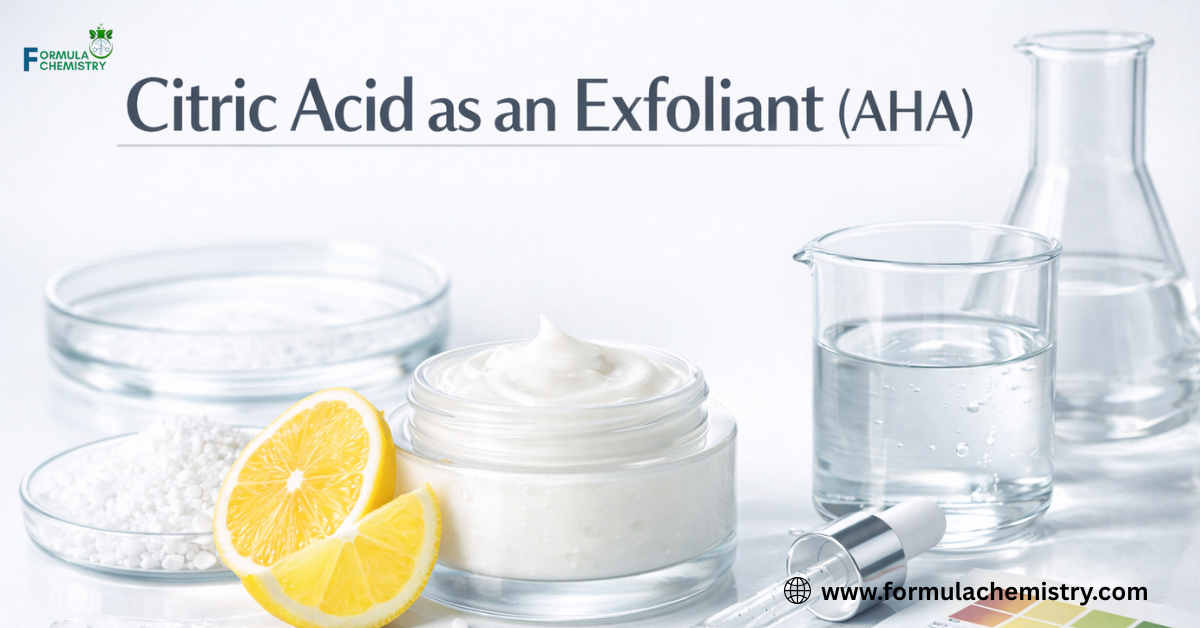
Citric Acid as an Exfoliant (AHA)
Although mainly a pH adjuster, Citric Acid is a potent Alpha Hydroxy Acid. At concentrations between 5% and 10% with a pH of roughly 3.5 to 4.0, it functions as a chemical exfoliant.
It works by dissolving the “glue” (desmosomes) that holds dead skin cells together, promoting cell renewal and brightening the complexion. However, compared to Glycolic Acid or Lactic Acid, Citric Acid has a bigger molecular size.
This means it penetrates the skin more slowly and superficially. While this can reduce irritation potential, it is also more astringent, which can sometimes be drying.
Learn how Sodium Hydroxide: pH Regulator for Skincare and Formulations keeps your formulas effective.
Formulating with Citric Acid: Practical Guidelines
When working with Citric Acid, you should rarely add the raw powder directly into a finished batch. The crystals take time to dissolve, and doing so makes it nearly impossible to control the pH drop accurately.
Adding powder can lead to “hot spots” of acidity that may shock the emulsion or ruin rheology modifiers like Carbomer. The industry standard is to create a stock solution. A 50% Citric Acid Solution is easy to calculate and use.
Simply mix equal parts by weight of Citric Acid powder and distilled water (e.g., 50g Acid + 50g Water). Stir until fully dissolved. This solution can be stored and used drop-by-drop to lower pH precisely at the end of the formulation process (cool-down phase).
Common Problems and Fixes
Using acids in formulation appears straightforward, but small errors can lead to batch failure. Below are common issues formulators face when using Citric Acid.
- Problem: The emulsion broke or separated after adding acid.
- Fix: You likely added the acid too quickly or the pH dropped too low for your emulsifier. Add the 50% solution slowly under agitation. Ensure your emulsifier is stable at acidic pH.
- Problem: The product is cloudy or has precipitated crystals.
- Fix: If using high concentrations, the solubility limit may have been reached, or it reacted with incompatible ions (like Calcium). Use distilled water and check compatibility.
- Problem: The thickener (Carbomer) lost its viscosity and turned to water.
- Fix: Carbomers are extremely pH-sensitive and usually require a pH > 5.0 to maintain gel structure. If you drop the pH below 4.5 using Citric Acid, the polymer coil collapses. Use acid-stable thickeners like Xanthan Gum or Hydroxyethylcellulose.
- Problem: The odor of the product changed or smells sour.
- Fix: Citric Acid is odorless, but it can interact with fragrances or reveal the base odor of fatty acids. Use a chelator and ensure the pH isn’t lower than necessary.
Best Practices for pH Adjustment
When adjusting pH, patience is vital. Add your Citric Acid solution in small increments—literally drops for small batches. Mix thoroughly and measure the pH after each addition. Remember that the pH scale is logarithmic; dropping from pH 6 to pH 5 requires 10 times less acid than dropping from pH 5 to pH 4.
Always calibrate your pH meter before starting. Paper strips are useful for a quick check but are often inaccurate for exact formulation, especially when working with colored products or viscous creams. A digital pH meter is a non-negotiable tool for professional results.
Usage Rates and Compatibility
The amount of Citric Acid you need depends entirely on the starting pH of your formula and your target pH. There is no fixed “usage rate” for pH adjustment; it is added Quantum Satis (QS), or “as much as is needed.” However, guidelines exist for specific applications.
For exfoliating products, the usage rate is fixed and intentional. In these cases, you must add a buffer (like Sodium Citrate) to prevent the pH from drifting too low over time, which could make the product dangerous.
Comparative Application Guide
Table: Citric Acid Usage by Product Type
| Product Type | Typical Usage Rate | Target pH Range | Primary Function |
| Toners & Mists | 0.05% – 0.2% | 4.5 – 5.5 | pH Adjustment, Stability |
| Shampoos | 0.1% – 0.5% | 5.0 – 6.0 | Cuticle Smoothing, pH Balance |
| Exfoliating Serums | 5.0% – 10.0% | 3.5 – 4.0 | Dead Skin Removal (AHA) |
| Bath Bombs | 20% – 30% | N/A (Dry) | Fizz Reaction (with Baking Soda) |
| Creams/Lotions | 0.05% – 0.3% | 4.8 – 5.5 | Preservative Activation |
Safety and Sensitization
Citric Acid is generally recognized as safe (GRAS) for food and cosmetic use. However, at high concentrations or low pH, it is a potent irritant. Products with a pH below 3.5 should be reserved for professional use or formulated with extreme caution.
Because it is an AHA, Citric Acid can increase the skin’s sensitivity to the sun. This is known as photosensitization. Any leave-on product containing meaningful concentrations of Citric Acid (or any AHA) must include a “Sunburn Alert” on the label, advising users to wear sunscreen and limit sun exposure for a week after use.
FAQ’s about Citric Acid: Natural Preservative and pH Balancer for Skincare
Is Citric Acid a preservative?
No, it is not a standalone preservative. It acts as a preservative booster by lowering the pH to a level where broad-spectrum preservatives (like Sodium Benzoate) become active. It also inhibits bacterial growth by chelating metal ions, but it cannot kill mold or bacteria on its own.
Can I use lemon juice instead of Citric Acid?
No. Lemon juice contains impurities, sugars, and plant particulate matter that can rot and feed bacteria. It also has an inconsistent pH level. Always use cosmetic-grade, standardized Citric Acid powder or solution for safety and reproducibility.
Is Citric Acid natural or synthetic?
Most commercial Citric Acid is naturally produced via the fermentation of sugars (often corn or molasses) by the mold Aspergillus niger. While it exists in fruit, extracting it directly is too expensive, so fermentation is the industry standard source.
Does Citric Acid exfoliate the skin?
Yes, but only at higher concentrations (typically > 5%) and a low pH (< 4.0). In most standard lotions and cleansers, it is used in such small amounts (< 0.5%) that it provides no significant exfoliation and serves only to adjust pH.
Is Citric Acid safe for sensitive skin?
In low concentrations for pH adjustment, it is usually safe. However, as an exfoliating active, it can be stinging and irritating, sometimes more so than Lactic Acid. Sensitive skin types should patch test high-concentration AHA products.
How do I make a 50% Citric Acid solution?
Weigh 50 grams of distilled water and 50 grams of Citric Acid granules. Mix them together in a clean beaker until the crystals are fully dissolved. Store this solution in a dropper bottle for easy use during formulation.
Is Citric Acid vegan?
Yes, Citric Acid produced via fermentation is vegan. It does not involve animal products or by-products. However, always check the manufacturer’s documentation to ensure no animal-derived processing aids were used.
Can Citric Acid ruin my formula?
Yes, if added too quickly or in excess. A sudden drop in pH can cause emulsions to separate or thickeners like Carbomer to lose viscosity. Always add it slowly at the end of formulation (below 40°C) and monitor pH constantly.