

Quick Answer
DIY skincare for oily skin works best when it balances oil rather than strips it, since aggressive drying only triggers more sebum. The core routine is a gentle cleanser, a niacinamide serum around 2 to 5% to help regulate the look of shine and pores, a lightweight gel moisturiser, and a broad-spectrum sunscreen.
A BHA exfoliant a few times a week and a weekly clay mask round it out, while the biggest mistake to avoid is skipping moisturiser, which pushes oily skin to overproduce.
Introduction
Oily skin is often treated as a problem to be scrubbed and stripped away, which is exactly the approach that makes it worse. The goal of a good routine is balance, supporting the skin so it produces less excess oil rather than punishing it into producing more.
The science is encouraging here. A handful of well-chosen ingredients in a DIY skincare for oily skin routine can help regulate the look of sebum and refine the appearance of pores, all without the harsh drying that backfires.
I formulate for oily skin regularly, and the single biggest shift people need is to stop fighting their skin and start balancing it. A gentle, hydrating, oil-regulating routine beats an aggressive one every time.
This guide covers what oily skin actually needs, the best ingredients to build with, a full morning and evening routine, simple DIY formulas, and the mistakes that keep oily skin oily.
Understanding Oily Skin
Oily skin produces excess sebum, the natural oil that protects and moisturises the skin. In oily skin, the sebaceous glands are simply more active, which leads to shine, a greasy feel, and the appearance of enlarged pores.
It helps to separate oily skin from acne. Oily skin is a skin type, while acne is a condition, and although they can overlap, plenty of oily skin does not break out, so this routine focuses on managing oil and shine rather than treating breakouts.
The most important insight is counterintuitive. Stripping oily skin with harsh products removes the surface oil briefly, but it damages the barrier and signals the skin to produce even more sebum to compensate, creating a cycle of grease and stripping.
Breaking that cycle is the whole aim. A routine that cleanses gently, hydrates lightly, and regulates the look of oil calms skin into producing less, which is far more effective than any amount of scrubbing.
The Best Ingredients for Oily Skin
A focused toolkit of ingredients does the real work in any DIY skincare for oily skin routine. Each helps balance oil, refine the look of pores, or hydrate without heaviness.
Niacinamide
Niacinamide, a form of vitamin B3, is the standout ingredient for oily skin, used at around 2 to 5%. It helps normalise the look of sebum production, refines the appearance of pores, and supports the barrier, all while being gentle enough for twice-daily use.
Its versatility is part of the appeal. Niacinamide addresses shine, pores, and tone at once without drying or irritating, which makes it the natural centre of an oily-skin routine.
Zinc PCA
Zinc PCA is niacinamide’s ideal partner for oily skin. It helps regulate the look of oil directly, and paired with niacinamide it forms one of the most effective combinations for balancing sebum, which is why the two so often appear together.
Adding zinc PCA to a niacinamide serum strengthens the oil-regulating effect. Together they tackle shine more completely than either does alone.
Lightweight Hydrators
Oily skin still needs hydration, and the trick is choosing light, non-greasy humectants. Hyaluronic acid and glycerin draw water into the skin without adding oil, keeping skin hydrated so it does not overcompensate with sebum.
Squalane deserves a mention despite being an oil, since it is light and non-greasy and mimics the skin’s own lipids. A thin layer suits oily skin that feels dry without making it greasy.
Oil-Absorbing and Pore-Refining Extras
A few targeted ingredients help with shine and congestion. Clay, such as kaolin or bentonite, absorbs excess oil in a weekly mask, while salicylic acid, a BHA, unclogs the pores that oily skin is prone to.
Antioxidant botanicals round out the options. Green tea extract and witch hazel offer gentle astringent and antioxidant support, helping skin feel balanced and refreshed without harsh stripping.
Oily Skin Is Not All the Same
Oily skin comes in variations, and recognising yours refines the routine. The same core approach adapts to each with small changes.
Combination Skin
Many people described as oily are really combination, oily through the T-zone but normal or dry on the cheeks. Here the trick is targeting, using oil-control products where skin is greasy and lighter hydration where it is not.
You can apply a clay mask only to the T-zone, or use a slightly richer moisturiser on drier areas. Treating the whole face as uniformly oily is a common mistake that leaves some areas stripped and others still shiny.
Dehydrated Oily Skin
Confusingly, oily skin can also be dehydrated, lacking water even while producing plenty of oil. This skin feels tight yet looks greasy, and stripping it makes both problems worse.
The answer is more hydration, not less oil control, a balance we pay close attention to at Formula Chemistry. Lightweight humectants like hyaluronic acid restore the water the skin lacks, which often reduces the excess oil that dehydration was driving.
Adjusting for Season and Climate
Oil production shifts with heat and humidity, so a routine should flex too. Skin often runs oilier in summer and in humid climates, and calmer in winter.
Adjusting is simple. Lean more on oil control and lighter textures in hot, humid conditions, and allow a little more hydration when the weather turns cool and dry, so the routine matches the skin’s changing needs.
The Full Oily Skin Routine
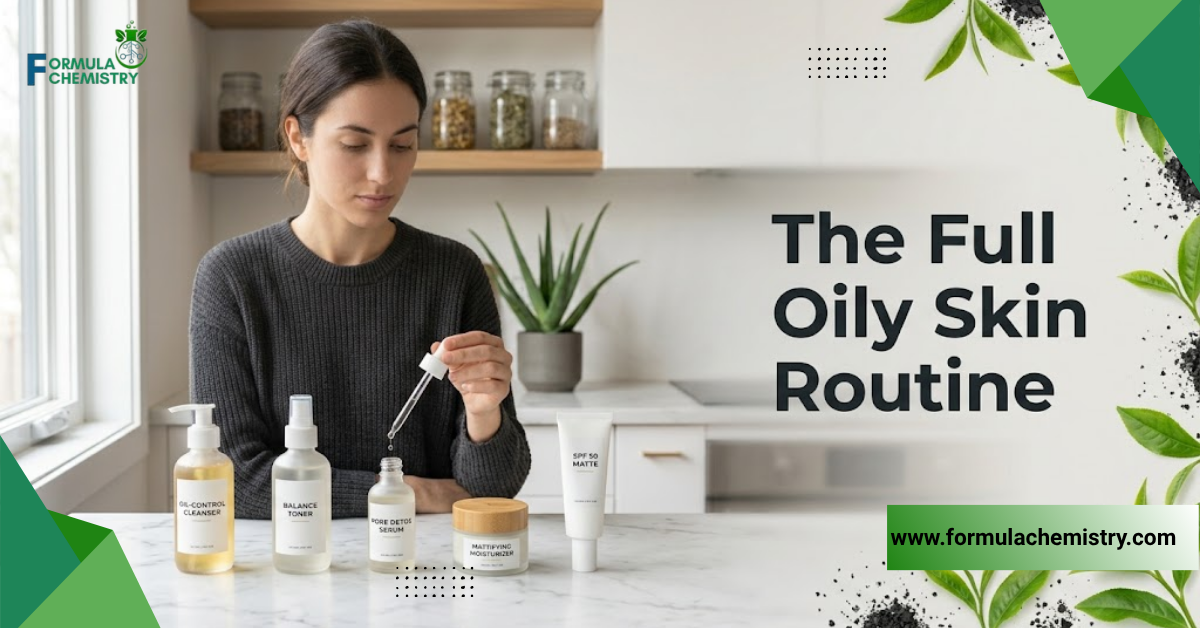
A complete DIY skincare routine for oily skin is simple, light, and consistent. Morning focuses on protection, evening on gentle renewal, and both on balance rather than stripping.
Morning Routine
- Gentle cleanser: a mild gel or foaming cleanser to remove overnight oil without stripping
- Niacinamide serum: applied to damp skin for oil regulation and pore refinement
- Lightweight gel moisturiser: hydration without grease, never skipped
- Broad-spectrum SPF 30 or higher: a non-greasy, matte-finish sunscreen
Evening Routine
- Cleanse: an oil cleanser or balm first to remove sunscreen, then a gentle gel cleanser
- BHA exfoliant: salicylic acid two to three times a week, not nightly, to unclog pores
- Niacinamide serum: the same as morning, safe to use twice daily
- Light moisturiser or gel-cream: a gel-cream texture seals hydration overnight
Weekly Additions
- Clay mask: once or twice a week to absorb excess oil and refine pores
- Gentle exfoliation: kept moderate, since over-exfoliating triggers more oil
The rhythm matters as much as the steps. Daily gentleness with a few weekly treatments keeps oily skin balanced, and layering too many actives at once is best avoided.
Simple DIY Formulas for Oily Skin
With the right ingredients, a few straightforward DIY skincare formulas for oily skin cover the essentials. Treat these as frameworks to adapt to your skin.
A Mattifying Niacinamide Serum
A balancing serum can be built around niacinamide at about 4 to 5% with zinc PCA, in a light water base with a humectant such as glycerin and a suitable preservative. The result is a lightweight serum that targets shine and the look of pores.
Keep the texture fluid and fast-absorbing. A watery or light gel serum suits oily skin far better than anything rich, and it layers cleanly under moisturiser and sunscreen.
A Lightweight Gel Moisturiser
An oil-free gel moisturiser can be built on a gel base with hyaluronic acid and glycerin for hydration, plus niacinamide for oil control. It hydrates without any heavy oils or butters, which oily skin does not need.
This is the moisturiser oily skin actually wants. Light, non-greasy, and hydrating, it keeps the barrier happy so the skin has no reason to overproduce oil.
An Oil-Control Clay Mask
A simple weekly mask can be built from kaolin or bentonite clay with a little glycerin and water, applied for ten to fifteen minutes. The clay absorbs excess surface oil and helps decongest the look of pores.
Used once or twice a week, this is enough. Clay masks are effective but drying if overused, so restraint keeps them helpful rather than stripping, which we always emphasise at Formula Chemistry when building oil-control formulas.
The Mistakes That Keep Oily Skin Oily
A handful of common errors sabotage DIY skincare for oily skin routines, and fixing them changes everything. Each stems from fighting the skin instead of balancing it.
Skipping moisturiser is the biggest mistake of all. Dehydrated oily skin overproduces sebum to compensate, so a lightweight moisturiser is essential rather than optional, and going without it makes oiliness worse.
Over-cleansing and harsh stripping come next. Aggressive foaming cleansers, hot water, and drying alcohols damage the barrier and trigger rebound oil, so gentle cleansing is the smarter approach.
Over-exfoliating is a third trap. Scrubbing daily or stacking strong acids irritates the skin and prompts more oil, so a BHA a few times a week is plenty, and physical scrubs are best avoided.
The last mistake is reaching for heavy products to overcompensate, or skipping sunscreen for fear of grease. Lightweight, non-comedogenic, oil-free formulas solve both, giving oily skin what it needs without the weight.
Building Your Oily Skin Routine
Start from balance rather than war. Cleanse gently, regulate the look of oil with niacinamide and zinc PCA, hydrate lightly, and protect with a matte sunscreen, and you address oily skin without triggering more oil.
Keep formulas light and non-greasy throughout, favouring gel and water-based textures over anything rich. Add a BHA and a clay mask as weekly support rather than daily habits, since moderation keeps oily skin calm.
Above all, resist the urge to strip. The goal of DIY skincare for oily skin is a balanced, comfortable, less shiny complexion, and that comes from supporting the skin gently and consistently rather than punishing it. Build light, stay consistent, patch test new formulas, and oily skin becomes far easier to live with.
Frequently Asked Questions
What is the best ingredient for oily skin?
Niacinamide, at around 2 to 5%, is the standout ingredient because it helps regulate the look of sebum, refines the appearance of pores, and supports the barrier without drying. It pairs especially well with zinc PCA for stronger oil control. Both are gentle enough for daily use.
Should oily skin use moisturiser?
Yes, absolutely. Skipping moisturiser is the biggest mistake in oily-skin care, because dehydrated skin overproduces oil to compensate. Use a lightweight, oil-free gel moisturiser that hydrates without adding grease. This actually helps reduce excess shine over time.
How do I make a DIY serum for oily skin?
Build a light serum around niacinamide at 4 to 5% with zinc PCA, in a water base with glycerin and a suitable preservative. Keep the texture fluid and fast-absorbing. Always preserve any water-based formula properly and patch test before regular use.
How often should oily skin exfoliate?
Two to three times a week with a BHA such as salicylic acid is usually enough. Over-exfoliating irritates the skin and triggers more oil, so moderation matters. Avoid harsh physical scrubs, which can damage the barrier.
Are clay masks good for oily skin?
Yes, clay masks with kaolin or bentonite absorb excess oil and help decongest the look of pores. Use one once or twice a week, since overusing clay can be drying. Follow with a lightweight moisturiser to rebalance.
Why is my skin still oily after using drying products?
Harsh, drying products strip the skin and damage the barrier, which triggers rebound oil production as the skin compensates. This creates a cycle of stripping and grease. Switching to gentle cleansing and light hydration usually calms oil over time.
Is oily skin the same as acne-prone skin?
No, oily skin is a skin type defined by excess sebum, while acne is a condition involving breakouts. They can overlap, but many people have oily skin without acne. This routine focuses on balancing oil rather than treating active breakouts.
Can I use facial oils on oily skin?
Some light, non-greasy oils like squalane can suit oily skin in small amounts, since squalane mimics the skin’s own lipids. Heavy oils are generally unnecessary. A little goes a long way, and lightweight hydration is usually the better focus.
Key Takeaways
DIY skincare for oily skin succeeds by balancing oil rather than stripping it, since harsh drying only triggers more sebum. The core routine is a gentle cleanser, a niacinamide serum at 2 to 5% with zinc PCA, a lightweight gel moisturiser, and a matte broad-spectrum sunscreen, with a BHA and clay mask as weekly support.
The most important mindset shift is to stop fighting oily skin. Skipping moisturiser, over-cleansing, and over-exfoliating all backfire by prompting more oil, so gentleness and light hydration do more than any aggressive approach.
Keep formulas light, water-based, and non-greasy, add weekly treatments in moderation, and stay consistent. Balance the skin gently rather than punishing it, patch test new formulas, and oily skin becomes a calmer, more comfortable, less shiny complexion to live with.