
Quick Answer
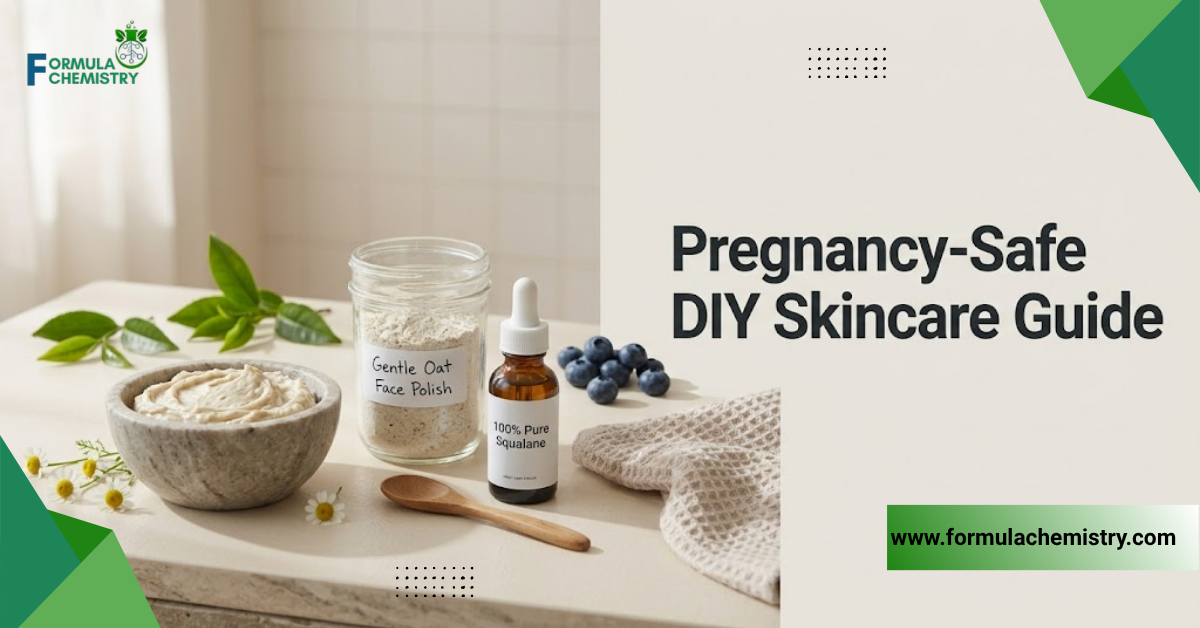
Pregnancy-safe DIY skincare means formulating with ingredients that dermatology bodies consider low-risk during pregnancy, while avoiding those commonly flagged for caution.
The ingredients most often avoided are retinoids, hydroquinone, and high-dose leave-on salicylic acid, along with certain preservatives and UV filters. Gentle, well-regarded alternatives include azelaic acid, vitamin C, niacinamide, hyaluronic acid, glycerin, and peptides.
This guide is educational rather than medical advice, so always confirm any ingredient with your doctor or dermatologist before using it during pregnancy.
Introduction
Pregnancy changes the skin, often bringing breakouts, dryness, sensitivity, or dark patches, and it changes which ingredients are wise to use. Formulating your own products during this time means thinking about safety first and results second.
The good news is that plenty of effective ingredients suit pregnancy-safe DIY skincare and are well regarded for use during this time. The list of what to avoid is short and specific, and working around it is entirely manageable.
An important note before anything else. This guide is educational, written from a formulator’s perspective, and it is not medical advice, so the single most important step is to confirm any ingredient with your own doctor or dermatologist.
This guide covers the ingredients commonly avoided during pregnancy, the safer alternatives to build with, simple formulas by concern, and how to approach pregnancy-safe DIY skincare thoughtfully.
A Note on Safety and Sources
Before the ingredient lists, it helps to understand where this guidance comes from and how to read it. The recommendations here reflect the consensus of dermatology bodies rather than any single opinion.
Much of the caution around pregnancy skincare is precautionary. Most warnings come from high doses, oral use, or animal studies, and the risk from occasional topical use in small amounts is often described by experts as theoretical.
Even so, the sensible logic most dermatologists follow is simple. When a safe, well-understood option exists, there is little reason to choose one we have less information about, which is the thinking that shapes every recommendation below.
Because individual circumstances differ, none of this replaces professional guidance. Your doctor knows your history, and confirming with them is always the right final step, a point worth repeating throughout.
Ingredients Commonly Avoided During Pregnancy
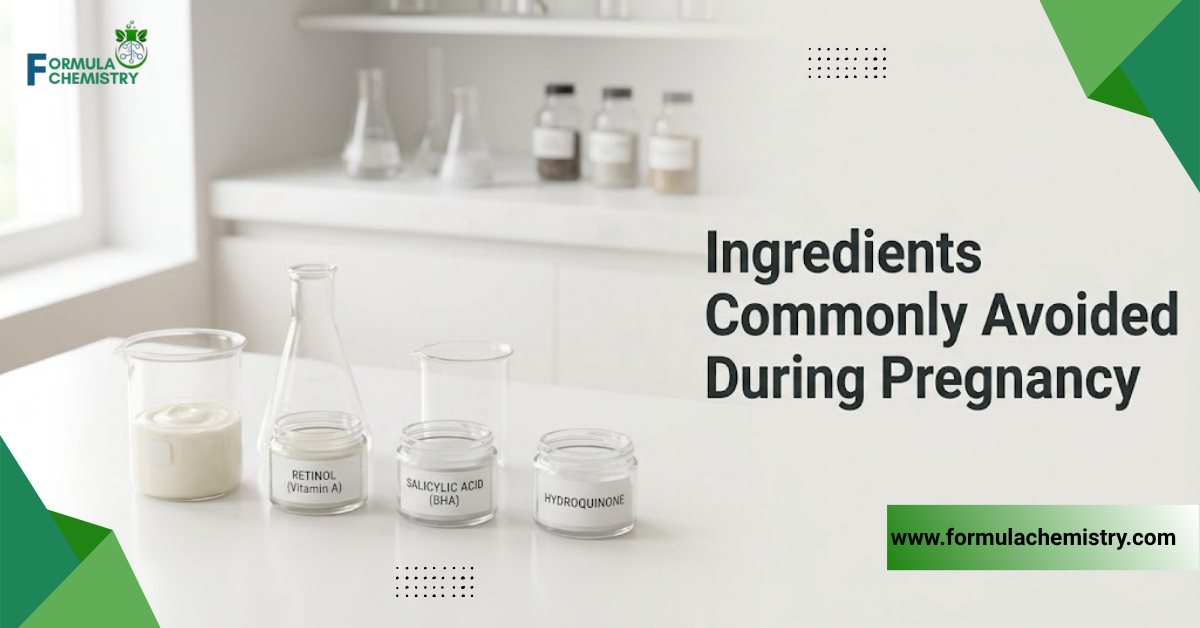
A handful of ingredients are consistently flagged for caution by dermatology authorities. Knowing them makes formulating safely straightforward.
Retinoids
Retinoids are the most important group to avoid, including retinol, tretinoin, adapalene, and retinyl palmitate. These vitamin A derivatives are widely avoided during pregnancy because high doses of vitamin A are linked to developmental harm.
Topical absorption is low, and the real-world risk from occasional use is considered small. Even so, dermatology bodies such as the American Academy of Dermatology advise stopping retinoids during pregnancy, because safe thresholds have not been established.
Hydroquinone
Hydroquinone is a strong skin-lightening ingredient used for pigmentation, and it is best avoided during pregnancy. The concern is absorption, since the body can take up a notably high fraction of applied hydroquinone compared with most ingredients.
There is no proven link to birth defects, but the high absorption makes caution sensible. Gentler brightening options are readily available and carry far less uncertainty.
High-Dose Salicylic Acid
Salicylic acid needs nuance rather than a blanket ban. High-dose, leave-on forms such as peels and strong BHA treatments are best avoided, because oral salicylates at high doses are associated with pregnancy complications.
Low-concentration products, generally under 2% and especially rinse-off cleansers, are considered low-risk by bodies such as the American College of Obstetricians and Gynecologists. The safest path in DIY is to keep salicylic acid low and brief, or to choose an alternative.
Other Ingredients to Approach With Caution
A few more ingredients attract caution. Formaldehyde-releasing preservatives, certain chemical UV filters such as oxybenzone, and phthalates, which are potential endocrine disruptors, are all commonly limited during pregnancy.
High concentrations of alpha hydroxy acids can also irritate more sensitive pregnancy skin, so they are best used sparingly. As always, these are precautionary limits worth discussing with your doctor.
The Pregnancy-Safe Alternatives to Build With
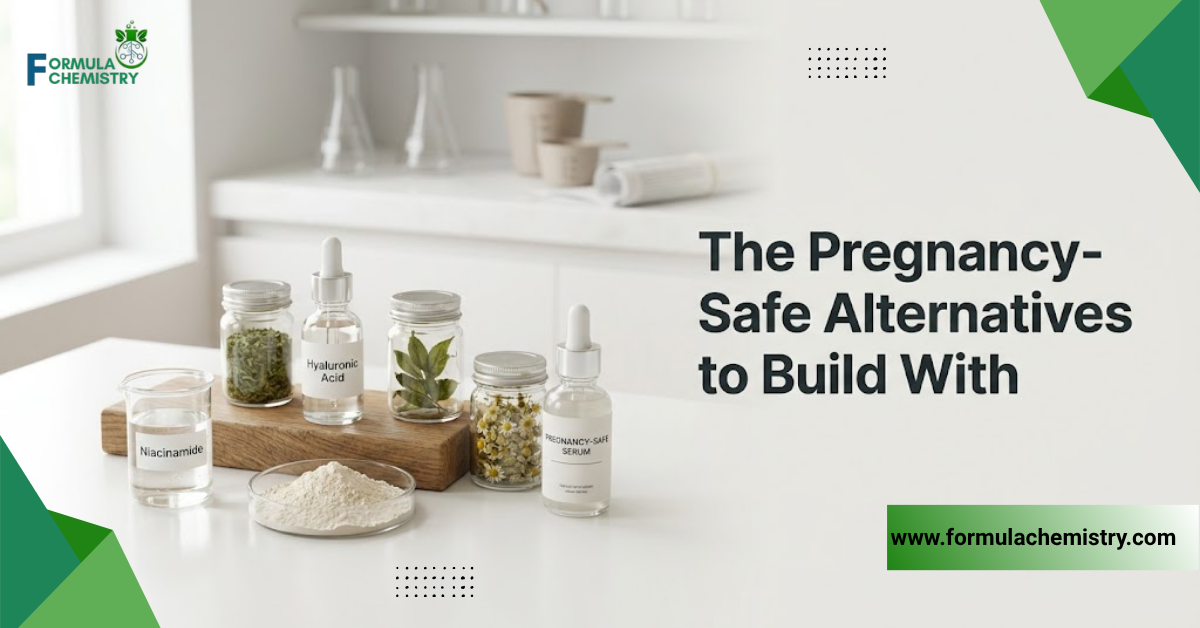
The encouraging part is how many effective ingredients are well regarded for pregnancy. These form a genuinely capable toolkit for DIY formulating.
Azelaic Acid
Azelaic acid is the standout multi-tasker, considered safe during pregnancy and useful across several concerns. It supports the appearance of clearer skin, a more even tone, and calmer-looking redness, which makes it valuable for acne, pigmentation, and rosacea-prone skin at once.
Both the AAD and ACOG regard it favourably, which is why it appears in so much pregnancy skincare. For a formulator, it is often the first ingredient to reach for.
Vitamin C and Niacinamide
Vitamin C is a safe antioxidant that supports brightness and a more even-looking tone, making it a natural replacement for the brightening role hydroquinone or retinoids might otherwise play. It also pairs well with sunscreen for daytime use.
Niacinamide is equally gentle and versatile, supporting the barrier, the look of pores, and tone. Neither is a retinoid or a bleaching agent, and both are widely used in pregnancy-friendly routines.
Hydration and Barrier Support
Hyaluronic acid and glycerin are safe, reliable humectants that hydrate and plump the look of skin without any pregnancy concern. They suit the dryness that often accompanies pregnancy.
Soothing barrier ingredients round out the toolkit. Colloidal oatmeal, ceramides, and gentle emollients calm sensitive, reactive skin and are well regarded for use during pregnancy.
Peptides and Gentle Renewal
Peptides support the appearance of firmness and fine lines by encouraging the skin’s own processes, without the risks associated with retinoids. This makes them a sensible anti-aging alternative during pregnancy.
Bakuchiol, a plant-derived ingredient often compared to retinol, is another option people turn to, though the safety data is more limited, so it is one to raise specifically with your doctor before use.
Simple Pregnancy-Safe Formulas by Concern
With safe ingredients chosen, a few straightforward pregnancy-safe DIY skincare formulas cover the concerns pregnancy tends to bring. Treat these as starting frameworks to discuss and adapt, not prescriptions.
A Gentle Hydrating Serum
A basic hydrating serum can be built around hyaluronic acid and glycerin in water, with a suitable preservative since it contains water. Niacinamide can be added for barrier support and tone, giving a light, calming daily serum.
This kind of serum suits the dryness and sensitivity of pregnancy well. It hydrates and supports the barrier without any flagged ingredient.
A Brightening Serum Without Retinoids
For the pigmentation and melasma that pregnancy can bring, a brightening serum built on vitamin C or on azelaic acid offers a safe route. These support a more even-looking tone without hydroquinone or retinoids.
Pairing it with diligent sun protection matters most of all, since pregnancy pigmentation worsens with sun exposure. Managing light is as important as the serum itself.
A Soothing Barrier Balm or Oil
For sensitivity and dryness, a simple anhydrous balm or body oil built from gentle plant oils and butters, protected with an antioxidant, is both safe and comforting. Oils such as jojoba are stable and well tolerated.
This is also the natural approach for a nourishing body or stretch-area oil, a common wish during pregnancy. Keeping it to gentle, well-tolerated oils avoids any concern, and it is exactly the kind of gentle formulation we favour at Formula Chemistry for reactive skin.
Reading Labels and Formulating Safely
Beyond choosing ingredients, a few formulating habits keep pregnancy DIY skincare genuinely safe. These matter as much as the ingredient list itself.
Check Every Ingredient, Not Just the Actives
Pregnancy caution extends past the headline active to the whole formula. A serum built on safe niacinamide can still carry a flagged preservative or a cautioned essential oil, so reviewing the full ingredient list is the habit to build.
When buying raw materials, keep the supplier documentation and INCI names to hand, a discipline we treat as standard at Formula Chemistry. Knowing exactly what is in a blend lets you cross-check each component against pregnancy guidance rather than trusting a marketing label.
Preserve Water-Based Products Properly
Safety during pregnancy is not only about avoided actives, it is also about basic product hygiene. Any water-based formula, such as a hydrating or brightening serum, still needs a suitable preservative to prevent microbial growth.
Choosing a pregnancy-appropriate preservative, and avoiding formaldehyde-releasing types, covers both concerns at once. An unpreserved water product is a safety risk regardless of pregnancy, so this step is never optional.
Keep Fragrance Light
Pregnancy skin is often more reactive, and fragrance is a common trigger for sensitivity. Keeping products fragrance-free or very lightly scented reduces the chance of irritation and sidesteps questions about specific fragrance materials.
Where a scent is wanted, discussing specific essential oils with your doctor first is the safe approach. Many formulators simply keep pregnancy products unscented for peace of mind.
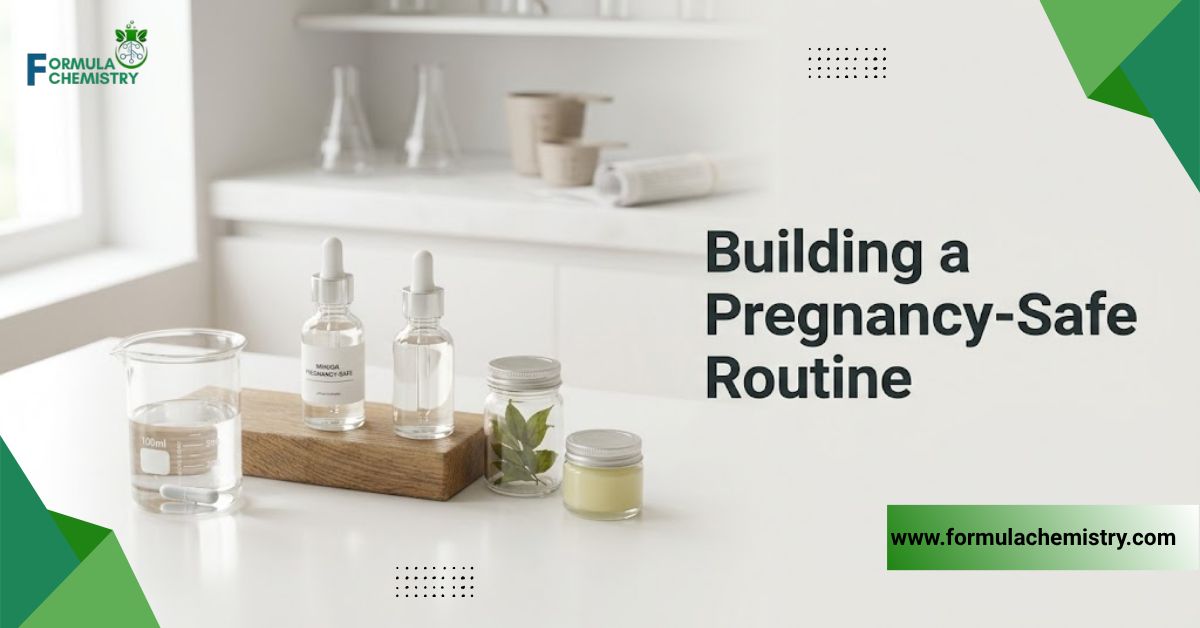
Building a Pregnancy-Safe Routine
Assembling these into a routine is straightforward once the ingredients are chosen. The aim is gentle, consistent care rather than active-heavy intervention.
- Cleanser: a gentle, low-irritation cleanser, avoiding high-dose salicylic acid
- Antioxidant serum: vitamin C in the morning for brightness and protection
- Treatment: azelaic acid or niacinamide for acne, tone, or redness
- Hydration: hyaluronic acid and glycerin for plumping and comfort
- Moisturiser: a barrier-supporting cream with ceramides or gentle emollients
- Sunscreen: a broad-spectrum sunscreen daily, mineral filters if you prefer to avoid certain chemical ones
This kind of routine covers the common pregnancy concerns while staying within well-regarded ingredients. It proves that pregnancy-safe DIY skincare need not feel limited.
Approaching Pregnancy-Safe DIY Skincare Thoughtfully
The mindset that serves pregnancy-safe DIY skincare best is caution paired with confidence. Avoid the short list of flagged ingredients, build with the generous list of safe ones, and you can formulate genuinely effective products.
Keep formulas simple during pregnancy, favouring gentle, well-understood ingredients over complex active stacks. Simplicity reduces both irritation and uncertainty, which matters more than usual when skin is reactive and caution is warranted.
Above all, treat this guide as a starting point for an informed conversation, not a substitute for one. Confirm your ingredients and your routine with your doctor or dermatologist, since they can account for your specific pregnancy in a way no general guide can.
Formulate gently, choose safe ingredients, protect your skin from the sun, and check with a professional, and pregnancy-safe DIY skincare becomes a calm, manageable part of this time rather than a worry.
Frequently Asked Questions
What skincare ingredients should I avoid during pregnancy?
The ingredients most commonly avoided are retinoids such as retinol and tretinoin, hydroquinone, and high-dose leave-on salicylic acid, along with formaldehyde-releasing preservatives and some chemical UV filters. These are precautionary limits based on absorption and limited data. Always confirm with your doctor.
Is salicylic acid safe during pregnancy?
It depends on the dose and form. High-concentration or leave-on salicylic acid, such as peels and strong BHA treatments, is best avoided, while low-concentration products under 2%, especially rinse-off cleansers, are considered low-risk by ACOG. When in doubt, choose an alternative and ask your doctor.
What are pregnancy-safe alternatives to retinol?
Well-regarded alternatives include azelaic acid, vitamin C, niacinamide, and peptides for the appearance of tone, brightness, and fine lines. Bakuchiol is often mentioned too, though its pregnancy data is more limited. These offer renewal and brightening without retinoids.
Is vitamin C safe to use during pregnancy?
Yes, vitamin C is generally considered safe during pregnancy and is a useful antioxidant that supports brightness and a more even-looking tone. It makes a good replacement for the brightening role of retinoids or hydroquinone. Pair it with sunscreen for daytime use.
Can I treat pregnancy acne with DIY skincare?
You can support clearer-looking skin with pregnancy-friendly ingredients such as azelaic acid and, in low rinse-off concentrations, salicylic acid, alongside gentle cleansing. Avoid retinoids and high-dose acids. For persistent or severe acne, consult your doctor or dermatologist.
What can I use for pregnancy melasma or dark spots?
Safe options for the appearance of an even tone include vitamin C and azelaic acid, combined with strict daily sun protection, since sun worsens pregnancy pigmentation. Hydroquinone is best avoided due to high absorption. Much pregnancy pigmentation also fades on its own after birth.
Are essential oils safe in pregnancy skincare?
Essential oils vary, and some are cautioned against during pregnancy, so they should be used carefully and at low levels if at all. Many formulators keep pregnancy products fragrance-light to reduce sensitivity and uncertainty. Discuss specific oils with your doctor before use.
Is DIY skincare a good idea during pregnancy?
It can be, provided you stick to well-regarded ingredients, keep formulas simple, preserve any water-based products properly, and confirm your choices with a professional. Simplicity and safety matter more than complexity during pregnancy. This guide is educational and not a substitute for medical advice.
Key Takeaways
Pregnancy-safe DIY skincare comes down to avoiding a short list of flagged ingredients, chiefly retinoids, hydroquinone, and high-dose leave-on salicylic acid, while building with a generous list of well-regarded alternatives.
Azelaic acid, vitamin C, niacinamide, hyaluronic acid, glycerin, and peptides cover most concerns safely.
Simple formulas handle the common pregnancy concerns, from a hydrating serum to a retinoid-free brightening serum to a soothing barrier oil. Keeping formulas gentle and simple reduces both irritation and uncertainty when skin is reactive.
Most importantly, this guide is educational and not medical advice. Much pregnancy skincare caution is precautionary, but the safest path is to build with trusted ingredients, protect against the sun, and confirm every choice with your doctor or dermatologist, who can account for your specific pregnancy.