
Introduction
Few cosmetic acids punish casual formulation as quickly as pyruvic acid. The pyruvic acid ingredient profile matters because this material combines low molecular weight, high acidity, volatility, odor, and fast skin activity in one small alpha-keto acid.
After reading this profile, a formulator should know where pyruvic acid belongs, where it does not belong, and why it should never be treated like glycolic acid with a different name. The goal is practical judgment at the bench, not romantic acid marketing.
What Pyruvic Acid Is
Pyruvic acid is a three-carbon alpha-keto acid with the formula C3H4O3. Its preferred chemical name is 2-oxopropanoic acid, and its conjugate base is pyruvate.
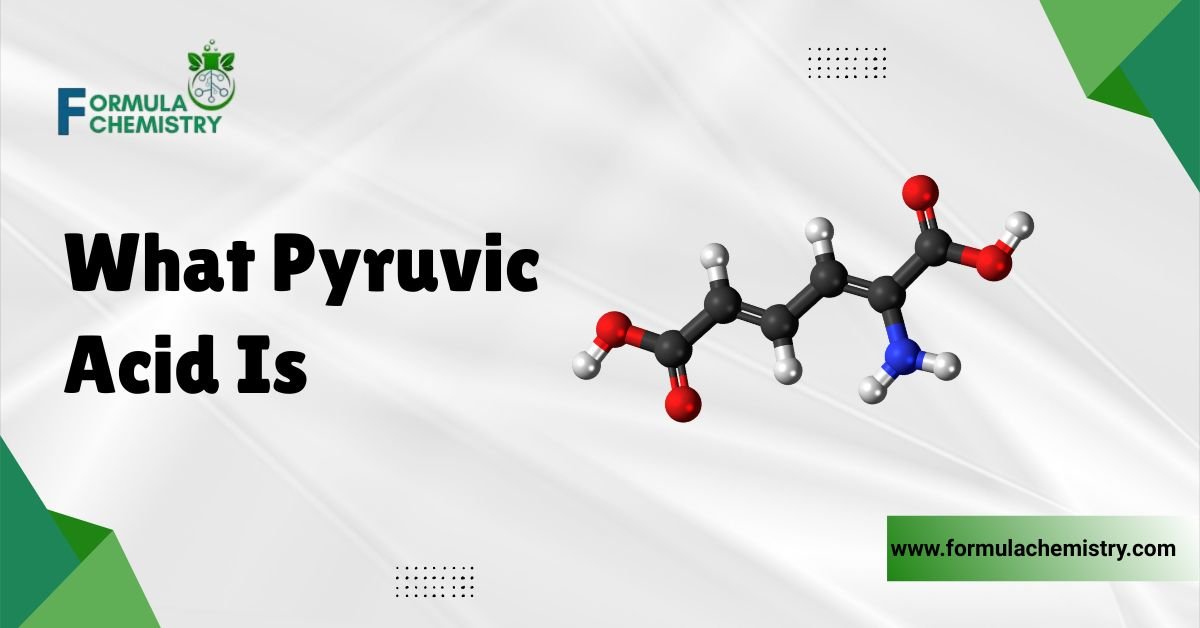
The molecule contains one carboxylic acid group and one ketone group on adjacent carbon atoms. That structure explains its acidity, water miscibility, reactivity, and stronger sensory profile compared with many familiar cosmetic hydroxy acids.
In biology, pyruvate sits at the center of carbohydrate metabolism. In cosmetics, pyruvic acid is mainly discussed as a professional peel acid and controlled exfoliating agent.
Key Properties Table
| Property | Pyruvic acid data |
| INCI name | Pyruvic Acid |
| CAS number | 127 17 3 |
| Chemical class | Alpha keto acid, organic carboxylic acid |
| Molecular formula | C3H4O3 |
| Molecular weight | 88.06 g/mol |
| pKa | About 2.4 to 2.5 |
| Active pH range | Below pH 3.5 for strong acid activity |
| Solubility | Miscible with water and polar solvents |
| Typical leave on cosmetic use | Not suitable for casual leave on DIY use |
| Professional peel range | Commonly discussed at 40.00 to 70.00 percent |
| Odor profile | Sharp, acetic, pungent |
| Formulator difficulty level | Advanced professional use only |
Pyruvic Acid Ingredient Profile for Cosmetic Use
Pyruvic acid behaves as a low molecular weight acid with a small, mobile structure. Its molecular weight of 88.06 g/mol helps explain why professional peel literature treats it as a fast-acting acid rather than a gentle daily exfoliant.
The acid is water miscible, but that does not make it easy to formulate. A clear solution can still be chemically aggressive, poorly tolerated, and unsuitable for retail skincare without a safety assessment.
Formula Chemistry treats pyruvic acid as a professional material because its handling risk sits far above routine acids such as lactic acid or gluconolactone. A pleasing serum texture does not make an acid system consumer safe.
How Pyruvic Acid Works on Skin Appearance
Pyruvic acid reduces cohesion in the outer stratum corneum when used at sufficiently acidic pH. Cosmetic language should describe this as supporting surface renewal and improving the appearance of texture, not treating disease.
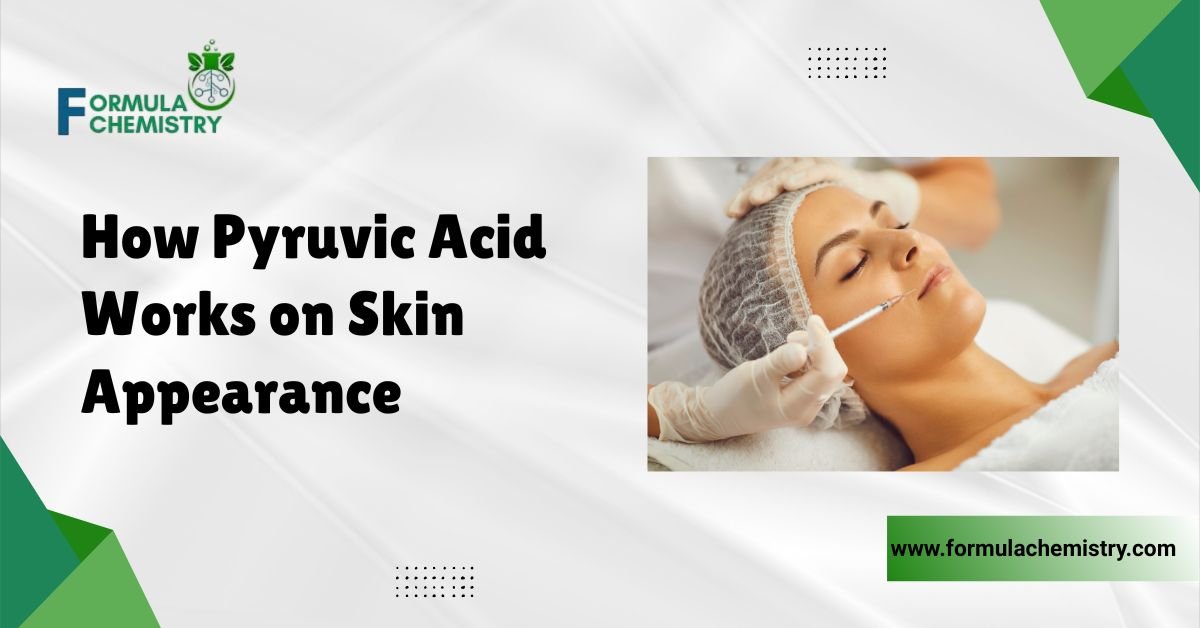
Its ketone and carboxylic acid groups also make it more reactive than simple hydroxy acids. This is one reason peel users report a distinct odor, strong sensation, and rapid visible frosting or erythema when protocols are too aggressive.
Pyruvic acid can be converted partly to lactic acid under biological conditions. That conversion does not turn a pyruvic peel into a lactic acid peel, because the starting acid, pH, concentration, exposure time, and delivery profile remain different.
INCI, Naming, and Identity
The correct INCI name is Pyruvic Acid. Other names include 2-oxopropanoic acid, alpha-ketopropionic acid, acetylformic acid, and pyroracemic acid.
Pyruvate is not the same ingredient as pyruvic acid. Sodium pyruvate is a salt, has a different pH behavior and cannot be substituted directly for pyruvic acid in an acid peel.
This naming distinction matters on batch sheets and supplier documents. A formula that calls for pyruvic acid cannot be corrected by adding a pyruvate salt unless the whole acid system is redesigned.
Percentage and Product Type Guidance
Pyruvic acid percentage only makes sense when pH, exposure time, neutralization, and user qualification are defined. A percentage without those controls is not a formula specification.
| Product type | Practical pyruvic acid position |
| Daily leave on toner | Not recommended for DIY formulation |
| Daily leave on serum | Not recommended for casual retail use |
| Rinse off the cleanser | Poor fit because the contact time is too short |
| Professional superficial peel | Requires trained application and neutralization |
| Professional medium-depth peel | Requires medical or advanced clinical control |
| Spot treatment concept | Not recommended because dosing is uneven |
Professional peel discussions commonly place pyruvic acid between 40.00 and 70.00 percent with short contact times. Those figures do not belong in home formulation instructions.
Peel Guide for Professional Context
A pyruvic acid peel is built around controlled injury to the outer skin surface. In cosmetic editorial writing, that should be described as a professional resurfacing procedure designed to improve the appearance of uneven texture and tone.
The variables that govern outcome are concentration, pH, skin preparation, application layers, contact time, endpoint observation, neutralization, and post-peel care. Changing one variable changes the whole safety profile.
| Peel variable | Professional control point |
| Concentration | Often, 40.00 to 70.00 percent in the literature |
| Contact time | Commonly short, often measured in minutes |
| Application | Even a film with no polling |
| Endpoint | Visual and sensory assessment by a trained user |
| Neutralization | Required when the protocol specifies it |
| Aftercare | Barrier support and daily broad-spectrum sunscreen |
Pyruvic acid fumes can irritate the eyes and respiratory tract during application. Ventilation, eye protection, gloves, and disciplined dispensing are not optional in a professional setting.
Formulation Considerations and Technical Data
Pyruvic acid should be formulated from the pH upward, not from the marketing claim downward. The acid strength, concentration, and final pH decide the formula’s behavior more than the product name.
A low pH system also affects packaging, fragrance stability, colorants, thickeners, preservatives, and label claims. Many attractive cosmetic ingredients perform poorly or become unstable in very acidic systems.
pH Control
Pyruvic acid has a pKa near 2.5, so low pH dramatically increases free acid activity. That free acid fraction drives exfoliating force and irritation potential.
For retail skincare, a formulator must not chase professional peel performance in a daily product. The correct decision is often to choose lactic acid, mandelic acid, gluconolactone, or a buffered acid blend instead.
Solvent and Vehicle Choice
Water-based vehicles keep pyruvic acid easy to disperse, but they do not reduce its need for control. Alcoholic systems may increase volatility, odor impact, and sting.
Gels require acid-resistant rheology. Carbomer, many natural gums, and some associative thickeners can lose performance or create unstable viscosity at very low pH.
Packaging Compatibility
Pyruvic acid belongs in packaging that tolerates low pH and reactive organic acids. Glass or acid-compatible plastic should be assessed with real-time and accelerated stability testing.
Metal components are a poor choice. Pumps, springs, liners, and caps must be checked because acid migration can create corrosion, discoloration, odor change, and dosing failure.
Preservation Strategy
A low pH formula is not automatically self-preserved. Preservative selection must match the final pH, water activity, packaging, and expected consumer contamination.
Organic acid preservatives may fit acidic systems, but they must not be added blindly. The finished product still needs microbial challenge testing before sale.
Safety and Regulatory Framing
Pyruvic acid is not a beginner acid. Its low molecular weight, low pKa, pungent vapor, and peel history place it in an advanced handling category.
Cosmetic formulators should avoid therapeutic claims for acne, melasma, scars, or inflammatory disorders. Safer claim language says the ingredient is used in products designed to improve the appearance of uneven texture, excess oiliness, and dull tone.
Regulatory status depends on market, product type, concentration, pH, exposure pattern, and claims. A brand must check the current rules for every sales territory before placing pyruvic acid in a commercial product.
Common Mistakes When Formulating With Pyruvic Acid
- Treating it like glycolic acid: This happens because both ingredients appear in peel discussions. Fix it by designing around pyruvic acid pKa, odor, volatility, and professional use profile.
- Copying peel percentages into retail skincare: This happens when formulators confuse clinical protocols with daily products. Fix it by separating professional procedures from consumer leave on formulas.
- Ignoring vapor exposure: This happens because formulators focus only on skin contact. Fix it with ventilation, closed dispensing, eye protection, and small controlled batches.
- Neutralizing by guesswork: This happens when pH meters are skipped. Fix it by using a calibrated meter and documenting every adjustment.
- Choosing incompatible thickeners: This happens when a gel base is reused from an AHA formula. Fix it by screening acid-stable polymers at the final pH.
- Making medical claims: This happens when ingredient literature is converted into marketing language. Fix it by using cosmetic appearance claims and avoiding treatment language.
Suitability Guide
Pyruvic acid is most suitable for trained professionals working on controlled peel systems. It is not suitable for beginner DIY formulators, casual home peel users, or brands without safety testing access.
Oily and resilient skin types may tolerate professional pyruvic systems better than dry or highly reactive skin types. Sensitive, compromised, recently exfoliated, or barrier-impaired skin should be treated with caution.
Haircare use is limited because the ingredient does not solve a common hair formulation problem better than safer acids. Scalp use also raises avoidable irritation concerns.
Intermediate formulators can study pyruvic acid on paper, but they should not build consumer formulas around it without supervision. Advanced formulators should still run compatibility, stability, preservative efficacy, and user safety testing.
Always conduct a 48-hour patch test with any new formula before wider use.
FAQ
What is pyruvic acid made of?
Pyruvic acid is made of carbon, hydrogen, and oxygen in the formula C3H4O3. Its structure contains one ketone group and one carboxylic acid group.
Is pyruvic acid an AHA?
Pyruvic acid is not a classic alpha-hydroxy acid because it has a keto group rather than a hydroxy group on the alpha carbon. It is correctly described as an alpha-keto acid.
Is pyruvic acid alpha or beta?
Pyruvic acid is an alpha-keto acid. The ketone group sits next to the carboxylic acid group on the alpha carbon position.
What is pyruvic acid used for?
In cosmetic practice, pyruvic acid is mainly associated with professional chemical peel systems. It is used in formulas designed to improve the appearance of surface texture and uneven tone.
How is pyruvic acid used in skincare?
Pyruvic acid is used with strict control of concentration, pH, contact time, and neutralization. It should not be used as a casual home acid in daily leave-on skincare.
What is another name for pyruvic acid?
Another name for pyruvic acid is 2-oxopropanoic acid. Other synonyms include alpha-ketopropionic acid and pyroracemic acid.
Is pyruvic acid good for skin?
Pyruvic acid can be useful in professional systems designed to improve visible texture and surface dullness. It is not automatically suitable for every skin type because the irritation potential is high.
Is pyruvic acid toxic?
Pyruvic acid can irritate skin, eyes, and the respiratory tract when handled improperly. Toxicity risk depends on concentration, exposure route, dose, ventilation, and user training.
Key Takeaways
- Pyruvic acid is a small alpha-keto acid with the INCI name Pyruvic Acid and CAS number 127 17 3.
- Its molecular weight of 88.06 g/mol, pKa near 2.5, and water miscibility explain its fast acid behavior.
- Professional peel discussions commonly involve 40.00 to 70.00 percent pyruvic acid, not casual home skincare.
- The ingredient demands pH control, acid-compatible packaging, ventilation, and disciplined neutralization protocols.
- Formula Chemistry classifies pyruvic acid as an advanced professional ingredient rather than a general DIY exfoliant.
Choose pyruvic acid only when your formulation controls are stronger than the acid itself.