
Introduction
Acne formulation is one of the most technically demanding areas in DIY cosmetic chemistry. Getting it wrong does not just mean an ineffective product; it means a formula that actively aggravates the condition it was built to address.
Pyruvic acid acne formulation sits at the intersection of exfoliation, sebum control, and antimicrobial chemistry. That combination is rare in a single active, and it is exactly why this ingredient deserves a dedicated formulation guide.
At Formula Chemistry, we built this article for formulators who want to move beyond salicylic acid as the default acne active. You will leave with a clear understanding of how pyruvic acid targets acne, how to build it into a stable formula, and what mistakes to avoid before your first batch.
What Makes Pyruvic Acid Effective for Acne
Most acne actives work through a single mechanism. Salicylic acid exfoliates inside the follicle. Benzoyl peroxide delivers antimicrobial activity. Glycolic acid clears dead cells at the surface.
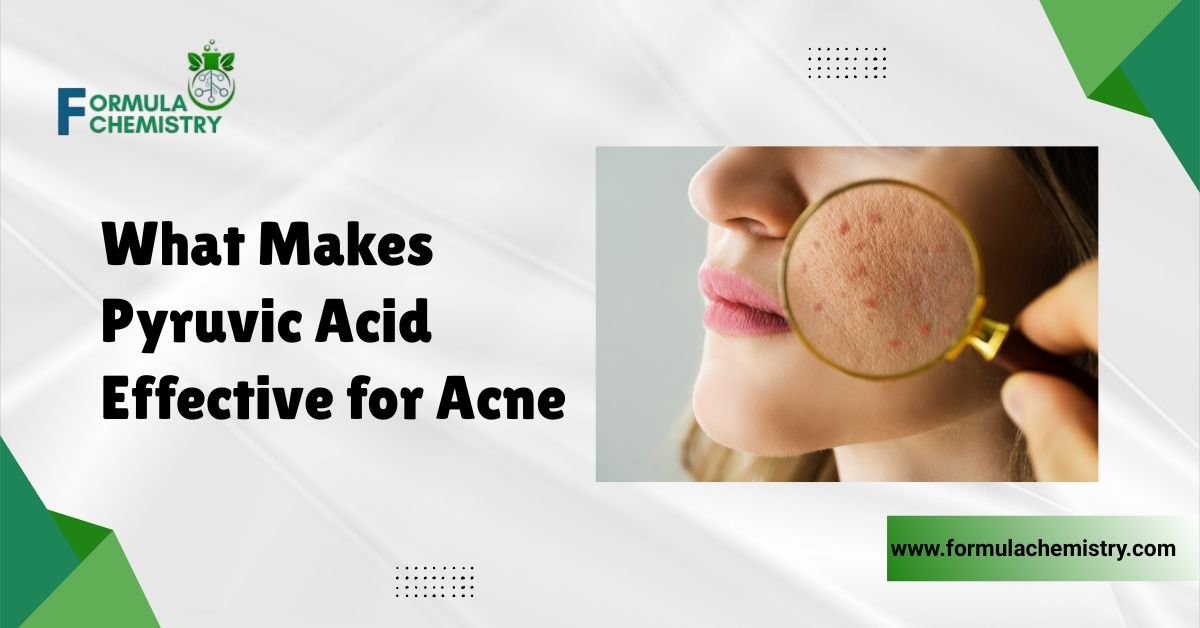
Pyruvic acid covers all three functional areas simultaneously. That multi-mechanism profile is what makes the pyruvic acid acne formulation a genuinely different approach from anything built around a standard AHA or BHA.
Its INCI name is Pyruvic Acid, CAS number 127-17-3, and it belongs to the alpha-keto acid chemical class. The keto group adjacent to its carboxylic acid is what enables follicular penetration and antimicrobial activity alongside surface keratolysis.
The Four Pillars of Acne and How Pyruvic Acid Addresses Them
Acne development follows four established pathways that any serious acne formulation must address. These are excess sebum production, follicular hyperkeratinization, Cutibacterium acnes proliferation, and inflammatory response.
Pyruvic acid directly addresses the first three of these pillars within a single active. It regulates the appearance of sebum-related congestion, clears hyperkeratinized follicular plugs through keratolytic action, and demonstrates documented antimicrobial activity against C. acnes at cosmetically relevant concentrations.
The fourth pillar, inflammation, is where supporting ingredients in the formula architecture carry the load. Actives like Allantoin, Panthenol, and Niacinamide are commonly paired with pyruvic acid in a well-built acne formula to address the inflammatory component.
Is Pyruvic Acid a BHA or an AHA
This question comes up consistently in formulator communities, and the answer matters for how you position and formulate the ingredient. Pyruvic acid is neither a BHA nor an AHA.
It belongs to the alpha-keto acid family, a separate chemical class entirely. Its keto group at the alpha position distinguishes it from alpha-hydroxy acids like glycolic and lactic acid, and from beta-hydroxy acids like salicylic acid.
Understanding this distinction prevents misclassification errors in product labeling and helps formulators set accurate expectations about how the ingredient will perform compared to standard AHA or BHA systems.
How Pyruvic Acid Works in an Acne Formula
The formulation rationale for a pyruvic acid acne treatment starts with pH. Without a correctly managed pH, the free acid concentration drops and the active’s keratolytic and antimicrobial functions are both compromised before the product reaches the skin.
The active window for pyruvic acid in an acne formula sits between pH 2.8 and 3.5 for leave-on applications. This range balances effective free acid availability with a manageable skin tolerance profile for daily or alternate-day use on acne-prone skin.
Keratolytic Action Inside the Follicle
Pyruvic acid’s keto group enables it to penetrate the sebaceous follicle more effectively than a standard AHA at equivalent molecular weight. Inside the follicle, it loosens the cohesion of keratinized cells that form the microcomedone, the earliest stage of acne lesion development.
Addressing the microcomedone stage is where pyruvic acid offers a genuine clinical advantage over surface-only exfoliants. A formula that clears existing lesions but does not address microcomedone formation will produce inconsistent long-term results.
Antimicrobial Activity Against C. Acnes
Pyruvic acid demonstrates measurable inhibitory activity against Cutibacterium acnes at concentrations achievable in a leave-on cosmetic formula. This is a function that neither glycolic acid nor lactic acid shares at comparable usage levels.
In practical formulation terms, this means a pyruvic acid acne formula is addressing microbial populations in the follicle at the same time it is exfoliating and regulating sebum appearance. No other single alpha-keto acid delivers that combination in one active system.
Key Formulation Considerations for Pyruvic Acid Acne Formulation
Building a stable and effective pyruvic acid acne formula requires decisions at every stage of the formulation process. pH management, phase addition, preservation, and packaging all have specific requirements that differ from a standard AHA formula.
Getting these details right before the first batch saves significant time in stability testing and reformulation. Formula Chemistry covers each of these parameters in detail below because skipping any one of them produces a formula that underperforms or fails shelf life.
Ideal pH Range for an Acne Leave-On Formula
For a leave-on acne serum or treatment, the target pH range is 2.8 to 3.5. This is slightly higher than a short-contact peel and reflects the need for daily tolerability on skin that is already compromised by active acne lesions.
Below pH 2.8 in a leave-on format, the risk of barrier disruption increases on inflamed or sensitized skin. Above pH 3.5, the free acid concentration drops to a level where consistent antimicrobial and keratolytic activity cannot be guaranteed.
Solubility and Phase Addition
Pyruvic acid is fully water-soluble and belongs in the water phase of any emulsion or aqueous formula. It should be added to the water phase after the temperature has dropped to 35°C or below to prevent oxidative degradation during processing.
It does not require heating for dissolution and should never be added to an oil phase or anhydrous system without a proper solubilizer. Open containers of pyruvic acid raw material absorb atmospheric moisture rapidly due to its hygroscopic nature, so weigh and close immediately.
Compatibility With Acne-Targeting Actives
Pyruvic acid is compatible with Niacinamide at concentrations up to 4% in an acne formula, though pH must be re-verified after addition, as niacinamide has a mild pH-raising effect in acidic systems. It pairs well with Zinc PCA at 0.5% to 1% for additional sebum-regulating support.
Avoid combining pyruvic acid with Benzoyl Peroxide in the same formula as the oxidizing nature of benzoyl peroxide destabilizes pyruvic acid over time. Do not combine with strongly alkaline botanicals or high-pH ferment filtrates without extensive compatibility and stability testing.
Typical Usage Levels for Acne Formulas
For daily-use leave-on acne serums and spot treatments, pyruvic acid sits between 5% and 15%. At 5% to 8%, the formula is suitable for consistent daily use on most acne-prone skin types.
At 10% to 15%, the formula functions as an alternate-day treatment or targeted spot application. Concentrations above 15% in a leave-on format require careful pH management and should be positioned for short-contact use with clear product instructions.
Common Mistakes in Pyruvic Acid Acne Formulation
These are the errors that appear most consistently when formulators build an acne formula with pyruvic acid for the first time. Each one is avoidable with the right adjustment at the bench.
- Adding pyruvic acid to the water phase above 40°C causes oxidative degradation and reduces active concentration before the formula is complete. Always cool the water phase to 35°C before acid addition without exception.
- Setting pH above 3.5 in a leave-on acne formula reduces free acid availability and compromises antimicrobial and keratolytic performance. Always verify with a calibrated pH meter after all ingredients are incorporated.
- Combining pyruvic acid with benzoyl peroxide in a single formula destabilizes the acid through oxidation and reduces the efficacy of both actives over time. These two actives belong in separate products used at different times of day.
- Using tap water instead of distilled or deionized water introduces mineral contaminants that react with pyruvic acid and create pH instability across the batch. Distilled water is non-negotiable in this formula type.
- Packaging a pyruvic acid acne formula in clear or translucent containers accelerates active degradation within weeks. Amber glass or opaque packaging is the correct choice for any formula containing pyruvic acid.
- Neglecting to test preservation efficacy at the working pH of the formula creates a microbial control gap that only appears late in stability testing. Verify that your preservation system performs at pH 2.8 to 3.5 before committing to a final batch size.
Suitability Guide for Pyruvic Acid Acne Formulas
The pyruvic acid acne formulation is best suited to oily, acne-prone, and congested skin types where sebum overproduction and follicular hyperkeratinization are primary concerns. It is particularly effective for skin presenting with comedonal and inflammatory acne simultaneously.
Dry, sensitized, or compromised skin types should not use pyruvic acid leave-on formulas above 5% without a supporting barrier repair system in the formula architecture. Rosacea-prone skin should avoid pyruvic acid formulas entirely due to the risk of aggravating vascular reactivity.
This ingredient sits at an intermediate formulator level for leave-on acne applications. Beginners should gain experience with lower-potency exfoliants like mandelic acid or low-percentage lactic acid before working with pyruvic acid in an acne treatment context. Always conduct a 48-hour patch test with any new formula before wider use.
Frequently Asked Questions About Pyruvic Acid Acne Formulation
Is pyruvic acid good for acne?
Pyruvic acid may help support the appearance of clearer skin in acne-prone individuals through its combined keratolytic, follicular penetration, and antimicrobial activity. It addresses three of the four established acne development pathways within a single active.
It is commonly used in formulations designed to support oily and blemish-prone skin types when formulated at the correct pH and concentration.
What are the 4 pillars of acne?
The four established pathways in acne development are excess sebum production, follicular hyperkeratinization, Cutibacterium acnes proliferation, and inflammatory response. A well-built acne formula targets as many of these pathways as possible within a stable and compatible ingredient system.
Pyruvic acid directly addresses the first three, making supporting anti-inflammatory actives essential partners in the formula architecture.
How is pyruvic acid used in skincare?
Pyruvic acid is used in skincare as a chemical exfoliant, follicular clarifying agent, and antimicrobial active primarily in peel and treatment formats. In leave-on formulas, it appears between 5% and 15% at a managed pH between 2.8 and 3.5. In professional and DIY peel systems, it is used at 25% to 40% in short-contact formats with a neutralization protocol.
What is the formula for pyruvic acid?
The molecular formula for pyruvic acid is CH3COCOOH with a molecular weight of 88.06 g/mol. In cosmetic formulation, the term pyruvic acid formula refers to the complete ingredient system built around this active at a controlled pH. A functional acne leave-on serum typically combines pyruvic acid at 5% to 15% with humectants, supporting actives, and a broad-spectrum preservation system.
Is pyruvic acid a BHA or an AHA?
Pyruvic acid is neither a BHA nor an AHA. It belongs to the alpha-keto acid chemical class, which is a separate family from both alpha-hydroxy acids and beta-hydroxy acids.
This classification matters for product labeling accuracy and for setting correct formulator and consumer expectations about how the ingredient performs compared to standard exfoliant categories.
What do Koreans use for acne scars?
Korean skincare approaches to acne scarring typically combine low-concentration chemical exfoliants, centella asiatica extracts, niacinamide, and tranexamic acid in layered routines focused on gradual cell turnover and barrier support.
From a formulation standpoint, this translates to building a compatible system of brightening and resurfacing actives at moderate concentrations rather than relying on a single high-strength acid. Consistent sun protection is always a non-negotiable component of any scar-fading protocol.
What do Koreans put on pimples?
Korean spot treatment approaches commonly use centella asiatica, tea tree-derived actives, salicylic acid at low concentrations, and calamine in targeted formats applied directly to active lesions.
Pyruvic acid at 10% to 15% in a gel base is a functionally stronger alternative for formulators looking to build a spot treatment with exfoliating and antimicrobial activity combined. The key formulation consideration is keeping pH within the active window while maintaining tolerability on inflamed skin.
Key Takeaways for Formulators
- Pyruvic acid addresses three of the four acne development pillars in a single active, making it one of the most functionally complete ingredients available for acne-focused cosmetic formulation.
- The working pH for a leave-on acne formula must sit between 2.8 and 3.5. Below this range, tolerability suffers on compromised skin, and above it the active’s core functions are measurably reduced.
- Pyruvic acid is incompatible with benzoyl peroxide and should never appear in the same formula. These two actives must be separated into different products used at different application times.
- Packaging matters as much as formulation for pyruvic acid. Amber glass or opaque containers are required to protect active concentration across the product’s shelf life.
- Niacinamide and Zinc PCA are the strongest compatible supporting actives for a pyruvic acid acne formula, and both contribute meaningfully to the formula’s overall performance against the four acne pillars.
Start with a 10% pyruvic acid serum in a simple aqueous base, verify pH at 3.0, run a 30-day stability check in amber glass, and document every observation before adjusting concentration or adding supporting actives to the system.