

Quick Answer
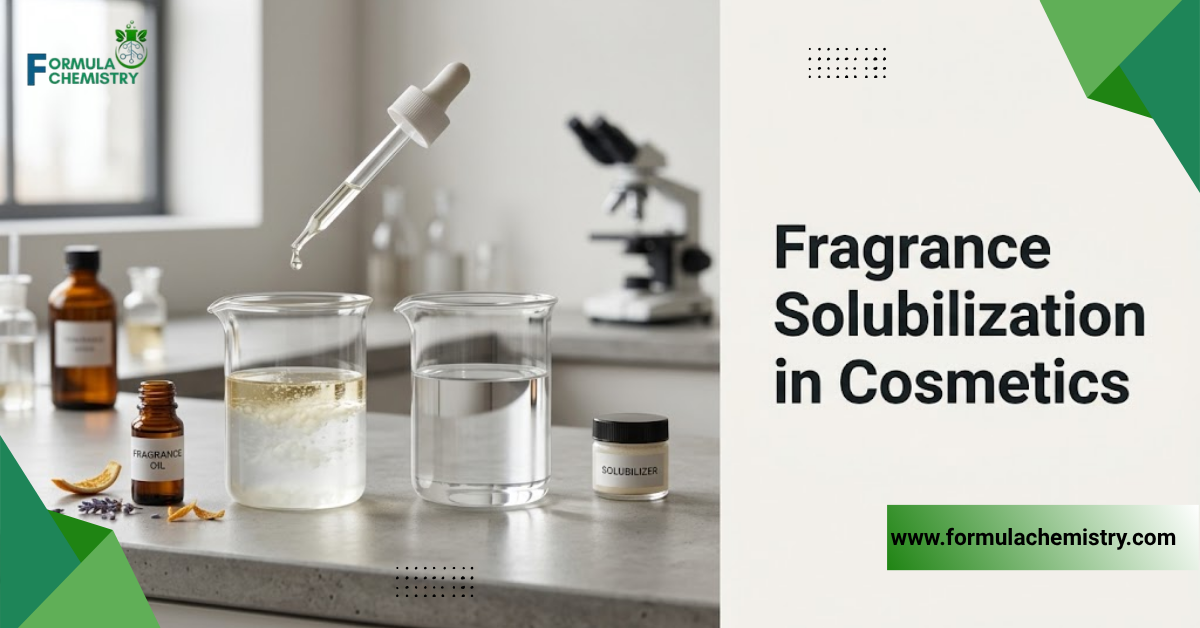
Fragrance solubilization in cosmetics is the process of dissolving oil-based fragrance or essential oils into a water-based formula using a solubilizer, which forms tiny micelles that trap the oil and keep the solution clear.
The key is the solubilizer-to-fragrance ratio, usually between 1:1 and 5:1, adjusted by testing until the mixture turns clear.
The single most important rule is to premix the solubilizer with the fragrance first, then add water slowly, because adding fragrance oil directly to water produces a cloudy, unstable product.
Introduction
Adding a scent to a water-based toner or mist sounds simple until the fragrance floats on top in oily droplets and refuses to blend. Oil and water do not mix, and fragrance oils are oils, so a water formula needs help to carry a scent.
That help is a solubilizer, and fragrance solubilization in cosmetics is the difference between a clear, stable, beautifully scented product and a cloudy, separating mess. The chemistry is straightforward once you understand what is actually happening.
I solubilize fragrances into water-based products regularly, and almost every failure traces back to one of two mistakes, the wrong ratio or the wrong order of mixing. Both are easy to fix once you know them.
This guide covers how solubilization works, which solubilizers to use, the all-important ratio and method, how to keep a solution clear, and how to stay within fragrance safety limits.
What Fragrance Solubilization Actually Is
Fragrance solubilization is the technique of dispersing an oil-soluble fragrance evenly and invisibly through a water-based formula. The goal is a clear, uniform, stable product rather than a layer of oil sitting on water.
Fragrance oils and essential oils are lipophilic, meaning they dissolve in oil but not in water. Dropped into a water base, they bead up, float, and separate, which is exactly what a solubilizer prevents.
How Micelles Do the Work
A solubilizer is a type of surfactant, a molecule with a water-loving end and an oil-loving end. When enough of it is present, these molecules arrange into tiny spheres called micelles, with their oil-loving ends pointing inward.
Each micelle traps a droplet of fragrance oil in its core, surrounded by a water-friendly shell. Because these micelle-wrapped droplets are extremely small, they scatter almost no light, so the solution looks clear rather than cloudy.
That is the whole principle. The solubilizer does not make oil and water chemically merge, it packages the oil into microscopic parcels that water can carry invisibly.
The Common Solubilizers
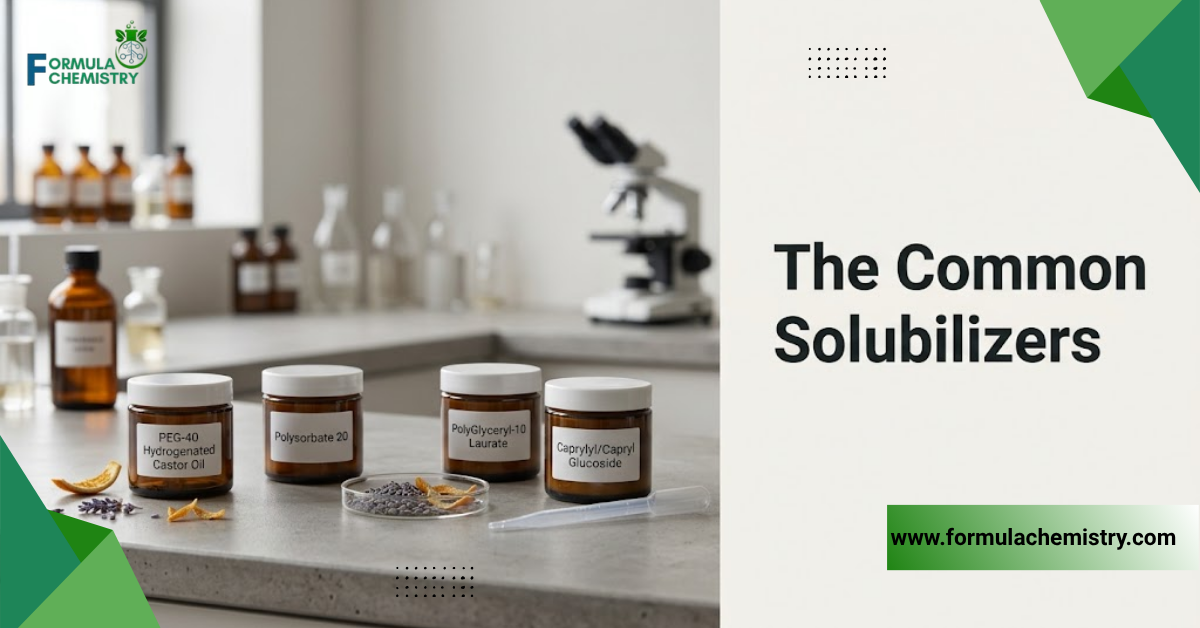
Several solubilizers handle fragrance solubilization in cosmetics, and the right one depends on your fragrance, your base, and whether you need a natural product. Each has a typical use and character.
Polysorbate 20
Polysorbate 20 is the workhorse of fragrance solubilization in cosmetics, a non-ionic surfactant with an HLB around 16.7 that suits lighter fragrance and essential oils. It keeps solutions clear, is gentle, and is the standard choice for toners, mists, and micellar waters.
It is water-soluble, easy to process, and forgiving, which makes it the usual starting point for anyone new to solubilizing. Most water-based scented products you meet rely on it or something similar.
Polysorbate 80
Polysorbate 80 is the heavier cousin, better suited to thicker or more stubborn oils. Its slightly different structure handles denser fragrance and carrier oils that Polysorbate 20 struggles with.
Choosing between the two comes down to the oil. Lighter citrus and floral materials go with Polysorbate 20, while heavier oils often solubilize more cleanly with Polysorbate 80.
PEG-40 Hydrogenated Castor Oil
PEG-40 hydrogenated castor oil, sometimes sold as Cremophor RH40, is a strong solubilizer widely used for perfumes and fragrance oils. It is efficient, often needing less material than the polysorbates for a clear result.
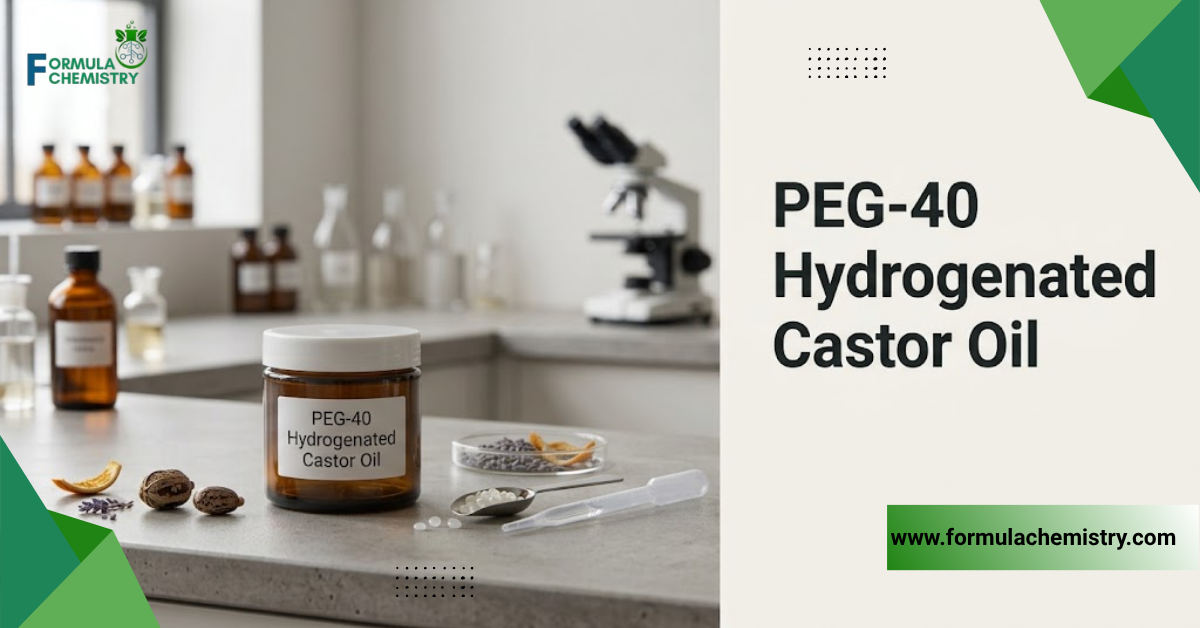
It pairs well with fine-fragrance-style water perfumes and is a favourite where a very clear, elegant solution is the goal. Alongside Polysorbate 20 it is one of the two conventional solubilizers most formulators reach for.
Natural Solubilizers
For natural and clean-beauty formulas, plant-derived options exist, though they are fussier to work with. Blends based on caprylyl/capryl glucoside, sodium olivate, or polyglyceryl esters can solubilize fragrance while meeting natural standards.
The honest trade-off is performance. Natural solubilizers can foam more, feel slightly tacky, or need higher levels than the conventional options, so they reward patient testing, which is something we account for at Formula Chemistry when a brief demands a certified natural scented product.
The Ratio That Makes or Breaks It
This is the heart of fragrance solubilization, and getting it wrong is the most common reason a product turns cloudy. The solubilizer-to-fragrance ratio decides whether your solution is clear or hazy.
The Working Range
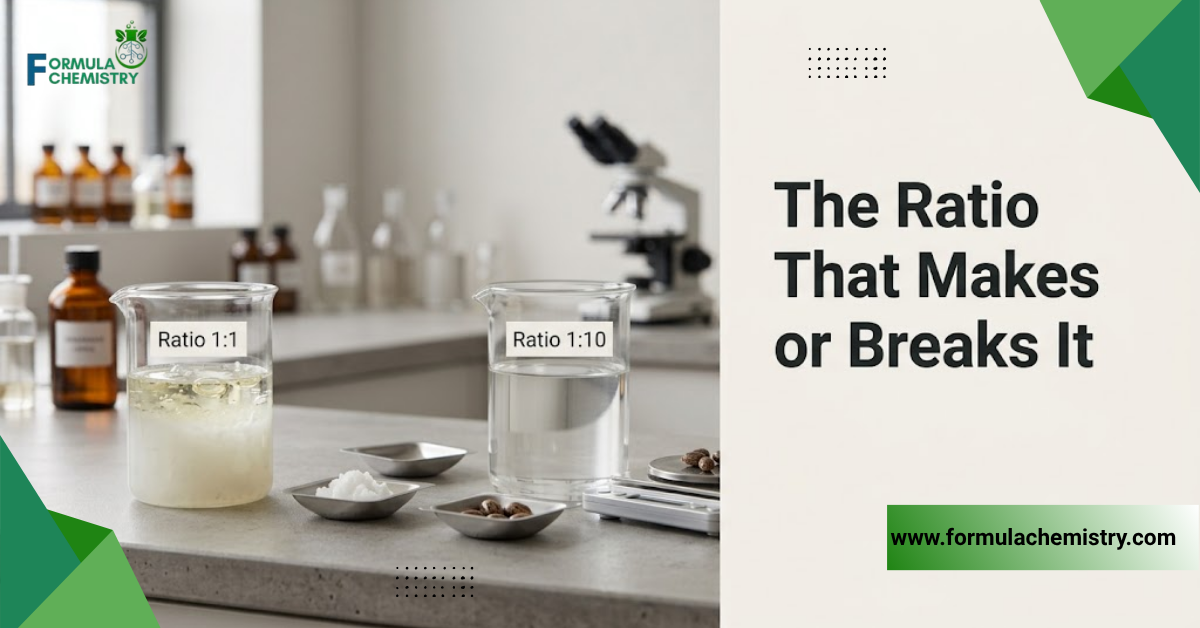
The correct ratio almost always falls between 1:1 and 5:1, meaning one to five parts solubilizer per one part fragrance or essential oil. With Polysorbate 20, a 1:1 starting point works for many fragrances, while more difficult oils need more solubilizer.
You have found the right ratio when the mixture goes clear. Too little solubilizer leaves the solution cloudy or oily on top, so you add more, a little at a time, until clarity appears.
Why the Ratio Varies
No single number fits every fragrance, because oils differ in composition. The terpenes, phenols, and esters that make up an essential oil each behave differently, so a light lavender may clear at 1:1 while a heavier or more complex oil needs 3:1 or more.
Some oils are genuinely difficult. Citrus oils and resinous materials are among the hardest to solubilize and may never turn clear, which is a limitation to plan around rather than a mistake to fix.
The Method: Order Matters Most
Even the perfect ratio fails if you mix in the wrong order. This single procedural rule prevents most solubilization failures.
Premix, Then Add Water
Always combine the solubilizer and the fragrance first, and stir them into a clear, uniform blend before any water goes in. This lets the solubilizer fully surround the oil while nothing is competing for it.
Only then do you add the water, and slowly, stirring continuously as you go. Adding water gradually to the premix gives the micelles time to form properly around the oil.
Why Adding Oil to Water Fails
Dropping fragrance oil straight into water is the classic beginner mistake. The oil hits the water, beads up, and floats before the solubilizer can wrap it, leaving droplets that never fully clear.
The order is not optional. Solubilizer plus fragrance first, water second and slowly, is the sequence that works, and reversing it is the most frequent cause of a cloudy batch.
Keeping the Solution Clear
Clarity is the visible proof of good solubilization, and a few factors beyond the ratio affect it. Managing them keeps a product looking clean and professional.
A small amount of ethanol, often 20 to 30% of the water phase, improves clarity and can reduce how much solubilizer you need. It helps dissolve the fragrance and sharpens the final transparency.
Temperature and storage matter too. Some solutions clear when warm and turn hazy when cold, so testing a product at the temperatures it will actually experience prevents surprises on a shelf or in a cold room.
The fragrance load itself is a factor. Pushing too much scent into a formula strains the solubilizer, so respecting a sensible fragrance percentage keeps both clarity and safety within reach, which leads directly to the limits that govern how much scent you can use.
Fragrance Safety and IFRA Limits
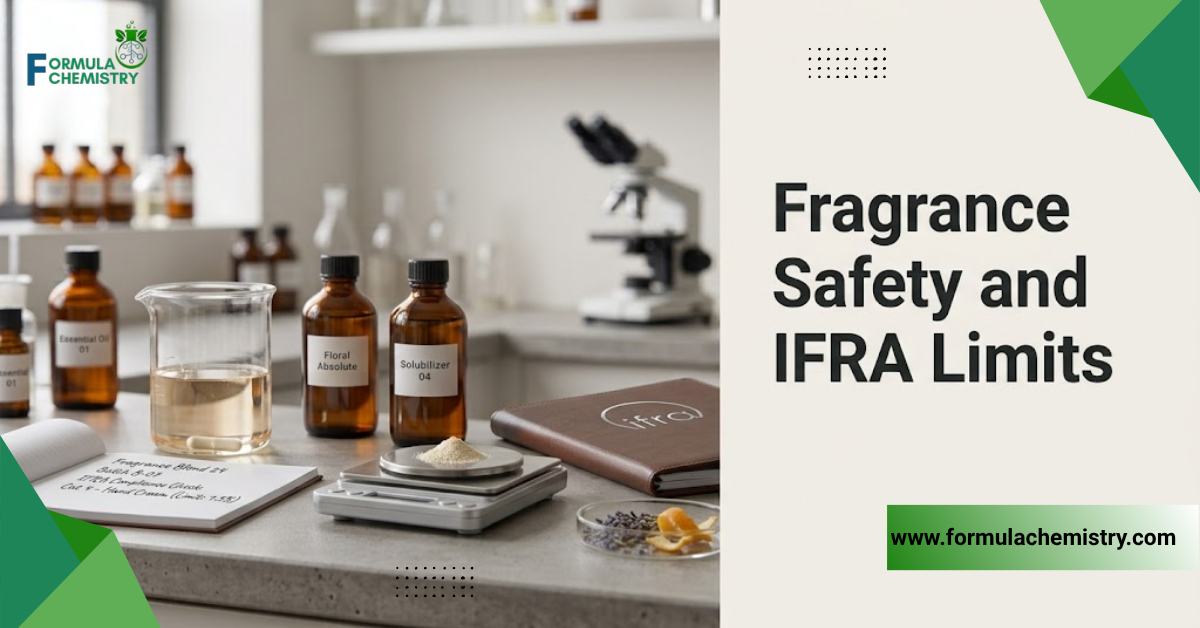
Solubilizing a fragrance is only half the job, since the amount you add is governed by safety rules. The International Fragrance Association, or IFRA, sets these limits.
How IFRA Limits Work
IFRA publishes maximum usage levels for fragrance materials, organised by product category based on how the product is used. A leave-on face product carries far stricter limits than a rinse-off wash or a room spray, because it stays on skin.
The same fragrance can be allowed at very different levels across categories. A material permitted at several percent in one product may be limited to a fraction of a percent in a leave-on facial formula, and some are not permitted in lip products at all.
A Common Misunderstanding
It helps to be precise about what IFRA does. IFRA does not approve or certify finished products, it sets the safe maximum for a fragrance material in a given category, and the formulator is responsible for staying within it.
Your fragrance supplier provides an IFRA certificate showing the maximum safe level for each category. Checking that certificate against your product type, before you finalise a formula, is a step we never skip at Formula Chemistry, because a beautifully clear solution is still a failure if it exceeds a safety limit.
Choosing Your Approach
The right solubilization strategy follows your product and your fragrance. A few clear patterns cover most situations.
- Light toner or facial mist: Polysorbate 20 with a fragrance or essential oil, starting near a 1:1 ratio
- Heavier or stubborn oil: Polysorbate 80, for its stronger grip on dense oils
- Water perfume or elegant clear spray: PEG-40 hydrogenated castor oil, for efficient clarity
- Certified natural product: a glucoside or olivate-based natural solubilizer, with extra testing
- Difficult citrus or resin oils: accept some haze, add ethanol, and use a higher ratio
- Any leave-on skincare: confirm the fragrance level against IFRA before finalising
Whatever the route, the process is the same. Choose a solubilizer suited to the oil, find the ratio that turns the mix clear, premix before adding water, and confirm both clarity and IFRA compliance.
Deciding on Your Solubilization Setup
If you are formulating a simple water-based scented product, begin with Polysorbate 20 and a 1:1 ratio, then add more solubilizer until the blend clears. That single approach covers a large share of toners, mists, and sprays.
For heavier oils, elegant perfumes, or natural formulas, match the solubilizer to the need, using Polysorbate 80, PEG-40 hydrogenated castor oil, or a natural blend, respectively. Each asks for its own testing, but the underlying method never changes.
Above all, respect the order and the limits. Premix solubilizer and fragrance first, add water slowly, adjust the ratio until clear, and check your fragrance level against IFRA for the product category. Do that, and fragrance solubilization in cosmetics becomes a reliable step rather than a guessing game.
Frequently Asked Questions
What is fragrance solubilization in cosmetics?
Fragrance solubilization in cosmetics is the process of dissolving oil-based fragrance or essential oils into a water-based formula using a solubilizer. The solubilizer forms micelles that trap the oil and keep the solution clear. Without it, the oil would float and separate.
How do I add fragrance to a water-based cosmetic?
Premix the solubilizer with the fragrance oil first until clear, then add water slowly while stirring. Never add fragrance oil directly to water, because it will bead up and separate. Adjust the solubilizer amount until the solution turns clear.
What ratio of solubilizer to fragrance should I use?
The ratio usually falls between 1:1 and 5:1, meaning one to five parts solubilizer per part fragrance. With Polysorbate 20, many fragrances start at 1:1, while heavier or complex oils need more. You have the right ratio when the mixture becomes clear.
Which solubilizer is best for essential oils?
Polysorbate 20 is the most common choice for essential oils and lighter fragrances, keeping solutions clear and being easy to use. Polysorbate 80 suits heavier oils, and PEG-40 hydrogenated castor oil suits perfumes. Natural blends exist for clean-beauty formulas.
Why is my fragrance and water mixture cloudy?
Cloudiness usually means too little solubilizer or the wrong mixing order. Add more solubilizer gradually until clear, and always premix solubilizer with fragrance before adding water. Some citrus and resin oils are difficult to fully clear even when done correctly.
Can I solubilize essential oil in a toner without alcohol?
Yes, a solubilizer such as Polysorbate 20 lets you add essential oils to a toner without alcohol. Premix the solubilizer and oil, then add the water phase slowly. A small amount of ethanol is optional and can improve clarity but is not required.
What are IFRA limits and do they apply to me?
IFRA sets maximum safe usage levels for fragrance materials by product category, based on how the product is used. Leave-on skincare has stricter limits than rinse-off or room products. Your fragrance supplier provides an IFRA certificate, and you must keep within the limit for your category.
Do natural solubilizers work as well as polysorbates?
Natural solubilizers based on glucosides, olivate, or polyglyceryl esters can work, but often need more testing. They may foam more, feel slightly tacky, or require higher levels than polysorbates. They are the route for certified natural products despite being fussier.
Key Takeaways
Fragrance solubilization in cosmetics uses a solubilizer to form micelles that trap oil-based fragrance in a water formula, keeping it clear and stable. Without a solubilizer, fragrance oils simply float and separate because oil and water do not mix.
The two things that decide success are the ratio and the order. Use a solubilizer-to-fragrance ratio between 1:1 and 5:1, adjusted by testing until the mix clears, and always premix the solubilizer with the fragrance before adding water slowly.
Match the solubilizer to the oil, with Polysorbate 20 for lighter materials, Polysorbate 80 for heavier ones, PEG-40 hydrogenated castor oil for perfumes, and natural blends for clean beauty. Finally, check your fragrance level against IFRA limits for the product category, because a clear solution still has to be a safe one.