
By Dr. SamiUllah, PhD, Lead Formulator at Formula Chemistry
Quick Answer
A cosmetic formulation diploma is worth the investment for students who want structured training in cosmetic chemistry, formulation science, product development, and manufacturing.
The value of a diploma depends less on the certificate itself and more on the curriculum, laboratory experience, instructor expertise, accreditation, and the practical formulation skills graduates develop.
Introduction
The cosmetics industry has become one of the fastest-growing manufacturing sectors worldwide, creating opportunities for cosmetic formulators, product developers, quality assurance specialists, and skincare entrepreneurs. As demand increases, so does the number of diploma programs claiming to prepare students for successful careers.
Choosing the right cosmetic formulation diploma can be confusing because every institution promotes its certification as industry-recognized. Some focus heavily on cosmetic chemistry, while others emphasize business development or product manufacturing with limited scientific depth.
This guide explains whether a diploma is worth the investment, how employers evaluate cosmetic formulation qualifications, what curriculum matters most, and how to determine whether a program offers genuine career value.
Why Are Cosmetic Formulation Diplomas Becoming More Popular?
The beauty and personal care industry has changed significantly during the last decade. Independent skincare brands, contract manufacturers, and private-label companies have increased demand for professionals who understand formulation science instead of simply following recipes.
Many aspiring formulators also prefer shorter professional education compared with traditional university degrees. A diploma often provides focused industry training that can be completed within months rather than several years.
For entrepreneurs planning to launch cosmetic brands, a diploma offers structured learning that reduces trial-and-error formulation while improving product safety and manufacturing knowledge.
What Is a Cosmetic Formulation Diploma?
A diploma in cosmetic formulation is a professional education program designed to teach the science of developing cosmetic products safely and consistently.
Unlike short workshops that demonstrate a few formulations, comprehensive diploma programs explain the chemistry behind ingredients, emulsions, surfactants, preservatives, stability testing, product evaluation, manufacturing processes, and cosmetic regulations.
Students typically learn to formulate products such as:
- Facial cleansers
- Moisturizers
- Creams
- Body lotions
- Facial serums
- Sunscreens
- Shampoo
- Conditioner
- Hair masks
- Face masks
- Toners
- Lip care products
- Body scrubs
- Liquid soaps
Professional diploma programs also teach troubleshooting, allowing formulators to identify and solve stability problems rather than relying on fixed recipes.
What Makes a Diploma Valuable?
The quality of education determines the value of a diploma far more than the certificate itself.
At Formula Chemistry, practical formulation ability consistently outweighs paper qualifications when evaluating professional competence.
Curriculum Quality
The curriculum should progress logically from cosmetic chemistry fundamentals to advanced formulation techniques.
Strong programs explain why ingredients behave differently under varying manufacturing conditions instead of simply providing formulation templates.
Laboratory Experience
Laboratory practice remains one of the strongest indicators of educational quality. Students should prepare multiple cosmetic formulations, adjust pH, evaluate viscosity, troubleshoot instability, perform compatibility testing, and observe how formulation variables affect product performance.
Instructor Experience
Learning from experienced formulators provides insight that textbooks alone cannot offer. Instructors with industrial formulation backgrounds can explain ingredient interactions, manufacturing limitations, raw material substitutions, and production troubleshooting using practical examples.
Industry Relevance
Modern cosmetic education should include contemporary ingredient technologies, preservation systems, sustainability considerations, regulatory awareness, and manufacturing practices used by today’s cosmetic companies.
Cosmetic Formulation Diploma vs Degree
Many students struggle to choose between a diploma and a university degree. Although both provide valuable education, they serve different career objectives.
| Feature | Cosmetic Formulation Diploma | University Degree |
| Duration | Months to 1 year | 3–4 years |
| Cost | Lower | Higher |
| Practical Focus | High | Moderate |
| Research Depth | Moderate | Extensive |
| Laboratory Training | Usually Strong | Varies |
| Career Entry Speed | Faster | Longer |
| Academic Recognition | Professional | Academic |
Students seeking rapid industry entry often benefit from diploma programs.
Those interested in research careers, postgraduate education, or academic positions may find university degrees more suitable.
Does Accreditation Matter?
Accreditation improves confidence in educational quality, but students should understand what accreditation actually represents. Some organizations evaluate curriculum standards, assessment methods, educational quality, and institutional practices rather than guaranteeing employment outcomes. When researching programs, investigate whether the institution explains its accreditation clearly instead of relying on marketing terminology.
ODLQC Accreditation
Some online cosmetic education providers reference ODLQC accreditation as part of their quality assurance framework. Students should understand the scope of any accreditation being promoted and verify what educational standards it evaluates before considering it a deciding factor. Accreditation strengthens credibility, but curriculum quality, instructor expertise, and laboratory experience remain the primary indicators of educational value.
Cosmetic Formulation Certification vs Diploma
People often confuse certification with diplomas, although they represent different educational pathways. A cosmetic formulation certification generally recognizes completion of a shorter educational program focused on specific formulation skills or product categories.
Diploma programs usually provide broader education covering cosmetic chemistry, formulation science, manufacturing, quality assurance, ingredient selection, and product development. The better choice depends on career objectives rather than terminology alone.
What Employers Actually Look For
Many graduates assume employers prioritize certificates above everything else. In practice, cosmetic companies usually evaluate technical competence before qualifications.
Recruiters frequently assess:
- Ingredient knowledge
- Cosmetic chemistry understanding
- Laboratory skills
- Problem-solving ability
- Stability evaluation
- Product development experience
- Documentation quality
- Manufacturing awareness
- Communication skills
Candidates who can explain formulation decisions confidently often stand out more than those holding multiple certificates without practical experience.
How Long Does a Cosmetic Formulation Diploma Take?
Program duration varies considerably between institutions. Some intensive diploma courses can be completed within several months, while more comprehensive professional programs extend over one academic year.
Longer programs generally provide additional laboratory sessions, formulation projects, stability studies, and product development exercises.
Duration alone should not determine quality. A well-designed six-month program may deliver more practical value than a longer course built around classroom lectures with limited laboratory exposure.
Is an International Diploma Better?
Some students automatically assume international education provides superior career opportunities.
International diplomas may expose students to broader regulatory frameworks, ingredient suppliers, and formulation trends, but educational quality still depends on curriculum design and practical training.
An international diploma cosmetic program should be evaluated using the same standards applied to domestic education, including instructor expertise, laboratory practice, curriculum depth, and industry relevance.
Is the Investment Worth the Money?
Many prospective students ask, “Is a cosmetic formulation diploma worth the money?” The answer depends on individual career goals and the quality of the chosen program.
A comprehensive diploma can shorten the learning curve, reduce costly formulation mistakes, improve product development skills, and increase confidence when working in cosmetic manufacturing or launching a skincare business.
Students who expect the diploma alone to guarantee employment may be disappointed. Those who actively build formulation portfolios, continue learning, and gain practical experience usually achieve significantly better long-term results.
Formulation Considerations Before Enrolling
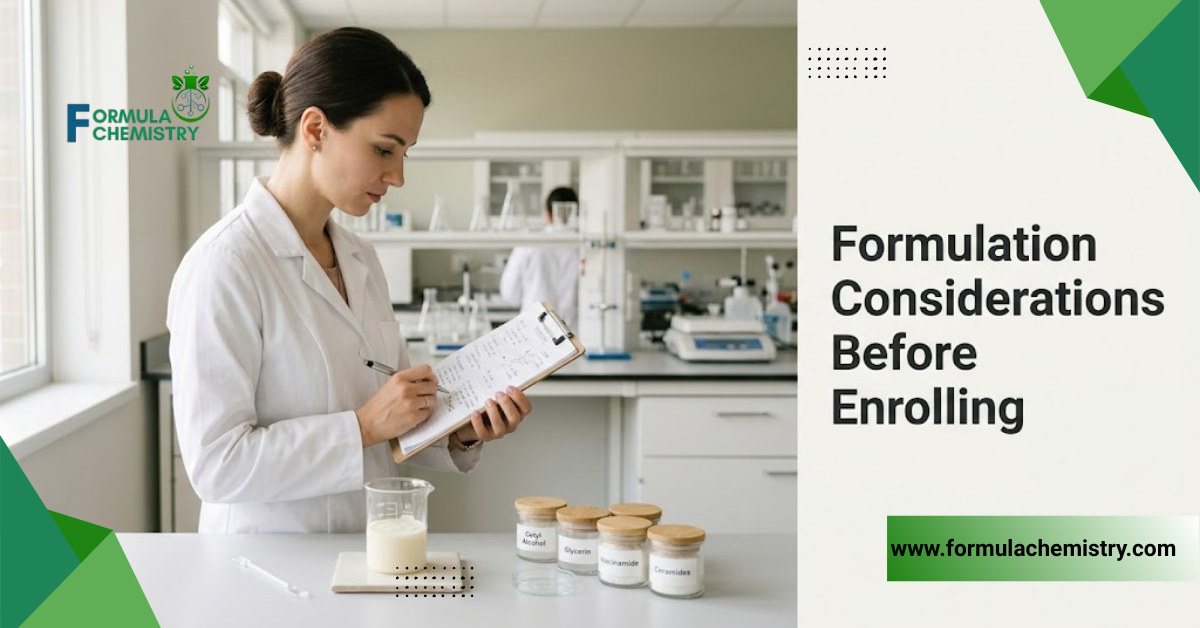
A diploma should teach students how to think like formulators rather than simply reproduce existing recipes. Before enrolling, review the curriculum carefully to confirm it covers the scientific principles that support successful product development.
Cosmetic Chemistry Foundation
Every professional formulator needs a solid understanding of cosmetic chemistry. Students should learn the properties of emulsifiers, humectants, emollients, surfactants, rheology modifiers, preservatives, antioxidants, silicones, botanical extracts, and cosmetic active ingredients before developing finished products.
Product Development Process
Professional formulation follows a structured development process. A quality diploma teaches students how to define product objectives, select appropriate raw materials, prepare prototype batches, optimize performance, conduct evaluations, and document each stage of development.
Stability Testing
Product stability determines whether a cosmetic formulation performs consistently throughout its intended shelf life.
Students should receive practical experience with accelerated stability studies, heating and cooling cycles, centrifuge testing, freeze-thaw evaluation, pH monitoring, viscosity measurement, and compatibility assessment.
Good Manufacturing Practices
Understanding Good Manufacturing Practices is essential for anyone planning to manufacture cosmetics commercially.
Professional diploma programs should explain production hygiene, documentation procedures, batch consistency, raw material handling, equipment cleaning, and quality control principles.
Cosmetic Regulations
Regulatory knowledge helps formulators develop products that meet commercial requirements. Students should become familiar with ingredient labeling, product documentation, safety considerations, manufacturing standards, and cosmetic compliance relevant to their target markets.
Diploma Cost vs Return on Investment
Many students compare the diploma cost vs ROI before making a decision. Although tuition is an important consideration, the real return comes from the skills gained rather than the certificate alone.
Students who complete comprehensive training often reduce formulation errors, improve product quality, and develop confidence that translates into career opportunities or successful cosmetic businesses.
The strongest return on investment usually comes from programs that combine scientific theory with extensive laboratory practice and ongoing mentorship.
Who Should Consider a Cosmetic Formulation Diploma?
A diploma can provide valuable education for learners from different professional backgrounds. The greatest benefit comes when students have clear career objectives and choose a curriculum aligned with those goals.
Suitable candidates include:
- Chemistry graduates
- Pharmacy graduates
- Biotechnology students
- Cosmetic manufacturing professionals
- Product development executives
- Beauty entrepreneurs
- Skincare brand founders
- Research assistants
- Quality assurance professionals
- DIY formulators seeking professional knowledge
Individuals interested only in hobby formulation may find a shorter certificate course sufficient, while those planning long-term careers generally benefit from more comprehensive diploma education.
Common Mistakes When Choosing a Diploma Program
1. Believing Every Diploma Has Equal Value
Not all diploma programs deliver the same educational quality. Curriculum depth, laboratory training, faculty expertise, and industry relevance vary considerably between institutions.
2. Ignoring Practical Laboratory Training
Watching demonstrations does not develop formulation competence. Students should prioritize programs that require them to prepare, evaluate, and troubleshoot multiple cosmetic formulations independently.
3. Choosing Based Only on Marketing Claims
Promotional materials often emphasize certification while providing little information about curriculum quality. Review the course syllabus carefully before making an enrollment decision.
4. Expecting Immediate Employment
A diploma improves technical knowledge but does not guarantee a job. Successful graduates continue developing their formulation portfolio, laboratory skills, and professional experience after completing their education.
5. Overlooking Instructor Experience
Faculty experience directly influences educational quality. Learning from instructors who have formulated commercial cosmetic products provides practical insight that extends beyond theoretical chemistry.
Suitability Guide
A cosmetic formulation diploma can support different career paths depending on the student’s educational background and professional objectives.
Most Suitable For
- Future cosmetic formulators
- Cosmetic entrepreneurs
- Product development professionals
- Chemistry and pharmacy graduates
- Quality assurance specialists
- Cosmetic manufacturing personnel
- Small skincare business owners
May Require Additional Preparation
Students without previous science education may initially find formulation chemistry challenging. Beginning with introductory cosmetic chemistry and ingredient fundamentals often makes advanced formulation topics easier to understand.
Always conduct a 48-hour patch test with any new formula before wider use.
Frequently Asked Questions
Is a cosmetic formulation diploma worth the money?
A well-designed diploma can provide excellent value by teaching cosmetic chemistry, formulation science, laboratory skills, and product development. The return on investment depends primarily on curriculum quality and practical experience rather than the certificate itself.
How long does a cosmetic formulation diploma take?
Most diploma programs range from several months to one year. Duration varies according to curriculum depth, laboratory requirements, and assessment methods.
Do employers recognize cosmetic formulation diplomas?
Many employers recognize diplomas from reputable institutions, particularly when graduates demonstrate strong formulation knowledge and practical laboratory competence during interviews.
Is a diploma better than a cosmetic formulation certification?
A diploma generally covers broader cosmetic science topics than a short certification course. Certifications are useful for focused skill development, while diplomas typically prepare students for more comprehensive professional roles.
Can I start my own skincare brand after completing a diploma?
Yes. Many graduates use their formulation education as the foundation for launching skincare or personal care brands. Business success also depends on regulatory compliance, manufacturing practices, product testing, branding, and marketing.
Does accreditation guarantee a better course?
Accreditation supports educational credibility, but it should not be the only deciding factor. Curriculum quality, laboratory training, and instructor expertise remain the strongest indicators of educational value.
Can beginners enroll in a cosmetic formulation diploma?
Many diploma programs welcome beginners, although a basic understanding of chemistry can make learning easier. Introductory modules often help students build the necessary scientific foundation.
What should I compare before choosing a diploma?
Compare curriculum depth, laboratory sessions, instructor qualifications, industry recognition, practical projects, course duration, tuition fees, and career support instead of focusing on certification alone.
Key Takeaways
A cosmetic formulation diploma can provide excellent career value when it combines cosmetic chemistry, practical formulation, laboratory training, stability testing, manufacturing principles, and regulatory awareness.
Employers consistently value graduates who understand formulation science and can apply that knowledge to real product development challenges.
The best diploma is not necessarily the most expensive or the most heavily advertised. Choose a program that develops practical competence, encourages scientific thinking, and prepares you to formulate safe, stable, and effective cosmetic products with confidence.