
Introduction
Most DIY formulators reach for glycolic or salicylic acid when building a peel. Pyruvic acid rarely makes that list, and that gap is worth fixing.
The pyruvic acid formula delivers keratolytic, sebum-regulating, and antimicrobial activity together. No single hydroxy acid matches that combination.
At Formula Chemistry, this guide gives you a complete, bench-ready peel formula. You will leave with a full ingredient breakdown, working percentages, and a step-by-step method you can follow today.
What Sets the Pyruvic Acid Formula Apart
Pyruvic acid is not a simple swap for glycolic acid. It works through multiple mechanisms simultaneously, covering surface exfoliation, follicular penetration, and antimicrobial action.
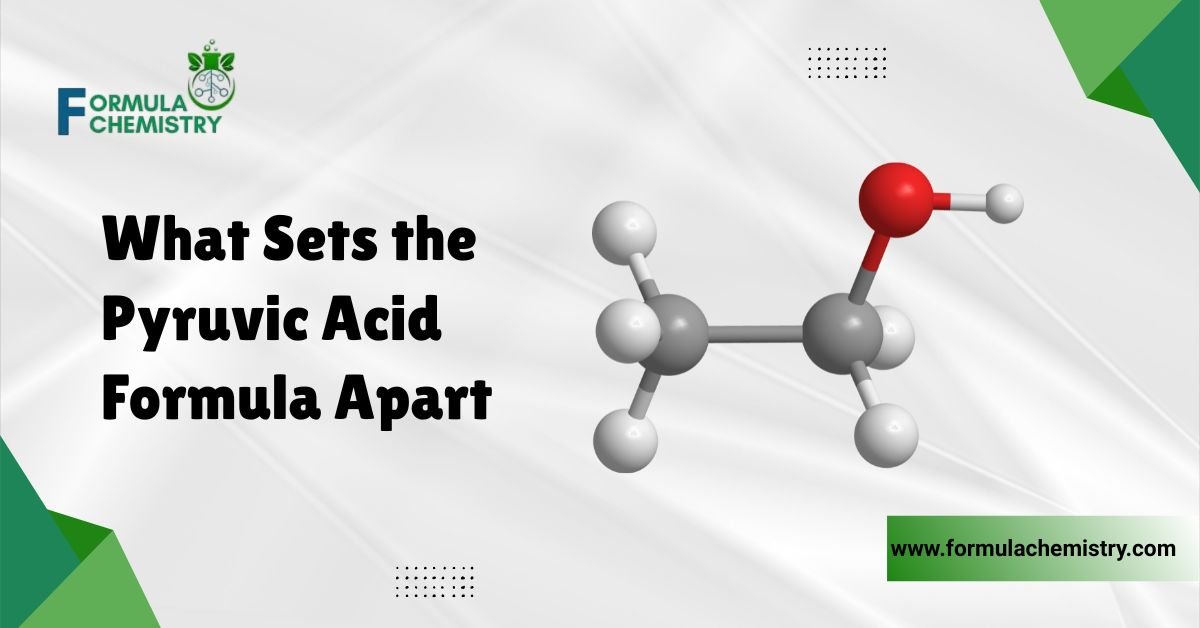
Its INCI name is Pyruvic Acid, CAS number 127-17-3. It belongs to the alpha-keto acid class, not the alpha-hydroxy acid family, and that distinction changes everything about how it performs in a formula.
Its molecular weight is 88.06 g/mol, slightly higher than glycolic acid at 76.05 g/mol. That difference moderates penetration rate and makes it more controllable at equivalent concentrations.
Why This Pyruvic Acid Peel Formula Works
This formula was built around three priorities. Those are maximizing keratolytic activity, managing instability at higher concentrations, and maintaining reproducibility for a DIY formulator.
Pyruvic acid is hygroscopic and mildly volatile in pure form. The vehicle uses a controlled aqueous base with a measured humectant level to manage both water activity and evaporation.
The working pH ranges from 2.2 to 2.8. That is the range where pyruvic acid delivers consistent exfoliating performance without unnecessary epidermal aggression.
Ingredient Breakdown by Phase
This section covers every ingredient in the formula by phase. Each entry explains the INCI name, its function in this specific peel, and why it was chosen over common alternatives.
Water Phase Ingredients in This Pyruvic Acid Formula
Aqua (Water) forms the base of this formula. It acts as the solvent for pyruvic acid and all water-soluble actives in the system.
Pyruvic Acid is the primary active at 40% concentration. This level delivers professional-grade keratolytic activity while remaining within a manageable safety window for a trained DIY formulator.
Sodium Pyruvate is included at 2% as a buffering and stability aid. It slows the degradation of free pyruvic acid without significantly raising the working pH of the formula.
Glycerin appears at 3% as a humectant. It controls the hygroscopic behaviour of pyruvic acid and reduces the risk of excessive transepidermal water loss during application.
Cool Down Phase Ingredients
Panthenol is added at 1% in the cool-down phase. It supports the appearance of skin comfort post-peel and contributes to the feel of a smoother surface after neutralization.
Allantoin is used at 0.2% for its skin-conditioning function. It is added in the cool-down phase to preserve its activity since it can degrade at elevated temperatures.
Phenoxyethanol and Ethylhexylglycerin form the preservation system at a combined 1%. This pairing provides broad-spectrum microbial control across the water activity range of this formula.
Complete Pyruvic Acid Formula Table
The percentages below are weight-by-weight. To calculate batch size, multiply each percentage by your total batch weight in grams. All ingredients must be weighed on a calibrated digital scale accurate to 0.01g.
| Phase | INCI Name | Common Name | % Weight |
| Water | Aqua | Distilled Water | 52.80% |
| Water | Pyruvic Acid | Pyruvic Acid | 40.00% |
| Water | Sodium Pyruvate | Sodium Pyruvate | 2.00% |
| Water | Glycerin | Glycerin | 3.00% |
| Cool Down | Panthenol | Provitamin B5 | 1.00% |
| Cool Down | Allantoin | Allantoin | 0.20% |
| Cool Down | Phenoxyethanol | Phenoxyethanol | 0.90% |
| Cool Down | Ethylhexylglycerin | Ethylhexylglycerin | 0.10% |
| Total | 100.00% |
Step-by-Step Method for Making the Pyruvic Acid Formula
Follow every step in sequence. Do not skip temperature checks or pH verification. This formula works at precision, and small deviations at the bench will affect both stability and performance.
Step 1: Prepare Your Equipment and Safety Gear
Put on nitrile gloves, safety goggles, and a lab coat before handling pyruvic acid. It is a corrosive active at 40% concentration and must be handled with full PPE throughout the process.
Sterilize all equipment with 70% isopropyl alcohol and allow it to dry completely. Use glass or high-density polyethylene containers only, as pyruvic acid can interact with certain plastics.
Step 2: Heat the Water Phase to Temperature
Weigh distilled water into your main beaker and heat to 40°C. Do not exceed this temperature as pyruvic acid will be added shortly, and elevated heat accelerates its degradation.
Add sodium pyruvate to the warm water and stir until fully dissolved. The solution will remain clear throughout this step.
Step 3: Add Pyruvic Acid to the Water Phase
Allow the water phase to cool to 35°C before adding pyruvic acid. Adding it above this temperature risks accelerating oxidation and reducing active concentration in the finished formula.
Weigh pyruvic acid carefully and add it slowly to the water phase while stirring at low speed. Avoid splashing at all times due to its corrosive nature at this concentration.
Step 4: Add Glycerin to the Water Phase
Add glycerin directly to the water and pyruvic acid mixture at 35°C. Stir at low to medium speed for two minutes until fully homogenized.
The mixture will remain fluid and slightly viscous at this stage. This is expected and confirms correct incorporation of the humectant into the aqueous system.
Step 5: Check and Adjust pH
Using a calibrated pH meter, measure the pH of the formula. The target range is 2.2 to 2.8 for active keratolytic performance.
If pH reads above 2.8, add small measured amounts of pyruvic acid to bring it down. If it reads below 2.2, add a 10% sodium hydroxide solution dropwise while stirring until the target range is reached.
Step 6: Cool Down Phase Addition
Allow the formula to cool to 30°C or below before adding cool-down phase ingredients. Adding allantoin or panthenol above this temperature will reduce their functional contribution to the finished product.
Add panthenol, allantoin, phenoxyethanol, and ethylhexylglycerin in sequence, stirring gently after each addition. Confirm full dissolution visually before proceeding to the next ingredient.
Step 7: Final Mix and Quality Check
Stir the completed formula at low speed for five minutes. Confirm the formula is clear, homogeneous, and free of undissolved particles before filling.
Check pH one final time after all ingredients are incorporated. Record the result, batch weight, and date before sealing and labeling your container.
Technical Formulation Notes for the Pyruvic Acid Peel
These notes cover the critical technical parameters of this formula. Read each section before your first batch, not after a stability issue appears.
pH of the Finished Pyruvic Acid Formula
The finished formula must sit between pH 2.2 and 2.8. Below 2.2, the risk of epidermal damage increases significantly even during short-contact application.
Above 2.8, the keratolytic activity of pyruvic acid drops measurably. Do not rely on estimating pH by feel or color; always use a calibrated meter.
Preservation System Rationale
Phenoxyethanol at 0.9% combined with ethylhexylglycerin at 0.1% provides effective broad-spectrum coverage for this low-pH aqueous system. The low pH itself contributes additional microbial inhibition, but it does not replace a formal preservation system.
This combination is effective against gram-positive and gram-negative bacteria, yeast, and mold. It remains stable across the pH range of this formula without interaction with pyruvic acid.
Stability Considerations for This Formula
Pyruvic acid is prone to oxidative degradation over time, particularly when exposed to light and air. Store finished product in amber glass bottles with tight closures and keep at temperatures below 25°C.
The expected shelf life with correct packaging and storage is six months. Always conduct a physical stability check at 30 days, including pH verification and visual inspection for color change or precipitation.
Substitutions and Alternatives
Sodium pyruvate can be removed if unavailable, but pH will require closer monitoring without its mild buffering contribution. Do not substitute pyruvic acid itself with another alpha-keto acid and expect equivalent results; each acid has a distinct activity profile.
Glycerin can be substituted with sodium PCA at the same percentage for a lighter skin feel. Panthenol can be replaced with allantoin alone if preferred, but the combined approach gives better post-application skin feel in stability testing.
Scale-Up Notes for the Pyruvic Acid Formula
This formula scales linearly by weight. For production batches above 5kg, use an overhead mixer at low shear rather than a handheld stirrer to ensure homogeneous incorporation.
At larger scales, pH adjustment requires more controlled addition of neutralizing agent. Prepare your sodium hydroxide solution in advance and add in measured increments, not by free pour.
Common Mistakes When Making a Pyruvic Acid Peel Formula
These are the errors that appear most consistently when formulators work with pyruvic acid for the first time. Each one is fixable with the right adjustment.
- Adding pyruvic acid to hot water above 40°C causes accelerated degradation and reduces active concentration before the formula is even finished. Always cool the water phase to 35°C before adding the acid.
- Skipping pH measurement and relying on the calculated ratio of acid to water is a consistent source of batch failure. Always verify with a calibrated pH meter, calculation alone is not sufficient.
- Adding cool-down phase ingredients while the batch is still above 30°C reduces the functional contribution of allantoin and panthenol. Wait for the correct temperature before proceeding.
- Using tap water instead of distilled water introduces minerals and chlorine that react with pyruvic acid and compromise both stability and pH accuracy. Distilled or deionized water is non-negotiable in this formula.
- Storing finished product in clear or translucent packaging accelerates oxidative degradation of pyruvic acid. Amber glass is the correct container for this formula.
- Over-adjusting pH with undiluted sodium hydroxide causes localized neutralization and uneven active distribution throughout the batch. Always use a 10% diluted solution added dropwise.
Variations and Customisation of the Pyruvic Acid Peel Formula
This base formula can be adjusted for different skin types and performance targets. Each modification below is tested against the core formula architecture for compatibility.
- To reduce intensity for first-time users or sensitive skin types, lower the pyruvic acid to 25% and compensate by increasing distilled water to 67.80%. The pH will shift and must be re-verified after adjustment.
- To add brightening support, incorporate Niacinamide at 2% in the water phase while reducing water by an equivalent amount. Confirm pH stability after addition, as niacinamide can slightly raise pH in acidic systems.
- For an enhanced antimicrobial effect targeting acne-prone skin, add Zinc PCA at 0.5% to the water phase. Reduce water by 0.5% to maintain the 100% total.
- To adjust skin feel post-application, increase glycerin to 5% and reduce water accordingly. This modification is suited to drier climates where transepidermal water loss is a concern during peel application.
- For professional-use reformulation at higher concentrations, pyruvic acid can be taken to 50% with close pH monitoring and a mandatory neutralization protocol included in the product instructions.
Suitability Guide for This Pyruvic Acid Formula
This formula at 40% concentration is designed for trained DIY formulators with prior experience handling low-pH actives. It is not suitable as a beginner’s first peel project.
It is best suited to oily, acne-prone, congested, and hyperpigmented skin types where follicular penetration and surface exfoliation are both needed. Dry, sensitized, or compromised skin should use the 25% variation described above.
This formula is not appropriate for use around the eye area, on broken or inflamed skin, or on skin currently using prescription retinoids. Always conduct a 48-hour patch test with any new formula before wider use.
| Ingredient | Function | Weight % | Amount (ml/g) |
|---|
Frequently Asked Questions About Pyruvic Acid
What is pyruvic acid?
Pyruvic acid is an alpha-keto acid with the INCI name Pyruvic Acid and CAS number 127-17-3. It is naturally present in living cells as a byproduct of glucose metabolism and is used in cosmetic formulations as a keratolytic and exfoliating agent. In peel formulas, it delivers surface exfoliation, follicular penetration, and antimicrobial activity simultaneously.
What is pyruvic acid used for?
In cosmetic chemistry, pyruvic acid is used primarily as a chemical peeling agent for oily, acne-prone, and hyperpigmented skin.
It is also found in clarifying serums and targeted spot treatments. Its combination of surface and follicular activity makes it more versatile than a standard AHA in targeted formulations.
What is a pyruvic acid peel?
A pyruvic acid peel is a chemical exfoliation treatment formulated with pyruvic acid as the primary active. It works by loosening the bonds between dead skin cells at the surface while simultaneously penetrating the sebaceous follicle.
Professional versions typically range from 40% to 70% concentration, while DIY formulations sit between 25% and 40%.
What is the formula for pyruvic acid?
The molecular formula for pyruvic acid is CH3COCOOH, with a molecular weight of 88.06 g/mol. In cosmetic formulations, the pyruvic acid formula refers to the complete ingredient system designed to deliver its activity safely at a controlled pH. This guide provides a complete 40% peel formula with all supporting ingredients and percentages.
What does pyruvic acid do for skin?
Pyruvic acid may help support the appearance of smoother, clearer skin by accelerating surface cell turnover through keratolytic action. It can contribute to the feel of reduced congestion in oily skin types through follicular penetration. It is also commonly used in formulations designed to support a more even-looking skin tone over consistent use.
Is pyruvic acid safe for skin?
Pyruvic acid is safe for cosmetic use when formulated at appropriate concentrations and pH levels. At 40%, it requires careful handling, correct pH management between 2.2 and 2.8, and short-contact application with neutralization. Formulators new to low-pH actives should begin with the 25% variation and progress gradually.
What is pyruvic acid vs glycolic acid?
Pyruvic acid is an alpha-keto acid, while glycolic acid is an alpha-hydroxy acid, and that structural difference changes how each performs in a formula.
Glycolic acid works primarily through surface exfoliation, while pyruvic acid adds follicular penetration and antimicrobial activity to the same mechanism. For oily and acne-prone skin types, pyruvic acid covers more functional ground in a single active.
How to do a pyruvic acid peel at home?
A pyruvic acid peel at home requires a correctly formulated product at an appropriate concentration, full PPE including gloves and eye protection, and a clear neutralization protocol using sodium bicarbonate solution.
Apply the formula to clean, dry skin for a controlled contact time of two to five minutes, depending on skin tolerance, then neutralize fully and rinse. Never attempt a home peel without prior patch testing and a complete understanding of the formula you are working with.
Formulator’s Summary
- Pyruvic acid delivers keratolytic, sebum-regulating, and antimicrobial activity in one active, making it more functionally complete than a standard AHA for oily and acne-prone skin.
- The working pH of this formula must sit between 2.2 and 2.8. Outside this range, efficacy drops or epidermal risk increases, and neither outcome is acceptable in a professional-grade peel.
- Pyruvic acid degrades under heat and light. Temperature control during manufacturing and amber glass packaging post-production are both non-negotiable for this formula type.
- The preservation system of phenoxyethanol and ethylhexylglycerin is compatible with this low-pH system and provides full-spectrum microbial coverage without destabilizing the active.
- Concentration adjustments require pH re-verification after every change. Do not assume the pH will hold when you modify ingredient percentages.
- Begin with a 25% concentration batch if you have no prior experience with pyruvic acid at the bench, document your results, and scale upward only when you have stable, consistent batches to reference.
Run your first small batch at 100g, document every measurement and observation, and use that record as your baseline before scaling or modifying the formula further.