
Introduction to Chemical Peels in Cosmetic Formulation
Most poor peel formulas fail before the first stability test because the formulator starts with an acid percentage instead of the finished acid system. Chemical Peels in Cosmetic Formulation require control of acid identity, free acid value, pH, solvent system, exposure time, neutralization, packaging, and user skill.
This guide explains how AHA, BHA, and keto acid peels behave at the bench. You will know how to compare peel acids, set realistic cosmetic use limits, and avoid the formulation mistakes that turn a controlled resurfacing product into a liability.
Chemical Peels in Cosmetic Formulation Defined
A cosmetic chemical peel is a controlled exfoliating preparation designed to loosen surface corneocyte cohesion and improve the appearance of texture, dull tone, and uneven surface buildup. It must not be framed as a treatment for disease, scarring, infection, or inflammatory skin disorders.
The word peel does not describe one product type. It can describe a mild rinse-off acid mask, a leave-on exfoliating toner, a professional superficial peel, or a high-strength procedure outside normal cosmetic practice.
In formulation work, a peel is defined by acid strength, pH, acid availability, contact time, and user control. A 10.00 percent acid product at pH 4.0 can behave far milder than a 10.00 percent product at pH 2.8.
Key Properties Table for Chemical Peels in Cosmetic Formulation
| Acid family | Common INCI examples | CAS number examples | Chemical class | Molecular weight | pKa | Active pH range | Solubility | Typical cosmetic use | Difficulty |
| AHA | Glycolic Acid, Lactic Acid, Mandelic Acid | 79 14 1, 50 21 5, 90 64 2 | Alpha hydroxy acid | 76.05, 90.08, 152.15 g/mol | 3.83, 3.86, 3.41 | About pH 3.0 to 4.0 | Water-soluble mandelic acid is less soluble | 3.00 to 10.00 percent retail, higher for professional use | Beginner to advanced |
| BHA | Salicylic Acid | 69 72 7 | Beta hydroxy acid | 138.12 g/mol | 2.97 | About pH 2.8 to 4.0 | Oil-soluble, limited water solubility | 0.50 to 2.00 percent in many cosmetic systems | Intermediate |
| PHA | Gluconolactone, Lactobionic Acid | 90 80 2, 96 82 2 | Polyhydroxy acid | 178.14, 358.30 g/mol | About 3.6 | About pH 3.5 to 4.5 | Water soluble | 3.00 to 10.00 percent | Beginner |
| Keto acid | Pyruvic Acid | 127 17 3 | Alpha-keto acid | 88.06 g/mol | About 2.5 | Below pH 3.5 | Water miscible | Professional-controlled systems only | Advanced |
AHA Peels in Cosmetic Formulation
AHA peels use water-soluble acids that mainly act on the outer stratum corneum. Glycolic acid gives the smallest AHA molecule, lactic acid gives a softer sensory profile, and mandelic acid gives slower penetration because of its larger aromatic structure.
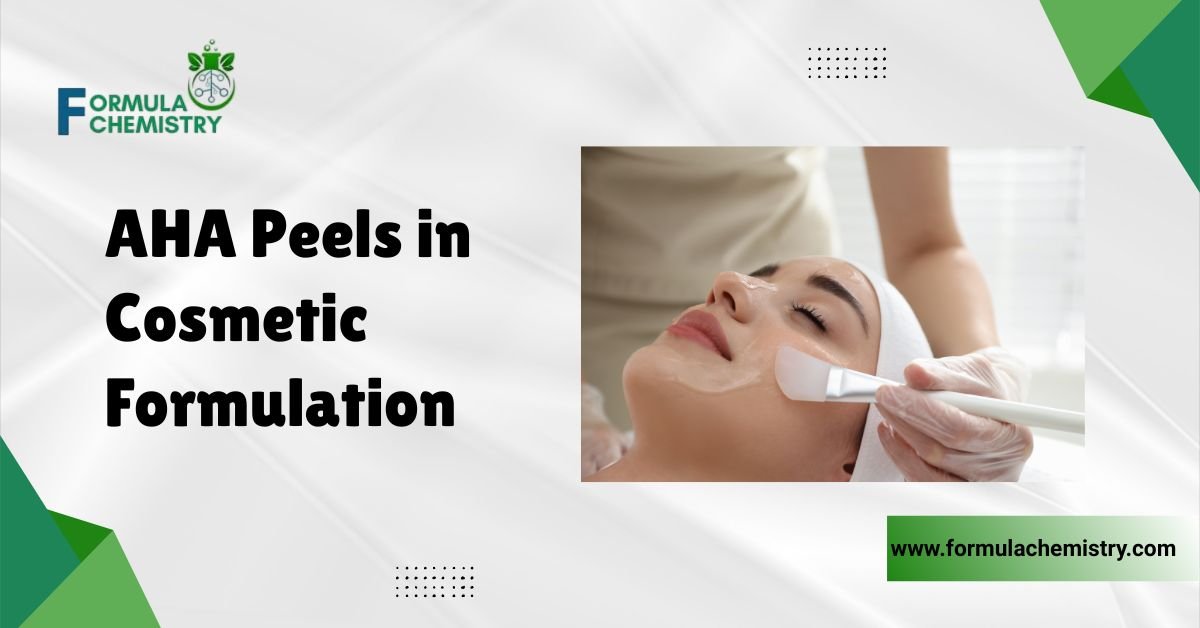
Glycolic acid is the most unforgiving AHA in beginner work because a small pH drop can sharply increase free acid activity. Lactic acid gives better formulating comfort in mild products because it also contributes a humectant feel.
Mandelic acid suits formulas where slower activity and better sensory control matter more than rapid surface response. Its lower water solubility requires careful solvent planning and warming during manufacturing.
BHA Peels in Cosmetic Formulation
BHA peel design usually means salicylic acid design. Salicylic acid is oil-soluble, has a pKa near 2.97, and performs best when the vehicle keeps it dissolved throughout the full product life.
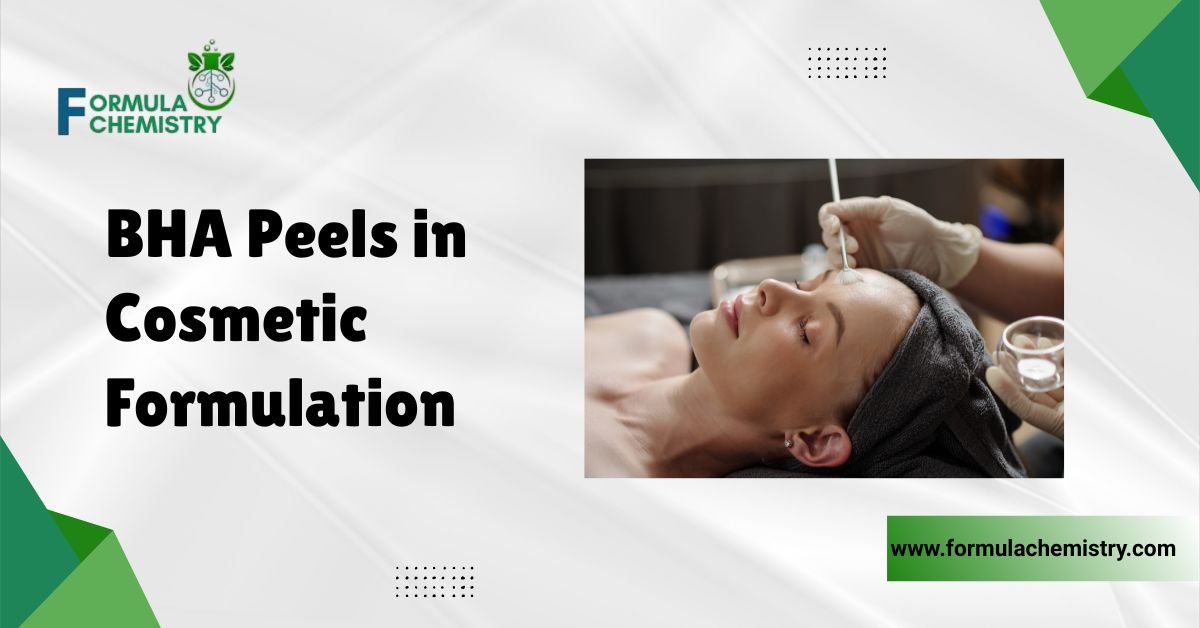
A salicylic acid peel is not simply an AHA peel with a different acid. It needs solvent support from materials such as propanediol, alcohol, or other compatible solubilizing systems.
Crystallization is the classic salicylic acid failure. A clear batch on day one can throw crystals after cold storage, water evaporation, fragrance addition, or packaging interaction.
Keto Acid Peels in Cosmetic Formulation
Keto acid peels sit in a more advanced category than routine AHA and BHA work. Pyruvic acid has a small molecular size, a pKa near 2.5, and a sharp odor that signals real handling concerns.
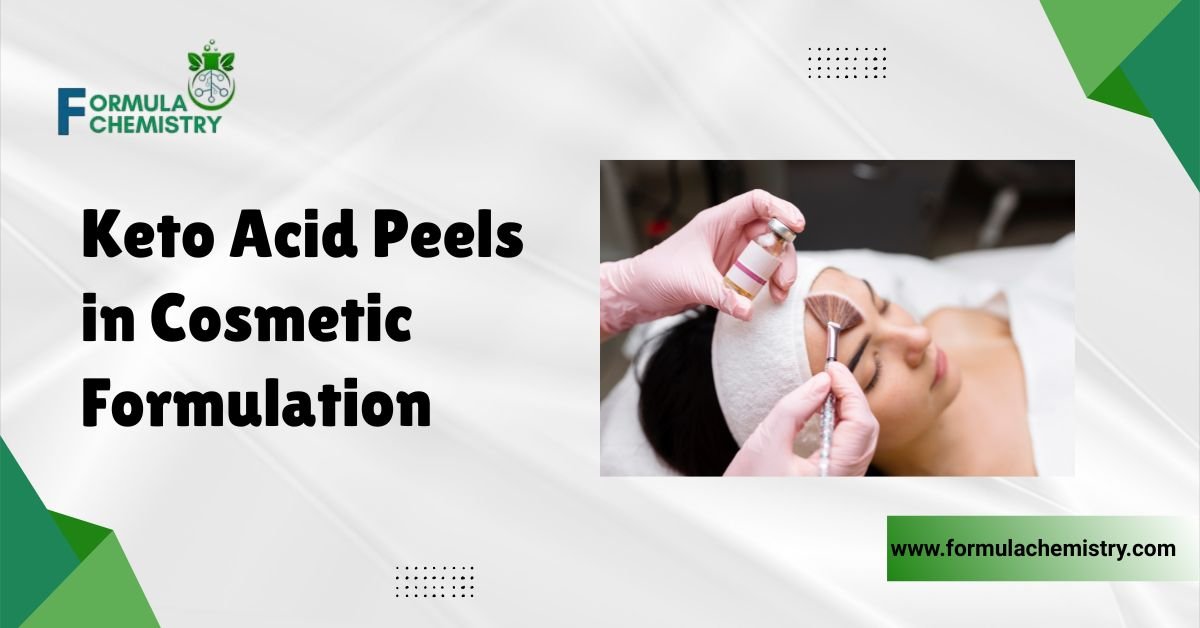
A pyruvic acid formula must control vapor exposure as well as skin exposure. Ventilation, gloves, eye protection, compatible packaging, and trained application belong in the development plan from the first trial.
Formula Chemistry treats keto acid peels as professional systems because they can move quickly from controlled exfoliation to avoidable irritation. The chemistry does not forgive casual bench habits.
Chemical Peels in Cosmetic Formulation Comparison Table
| Parameter | AHA peel | BHA peel | Keto acid peel | PHA peel |
| Main cosmetic target | Surface texture and dull tone | Oily feel and pore appearance | Strong surface renewal appearance | Mild texture refinement |
| Solubility behavior | Mostly water-soluble | Oil soluble with limited water solubility | Water miscible | Water soluble |
| Typical pH sensitivity | High | High | Very high | Moderate |
| Sensory profile | Sting varies by acid | Can sting and dry | Sharp, hot, pungent | Usually milder |
| Beginner suitability | Lactic and PHA adjacent systems suit beginners | Requires solvent skill | Not suitable | Most suitable |
| Stability risk | pH drift and viscosity loss | Crystallization | Odor, volatility, reactivity | Preservation and viscosity |
| Best development use | Toners, masks, superficial peels | Clear gels, anhydrous spot systems, masks | Professional peel systems | Sensitive skin positioned exfoliants |
How to Formulate Chemical Peels in Cosmetic Formulation
Start every peel formula with the target user, contact time, and rinse pattern. A product for trained professional use has different specifications from a mild cosmetic mask used once weekly at home.
Next, select the acid family that matches the cosmetic goal. Do not force salicylic acid into a water gel if the solvent system cannot keep it dissolved.
Set the acid percentage after the pH target, not before it. The free acid level controls much of the skin feel and irritation potential.
Build the vehicle around acid stability. Low pH can weaken thickeners, shift preservative performance, degrade fragrance, and change color over time.
Percentage Guide for Chemical Peels in Cosmetic Formulation
A 10.00 percent chemical peel usually means the formula contains 10.00 percent of the named acid or acid blend. It does not guarantee strength unless the pH, acid type, and exposure time are also stated.
A 30.00 percent chemical peel belongs in a professional or very controlled setting when based on strong acids such as glycolic acid. It should not be copied into home skincare because dosing errors and overexposure become more likely.
| Peel description | What it usually means | Formulation caution |
| 5.00 percent peel | Mild acid product or mask | pH still decides strength |
| 10.00 percent peel | Moderate cosmetic acid level | Requires clear use directions |
| 20.00 percent peel | Strong cosmetic or professional border | Needs a strong safety review |
| 30.00 percent peel | Professional style acid level | Not suitable for casual DIY use |
| 50.00 percent or higher | Professional peel territory | Requires a trained application |
pH and Free Acid in Chemical Peels in Cosmetic Formulation
pH measures hydrogen ion activity in the finished formula. Free acid is the portion of acid present in the protonated form that can contribute strongly to exfoliating action and irritation potential.
Two formulas with the same acid percentage can behave differently if one sits one pH unit lower. That difference is not small at the bench or on the skin.
A calibrated pH meter is mandatory for serious peel work. Strips do not give enough precision in low pH cosmetic systems.
Vehicle Design for Chemical Peels in Cosmetic Formulation
The vehicle decides how the acid reaches the skin surface. Water gels, hydroalcoholic solutions, emulsions, and anhydrous systems all change deposition, evaporation, sting, and contact time.
Humectants such as glycerin and propanediol can soften the feel, but they do not cancel acid activity. Film formers can improve spread, but they can also increase contact time and raise irritation potential.
Rinse-off formats give more control for higher acid loads. Leave-on formats require a lower irritation burden because the acid remains on the skin until diluted or removed.
Preservation and Packaging for Chemical Peels
Low pH narrows preservative choices. A formula with water, botanical extracts, or repeated consumer contact still needs preservative efficacy testing.
Packaging must tolerate low pH, solvent content, and acid migration. Dropper bulbs, metal springs, decorative coatings, and liners often fail before the formula itself fails.
Opaque or air-limiting packaging can help formulas that discolor or pick up odor. Final packaging must be included in stability testing, not chosen after the formula looks acceptable in glass.
Professional Peel Safety in Cosmetic Formulation
Professional peel safety depends on product design and application discipline. The formula must state contact time, skin preparation, application amount, endpoint cues, neutralization method, and aftercare limits.
Peel users should avoid stacking acids, retinoids, scrubs, and high fragrance products around peel use. Cosmetic aftercare should focus on bland moisturization, reduced friction, and broad-spectrum sunscreen.
Common Mistakes in Chemical Peels in Cosmetic Formulation
- Starting with percentage only: This happens when marketing drives the brief. Fix it by specifying acid identity, pH, contact time, and rinse or leave on use before the first batch.
- Using pH strips for final approval: This happens in small labs trying to save time. Fix it with a calibrated meter and record pH checks at manufacture, 24 hours, and stability pulls.
- Ignoring salicylic crystallization: This happens when day one clarity gets mistaken for stability. Fix it with cold cycling, solvent screening, and crystal checks under magnification.
- Choosing fragile thickeners: This happens when a neutral pH gel base gets reused. Fix it by screening acid-stable rheology at the finished pH.
- Overloading fragrance: This happens when odor masking takes priority over tolerance. Fix it by reducing fragrance, removing known irritant materials, or accepting a cleaner acid scent.
- Writing treatment claims: This happens when clinical peel language moves into cosmetic copy. Fix it by using appearance language for texture, tone, dullness, and oily feel.
Suitability Guide
Chemical peels suit experienced formulators who can measure pH, manage preservation, and run stability testing. Beginners should start with mild lactic acid or PHA rinse-off products before attempting strong AHA, BHA, or keto acid systems.
Resilient, oily, and dull-looking skin may tolerate well-designed cosmetic peels better than dry or reactive skin. Sensitive, compromised, recently shaved, sun-exposed, or barrier-impaired skin needs caution and a lower acid burden.
Haircare peel concepts rarely justify the irritation risk unless the product targets scalp feel under strict cosmetic language. Most hair fiber concerns are better handled with conditioning agents, mild chelators, or pH-adjusted rinse products.
Always conduct a 48-hour patch test with any new formula before wider use.
FAQ
What is a cosmetic chemical peel?
A cosmetic chemical peel is an exfoliating product designed to improve the appearance of surface texture and dull tone. It works on the outer skin surface and must not be described as treating disease.
How do you formulate a peel?
You select the acid family, set the target pH, define contact time, and build a stable vehicle. The finished formula also needs preservation, packaging, and safety testing.
What are the main peel types?
The main cosmetic peel types are AHA, BHA, PHA, and keto acid systems. Professional practice may also classify peels by depth, such as superficial, medium, or deep.
Which chemical peel is best?
The best peel is the one matched to the user, acid tolerance, cosmetic goal, and application control. Lactic acid and PHA systems suit many mild cosmetic products.
What is a Number 7 peel?
A Number 7 peel usually refers to a branded or clinic-specific peel name, not a universal chemistry standard. The formula must be judged by its acid type, percentage, pH, and instructions.
What is a 10 percent peel?
A 10 percent peel contains 10.00 percent acid or acid blend by formula weight. Its real strength depends on pH, acid identity, contact time, and whether it is rinsed off.
What is a 30 percent peel?
A 30 percent peel contains 30.00 percent acid or acid blend by formula weight. With strong acids, that level belongs in professional or tightly controlled use.
Which acid is best for peels?
Glycolic acid gives fast surface activity, lactic acid gives a softer feel, salicylic acid suits oily skin feel, and PHA acids suit mild exfoliation. Pyruvic acid belongs in advanced professional systems.
Chemical Peels in Cosmetic Formulation Key Takeaways
- Chemical peels in cosmetic formulation must be designed by acid identity, pH, free acid, vehicle, contact time, and user skill.
- AHA peels need water phase control, BHA peels need solubility control, and keto acid peels need professional handling control.
- A 10.00 percent peel and a 30.00 percent peel cannot be judged without pH, acid type, contact time, and application instructions.
- Stability testing must include pH drift, crystallization, viscosity change, odor, color, packaging, and preservative performance.
- Formula Chemistry recommends mild acid systems for beginner work and reserves high-strength peel architecture for trained professionals.
Build every peel from the acid system outward, then reject any version that cannot be measured, preserved, packaged, and explained clearly.