
Introduction
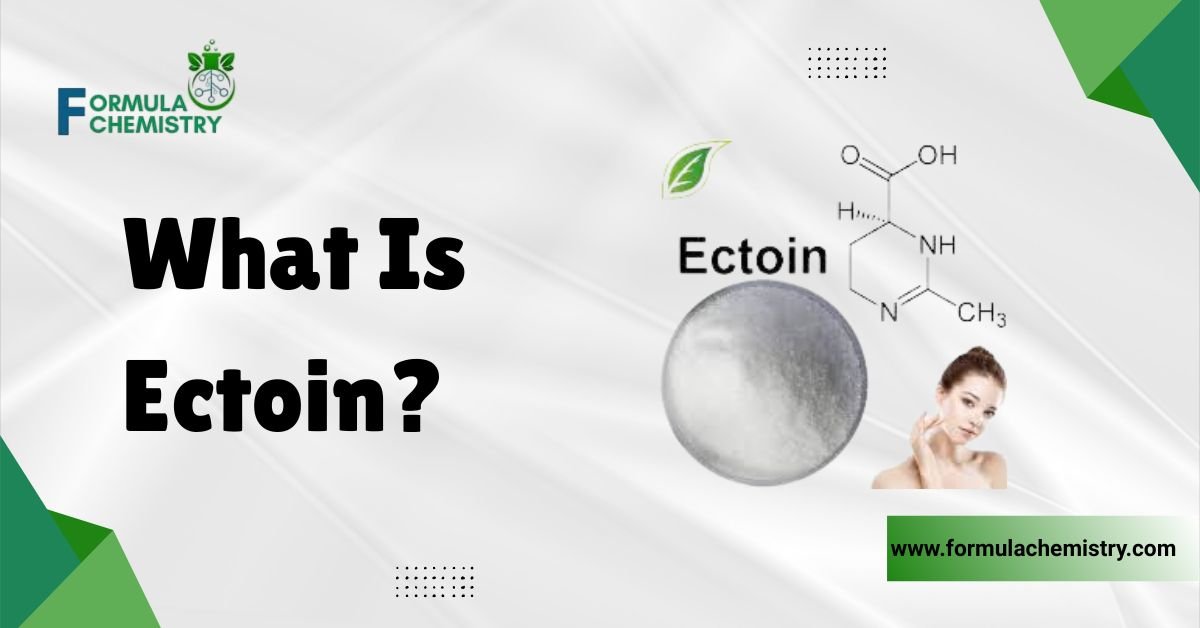
Ectoin does not get the attention it deserves in professional formulation circles. While the industry debates hyaluronic acid molecular weights, this extremophile-derived compound has been delivering consistent barrier and hydration results in clinical testing for decades.
If you formulate for sensitive or environmentally stressed skin, this guide covers everything you need to work with it confidently.
Quick Answer about What is Ectoin
Ectoin is a natural cyclic amino acid compound produced by extremophilic bacteria to survive extreme dehydration and UV stress. In cosmetic formulas, it functions as a humectant and cell-protective agent that organises water molecules around cellular structures.
At usage levels of 0.5% to 2%, it contributes to measurable improvements in hydration, barrier integrity, and skin tolerance.
Ectoin Chemistry, Origin, and What It Actually Is?
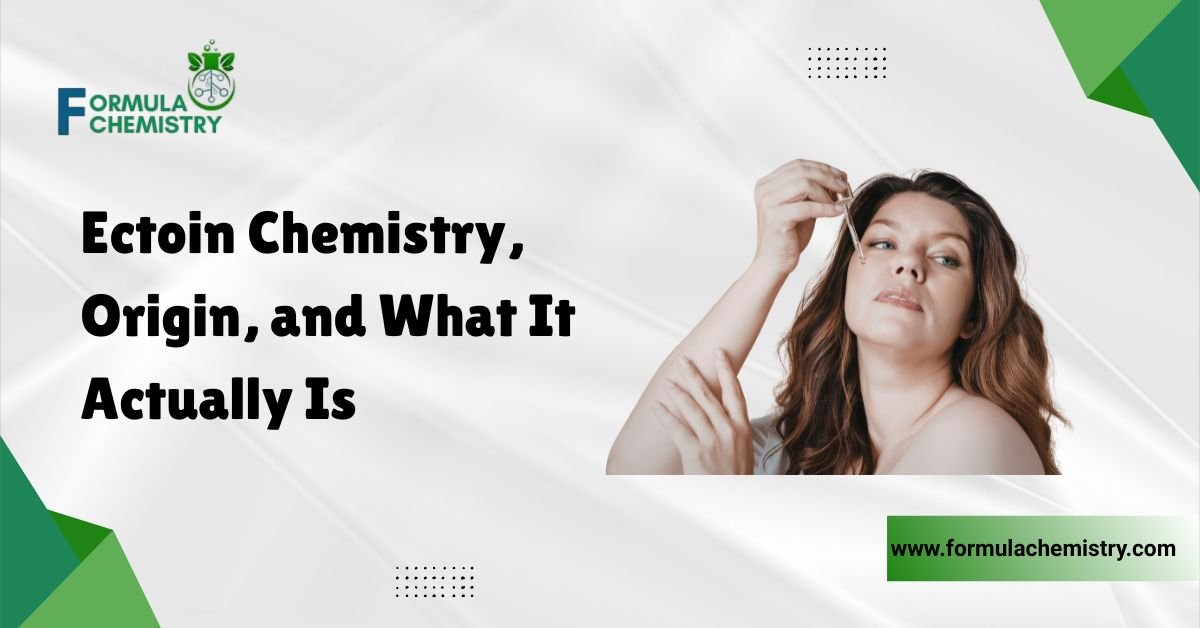
INCI name: Ectoin CAS number: 96702-03-3 Chemical class: Cyclic tetrahydropyrimidine derivative; compatible solute Origin: Naturally derived via bacterial fermentation
Ectoin was first isolated in 1985 from Halomonas elongata a halophilic bacterium that survives salt concentrations lethal to most organisms. It belongs to a class called compatible solutes: small, water-soluble organics bacteria accumulate under osmotic stress.
Commercially, it is produced through controlled fermentation and purified to cosmetic grade. This is precision microbial fermentation not plant extraction which ensures consistent, contaminant-controlled supply.
Its six-membered nitrogen-containing ring gives it zwitterionic character. This enables the preferential exclusion model ectoin is excluded from protein and membrane surfaces, forcing water into a stable, organised shell around them.
How Ectoin Functions Inside a Cosmetic Formula
Ectoin’s role extends well beyond simple humectancy. Its compatible solute behaviour delivers layered actions especially relevant for barrier-focused and sensitivity-reducing formulations.
Primary functions:
- Humectant: Attracts and retains moisture in the stratum corneum
- Osmoprotectant: Stabilises skin cell osmotic environment under environmental stress
- Membrane stabiliser: Supports phospholipid bilayer integrity under UV and pollution
- Cell-protective agent: Shields Langerhans cells and keratinocytes via water-shell stabilisation
- Anti-inflammatory modulator: Reduces pro-inflammatory cytokine release in atopic and sensitive skin
It also reduces activation of TSLP a cytokine strongly linked to atopic dermatitis flares. For a formulator, this translates to a calmer skin response over time without any chemical reactivity inside the formula.
Its protective interaction with ceramides and NMF components makes it a logical co-ingredient in barrier creams and post-procedure formulas.
Ectoin Formulation Data Every Chemist Should Know
pH Range
Ectoin is stable between pH 4.0 and 8.0, with optimal performance at 5.0–7.0. Most skin-appropriate formulas fall within this window without requiring specific adjustment.
Below pH 4.0, ring-opening degradation becomes a risk over extended storage. AHA toners and low-pH vitamin C formulas should include ectoin in accelerated stability panels.
Solubility and Phase Addition of ectoin
Ectoin is freely water-soluble and belongs in the water phase. It dissolves at room temperature with gentle stirring no heat required.
Cool-down addition below 40°C is preferable when heat-sensitive actives are present. Never add it to the oil phase; it has no oil solubility and will not perform.
Stability and Shelf Life
In properly formulated products, ectoin maintains activity for up to 24 months under standard storage conditions. Avoid sustained temperatures above 60°C during manufacturing.
Standard UV-protective packaging applies this is good practice for any water-based active system, not specific to ectoin alone.
Compatibility
Ectoin creates very few formulation conflicts. It is compatible with hyaluronic acid, niacinamide, ceramides, panthenol, allantoin, peptides, and standard preservation systems including phenoxyethanol and sodium benzoate/potassium sorbate blends.
Exercise caution only in sustained pH above 8.0 or below 4.0, where long-term ring stability may be affected.
Typical Usage Levels by Product Type
| Product Type | Recommended Range |
| Lightweight serum | 0.5% – 1.5% |
| Moisturiser / emulsion | 1.0% – 2.0% |
| Eye cream | 0.5% – 1.0% |
| Sensitive skin formula | 1.0% – 2.0% |
| After-sun / post-procedure | 1.5% – 2.0% |
| Cleansing product | 0.3% – 0.5% |
Going above 2% does not deliver proportional gains. The dose-response curve levels off well within this range.
Processing Notes
Ectoin needs no special equipment and no emulsification step. Add it to the water phase with gentle stirring. It tolerates both pre- and post-homogenisation addition without performance loss.
Always request a full certificate of analysis from your supplier. Purity varies meaningfully between sources and directly affects performance.
Common Mistakes Formulators Make With Ectoin
- Adding it to the oil phase. It has no oil solubility and will not distribute. Fix: always add to the water phase or pre-dissolve in a small amount of purified water first.
- Using it below 0.5% and expecting results. Sub-threshold concentrations are effectively inert. Fix: start at 0.5% minimum; target 1.0–2.0% for sensitive or barrier-focused formulas.
- Assuming it replaces the preservation system. Ectoin has no antimicrobial action. Fix: always pair it with a fully validated preservation system suited to your formula’s water activity and pH.
- Ignoring pH in acid-forward formulas. Below pH 4.0, ring stability is at risk over time. Fix: confirm final formula pH also from formula chemistry calculator before beginning stability testing.
- Sourcing without CoA review. Purity varies significantly between suppliers. Fix: request full CoA confirming ectoin content, heavy metal screening, and microbial count before accepting any batch.
- Using it to rescue an unrelated formulation problem. Ectoin will not fix poor emulsification or an incompatible preservative. Fix: diagnose the actual failure point before adjusting actives.
- Skipping it from stability panels with reactive actives. It is stable alone but needs evaluation alongside vitamin C or retinoids. Fix: include it in stability testing from the prototype stage.
Suitability and Safety Guidance for Ectoin Formulas
Ectoin is one of the most broadly tolerated actives in cosmetic formulation. Its non-reactive mechanism means it does not trigger sensitisation or irritation in virtually any skin type.
Suitable for:
- Sensitive and reactive skin
- Atopic and eczema-prone skin
- Rosacea-affected skin
- Mature skin with compromised barrier
- Post-procedure and post-laser skin
- All phototypes
Ectoin is approved for cosmetic use under EU Cosmetics Regulation (EC) No 1223/2009 with no concentration restrictions at standard levels. It does not appear on restricted or prohibited lists in any major regulatory market. It is not subject to IFRA guidelines as it is not a fragrance component.
Always conduct a 48-hour patch test with any new formula also calculate from formula chemistry before wider use.
Related Ingredients Worth Knowing
Betaine: Another compatible solute with osmoprotective and humectant function; pairs naturally with ectoin in barrier and sensitivity formulas for complementary water-retention mechanisms.
Sodium Hyaluronate: Attracts water through a different mechanism than ectoin; the two work synergistically without competition, making them a rational pairing in hydration serums.
Panthenol (D-Panthenol): Shares ectoin’s water phase addition and sensitive skin compatibility; straightforward to co-formulate with no known interactions.
Frequently Asked Questions About Ectoin
What does ectoin do for your skin?
Ectoin attracts and organises water molecules around skin cells, supporting hydration and barrier function. It also reduces inflammatory responses in sensitised and environmentally stressed skin through its compatible solute mechanism.
Is ectoin better than hyaluronic acid?
They work through different mechanisms and perform best when used together. Hyaluronic acid binds large volumes of water; ectoin stabilises the cellular environment and modulates inflammation complementary, not competitive.
Is ectoin better than niacinamide?
These are not direct substitutes. Niacinamide targets pigmentation, pore appearance, and sebum regulation, while ectoin targets cellular protection and sensitivity reduction. A well-designed formula often contains both.
Can I use ectoin every day?
Yes. Ectoin is non-irritating and non-sensitising, making it suitable for daily and twice-daily use across all skin types, including the most reactive and compromised presentations.
What is ectoin in skincare?
Ectoin is a fermentation-derived amino acid compound used as a humectant and cell-protective active. It was originally discovered in extremophilic bacteria that survive extreme dehydration and osmotic stress.
What is ectoin serum?
An ectoin serum is a water-based leave-on product formulated with ectoin as a primary active, typically at 0.5–2%, designed to deliver targeted hydration and barrier support.
What is ectoin made of?
Ectoin is a cyclic amino acid compound produced through controlled fermentation of Halomonas elongata bacteria, then purified to cosmetic-grade quality before use in formulas.
What is ectoin for eyes?
In eye area formulations, ectoin is used for its gentle hydrating and barrier-supporting properties. It is well-tolerated on thin periorbital skin and typically used at 0.5–1.0% in eye creams and gels.
Summary for Formulators
- Ectoin is a fermentation-derived compatible solute that organises water molecules through preferential exclusion fundamentally different from conventional humectants
- Its optimal range of 0.5–2.0% is well-supported by published data; exceeding 2% adds cost without proportional benefit
- It belongs in the water phase, is stable across pH 4.0–8.0, and requires no special processing one of the easiest high-performance actives to work with
- Pairing it with sodium hyaluronate, ceramides, betaine, and panthenol is technically sound and clinically rational for sensitive skin bases
- Sourcing quality matters always review a full certificate of analysis before accepting any batch
- Its tolerability profile makes it suitable for formulas targeting atopic, post-procedure, and reactive skin where most actives are off the table
Run a side-by-side hydration comparison between your current moisturiser base and a version with 1.5% ectoin added to the water phase the data will confirm whether it earns a permanent place in your toolkit.