
Tartaric acid formula ingredient overview
Tartaric acid formula is a sophisticated dicarboxylic alpha-hydroxy acid (AHA) traditionally extracted from fermented grapes or tamarinds. Within the cosmetic industry, it is classified as a high-performance Active ingredient.
Prized for its dual-action capability as both a biological exfoliant and a structural pH stabilizer. Unlike simpler AHAs, its unique molecular architecture allows for superior buffering capacity in complex aqueous systems.
INCI nomenclature and identity
The INCI Name is Tartaric Acid. In professional circles, it is recognized for providing a targeted, controlled exfoliation experience. As a core tool for the modern formulator, tartaric acid formula is essential for creating high-clarity serums.
Chemical peels, and hair care treatments that require precise acidity to function effectively without compromising the skin’s moisture barrier.
Function in cosmetic formulation: the roles of tartaric acid
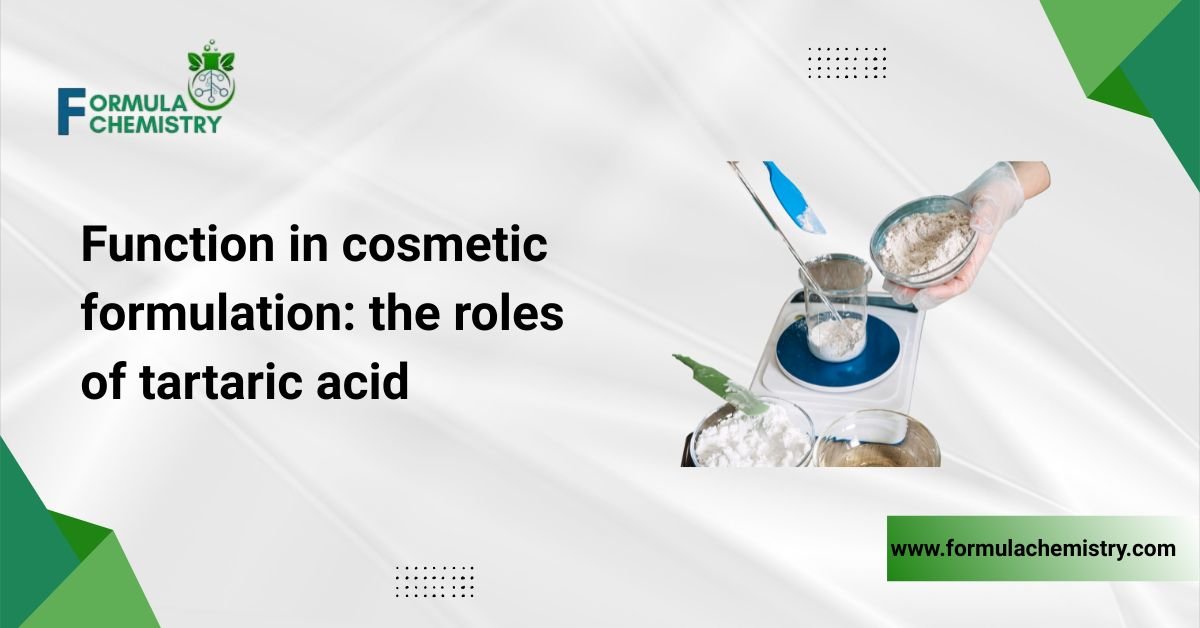
In professional cosmetic science, tartaric acid is utilized for its specific biochemical interactions with the skin’s surface and its stabilizing effect on the formula’s internal environment.
Keratolytic and exfoliating properties
It weakens the ionic bonds between dead skin cells (corneocytes), promoting a smoother, more radiant skin surface. By accelerating desquamation, it reveals fresher skin underneath.
Precision pH adjusting and buffering
Its dicarboxylic nature makes it an elite buffering agent, preventing pH drift in formulas containing sensitive botanical extracts. This helps maintain the product’s efficacy throughout its shelf life.
Secondary chelating and synergistic action
It assists in binding metal ions, which prevents discoloration and enhances the efficacy of antioxidants. It is frequently paired with lactic or glycolic acids to create a multi-depth exfoliation profile that targets different layers of the stratum corneum.
Recommended usage rate (%) of tartaric acid
The concentration of this ingredient must be strictly tailored to the product’s intended contact time and target pH to ensure safety and performance.
Typical usage ranges by product format
| Product type | Typical usage range | Primary purpose |
| Leave-on serums & creams | 0.5% – 2.0% | Daily texture refinement |
| Rinse-off cleansers | 1.0% – 5.0% | Deep cleansing support |
| Professional/chemical peels | 5.0% – 15.0% | Resurfacing (Wash-off only) |
| pH adjuster solution | Quantum satis (QS) | Neutralization & stability |
Retail formulation safety standards
In retail formulations, keeping the combined AHA load at a safe level is crucial. For daily-use products, ensuring the final pH remains above 3.5 is the industry standard for minimizing irritation while maintaining activity.
Solubility & phase information for tartaric acid
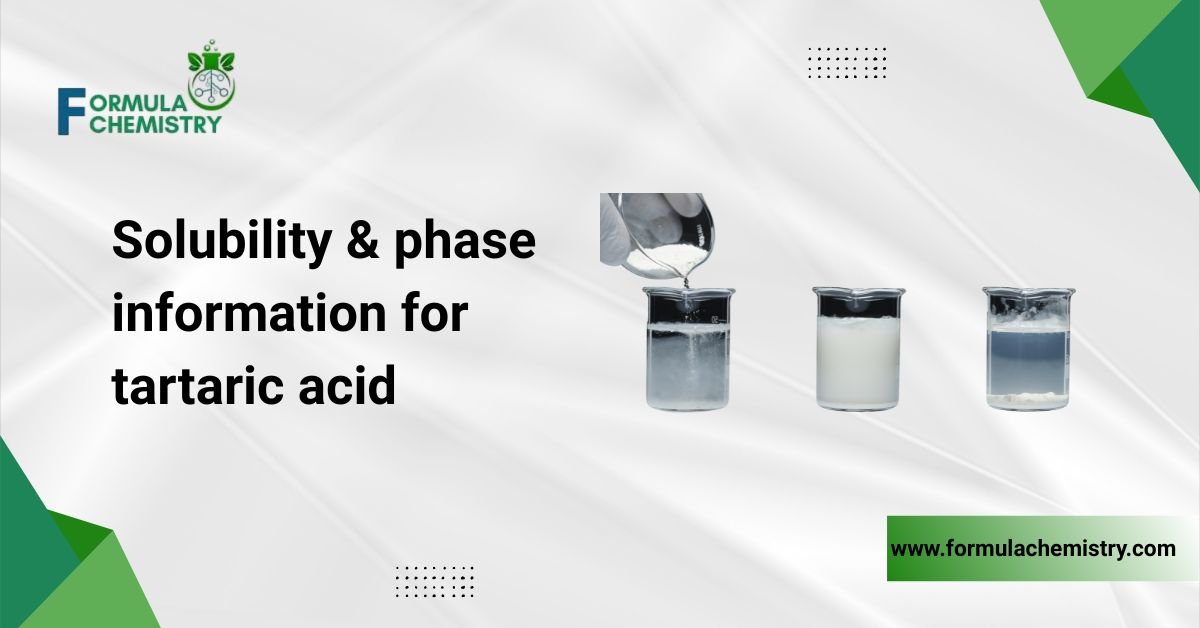
Success in formulating with tartaric acid serum formula depends on its complete integration into the water phase to prevent recrystallization and grit.
Solubility and solvent compatibility
It is highly water-soluble and also dissolves well in ethanol. It is entirely insoluble in oils, waxes, and non-polar silicones, making it unsuitable for anhydrous balms.
Phase addition and processing requirements
It should be integrated into the Water Phase (Phase A). As a crystalline solid, it must be fully dissolved in the aqueous portion of the formula before the addition of any salt-sensitive thickeners.
Temperature tolerance in manufacturing
It is a robust molecule that can withstand standard heating phases up to 80°C without losing its chemical potency or exfoliating properties, allowing for flexible processing.
pH range & stability of tartaric acid formula
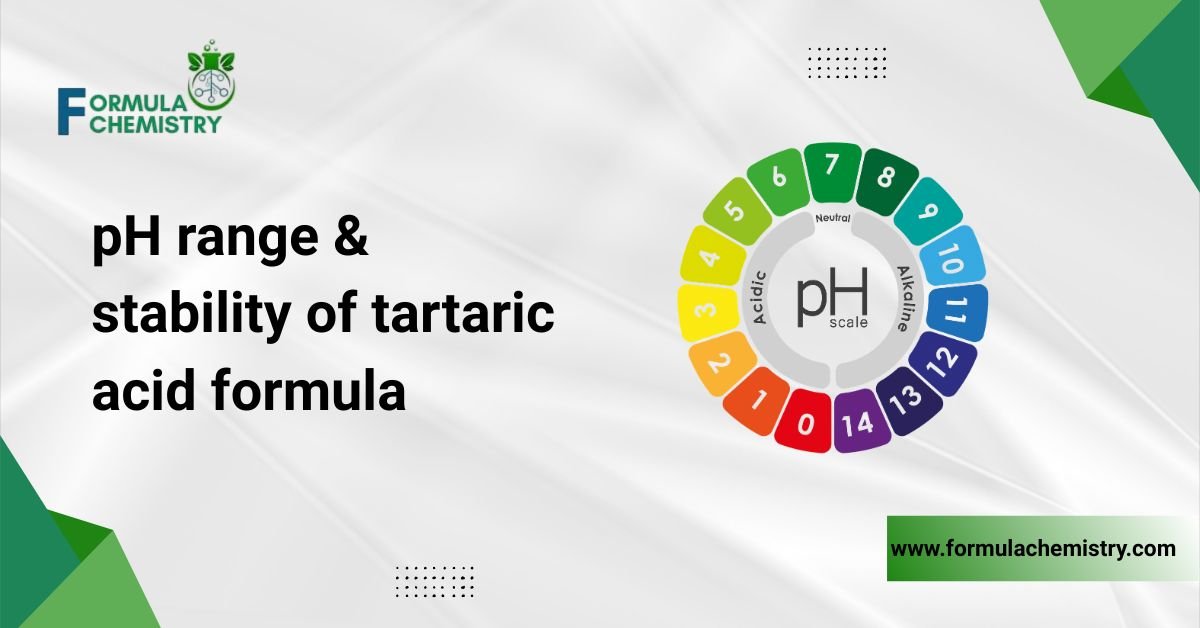
The stability and safety of the formula chemistry formula containing this ingredient are dictated by the logarithmic scale of acidity and the pKa of the acid.
Optimal pH window for activity
3.5 – 4.5 is the preferred range. Within this window, the acid remains active enough to provide visible results without stripping the skin’s protective acid mantle.
Buffering and storage sensitivity
Because it can sharply drop the pH of a solution, formulators use a buffer like Sodium Tartrate to prevent the “yo-yo” effect of pH shifts. The raw powder is hygroscopic and must be kept in airtight containers to prevent clumping.
Resistance to oxidation
It is highly resistant to oxidation and light degradation. This makes it more stable in clear packaging compared to many vitamins or botanical actives that require opaque containers.
Compatibility & incompatibilities of tartaric acid formula
Compatible ingredients and systems
- Alpha & Beta Hydroxy Acids: Works synergistically with Lactic, Malic, and Salicylic acids.
- Humectant Systems: Pairs perfectly with Propanediol, Glycerin, and Betaine to offset potential dryness.
- Acid-Stable Preservatives: Compatible with Sodium Benzoate and Potassium Sorbate.
Incompatible ingredients and risks
- Cationic Surfactants: May cause precipitation or cloudiness in certain hair care systems.
- Standard Carbomers: Most Carbopol-style thickeners will collapse immediately when they encounter the acidity.
- Unprotected Peptides: High acidity can catalyze the hydrolysis of certain peptide chains, rendering them inactive.
Formulation tips (pro notes) for tartaric acid formula
Sequence of addition
Always dissolve the acid crystals in room-temperature water before heating for large batches; this ensures uniform distribution. If using Xanthan Gum, hydrate the gum first, then slowly introduce the acid solution to maintain a smooth rheology.
Enhancing sensory profile
Balancing the “bite” of the acid with a soothing agent like Bisabolol or Allantoin is recommended to enhance consumer compliance and reduce the potential for stinging upon application.
Benefits of tartaric acid in cosmetic products (non-medical)
Skin texture and radiance
Supports smoother-looking skin through the gentle dissolution of cellular “glue.” It removes dull, oxidized surface cells to reveal a more radiant tone.
Clarifying and hydrating support
It helps clear congested pores and reduce surface oiliness in blemish-prone skin. By removing the barrier of dead cells, it allows humectants to penetrate more effectively.
Common product applications for tartaric acid
Skincare and exfoliating formats
Resurfacing liquid toners often use this as a primary acid for “glow” treatments. It is also found in anti-aging night creams to promote consistent cellular turnover.
Hair care and specialized uses
Clarifying shampoos use it to remove mineral “hard water” deposits. It is also the acidic component in bath bombs used to trigger the carbon dioxide release when combined with carbonates.
Substitutes / alternatives for tartaric acid
Gentle and hydrating alternatives
- Malic Acid: A larger molecule derived from apples; offers a gentler exfoliation profile for sensitive skin.
- Lactic Acid: Provides similar exfoliating benefits but with added natural moisturizing factor (NMF) properties.
Functional alternatives
- Citric Acid: A more common alternative for simple pH adjustment, though it can feel more “sticky” at higher concentrations.
Safety & regulatory notes for tartaric acid
UV sensitivity and labeling
Formulators must include a Sunburn Alert on finished product packaging, as AHAs increase UV vulnerability by thinning the stratum corneum.
Irritation and eye safety
Irritation potential is low to moderate depending on pH; always conduct a 24-hour patch test. Avoid formulating into products intended for the immediate eye area or waterline.
Used in formulas (internal linking section)
Used in these free formulas:
- [Ultra-Glow Resurfacing Serum]: Utilized at 2% to provide a clean finish and stabilize vitamin C derivatives.
- [Mineral-Detox Clarifying Wash]: Used to neutralize hard water minerals on the skin surface.
Related ingredients (internal linking)
Synergistic acids and humectants
- [Glycolic Acid]: A smaller AHA used for deeper penetration.
- [Sodium Hyaluronate]: The ideal humectant to pair with acids.
- [Salicylic Acid]: A BHA that complements surface action by cleaning deep within pores.
FAQ’s
What is the best pH for tartaric acid?
For maximum exfoliating efficacy, aim for a pH between 3.5 and 4.0. For simple pH adjusting, it can be used across any range.
Is tartaric acid water or oil soluble?
It is strictly water-soluble. It cannot be incorporated into 100% oil-based balms or anhydrous serums.
Can I use tartaric acid in sensitive skin products?
Yes, but usage should be kept under 1% and the final pH should be closer to 4.5 to ensure a gentler experience.
What is the best substitute for tartaric acid?
Malic acid is the closest functional substitute for exfoliation, while citric acid is the best substitute for pH adjusting.
Conclusion
- Main Role: AHA Exfoliant & High-Performance pH Buffer.
- Usage Rate: 0.5% – 5.0% (standard cosmetic applications).
- pH Range: 3.5 – 4.5 for active formulas.
- Best Applications: Brightening toners, resurfacing serums, and clarifying hair care