

Introduction
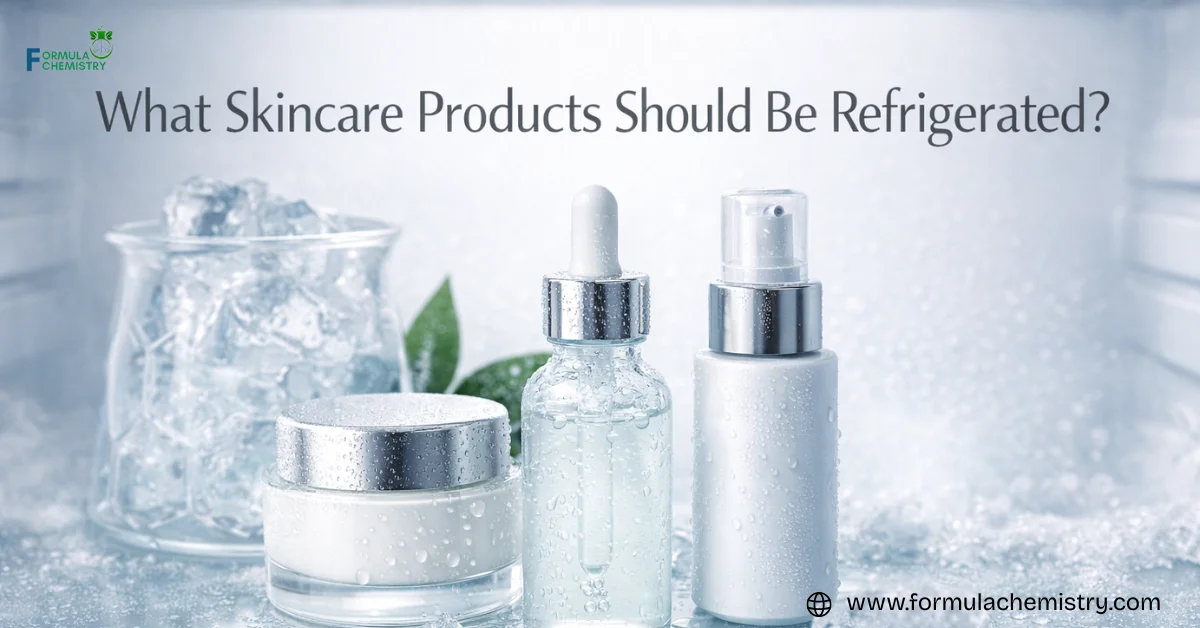
The rise of the “skincare fridge” has changed how many enthusiasts organize their beauty routines, turning storage into a stylistic statement. However, beyond the aesthetic value of a mini-fridge on a vanity, there is genuine chemistry to consider regarding temperature and product stability.
While most cosmetic formulations are stability-tested to withstand room temperature, certain ingredients degrade rapidly when exposed to heat and light. Understanding which products benefit from a chill and which can be ruined by it is important for keeping efficacy.
At formula chemistry, for a cosmetic chemist temperature control is a tool to extend the half-life of unstable actives like Vitamin C or to restrain microbial growth in weaker preservative systems.
Quick Answer
- Vitamin C Serums (L-Ascorbic Acid): Highly unstable; refrigeration slows down oxidation (browning) significantly.
- Retinoids (Retinol/Tretinoin): Heat sensitive; cold storage preserves potency and prevents degradation.
- Preservative-Free/Natural Products: Essential to refrigerate to slow bacterial and fungal growth, though shelf life remains short (3–7 days).
- Sheet Masks & Eye Creams: Optional but beneficial; cold application causes vasoconstriction, reducing puffiness and soothing irritation.
- Benzoyl Peroxide: Often prescribed to be kept cold to preserve stability and effectiveness against acne bacteria.
- Face Mists / Hydrosols: Keeping these cold gives a refreshing sensory sensation and can help calm visible rosacea or heat-flushed skin.
- Liquid Probiotics: Some live-culture skincare requires refrigeration to keep the bacterial colonies active.
- Safety Note: Cold temperature is not a substitute for a broad-spectrum preservative. If a water-based product has no preservative, it is unsafe after a few days, even in the fridge.
What Ingredients Actually Require Cold Storage?
While most commercial products are robust enough for the bathroom shelf, specific active ingredients have a volatile chemical structure. L-Ascorbic Acid (Vitamin C) is the most notorious offender.
It oxidizes rapidly when exposed to air, light, and heat, turning from clear to amber/brown. Once oxidized, it becomes ineffective and potentially irritating. Keeping it at 4°C – 8°C can double its viable lifespan.
High temperatures can cause the molecule to break down, rendering your expensive anti-aging serum useless. If you live in a warm climate or your bathroom gets steamy during showers, moving these actives to the fridge is a smart preservation strategy to ensure you get the full clinical benefit of the ingredient.
The Risk of “Natural” and Preservative-Free Formulas
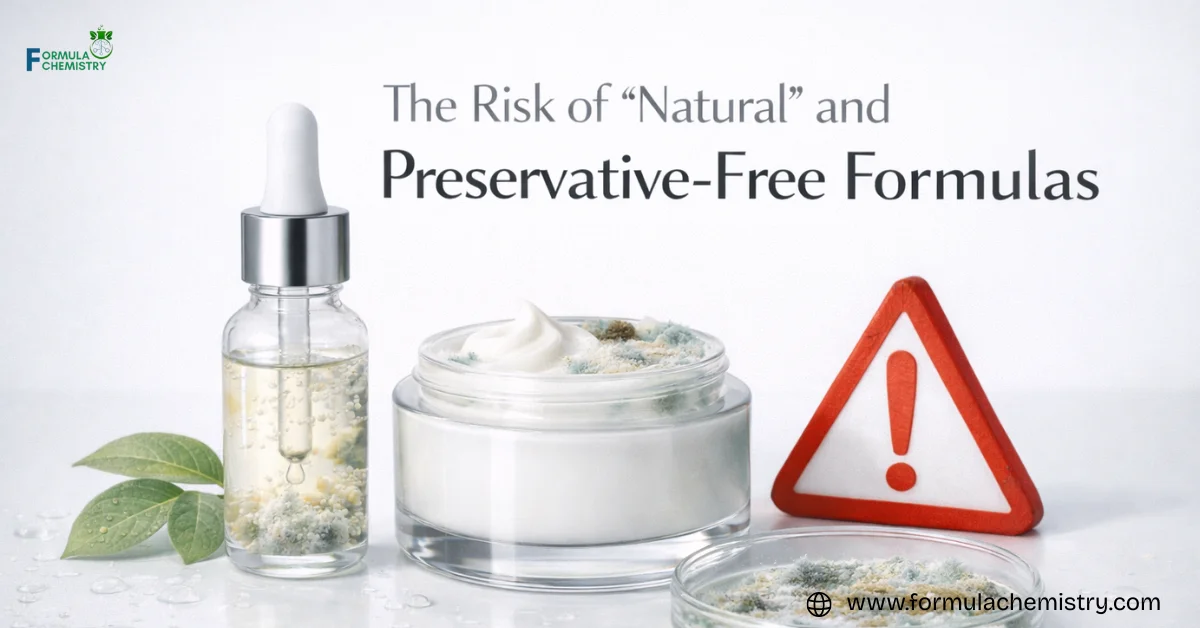
The clean beauty movement has led to an increase in products with “gentle” or minimal preservative systems, or sometimes none at all (DIY). Water-based products devoid of robust preservatives (like Parabens or Phenoxyethanol) are breeding grounds for bacteria and mold.
In these cases, refrigeration is mandatory, not optional. Cold temperatures slow down the metabolic rate of microorganisms, delaying spoilage. However, this is only a temporary measure. A DIY toner made with tea or fruit juice kept in the fridge is usually only safe for 3 to 5 days max. Always examine for cloudiness or off-odors before use.
Learn how to tell when your products go bad in Does Skincare Expire?
Products You Should NEVER Refrigerate
Not all skincare benefits from the cold; in fact, low temperatures can ruin the texture and stability of certain formulations. Oil-based serums and facial oils should generally stay at room temperature. Many plant oils, such as Jojoba or Coconut oil, will solidify or become cloudy (turbid) in the fridge.
This solidification can cause “fractionation,” where different fatty acids separate based on their melting points. While warming the bottle up usually fixes this, repeated freeze-thaw cycles can alter the lipid structure and affect the sensory feel.
Similarly, balms and salves formulated with waxes and butters will become rock-hard and impossible to spread on delicate skin without aggressive rubbing.
Clay Masks and Emulsions
Clay masks should also be kept at room temperature. Low temperatures can make the clay paste stiff and difficult to squeeze out of the tube. Furthermore, the cold can affect the plasticity of the clay, making it crumble rather than spread smoothly over the pores.
Complex emulsions (lotions and creams) are delicate balances of oil and water held together by emulsifiers. Extreme cold can sometimes destabilize this bond, leading to phase separation where the oil and water split apart.
If you see a clear liquid sitting on top of your cream after taking it out of the fridge, the emulsion has likely broken, and the product may no longer be effective.
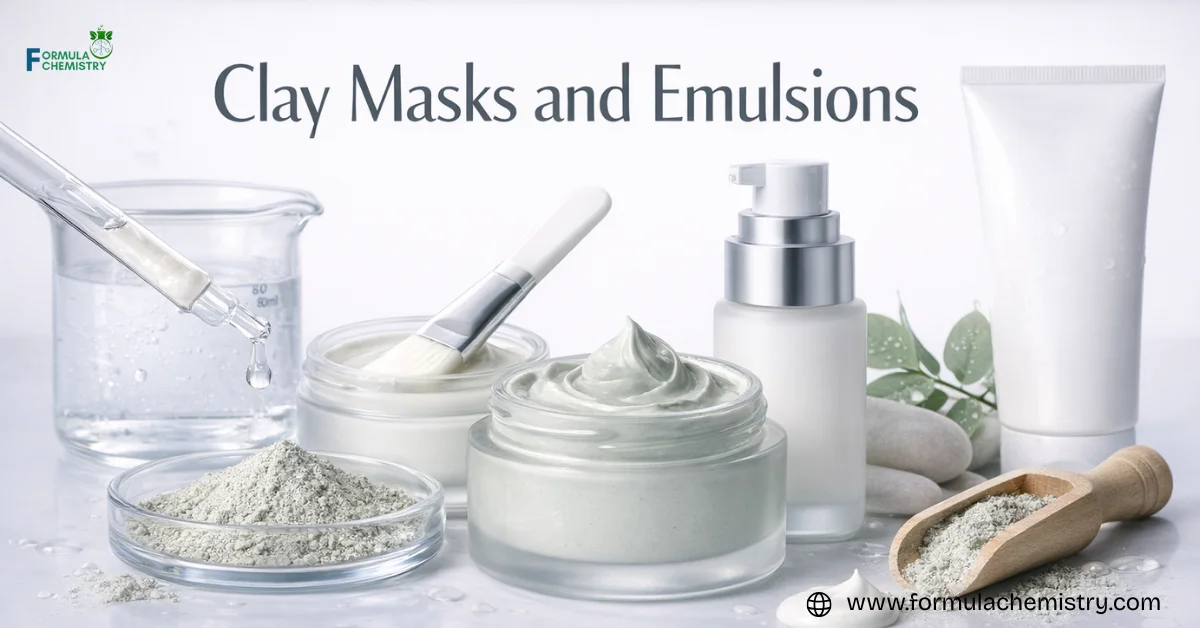
Table: To Chill or Not to Chill?
| Product Type | Refrigerate? | Why? / Notes |
| Vitamin C (L-Ascorbic) | YES | Slows oxidation; extends potency. |
| Retinol / Retinoids | YES | Heat sensitive; maintains efficacy. |
| Facial Oils | NO | Will solidify/crystallize; ruins texture. |
| Sheet Masks | YES (Optional) | Enhances depuffing/soothing effect. |
| Clay Masks | NO | Becomes too hard to spread. |
| DIY / Fresh Masks | YES (Critical) | No preservatives; slows bacterial growth. |
| Waxy Balms | NO | Hardens excessively; unspreadable. |
Curious about who’s most invested in skincare? Discover which age groups are leading the way.
The Science of Cold Application: Benefits and Pitfalls
Beyond chemical stability, the physical temperature of a product has a biological effect on the skin. Applying a cold product causes vasoconstriction, the narrowing of blood vessels.
This is why a chilled eye cream or sheet mask is so effective at reducing morning puffiness and under-eye bags it physically restricts fluid flow to the area. For conditions like Rosacea or itchy, irritated skin, cold skincare acts as a sensory distraction and an anti-inflammatory agent.
The cooling feeling inhibits the firing of itch receptors, delivering immediate (though temporary) relief. However, for deep cleansing or extractions, warm products are preferred to soften the sebum within the pores.
Common Problems and Fixes
Using a skincare fridge can bring new variables that cause confusion. Here is how to diagnose common issues.
- Problem: “My facial oil looks cloudy and has white chunks.”
- Fix: The cold crystallized the fatty acids. Move it to room temperature for 24 hours. It should clear up without damage.
- Problem: “My lotion separated into oil and water.”
- Fix: The emulsion broke due to freezing. Shake vigorously. If it doesn’t re-emulsify, the product is ruined and should be discarded.
- Problem: “My Vitamin C serum still turned brown in the fridge.”
- Fix: Oxygen is the main enemy. Ensure the cap is screwed on tight immediately after every use. Cold delays oxidation, but contact with air guarantees it.
- Problem: “My DIY mask grew mold inside the fridge.”
- Fix: Cold slows mold but doesn’t kill it. discard immediately. Never keep unpreserved water-based DIYs for more than 5-7 days.
Wondering why your moisturizer or serum feels sticky? Learn how long skincare really takes to absorb.
FAQ’s about What Skincare Products Should Be Refrigerated?
Does skincare last longer in the fridge?
For unstable ingredients such as Vitamin C and Retinol, yes, it extends the effective shelf life. For standard moisturizers and cleansers, it does not significantly change the expiration date, which is determined by the preservative system, not the temperature.
Can I put my sunscreen in the fridge?
It is generally not recommended. Sunscreen formulations are complex emulsions with strict stability requirements. Extreme cold can cause the UV filters (especially mineral ones like Zinc Oxide) to clump or precipitate, resulting in uneven protection and potential sunburn.
What temperature should a skincare fridge be?
The ideal range is 45°F – 50°F (7°C – 10°C). This is slightly warmer than a kitchen food fridge (usually 35°F-40°F). It provides enough cool to preserve actives without freezing or solidifying oils and waxes.
Is a skincare fridge necessary?
No, it is not a necessity for most people. 95% of commercial skincare is stability tested to survive in a bathroom cabinet. It is a luxury add-on, useful primarily for those using high-strength L-Ascorbic Acid or preservative-free “fresh” cosmetics.
Does cold skincare close pores?
No. Pores do not have muscles and cannot “open” or “close.” Cold water or products can constrict the skin and blood vessels, making pores appear tighter temporarily, but the actual size of the pore structure remains unchanged.
Can I store perfume in the fridge?
Yes, and it is actually beneficial. Light and heat break down aroma compounds and evaporate alcohol. Storing perfume in a dark, cool fridge can preserve the fragrance profile for years, especially for vintage or citrus-heavy fragrances.
How do I know if a product has gone bad?
Look for changes in Color (browning), Odor (rancid, sour, or metallic smells), and Texture (separation, clumping, or graininess). If you see any of these signs, discard the product immediately, regardless of where it was stored.
Can I store sheet masks in the freezer?
Briefly, yes, but do not leave them there long-term. Freezing the serum can damage the active ingredients or cause the mask material to become brittle. Putting them in 10 minutes before use is safer than permanent freezer storage.