
Introduction
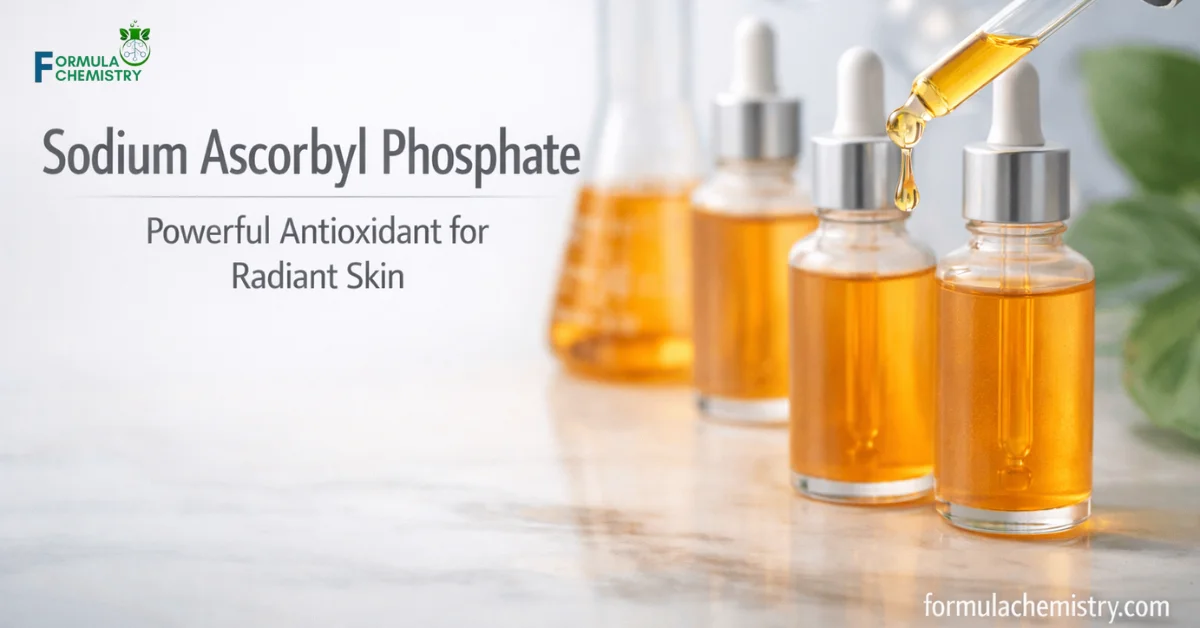
Sodium Ascorbyl Phosphate (SAP) is a stable, water-soluble derivative of Vitamin C that has established itself as a staple in modern cosmetic science.
Unlike pure L-Ascorbic Acid, which is notoriously unstable and prone to rapid oxidation, SAP offers a strong alternative for formulators striving to deliver antioxidant benefits without the formulation headaches of low pH requirements.
At FormulaChemistry, we focus on ingredients that balance biological activity with physical stability, making sure that the final product remains effective throughout its shelf life.
Quick Facts
- What it is: A stabilized sodium salt of the l-ascorbic acid monophosphate ester.
- Who it’s for: All skin types, particularly those with acne-prone or sensitive skin.
- How to use: Dissolve in the water phase of a cold or hot process (under 40°C) formulation.
- Typical usage range: 0.2% to 3% for daily antioxidant care; up to 5% for brightening.
- pH Stability: Best maintained in a finished product with a pH of 6.5 to 7.0.
- Solubility: Highly soluble in water; insoluble in oil.
- Common Mistake: Formulating at an acidic pH (below 6.0), which can cause the phosphate group to cleave and destabilize the molecule.
- Safety Note: Always perform a patch test when adding new actives to a routine.
The Chemistry of SAP Stability
The main challenge with Vitamin C is its sensitivity to light, heat, and air. SAP solves this by protecting the 2-hydroxyl group with a phosphate ester. Once absorbed into the skin, enzymes (phosphatases) cleave the phosphate group, converting SAP into active L-Ascorbic Acid.
This “pro-drug” delivery mechanism allows the ingredient to remain stable in the bottle while providing the skin with the necessary Ascorbic Acid to stimulate collagen synthesis and neutralize free radicals.
What are the Main Benefits of Sodium Ascorbyl Phosphate?
Antioxidant Protection and Brightening
As a potent scavenger of reactive oxygen species (ROS), SAP protects the skin from the oxidative stress induced by UV radiation and environmental pollutants.
This protection is critical for preventing lipid peroxidation, which is a precursor to inflammatory skin conditions and premature aging. Furthermore, SAP interferes with the melanogenesis process by inhibiting tyrosinase activity.
This leads to a visible reduction in hyperpigmentation and an overall evenness of skin tone, making it a popular pick for “glow” serums.
Anti-Acne Efficacy and Sebum Control
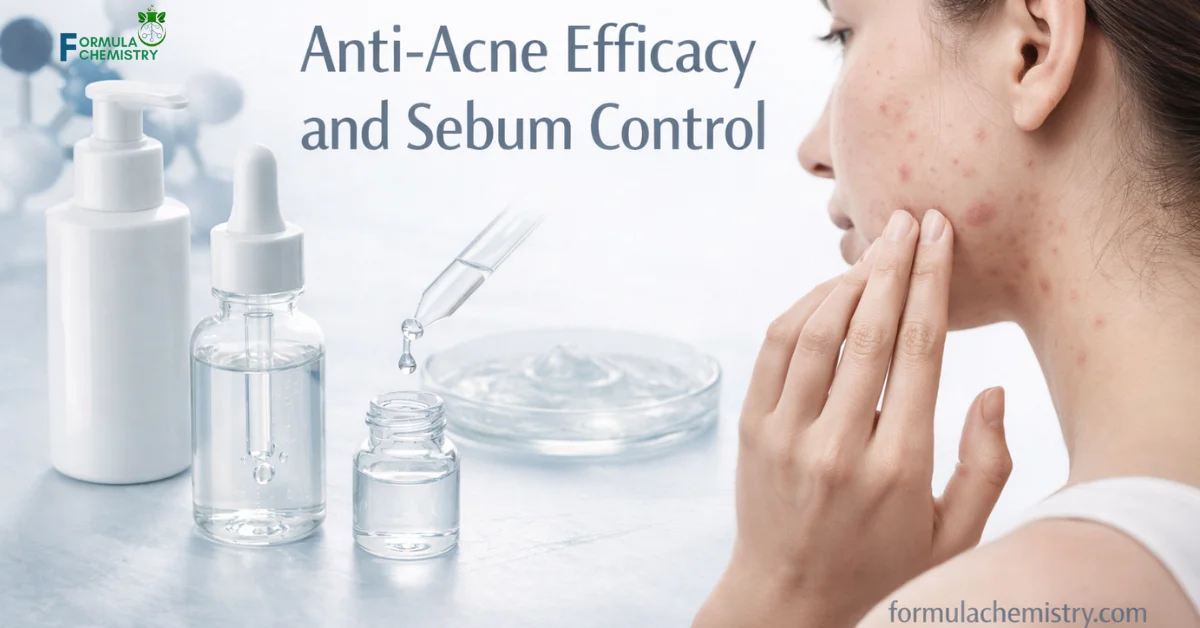
One of the most unique attributes of SAP, compared to other Vitamin C derivatives, is its documented efficacy against Cutibacterium acnes. Studies suggest that concentrations as low as 1% can have a significant effect on reducing acne lesions.
It prevents the oxidation of sebum specifically squalene which is a known trigger for the inflammatory cascade in acne-prone skin.
This makes SAP an ideal active for teenage skin formulations or adult acne treatments where typical L-Ascorbic Acid might be too irritating.
- Common Problems and Fixes:
- Discoloration of formula: Often caused by pH drifting below 6.5. Fix: Use a buffer like Sodium Citrate to maintain a stable pH of 6.5–7.0.
- Grainy texture: SAP may not be fully dissolved. Fix: Ensure it is added to the water phase at room temperature and stirred until completely clear.
- Formula thinning: SAP is an electrolyte and can break down certain carbomer-based thickeners. Fix: Use electrolyte-resistant thickeners like Xanthan Gum or Sclerotium Gum.
- Synergistic irritation: Using high-strength SAP with acids.
- Fix: Formulate SAP separately from low-pH chemical exfoliants.
Protect and refresh your skin with Green Tea Extract: Powerful Antioxidant for Radiant, Healthy Skin.
Formulating with Sodium Ascorbyl Phosphate
Solubility and Compatibility Requirements
Sodium Ascorbyl Phosphate is a salt, meaning it behaves as an electrolyte in aqueous solutions. This is a vital consideration for the rheology of your product.
Many traditional polyacrylic acid thickeners (carbomers) will collapse in the presence of SAP, resulting in a watery consistency. To create a stable gel or cream, formulators should opt for non-ionic or electrolyte-tolerant rheology modifiers.
| Feature | Specification |
| INCI Name | Sodium Ascorbyl Phosphate |
| Appearance | White to off-white powder |
| Recommended Usage | 0.5% – 5.0% |
| Optimal pH Range | 6.5 – 7.0 |
| Solubility | Water (up to ~15%) |
| Incompatibilities | Strong acids, some carbomers, oxidizing agents |
Temperature and Process Control
While SAP is significantly more heat-stable than L-Ascorbic Acid, it is still best practice to add it during the cool-down phase of an emulsion (typically below 40°C).
Prolonged exposure to high heat during the oil-water unification process can degrade the active over time. Formula Chemistry provides practical formulation education and safety-forward guidance to help makers avoid these common pitfalls in the lab.
For aqueous serums, ensure the water is deionized to prevent metal ions from catalyzing the oxidation of the vitamin C ester.
Safety, Stability, and Usage Guidelines
Storage and Preservation Standards
Because SAP is typically used in water-based serums or lotions, robust preservation is mandatory.
It is a common misconception that antioxidants act as preservatives; in reality, the alkaline-leaning pH required for SAP (6.5–7.0) is a range where many bacteria and yeasts thrive.
A broad-spectrum preservative system is mandatory. Additionally, while SAP is light-stable, storing the final product in amber or opaque glass extends the shelf life of the overall formulation by protecting other botanical extracts or oils in the blend. Who Should Avoid and Application Precautions
While SAP is generally considered the “gentle” Vitamin C, it is not for everyone.
Who should avoid: Individuals with extremely sensitive skin or those with a known allergy to Vitamin C derivatives should proceed with caution. Because SAP is a salt, very high concentrations (above 5%) may feel slightly “tacky” on the skin or cause mild tingling in those with a compromised skin barrier.
Key warning: Do not mix SAP directly with highly acidic products like 10% Glycolic Acid in the same application step, as the pH shift has the potential to destabilize the SAP and lead to skin flushing.
FAQ about Sodium Ascorbyl Phosphate: Powerful Antioxidant for Radiant Skin
Can I use Sodium Ascorbyl Phosphate with Retinol?
Yes. Unlike L-Ascorbic Acid, which requires a low pH that can clash with Retinol, SAP’s near-neutral pH makes it highly compatible with retinoids in a single formulation or routine.
Is Sodium Ascorbyl Phosphate better than L-Ascorbic Acid?
“Better” depends on the goal. SAP is better for stability, ease of formulation, and acne-prone skin. L-Ascorbic Acid is more potent for rapid collagen induction but much harder to keep stable.
Does SAP cause skin purging?
No, SAP does not increase cell turnover in the same way as retinoids or hydroxy acids, so it should not cause a traditional purge. If breakouts occur, it is likely a reaction to another ingredient.
What is the best pH for SAP serums?
The gold standard is a pH of 6.5 to 7.0. Dropping below pH 6.0 can cause the ingredient to degrade into L-ascorbic acid prematurely in the bottle.
H4: Can I use SAP during the day?
Absolutely. In fact, it is recommended for daytime use because its antioxidant properties help neutralize the free radicals generated by UV exposure.
Is SAP safe for fungal acne?
Yes, Sodium Ascorbyl Phosphate is widely regarded as safe for those dealing with Malassezia folliculitis, as it does not provide a carbon source for the yeast to thrive.
How long does a Sodium Ascorbyl Phosphate serum last?
When formulated correctly at the proper pH and stored away from direct sunlight, an SAP serum can remain stable for 12 to 24 months.
Can I dissolve SAP in oil?
No. SAP is strictly water-soluble. If you need an oil-soluble Vitamin C, look for Tetrahexyldecyl Ascorbate or Ascorbyl Tetraisopalmitate.
FormulaChemistry continues to be committed to providing the most accurate, science-backed information for the cosmetic formulation community. Always ensure your workspace is sanitized and your measurements are precise when working with active compounds such as Sodium Ascorbyl Phosphate.