
Quick Answer
Selling homemade cosmetics legally depends almost entirely on where you sell, because the rules diverge sharply between regions.
In the USA, small makers face a relatively light burden and may be exempt from FDA facility registration under the Modernization of Cosmetics Regulation Act of 2022, while still needing safety substantiation and compliant labeling.
In the UK and EU, every product, including handmade and small-batch, legally requires a Cosmetic Product Safety Report signed by a qualified assessor before it can be sold, with no exemption for hobbyists.
Introduction
Most people asking how to go about selling homemade cosmetics legally assume there is one answer, and that assumption is the first costly mistake. The legality of your exact situation is decided by your market, since the USA, UK, and EU regulate homemade cosmetics in very different ways.
This guide explains the current rules in plain terms, though it is general information rather than legal advice, so confirm specifics with the relevant regulator or a qualified adviser before you sell.
I have watched makers copy US advice while selling into the UK and unknowingly break the law from their first order. The gap between the regions is wide enough that guidance for one can be dangerous for another.
By the end, you will understand what each region actually requires, whether you need a license, how marketplace rules like Etsy fit in, and which path matches your situation.
The One Rule That Decides Everything: Where You Sell
The single factor that determines your obligations is the market you sell into, not where you live or how small you are. A home maker selling only in the US faces a very different bar than one selling into the UK or EU.
The US system leans on documentation you keep on file and exempts many small sellers from registration. The UK and EU instead require a formal safety assessment for every product before sale, regardless of batch size.
The table below compares the core requirements side by side, so the divide is clear before we go region by region.
| Requirement | USA | UK | EU |
| Pre-sale safety report (CPSR) | Not required; keep safety records instead | Required for every product | Required for every product |
| Safety assessor | No assessor mandated | A qualified assessor must sign | A qualified assessor must sign |
| Responsible Person | Name on the label (you) | UK-based RP required | EU-based RP required |
| Product notification | Product listing (small sellers exempt) | SCPN portal | CPNP portal |
| GMP standard | Required unless exempt | ISO 22716 required | ISO 22716 required |
| Small-seller exemption | Yes, under roughly $1M US sales | None | None |
| Compliant labeling | Required | Required | Required |
Selling Homemade Cosmetics Legally in the USA
The US sets the lowest barrier of the three, since the FDA does not license or pre-approve cosmetics. You may make and sell most cosmetics without approval, provided your products are not adulterated or misbranded and carry compliant labeling.
Under MoCRA, every cosmetic still needs safety substantiation, meaning records showing why each product is safe at the levels used. Supplier certificates, ingredient safety data, formulas, and batch records are what satisfy this, and it applies to sellers of every size.
MoCRA also requires facility registration and product listing, but a small business exemption removes this for many home makers. A business with average annual US cosmetic sales under roughly one million dollars over the previous three years is generally exempt from registration, listing, and forthcoming GMP rules.
That exemption does not cover safety substantiation or certain higher-risk products such as eye-area, injected, or internal-use items. One more nuance matters, since true soap-making- only cleansing claims fall under different oversight, while a soap claiming to moisturize becomes a regulated cosmetic.
UK Rules for Homemade Cosmetics
The UK is far stricter, and the central requirement is a Cosmetic Product Safety Report, known as a CPSR. Every cosmetic sold in the UK legally needs one, signed by a qualified safety assessor with a degree in pharmacy, toxicology, medicine, or a related field, with no exemption for handmade or small-batch products.
You must also appoint a UK-based Responsible Person and notify each product through the Submit Cosmetic Product Notification portal. A Product Information File containing the CPSR, formula, and manufacturing details must be kept and made available to Trading Standards on request.
Manufacturing must follow good manufacturing practice under ISO 22716, and this applies even when you make products at home. Clean workspaces, contamination control, and microbial monitoring are part of the legal expectation, not optional extras.
Labeling carries its own rules, including an INCI ingredient list, warnings, a period-after-opening symbol, batch number, and the Responsible Person’s details. Stability testing and, for water-based products, preservative efficacy testing feed directly into the CPSR.
EU Rules for Homemade Cosmetics
The EU framework mirrors the UK because both derive from the same regulation, EC No 1223/2009. A CPSR from a qualified assessor, an EU-based Responsible Person, a Product Information File, and GMP compliance are all mandatory before any product reaches the market.
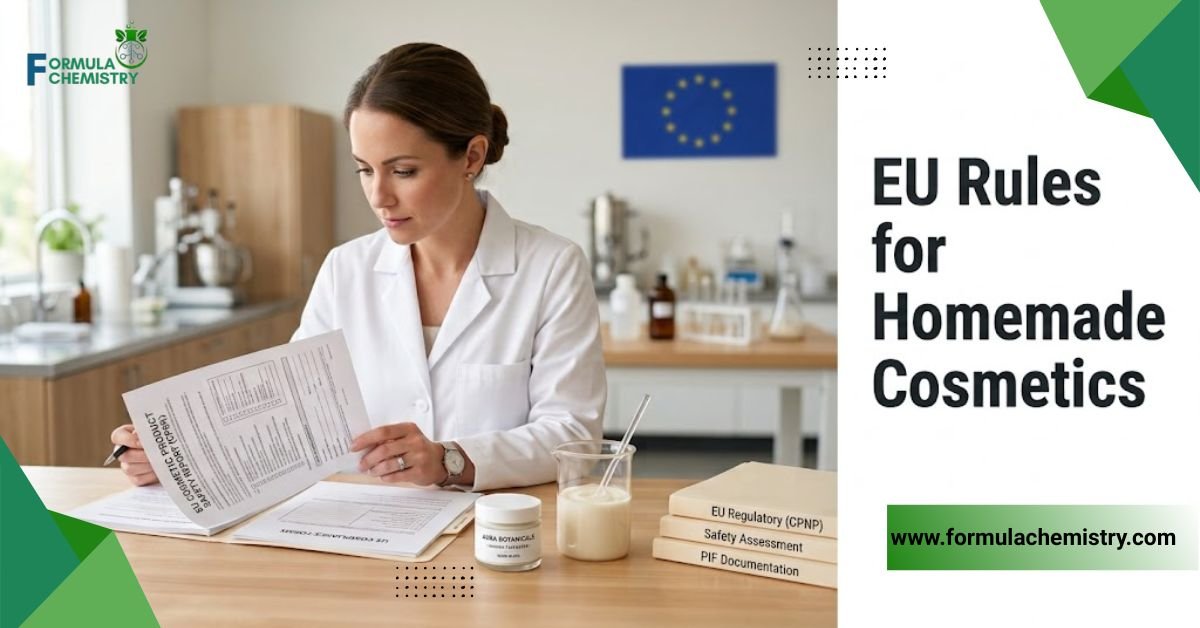
Notification in the EU runs through the Cosmetic Products Notification Portal rather than the UK system. Every product must be notified, and the same absence of any small-seller exemption applies.
One point trips up cross-border sellers constantly. A single Responsible Person cannot cover both the UK and the EU, so selling into both means separate RPs, separate notifications, and separate documentation for each market.
Do You Need a License to Sell Skincare?
There is no single cosmetic license to buy in any of these regions, which surprises many new sellers. What exists instead is a set of compliance obligations that function as the real gate to selling legally.
In the US, you register your business entity at the state or local level and may need local permits, but no federal cosmetic license. Your legal duties are compliant labeling, safety substantiation, and MoCRA registration unless you qualify for the small business exemption.
In the UK and EU, there is likewise no cosmetic license, yet you cannot legally sell without a CPSR, a Responsible Person, a Product Information File, and a product notification. The practical effect is a higher barrier than a license would impose, since a qualified assessor must sign off on every formula.
Selling on Etsy, Amazon, and at Craft Fairs
A marketplace allowing your listing never replaces legal compliance, and this is the most common misunderstanding among small sellers. Etsy permits handmade cosmetics, but it places full responsibility for meeting the law on you as the seller.
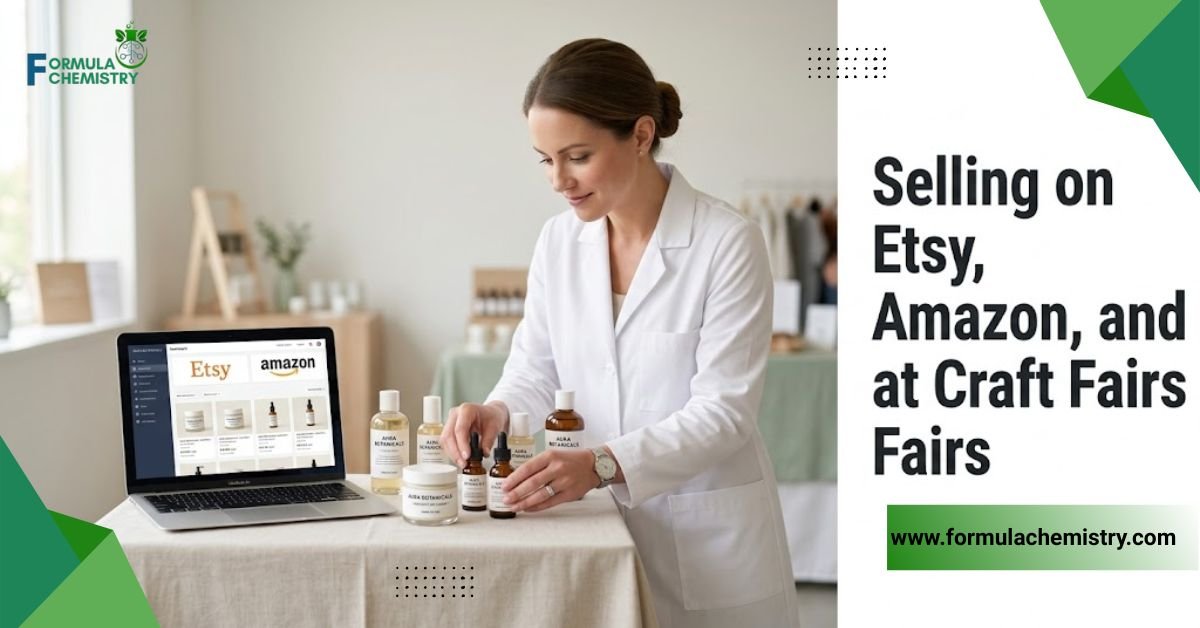
So the answer to whether it is legal to sell homemade cosmetics on Etsy is yes, but only if you already meet your market’s requirements. A UK Etsy seller still needs a CPSR for every product, and a US seller still needs safety substantiation and correct labeling.
Amazon applies its own layer, often requesting compliance documentation and removing listings that fail its checks. Selling at craft fairs and markets adds local permits and council rules, while your cosmetic obligations continue to apply in full.
Online selling everywhere brings distance-selling and consumer-protection duties on top of cosmetic law. The platform is a sales channel, not a shield, and treating it as one is how compliant-looking businesses get caught out.
Common Mistakes When Selling Homemade Cosmetics
New sellers tend to fail in predictable ways, and each mistake below carries a clear fix. Getting these right is the difference between a lawful business and an accidental offense.
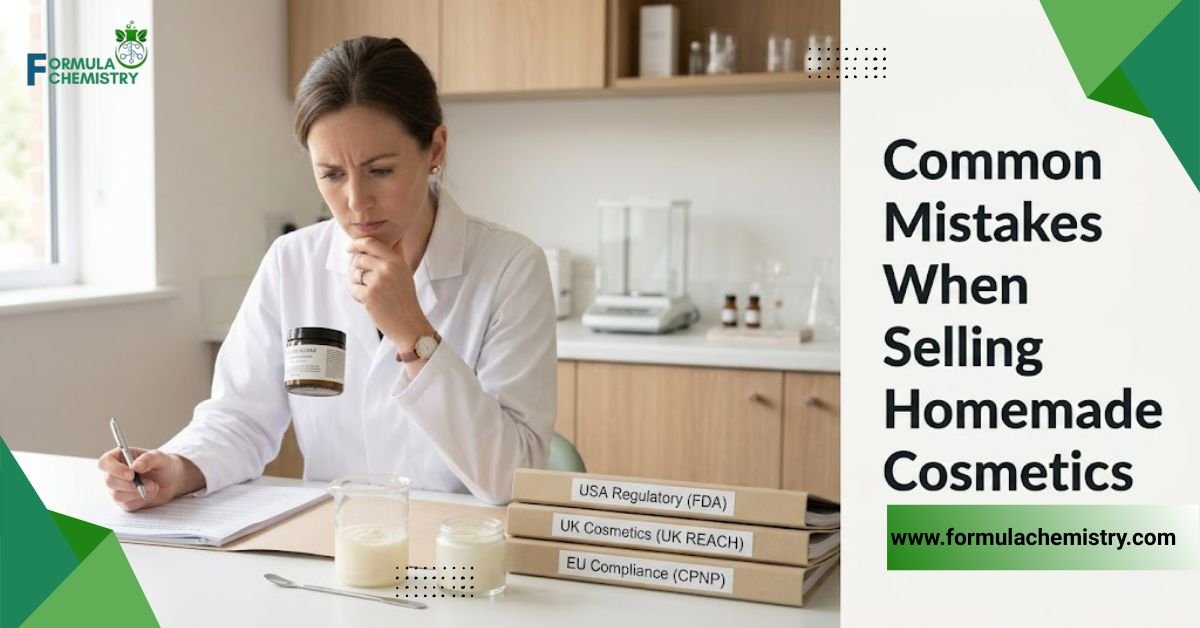
The first mistake is applying US-style rules while selling into the UK or EU. It happens because most online advice is American, so identify your actual market first and follow its specific requirements.
Assuming small batches or handmade status creates an exemption is a second error. That exemption exists in the US but not in the UK or EU, where every product needs a CPSR regardless of scale.
Treating marketplace approval as legal compliance is a third mistake. Platforms permit listings without verifying legality, so meet your regulator’s requirements independently of any store’s rules.
Selling water-based products without preservation testing is a fourth error. Unpreserved water-based cosmetics grow microbes and endanger users, so complete preservative efficacy testing before any water-containing product goes on sale.
Making medical claims is a fifth mistake. Words like treat, cure, or heal can reclassify your product as a drug, so describe only cosmetic effects using compliant language.
The sixth error is skipping compliant labeling. Missing INCI lists, batch numbers, or Responsible Person details can pull products from sale, so build correct labels before your first listing, a step that guides like Formula Chemistry return to often.
Which Path Fits You
A hobbyist selling only in the US faces the gentlest route and can often start with safety records and compliant labels alone. The small business exemption likely applies, though safety substantiation remains non-negotiable.
Anyone selling into the UK or EU must budget from the outset for a CPSR, a Responsible Person, and product notification. These costs and timelines belong in your plan before your first sale, not after.
Sellers targeting more than one region should treat each market as a separate compliance project. One product sold in the US, UK, and EU can require three distinct sets of documentation.
Whatever your situation, get one product fully compliant in your home market before expanding. A single correctly cleared product teaches the process and protects you far better than a rushed range sold across borders.
Frequently Asked Questions
Can I sell homemade cosmetics legally?
Yes, homemade cosmetics can be sold legally in the USA, UK, and EU if you meet each region’s rules. The US requires compliant labeling and safety substantiation, while the UK and EU require a safety report for every product. Your obligations depend on where you sell.
Do I need a license to sell skincare?
None of these regions issues a specific cosmetic license, but each has compliance requirements you must meet. In the US, you register a business and keep safety records, while the UK and EU require a safety report and a Responsible Person. These duties function as the real gate to selling.
Is it legal to sell homemade cosmetics on Etsy?
Yes, provided you already comply with your market’s cosmetic laws. Etsy allows handmade cosmetics but places legal responsibility on the seller. A UK Etsy seller still needs a CPSR, and a US seller still needs safety substantiation and correct labels.
Do I need a CPSR to sell in the UK?
Yes, every cosmetic sold in the UK legally requires a Cosmetic Product Safety Report. It must be signed by a qualified safety assessor before sale. There is no exemption for handmade, small-batch, or hobby sellers.
Are small batches exempt from the rules?
In the US, small businesses can be exempt from facility registration and product listing under MoCRA. In the UK and EU, there is no such exemption, and every product needs a full safety assessment. Small scale never removes the core safety and labeling duties.
Can I sell skincare made at home?
Yes, home production is permitted in all three regions if you follow the rules. The UK and EU require good manufacturing practice even in a home setting, covering cleanliness and contamination control. The US expects safe, properly labeled products with supporting records.
Do US sellers need FDA registration?
Manufacturers generally must register facilities under MoCRA, but small businesses under roughly one million dollars in average annual US sales are often exempt. That exemption does not cover safety substantiation or certain higher-risk products. Registration is based on where you manufacture, not where you sell.
Can one setup cover the UK and the EU?
No, the UK and EU require separate compliance since Brexit. You need a Responsible Person, notification, and documentation in each market individually. A single Responsible Person cannot serve both regions.
Selling homemade cosmetics legally comes down to your market first, because the USA, UK, and EU differ dramatically. The US is lighter for small sellers, while the UK and EU require a signed safety report for every product, with no exemption.
No region issues a simple cosmetic license, yet each imposes compliance duties that you must meet before selling. Marketplace approval on Etsy or Amazon never replaces those legal requirements.
Identify your market, meet its exact rules, and get one product fully compliant before expanding. To start today, confirm which region you are selling into and build that first product’s compliance file before you list anything.