
Introduction
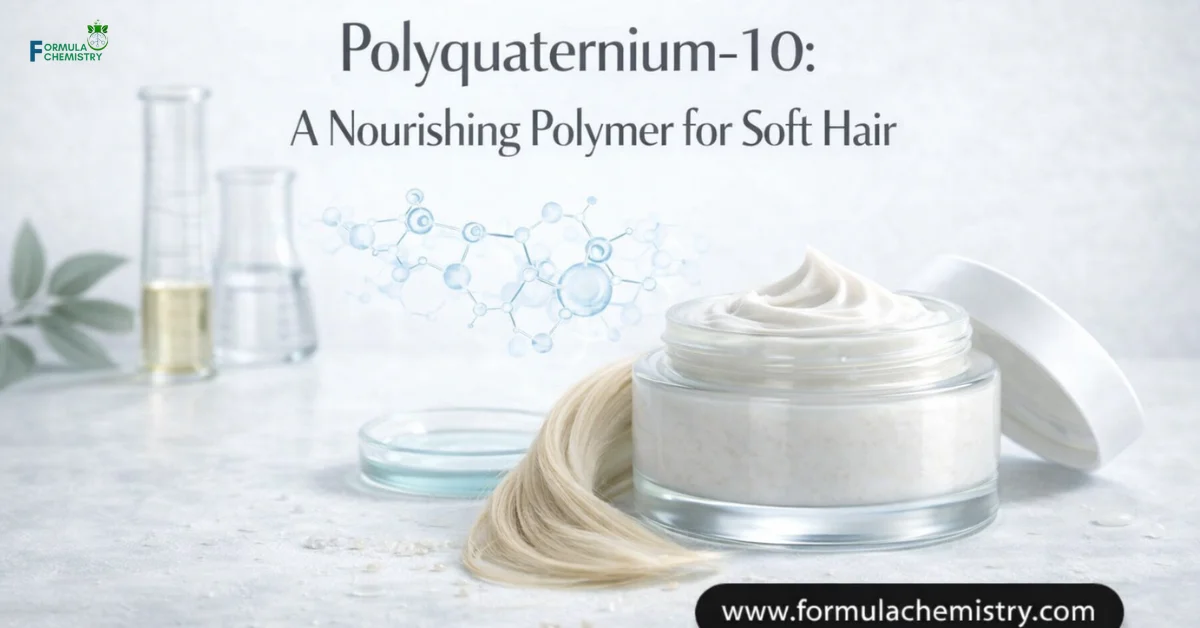
Polyquaternium-10 is a premier conditioning agent widely celebrated in the cosmetic chemistry industry for its ability to transform hair texture without weighing it down. Chemically, it is a quaternized hydroxyethylcellulose, meaning it is derived from cellulose (a natural polymer found in plants) that has been modified to carry a positive charge.
For formulators, Polyquaternium-10 represents the perfect balance between performance and versatility. Unlike many conditioning agents that require oil phases or complex emulsification, this water-soluble polymer integrates seamlessly into surfactant systems. It provides “slip,” reduces static electricity,
Formula Chemistry provides practical formulation education and safety-forward guidance to help you understand raw materials like Polyquaternium-10, ensuring your creations are both effective and stable. While commonly used, this ingredient requires specific hydration techniques to avoid “fish eyes” or clumping.
Quick Facts
- INCI Name: Polyquaternium-10
- Chemical Family: Quaternized Hydroxyethylcellulose (Cationic Polymer)
- Function: Anti-static agent, film former, conditioning agent, deposition aid.
- Typical Usage Rate: 0.2% – 0.5% (Rarely exceeds 0.8% in leave-ons to avoid buildup).
- Solubility: Water-soluble; requires hydration time or specific processing (slurry) to dissolve fully.
- Charge: Cationic (Positively charged).
- pH Stability: Stable across a wide range, typically pH 4.0 – 8.0.
- Compatibility: Highly compatible with anionic surfactants (unlike many other cationics), making it ideal for clear shampoos.
- Safety Note: Generally mild, but always ensure proper preservation in water-based formulas. Avoid inhalation of the raw powder.
What is Polyquaternium-10 and How Does It Work?
Polyquaternium-10 is unique because it bridges the gap between natural cellulose and synthetic conditioning. The base molecule is cellulose, usually derived from wood pulp or cotton. Through a process called cationization, this cellulose is reacted with a trimethyl ammonium substituted epoxide.
This reaction grafts a permanent positive charge onto the polymer backbone. In the world of hair care, charge is everything. Healthy hair is hydrophobic and carries a slight negative charge, but damaged hair—whether from bleaching, heat styling, or environmental stress—carries a much stronger negative charge.
The Chemistry of Substantivity
“Substantivity” refers to an ingredient’s ability to stick to a surface and resist rinsing off. Polyquaternium-10 exhibits excellent substantivity because of its positive charge density. Since opposite charges attract, the polymer acts like a magnet to the negatively charged hair fibers.
Once attached, the polymer lies flat against the hair shaft. This forms a micro-thin, breathable film that smooths down the raised cuticles. This smoothing action is what consumers feel as “softness” and see as reduced frizz. Unlike hydrophobic silicones that can sometimes seal the hair shaft too tightly, the cellulosic backbone of Polyquaternium-10 allows for moisture retention, keeping the hair hydrated rather than just coated.
The Mechanism of Coacervation
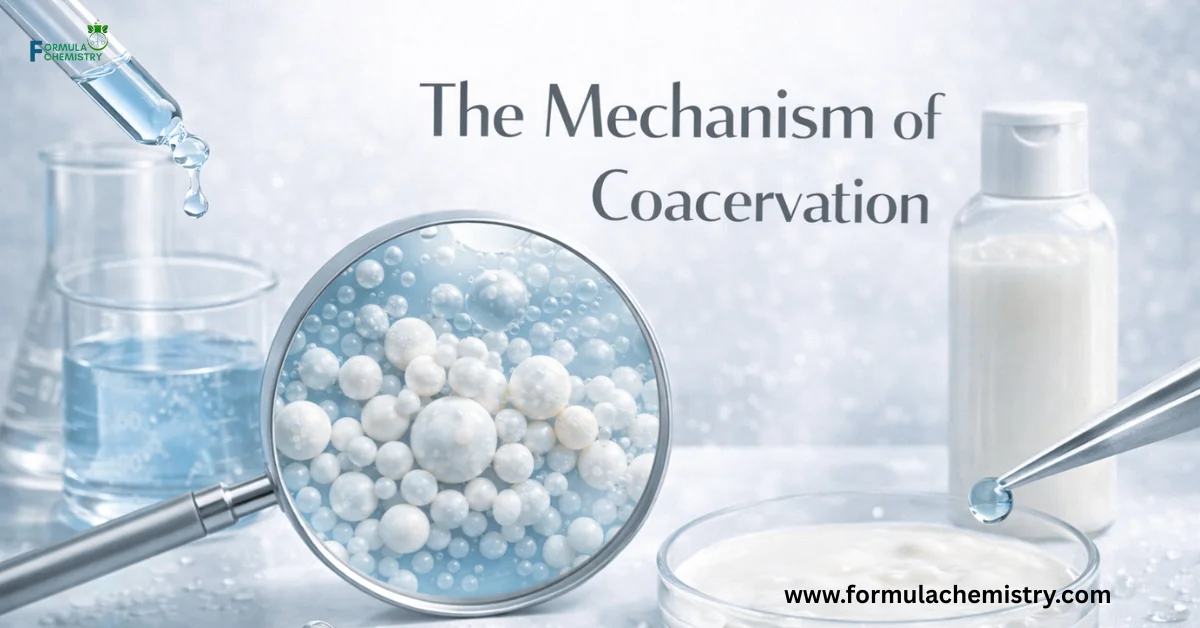
The secret to Polyquaternium-10’s success in “2-in-1” shampoos is a phenomenon called coacervation. A coacervate is a phase separation that occurs when the cationic polymer interacts with anionic surfactants under specific conditions—usually triggered by dilution.
Inside the shampoo bottle, the high concentration of surfactants keeps the polymer solubilized and hidden. However, when the consumer applies the shampoo and adds water to rinse, the surfactant concentration drops. This shift in equilibrium causes the polymer to separate from the water phase (coacervate) and deposit onto the hair.
This “smart” deposition ensures the conditioning agent is left behind exactly where it is needed, even after the dirt and oil are rinsed away. It allows formulators to create clear shampoos that condition like creams.
Formulating with Polyquaternium-10 in Hair Care
Incorporating Polyquaternium-10 requires attention to detail regarding processing order and hydration. It is supplied as a powder, and like many gums or cellulosics, it is highly hydrophilic (water-loving). If dumped directly into a tank of water, it will form “fish eyes”—clumps of dry powder encapsulated by a hydrated gel outer layer.
These clumps are notoriously difficult to break down once formed and can ruin a batch. To prevent this, professional formulators use specific dispersion techniques to ensure a smooth, crystal-clear solution.
Best Practices for Hydration and Incorporation
The most reliable method for incorporating Polyquaternium-10 is the “slurry” method. This involves dispersing the powder into a non-solvent humectant, such as Glycerin or Propanediol, before adding any water. The non-solvent separates the particles, ensuring that when water is introduced, every particle hydrates evenly and simultaneously.
Alternatively, if you must add it directly to water, use room temperature water with a high-speed vortex. Sprinkle the powder slowly into the center of the vortex. Once dispersed, you can gently heat the water to 40°C – 50°C to accelerate hydration. The solution is ready when it transitions from cloudy to clear and develops viscosity.
Do not add surfactants until the polymer is fully hydrated. Anionic surfactants can compete for water and may shock the polymer if added too early, leading to haze or precipitation.
Compatibility with Surfactants and Thickeners
One of the greatest strengths of Polyquaternium-10 is its compatibility profile. In the realm of cationic polymers, few are as forgiving in anionic systems (like Sodium Lauryl Sulfate or Sodium Cocoyl Isethionate). While many cationics crash out instantly when mixed with anionics, PQ-10 forms stable, clear complexes.
However, formulators must be mindful of the “salt curve.” Polyquaternium-10 can sometimes suppress the viscosity response of surfactants to salt (Sodium Chloride). You may find that a shampoo containing PQ-10 requires more salt or a secondary thickener (like PEG-150 Distearate or Cocamide MIPA) to reach the desired thickness.
Additionally, avoid using strong anionic rheology modifiers like Carbomers or high-charge anionic gums (like Xanthan Gum) in the same phase, as these can interact with the cationic polymer and form white, stringy precipitates.
Troubleshooting and Comparative Analysis
Even experienced chemists encounter instability when working with charged polymers. Texture issues, clarity problems, and lack of foam are common hurdles. Below is a guide to troubleshooting these specific formulation challenges.
Common Problems and Fixes
- Problem: “Fish eyes” or gelatinous lumps in the water phase.
- Fix: Pre-disperse the Polyquaternium-10 in Glycerin before adding water. If using water only, sift slowly into a strong vortex. Never dump it all at once.
- Problem: The shampoo is cloudy or hazy, but needs to be clear.
- Fix: Ensure the polymer is completely hydrated (clear) before adding any surfactants. Check if the percentage of PQ-10 is too high (>0.5%); excess polymer often causes haze.
- Problem: The product feels sticky or tacky on the hands/hair.
- Fix: The usage rate is likely too high. Reduce Polyquaternium-10 to 0.2% – 0.3%. A little goes a long way.
- Problem: Incompatibility/Separation when adding salt.
- Fix: PQ-10 can flatten the salt curve. Adjust your thickening strategy to include non-ionic liquid thickeners (like PEG-120 Methyl Glucose Dioleate).
- Problem: Hair feels coated or heavy (Buildup).
- Fix: Use a lower molecular weight grade of Polyquaternium-10 or reduce the concentration. Ensure the formula contains enough anionic surfactant to facilitate proper rinsing.
Polyquaternium-10 vs. Other Conditioning Polymers
Selecting the right polymer depends on the desired hair feel and the target consumer. The table below outlines how Polyquaternium-10 compares to other common cationic agents found in hair care.
Table: Comparative Analysis of Cationic Polymers
| Feature | Polyquaternium-10 | Polyquaternium-7 | Guar Hydroxypropyltrimonium Chloride |
| Origin | Cellulose (Plant-derived backbone) | Synthetic (Acrylamide based) | Guar Gum (Plant-derived) |
| Conditioning Level | Moderate to High | Low to Moderate | High |
| Build-up Potential | Moderate | Low | High |
| Clarity in Solution | Excellent (Clear) | Excellent (Clear) | Often Hazy / Opaque |
| Best For | Damaged hair, volume, curl definition | Fine hair, detangling, budget formulas | Thick/Coarse hair, intense repair |
| Sensory Feel | Soft, natural, hydrated | Slick, “silicone-like” slip | Heavy, coated, protective |
FAQ’s about Polyquaternium-10: A Nourishing Polymer for Soft Hair
Is Polyquaternium-10 a silicone?
No, Polyquaternium-10 is not a silicone. It is a quaternized polymer derived from hydroxyethylcellulose. While it provides slip and shine similar to silicones, it is water-soluble and functions through electrostatic attraction rather than hydrophobic coating.
Does Polyquaternium-10 cause hair buildup?
It can cause buildup if used in high concentrations or if the hair is not clarified occasionally. However, because it is water-soluble, it is generally easier to remove than silicones or heavy waxes using a standard anionic shampoo.
Is Polyquaternium-10 natural?
It is considered semi-synthetic or naturally derived. The backbone is cellulose (from wood pulp or cotton), but it is chemically modified in a lab to add the cationic charge. It is not “natural” in the raw sense, but it is based on renewable resources.
Can I use Polyquaternium-10 in skin care?
Yes. While primarily known for hair care, it is used in body washes and facial cleansers. It imparts a soft, conditioned after-feel to the skin and can reduce the irritation potential of surfactants by mitigating their interaction with skin proteins.
What is the difference between Polyquaternium-10 and Polyquaternium-7?
Polyquaternium-10 is cellulosic and offers more “substantive” conditioning, making it better for damaged hair. Polyquaternium-7 is fully synthetic, cheaper, and provides a lighter, slipperier feel, making it better for fine hair or budget-friendly formulations.
Is Polyquaternium-10 safe for color-treated hair?
Yes, it is excellent for color-treated hair. Smoothing the cuticle helps lock in color molecules and prevents them from leaching out during washing. Its gentle conditioning properties also help repair the structural damage often caused by the coloring process.
How do I dissolve Polyquaternium-10 powder?
The best method is to create a slurry by mixing the powder with Glycerin or Propanediol, then adding warm water. Alternatively, add it slowly to the vortex of rapidly mixing water. Always allow it to hydrate fully (turn clear/viscous) before adding other ingredients.
Is Polyquaternium-10 biodegradable?
The biodegradability of Polyquaternium-10 varies by grade and testing method. While the cellulose backbone is biodegradable, the cationic modification slows down the degradation process. It is generally considered less biodegradable than unmodified cellulose but better than fully synthetic polymers like Polyquaternium-7.