
Introduction
Fractionated Coconut Oil (FCO) is a fundamental element in modern cosmetic chemistry, prized because of its exceptional stability and elegant skin feel. Unlike virgin coconut oil, which creates a heavy, greasy film and solidifies at room temperature, FCO remains liquid and absorbs rapidly.
This makes it a superb carrier for active ingredients and essential oils. For formulators, it serves as an adaptable emollient that connects natural oils and synthetic esters. Its chemical structure allows it to penetrate the skin barrier effectively without blocking pores or leaving a sticky residue.
It is chemically known as Caprylic/Capric Triglyceride, highlighting its specific fatty acid composition. Whether you are designing a dry body oil, a lightweight facial serum, or a color cosmetic product, understanding FCO is essential.
Quick Facts
- INCI Name: Caprylic/Capric Triglyceride (or rarely, Cocos Nucifera Oil if not fully fractionated).
- Appearance: Clear, colorless, and odorless liquid.
- Texture: Very light, non-greasy, with high spreadability (low viscosity).
- Solubility: Oil soluble; insoluble in water.
- Typical Usage Rate: 1% – 100% (Can be used neat or as a co-emollient).
- Shelf Life: Indefinite/Very Long (highly resistant to oxidation).
- Comedogenic Rating: Generally 2–3 (Low to Moderate); usually safe for acne-prone skin compared to virgin oil.
- Best For: Facial serums, makeup removers, hair oils, and dispersing pigments.
- Safety Note: Always perform a patch test; while hypoallergenic, individual sensitivities exist.
What is Fractionated Coconut Oil and How is it Made?
To understand Fractionated Coconut Oil, one must look at the chemistry of raw coconut oil. Raw coconut oil contains a mix of long-chain fatty acids (like Lauric Acid) and medium-chain fatty acids. The long-chain fatty acids are responsible for the high melting point, causing the oil to turn solid when cool.
Fractionation is a physical separation process that removes these long-chain fatty acids. By cooling the oil and removing the solid fraction (Stearin) or using hydrolysis and steam distillation, chemists isolate the Medium Chain Triglycerides (MCTs). This leaves behind a liquid oil that is completely saturated, highly stable, and resistant to heat.
The Fractionation Process Explained
The process normally begins with the hydrolysis of crude coconut oil. This splits the glycerol backbone from the fatty acids. The fatty acids are then separated by distillation based on their boiling points. The specific “fractions” desired for FCO are the lower molecular weight chains.
Once isolated, these specific fatty acids (Caprylic and Capric) are re-esterified with glycerin to form the final triglyceride. This results in a “pure” oil that lacks the heavy Lauric Acid found in whole coconut oil. This purification is why FCO never goes rancid in the way cold-pressed vegetable oils do.
Chemical Composition: Caprylic and Capric Acids
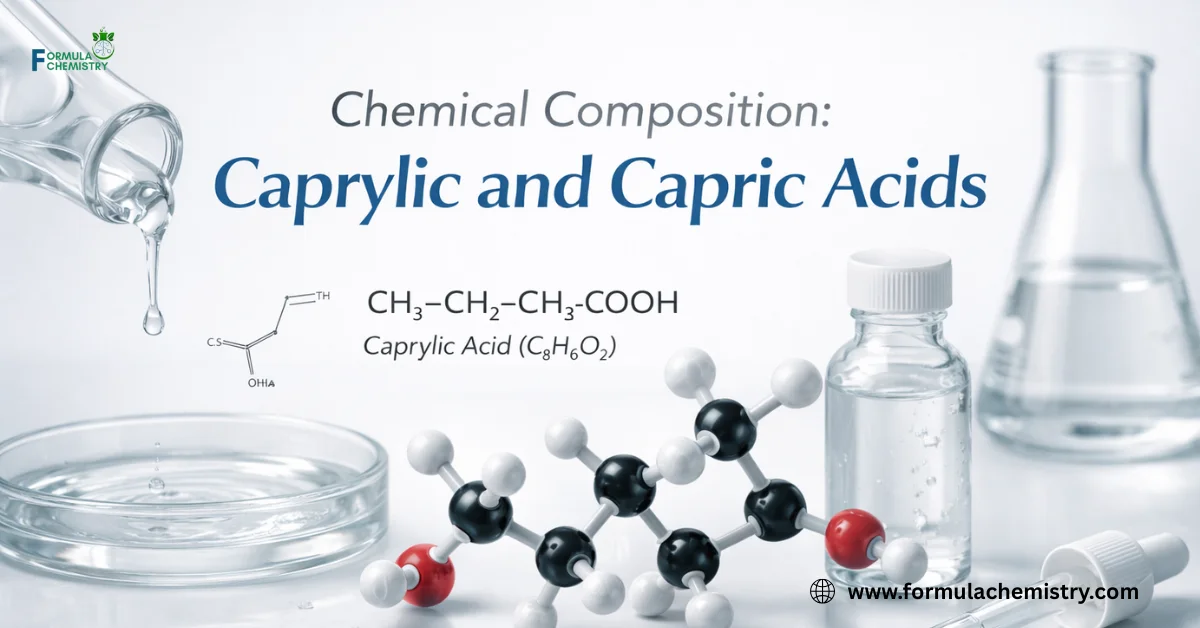
The resulting liquid is composed almost entirely of Caprylic Acid (C8) and Capric Acid (C10). These are saturated fatty acids, meaning they have no double bonds in their carbon chains.
The lack of double bonds is important for stability, as double bonds are the sites where oxidation (rancidity) occurs. Because it is fully saturated, FCO functions more like a synthetic ester than a plant oil in formulations. It offers a “dry” skin feel and functions as an excellent solvent.
It can dissolve lipophilic actives like Salicylic Acid or UV filters much better than heavier plant oils like Olive or Almond oil.
Hydrate and smooth your skin naturally with Turkey Red Oil: Nature’s Emulsifying Moisturizer.
Why Formulators Choose Fractionated Coconut Oil
One of the primary reasons FCO is ubiquitous in skincare is its indefinite shelf life. Unlike Rosehip or Hemp seed oil, which can oxidize within months, Fractionated Coconut Oil can sit on a shelf for years without changing scent or color.
This makes it the perfect base for commercial products requiring long expiration dates. Beyond stability, its sensory profile is unmatched in the natural category. It reduces the “drag” of heavy creams and provides “slip” without the greasiness.
This makes it a popular pick for massage oils, where the therapist needs glide but the client does not want to leave feeling oily. It is also fully compatible with silicones and most cosmetic ingredients.
Advantages for Skin and Hair Formulations
In hair care, FCO is a hero ingredient for providing shine without weight. Because the molecules are smaller than those in raw coconut oil, they can penetrate the hair shaft to provide moisture from within. It is excellent for defrizzing sprays or hair serums where customary oils would weigh down fine hair.
For skincare, it acts as a barrier repair agent that does not occlude the skin aggressively. It is often used in oil cleansers because it mixes readily with solubilizers and breaks down waterproof makeup efficiently. Its lightweight characteristics guarantee that it rinses away cleanly, leaving the skin soft but not stripped.
Comparison: FCO vs. Virgin Coconut Oil
It is vital to distinguish between these two forms of coconut oil, as they behave very differently in a beaker. Virgin Coconut Oil smells like coconuts and clogs pores for many people; FCO is odorless and much less likely to cause congestion.
The table below outlines the key functional differences formulators must know.
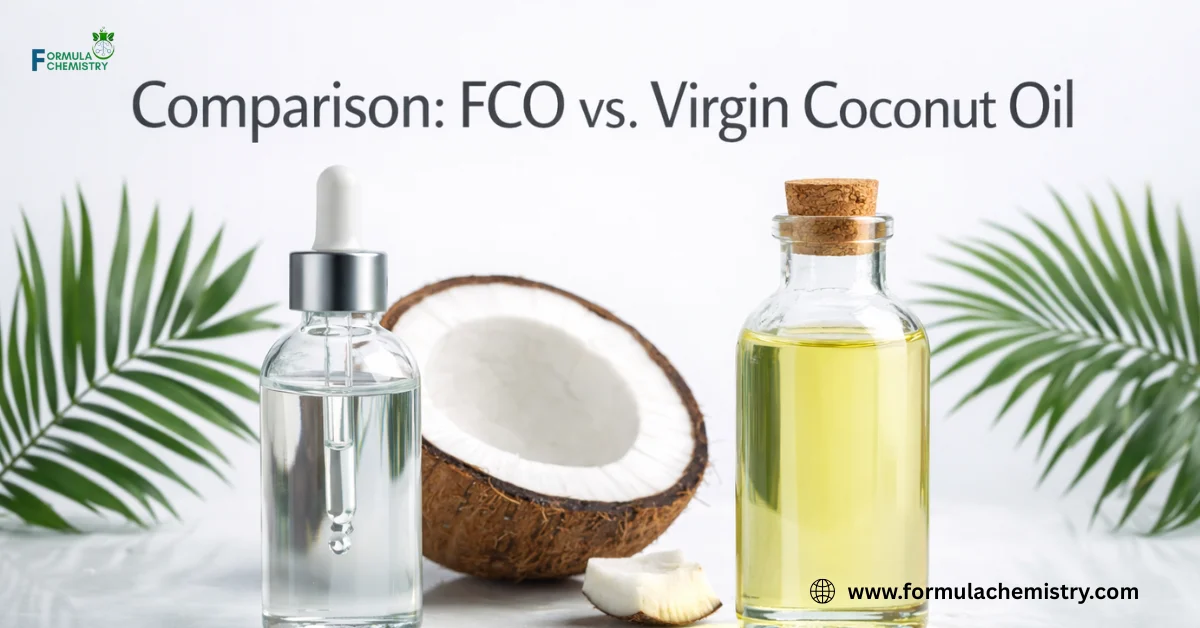
Table: Fractionated Coconut Oil vs. Virgin Coconut Oil
| Feature | Fractionated Coconut Oil (MCT) | Virgin Coconut Oil (Raw) |
| INCI | Caprylic/Capric Triglyceride | Cocos Nucifera Oil |
| State at Room Temp | Liquid | Solid / Semi-Solid |
| Odor | Odorless | Distinct Coconut Scent |
| Absorption Speed | Very Fast (“Dry” feel) | Slow (Greasy/Heavy feel) |
| Shelf Life | Indefinite (High Stability) | 12–18 Months |
| Comedogenicity | Low to Moderate | High (Pore Clogging) |
| Main Fatty Acid | Caprylic & Capric | Lauric |
Formulating with Fractionated Coconut Oil: Practical Guide
When designing a formula, Fractionated Coconut Oil is incredibly forgiving. It can be heated to high temperatures without degrading, rendering it suitable for the hot oil phase of emulsions. It is also compatible with cyclomethicone substitutes, enabling natural-leaning formulations that replicate the feel of luxury synthetic serums.
For anhydrous products (water-free), FCO serves as a bulking agent. It lowers the cost of the formula while improving the texture of expensive, sticky oils like Vitamin E or Castor Oil. A common technique is to “cut” heavier oils with 50% FCO to improve spreadability.
Usage Rates and Solubility
There is virtually no limit to the usage rate of FCO. In a facial oil, it can be 100% of the product, although it is usually blended for complexity. In emulsions (lotions and creams), it is typically used between 2% and 15%.
If you are working with pigments (like in foundations or lipsticks), FCO is an excellent wetting agent. It helps disperse iron oxides evenly, preventing agglomeration (clumping). This results in better color payoff and a silkier application on the lips or skin.
Common Problems and Fixes
Even with such a stable ingredient, issues can occur concerning texture and performance. Here are common challenges and how to solve them.
- Problem: The body oil feels “too thin” and lacks a premium cushion.
- Fix: FCO has very low viscosity. Blend it with a heavier oil like Jojoba or Castor Oil, or add an oil-soluble rheology modifier like Silica Dimethyl Silylate to add body.
- Problem: The emulsion is stable but feels “empty” or not moisturizing enough.
- Fix: FCO is a light emollient, not a heavy occlusive. Add a solid butter (Shea or Cocoa) or a wax (Beeswax) to the oil phase to create a protective barrier on the skin.
- Problem: Essential oils are evaporating too quickly from the perfume oil.
- Fix: FCO is not a fixative. Include a base note oil or a dedicated fixative ingredient to help anchor volatile scent compounds.
- Problem: The product is leaking from the pump/dropper.
- Fix: Because FCO has low surface tension and viscosity, it can creep through standard packaging seals. Ensure you test packaging specifically for low-viscosity oils.
FAQ’s about Fractionated Coconut Oil: Lightweight Moisture for Skin & Hair
Is Fractionated Coconut Oil the same as MCT Oil?
Yes, they are essentially the same. Both consist primarily of Caprylic and Capric triglycerides. “MCT Oil” is a term more commonly used in the dietary supplement industry, while “Fractionated Coconut Oil” or “Caprylic/Capric Triglyceride” is the standard terminology in cosmetics.
Will Fractionated Coconut Oil clog my pores?
It is generally considered non-comedogenic to low-comedogenic. Because the heavy Lauric Acid has been removed, it is much less likely to clog pores than virgin coconut oil. However, those with extremely sensitive or active acne should patch test first.
Can I use Fractionated Coconut Oil as a preservative?
No. FCO is an oil and does not contain water, so it does not need a preservative itself. However, it has no antimicrobial properties to preserve other ingredients. If you mix it with water or aloe, you absolutely need a broad-spectrum preservative.
Does Fractionated Coconut Oil smell like coconuts?
No. The fractionation process removes the volatile chemicals responsible for the coconut scent. It is completely odorless, thus making it an excellent carrier for essential oils and fragrances, as it will not alter their scent profile.
Is Fractionated Coconut Oil natural or synthetic?
It is obtained from natural sources (coconut oil and glycerin) but experiences substantial chemical processing (hydrolysis, fractionation, and re-esterification). Therefore, it is best described as “naturally derived” or “semi-synthetic” rather than raw or unrefined.
Can I heat Fractionated Coconut Oil?
Yes. FCO has very high thermal stability. You can heat it in the oil phase of your formulations (up to 75°C – 80°C) without worrying about oxidation or degradation, unlike fragile oils such as Evening Primrose or Flaxseed.
How do I store Fractionated Coconut Oil?
Store it in a cool, dry area away from direct sunlight. Because it is fully saturated, it does not require refrigeration. It will remain liquid even in the refrigerator, unlike virgin coconut oil, which hardens.
Can I use FCO for oil cleansing?
Absolutely. It is one of the best oils for the Oil Cleansing Method (OCM). Its light texture allows it to dissolve sebum and makeup effectively. It should ideally be mixed with an emulsifier (like Polysorbate 80), so it rinses off with water.