
Introduction
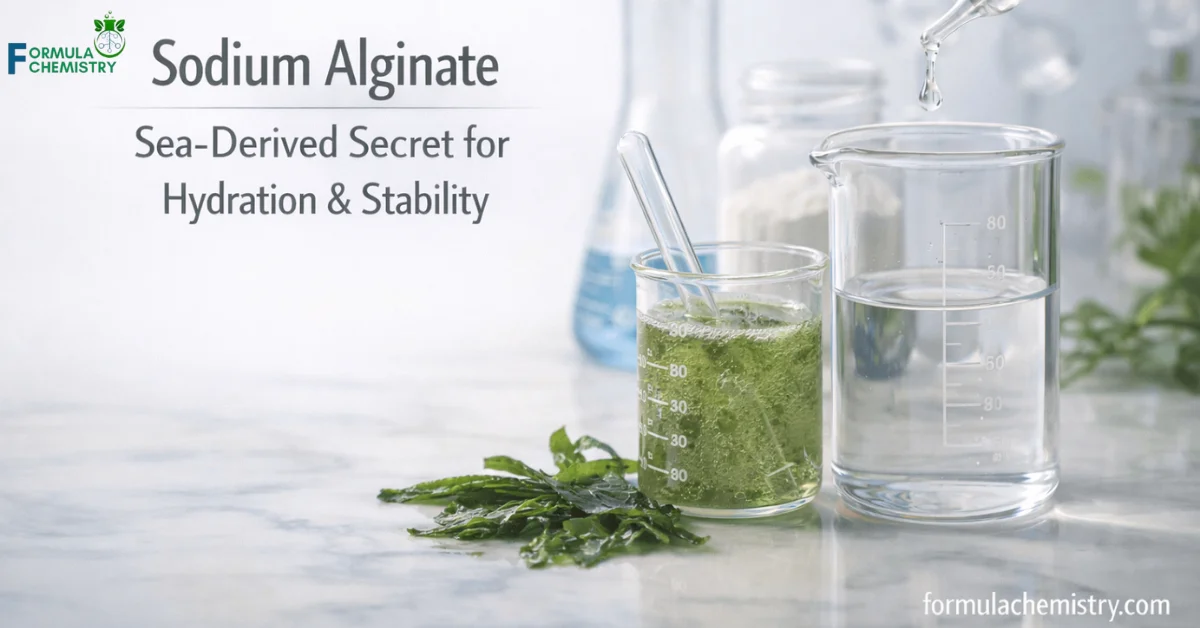
Sodium Alginate is a natural polysaccharide extracted from brown seaweed, primarily Laminaria digitata and Macrocystis pyrifera. In the world of cosmetic science and formulation, it operates as a multifunctional rheology modifier, film-former, and hydrating agent.
At FormulaChemistry, we recognize its dual value in both skincare performance and formula stability, rendering it a staple to developers seeking bio-based alternatives to synthetic polymers.
Quick Facts
- What it is: A sodium salt of alginic acid, acting as a cold-water soluble thickener and gelling agent.
- Who it’s for: Formulators looking for “clean beauty” thickeners and users desiring non-occlusive, breathable hydration.
- How to use: Sift slowly into the water phase under high-speed agitation to avoid “fish eyes” (clumping).
- Typical usage range: 0.2% to 2.0%, depending on the desired viscosity.
- pH/Solubility: Soluble in water; stable at a pH range of 5.5 to 10.0.
- Compatibility: Highly sensitive to electrolytes and divalent cations like Calcium, which trigger instant gelation.
- Common Mistakes: Adding it to acidic phases too quickly, which can cause the alginic acid to precipitate.
- Safety Note: Generally recognized as safe (GRAS), but always perform a patch test for marine-derived sensitivities.
The Molecular Science of Alginates
The efficacy of Sodium Alginate resides in its molecular structure, consisting of linear copolymers of (1-4)-linked β-D-mannuronate (M) and α-L-guluronate (G) residues.
The ratio of these blocks determines the flexibility and texture of the resulting gel. When used in topical applications, these molecules form a structured network that traps moisture against the stratum corneum.
FormulaChemistry provides practical formulation education and safety-forward guidance to help you steer through these biochemical interactions effectively.
What are the Main Benefits of Sodium Alginate in Skincare?
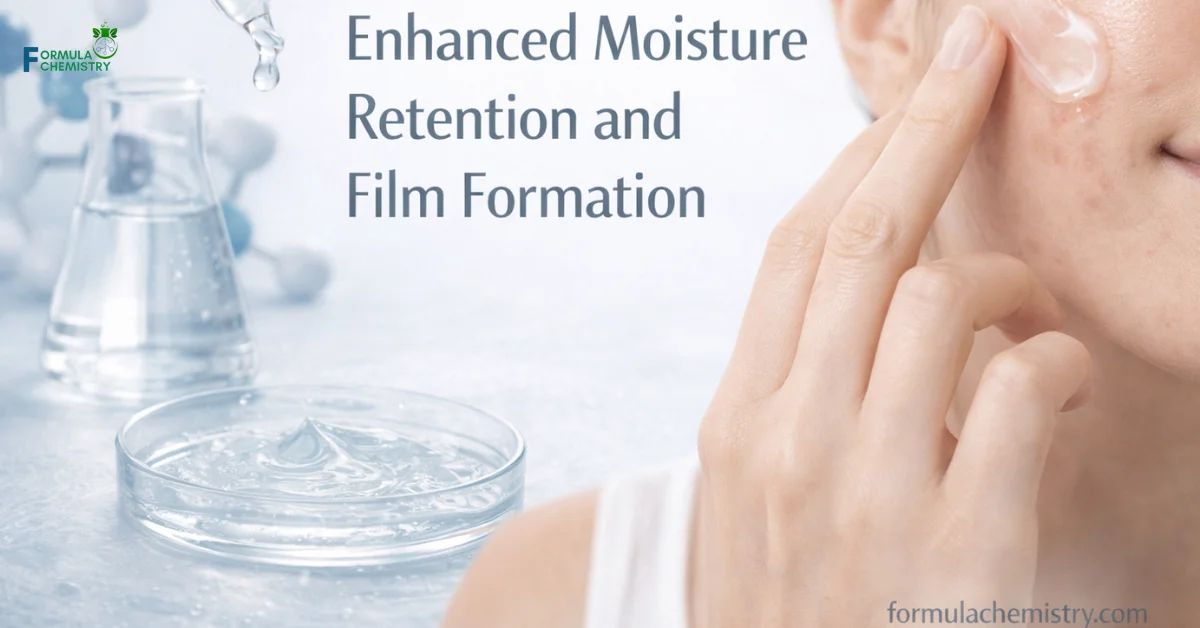
Enhanced Moisture Retention and Film Formation
Sodium Alginate is a powerhouse for humectancy. Unlike heavy waxes or oils, it creates a sophisticated, breathable film on the skin’s surface.
This “hydro-gel” layer reduces trans-epidermal water loss (TEWL) without the stickiness often associated with high concentrations of glycerin. Because it is sea-derived, it often contains trace minerals that supplement the skin’s natural moisturizing factors.
The film-forming properties are also utilized in “peel-off” masks. When the alginate meets a calcium source, it goes through an ion-exchange reaction, transitioning from a liquid to a solid, rubbery state. This creates an occlusive environment that forces active serums deeper into the epidermis before the mask is removed.
Stabilizing Emulsions and Suspending Actives
Beyond hydration, Sodium Alginate acts as a secondary emulsifier and stabilizer. It increases the viscosity of the external water phase in O/W (oil-in-water) emulsions, preventing the coalescence of oil droplets.
This is particularly useful in “sprayable” emulsions where a light touch is required, but stability cannot be compromised.
Its ability to create a “yield value” in liquids allows it to suspend small particles, such as exfoliating beads or encapsulated vitamins, without them settling at the bottom of the container.
- Common Problems and Fixes:
- Problem: Clumping/Lumping during hydration. Fix: Pre-disperse in a non-solvent like glycerin or propanediol before adding to water.
- Problem: Thinning over time. Fix: Look for microbial growth; ensure preservation is robust as polysaccharides are “bug food.”
- Problem: Unexpected gelling. Fix: Ensure no calcium-rich tap water or botanical extracts with high mineral content were used.
- Problem: Thinning in low pH. Fix: Maintain pH above 5.5; if the formula must be acidic, consider Xanthan Gum instead.
Structural Role and Technical Specifications
Rheology Modification and Texture Profiles
The texture of a Sodium Alginate gel is distinct from that of synthetic carbomers. It provides a “short” flow, meaning it breaks easily rather than stringing.
This makes it ideal for serums that need to feel substantial in the bottle but vanish quickly upon application. In the context of Formula Chemistry, understanding the “G” and “M” block ratios is key: high “G” alginates create brittle, firm gels, while high “M” alginates create more flexible, elastic textures.
| Property | Specification/Usage | Compatibility Notes |
| Usage Rate | 0.5% – 1.5% (Typical) | Lower for serums; higher for masks. |
| Solubility | Water Soluble | Insoluble in alcohols or oils. |
| pH Stability | 5.5 to 10.0 | Precipitates as Alginic Acid below pH 4.5. |
| Ionic Nature | Anionic | Incompatible with Cationic surfactants (BTMS). |
| Appearance | Off-white/Tan powder | Clear to translucent in solution. |
Interaction with Divalent Cations (Calcium)
The “Egg-Box Model” is the scientific standard for describing how Sodium Alginate reacts with calcium. The calcium ions sit between the G-block cavities of the alginate chains, effectively “zipping” them together. This reaction is instantaneous and does not require heat.
In standard leave-on products, however, this reaction is usually avoided. Formulators must use deionized water and chelatants like Disodium EDTA to prevent trace minerals from causing the formula to become grainy or lumpy over time.
Strategic Formulation and Safety Guidelines
Synergistic Blending with Other Gums
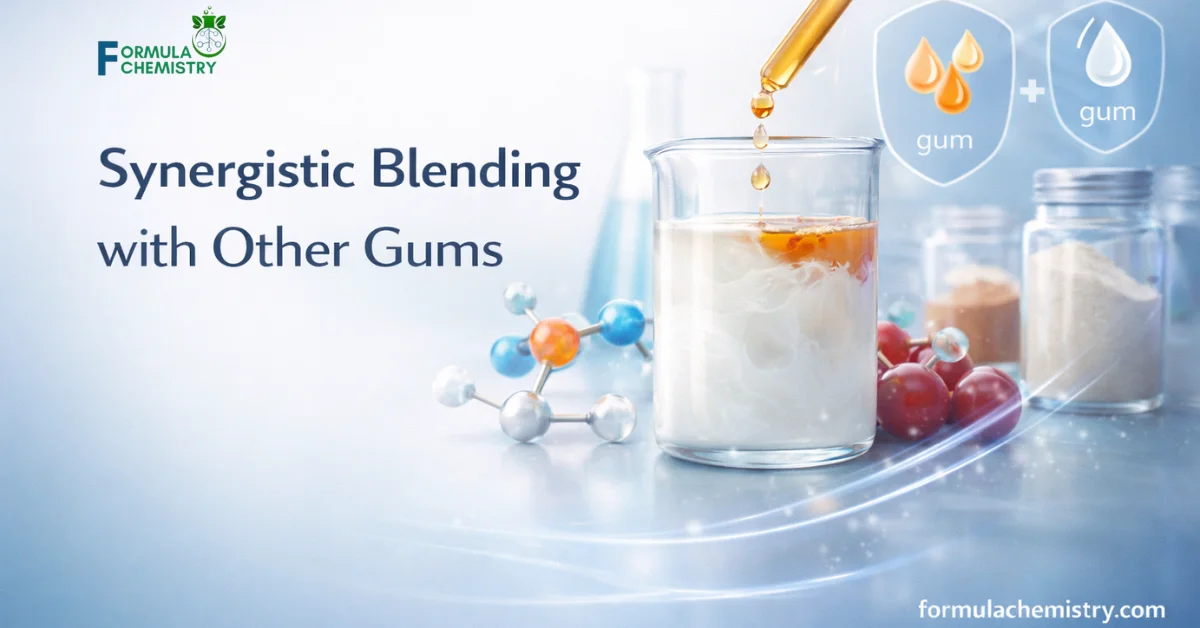
Sodium Alginate is rarely used in isolation. To create a more sophisticated skin feel, it is often paired with Xanthan Gum or Guar Gum.
While Alginate provides the “body” and film, Xanthan adds “slip” and improves freeze-thaw stability. When combined, these polysaccharides create a more durable network that can withstand higher concentrations of electrolytes than Alginate could alone.
In high-performance serums, pairing Sodium Alginate with Hyaluronic Acid can create a multi-level hydration strategy. The Alginate provides the surface film, while the lower molecular weight Hyaluronic Acid penetrates the deeper layers of the stratum corneum.
Preservation and Microbiological Safety
Because Sodium Alginate is a natural sugar-based polymer, it is highly susceptible to microbial contamination.
Preservation is mandatory for any formulation containing water and Alginate. Broad-spectrum preservatives like Phenoxyethanol/Ethylhexylglycerin or Sodium Levulinate/Sodium Anisate are recommended.
Who should avoid:
Individuals with known severe seafood or iodine allergies should proceed carefully and patch test marine-derived ingredients, although the refining procedure usually removes allergenic compounds.
Key warnings: Do not use in formulas with a pH below 4.0, as the polymer will fail and the product will separate.
At FormulaChemistry, we stress that while natural ingredients are desirable, they require more rigorous stability testing than their synthetic counterparts. Proper storage in a cool, dry place is essential for the raw powder to prevent premature hydration from atmospheric moisture.
FAQ about Sodium Alginate: Sea-Derived Secret for Hydration & Stability
Is Sodium Alginate vegan and cruelty-free?
Yes, it is derived entirely from brown seaweed (algae). It is a plant-based ingredient and is widely used in vegan cosmetic formulations as a substitute for gelatin.
How do I prevent clumping when mixing Sodium Alginate?
The most effective method is to create a “slurry” by mixing the powder with a glycol (like Glycerin) in a 1:2 ratio before adding it to the water phase under constant stirring.
Can I use Sodium Alginate in a Vitamin C serum?
Only if using a stabilized derivative like Sodium Ascorbyl Phosphate. Pure L-Ascorbic Acid requires a low pH (around 3.5), which will cause Sodium Alginate to precipitate and lose its thickening properties.
What is the difference between Sodium Alginate and Agar-Agar?
While both are seaweed-derived, Agar-Agar requires heat to dissolve and forms a very firm, thermoreversible gel. Sodium Alginate dissolves in cold water and gels via ion exchange (calcium), not temperature.
Can Sodium Alginate cause skin irritation?
It is generally non-irritating and soothing. However, users with rare marine allergies should patch test first. It is non-comedogenic and suitable for acne-prone skin.
Is a preservative necessary if I use dry Alginate in a mask powder?
If the product is a dry powder meant to be mixed with water immediately before use, a preservative is not strictly required for the powder itself. However, any leftover wet mixture must be discarded.
How does it affect the “drag” of a cream?
In small amounts (under 0.5%), it can reduce the “soaping” effect of some emulsifiers, yielding a smoother, more “silky” glide during application.
Can I use tap water with Sodium Alginate?
It is highly discouraged. Tap water contains minerals like calcium and magnesium, which will react with the Alginate, causing it to form small, hard lumps or “beads” instead of a smooth gel.