

By Dr. SamiUllah, PhD, Lead Formulator, Formula Chemistry
Quick Answer: Learning how to make soap from scratch means calculating your own lye and water amounts by hand rather than relying on a fixed recipe, using each oil’s saponification (SAP) value to determine exactly how much sodium hydroxide it needs.
The core formula is oil weight multiplied by SAP value, then reduced by your chosen superfat percentage, and building a balanced blend also means weighing each oil’s contribution to hardness, cleansing, and conditioning before you ever melt a single ingredient.
Introduction
Most tutorials hand you a finished recipe and tell you to trust it. Building a recipe from scratch is a different skill, and it is the one that actually makes you a formulator rather than someone following instructions.
Once you understand how a single oil’s fatty acid profile determines its SAP value, its hardness contribution, and its lather behavior, you can design a bar for a specific outcome instead of hoping a borrowed recipe performs the way you want. This guide walks through that math directly, starting from raw oils rather than a pre-built kit.
If you have never made a bar of soap before, our beginner’s guide to homemade soap covers the basic process end to end and is the better starting point. This article assumes you already understand trace, gel phase, and cure time, and want to move past following a recipe toward building one.
Why Building From Scratch Matters
A borrowed recipe was designed around someone else’s goals, whether that was maximum lather, extreme hardness, or a specific skin feel. Those choices are baked into ratios you cannot see just by reading the ingredient list.
Designing your own blend means choosing those outcomes deliberately. You decide how cleansing the bar should feel, how hard it needs to be for your climate, and how creamy or bubbly the lather turns out, then select oils that deliver exactly that combination.
Reading and Using Saponification Values
Every fat or oil has a SAP value, the number of grams of sodium hydroxide required to fully saponify one gram of that oil. This single number is the foundation of every lye calculation you will ever run.
Reference SAP values are published for essentially every oil used in soap making, and they do not change between suppliers of the same refined oil. The table below lists SAP values for common soap-making oils, along with their iodine value, a rough indicator of oxidative stability and bar softness.
| Oil / Fat | INCI Name | NaOH SAP Value | Iodine Value | Primary Contribution |
| Coconut Oil | Cocos Nucifera (Coconut) Oil | 0.183 | 10 | Hardness, cleansing, bubbly lather |
| Palm Oil | Elaeis Guineensis (Palm) Oil | 0.141 | 53 | Hardness, stable lather |
| Olive Oil | Olea Europaea (Olive) Fruit Oil | 0.134 | 85 | Conditioning, creamy lather |
| Castor Oil | Ricinus Communis (Castor) Seed Oil | 0.129 | 85 | Bubbly, stable lather boost |
| Cocoa Butter | Theobroma Cacao (Cocoa) Seed Butter | 0.137 | 37 | Hardness, conditioning |
| Sweet Almond Oil | Prunus Amygdalus Dulcis Oil | 0.136 | 100 | Conditioning, mild lather softening |
A higher SAP value means that oil consumes more lye per gram, since more of its molecular weight is available to react. Coconut oil’s high value is a direct result of its short-chain fatty acids, which pack more reactive sites into the same gram weight than a long-chain oil like olive.
Calculating Your Own Lye and Water Amounts by Hand
The core equation behind every cold process recipe is straightforward once broken down. NaOH grams needed equals the oil’s weight in grams multiplied by its SAP value, then multiplied again by one minus your chosen superfat percentage.
For a single oil, a 500 gram batch of olive oil at 5 percent superfat looks like this: 500 multiplied by 0.134 gives 67 grams of NaOH at full saponification, and 67 multiplied by 0.95 brings that down to roughly 63.7 grams. That final number is what actually goes on the scale.
For a blended recipe, you run this calculation separately for each oil, then sum the results before applying the superfat reduction once to the total.
A 1,000 gram blend of 300 grams coconut oil, 400 grams olive oil, 200 grams castor oil, and 100 grams cocoa butter produces a combined NaOH requirement of 147.9 grams before superfat, calculated from each oil’s individual contribution.
Applying a 5 percent superfat to that total brings the figure to approximately 140.5 grams of NaOH. Water is typically set between 2.0 and 2.5 times the NaOH weight, so this batch would use roughly 300 to 350 grams of water depending on how much water discount you choose to apply.
Always double check hand calculations against a lye calculator before mixing, even once you are confident in the math. A single transposed digit in a manual calculation is the most common source of a genuinely dangerous batch.
| Ingredient | Function | Weight % | Amount (g) |
|---|
All amounts are by weight. Weigh every ingredient, including liquids, on a scale accurate to 0.01 g.
Scaling a Scratch-Built Recipe
Once a blend is finalized, scaling it up or down only requires keeping every oil’s percentage identical while changing the total oil weight.
A recipe built at 1,000 grams total oil scales to 2,000 grams by doubling every individual oil weight, then rerunning the same SAP calculation against the new totals rather than simply doubling the original NaOH figure blindly.
This distinction matters because rounding errors compound differently at different batch sizes. Recalculating from the percentages at the new total weight, rather than scaling the old lye number by the same multiplier, keeps the math accurate regardless of how large or small the batch becomes.
Balancing Fatty Acid Profiles: Hardness, Cleansing, and Conditioning
Every oil’s fatty acid composition determines what it contributes to the finished bar beyond just its SAP value. Lauric and myristic acids, abundant in coconut oil, drive hard, cleansing, bubbly bars but can feel stripping at high percentages.
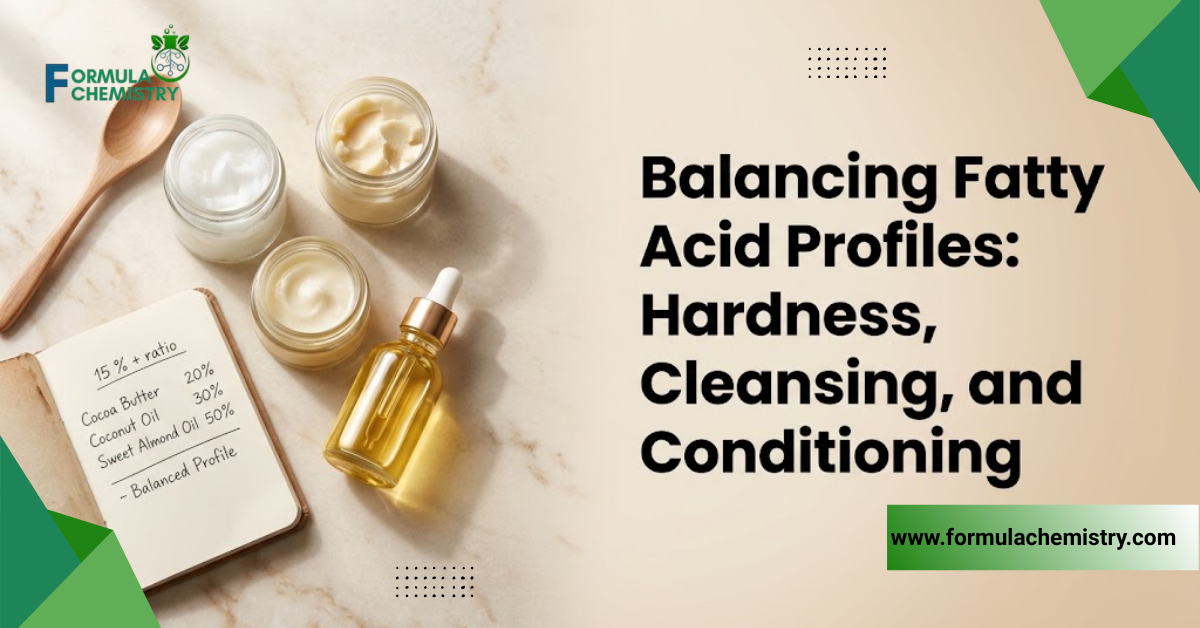
Oleic acid, the dominant fatty acid in olive oil, contributes conditioning and a stable, creamy lather rather than big bubbles. Ricinoleic acid, found almost exclusively in castor oil, boosts lather stability disproportionately even at low usage rates, which is why most recipes cap castor oil around 5 to 10 percent.
Soap makers commonly target rough ranges when scratch-building a recipe: hardness between 29 and 54, cleansing between 12 and 22, and conditioning between 44 and 69. These ranges are guidelines rather than rules, and a recipe built for a humid climate might intentionally push hardness higher than one built for a dry one.
Iodine value, shown in the SAP table above, offers a useful cross-check against these targets. A finished blend with an overall iodine value above roughly 70 tends to produce a softer bar prone to faster oxidation, even when hardness and cleansing numbers look acceptable on their own.
Building a Custom Blend Without a Kit
Working from individually sourced raw oils, rather than a pre-measured kit, is what actually lets you hit these targets deliberately. Start by choosing a primary conditioning oil at 40 to 50 percent of the blend, typically olive, sunflower, or another liquid oil high in oleic acid.
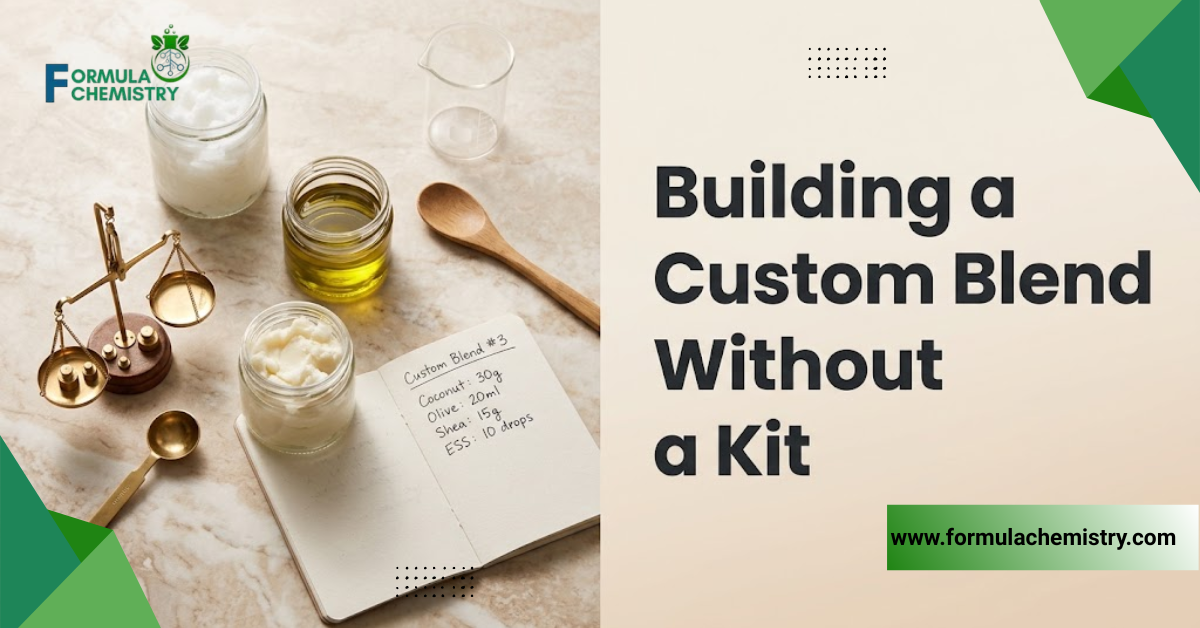
Add a hard, cleansing oil like coconut or palm at 20 to 30 percent to provide structure and lather. Round out the blend with a smaller percentage of a specialty oil like castor for lather stability, or a butter like shea or cocoa for extra hardness and skin feel.
Our full ingredient reference on soap making ingredients breaks down dozens of additional oils by fatty acid profile if you want to expand beyond this core set.
Sourcing each oil individually rather than through a kit also gives you control over refinement grade, which affects scent, color, and shelf stability of the raw material itself.
A Worked Example: Building a Recipe From Raw Oils
Say the goal is a bar for dry winter climate use, prioritizing conditioning and creamy lather over aggressive cleansing. That target points toward a higher percentage of oleic-rich oils and a smaller cleansing fraction than a typical all-purpose recipe.
Start with olive oil at 50 percent for its strong conditioning and creamy lather profile. Add sunflower oil at 15 percent to reinforce that conditioning character without duplicating olive oil’s scent and color.
Bring in coconut oil at only 18 percent, lower than a standard beginner recipe, to keep cleansing gentle while still contributing hardness and a light bubble structure.
Round out the blend with shea butter at 12 percent for extra hardness and a smoother bar feel, then castor oil at 5 percent for lather stability.
| Oil | Percentage | Weight (1,000g batch) | NaOH Contribution |
| Olive Oil | 50% | 500g | 67.0g |
| Coconut Oil | 18% | 180g | 32.9g |
| Sunflower Oil | 15% | 150g | 20.4g |
| Shea Butter | 12% | 120g | 15.4g |
| Castor Oil | 5% | 50g | 6.45g |
Summing the NaOH column gives 142.2 grams of lye before superfat. Applying a 5 percent superfat brings the working figure down to roughly 135.1 grams, with water set at approximately 2.2 times that lye weight, landing near 297 grams.
This blend leans toward the conditioning and creamy end of the spectrum rather than the bubbly, high-cleansing end that a coconut-heavy recipe would produce.
That tradeoff was a deliberate choice made before a single oil was measured, which is the entire point of building a recipe from scratch rather than reusing one.
The Cold Process Method Once Your Recipe Is Built
Once your custom blend and calculated lye amount are confirmed, the physical process follows the same cold process sequence used for any recipe. Melt solid oils, combine with liquid oils, and bring the blend to a working temperature between 100°F and 110°F.
Mix your calculated NaOH into your calculated water, always lye into water, and let the solution cool to a compatible temperature. Combine the two phases and blend to trace, then pour into your mold and allow the standard 24 to 48 hour set before unmolding and cutting.
If you are deciding between finishing this batch as a cold process bar or accelerating the reaction with heat, our comparison of cold process versus hot process walks through how each method changes texture and timeline. A scratch-built recipe works with either method once the math behind it is correct.
Common Mistakes When Building a Recipe From Scratch
Using a published SAP value from an unrefined or specialty variant of an oil. Refined and unrefined versions of the same oil can carry slightly different SAP values, so always confirm the value matches the specific product you purchased.
Forgetting to apply the superfat reduction to the full oil blend total. Applying superfat to each oil individually rather than to the combined lye total before summing can introduce small but meaningful rounding errors across a multi-oil recipe.
Ignoring iodine value when chasing a specific hardness target. A blend can hit a hardness number on paper while still producing a soft, fast-oxidizing bar if the iodine value of the overall blend runs too high.
Ignoring how the total fatty acid quality profile is often calculated from percentages of the fatty acid composition, not oil-by-oil weight alone. Confusing oil percentage by weight with fatty acid contribution percentage is a common source of miscalculated bar properties.
Overcorrecting a single quality metric at the expense of the others. Chasing high cleansing numbers by loading up on coconut oil often produces a bar that feels stripping even though it looks balanced on paper.
Skipping the manual double check against a calculator. Confidence in your own math is not a substitute for verifying every batch, since a single arithmetic slip scales directly into an unsafe lye excess.
Who Should Build Recipes From Scratch
Formulators comfortable with basic cold process technique, who already understand trace, gel phase, and standard safety handling, are the right audience for scratch-built recipes.
If the cold process itself is still new, our guide for beginner soap makers is the better starting point before working through SAP math.
This approach also suits anyone developing soap for a specific climate, skin type, or sensory target that off-the-shelf recipes do not address.
Formulators exploring liquid cleansers alongside bar soap may eventually want to look at surfactant-based systems like coco glucoside, or our guide to formulating a body wash, since scratch formulation skills transfer directly to that category. Always conduct a 48-hour patch test with any new formula before wider use.
Frequently Asked Questions
What is a SAP value in soap making?
A SAP value is the number of grams of lye needed to fully saponify one gram of a specific oil. It is unique to each oil based on its fatty acid composition.
Do refined and unrefined oils have different SAP values?
Yes, refinement can shift an oil’s fatty acid profile slightly, which changes its SAP value. Always confirm the value against the specific product you are using rather than a generic reference.
How do I calculate lye for a blend of multiple oils?
Multiply each oil’s weight by its own SAP value, sum those results, then reduce the total by your chosen superfat percentage. This gives the exact NaOH weight for the full blend.
What superfat percentage should a scratch-built recipe use?
Most recipes use 5 percent as a balanced default between mildness and bar longevity. Sensitive-skin formulas sometimes increase to 7 or 8 percent.
Why does castor oil have such a small usage percentage?
Ricinoleic acid in castor oil boosts lather stability disproportionately to its weight. Using more than 10 percent often makes the bar sticky rather than improving lather further.
Can I substitute one oil for another with a similar SAP value?
A similar SAP value does not guarantee a similar fatty acid profile or bar performance. Always check hardness, cleansing, and conditioning contributions before swapping oils.
Is hand-calculating lye amounts safe without a calculator?
Hand calculation is a valuable skill, but every batch should still be verified against a lye calculator before mixing. This catches arithmetic errors before they become a safety issue.
What is the difference between hardness and cleansing values?
Hardness relates to how firm and long-lasting the bar feels, largely from saturated fatty acids. Cleansing relates to how effectively the bar removes oil from skin, primarily from lauric and myristic acid content.
Key Takeaways
Building soap from scratch means understanding SAP values, fatty acid contributions, and lye math well enough to design a recipe rather than follow one. Every oil you add is a deliberate choice about hardness, cleansing, conditioning, and lather, not just an ingredient on a list.
Run every hand calculation through a lye calculator before mixing, regardless of how confident you are in the math. Once you can build a balanced blend from raw oils on your own, you have moved from following soap recipes to formulating them.
One thought on “How to Make Soap From Scratch (Cold Process Guide)”