
Quick Answer
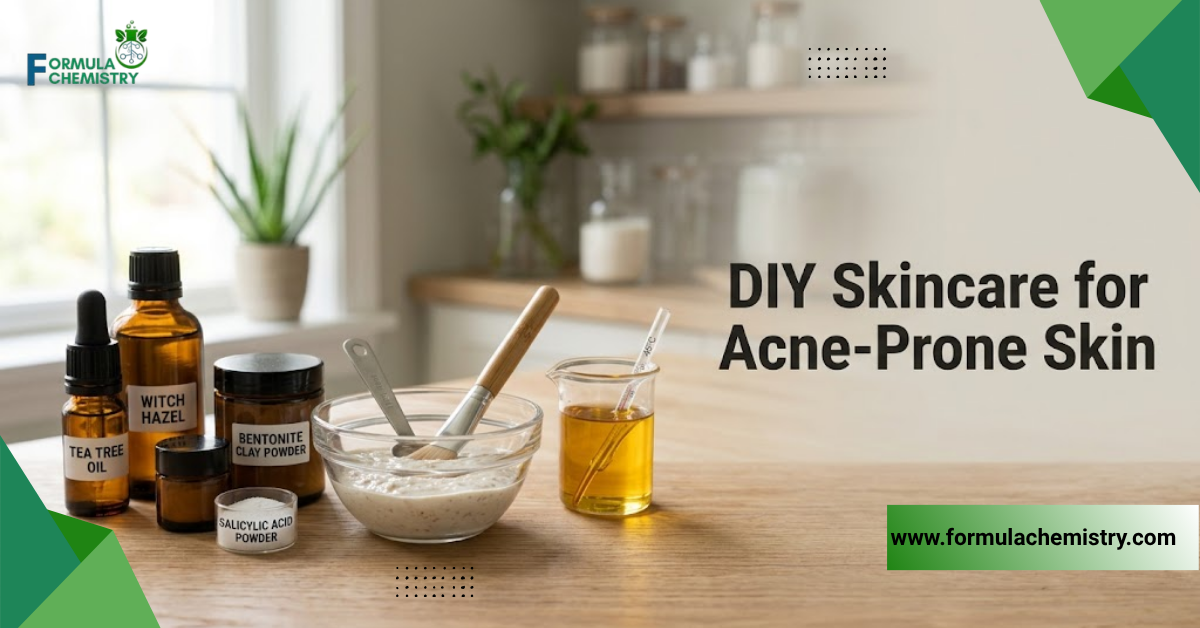
DIY skincare for acne-prone skin centres on a few proven actives matched to your acne type, used gently and consistently. Salicylic acid and retinoids suit clogged pores and blackheads, while benzoyl peroxide, azelaic acid, and niacinamide suit inflamed breakouts.
The core routine is a gentle cleanser, a targeted active, a lightweight non-comedogenic moisturiser, and daily sunscreen. The most common mistakes are skipping moisturiser, mixing incompatible actives, and giving up too soon, since real change takes six to twelve weeks. Acne is a medical condition, so persistent or severe cases need a dermatologist.
Introduction
Acne-prone skin needs a routine that clears pores and calms breakouts without stripping or irritating the skin. The balance is delicate, since the aggressive approach most people reach for often makes acne worse.
The encouraging news is that a handful of well-studied ingredients genuinely help the appearance of acne-prone skin. Matching them to your specific type of breakout and using them consistently, is what turns a routine into results.
I formulate for acne-prone skin regularly, and the biggest lesson is patience paired with gentleness. Harsh, impatient routines backfire, while a calm, consistent one supported by the right actives works.
This guide covers what acne-prone skin needs, the key actives and which breakouts they suit, a full routine, simple formulas, and the mistakes that keep skin breaking out. Because acne is a medical condition, this is educational, and a dermatologist should guide persistent or severe cases.
| Ingredient | Function | Weight % | Amount (g) |
|---|
All amounts are by weight. Weigh every ingredient, including liquids, on a scale accurate to 0.01 g.
Understanding Acne-Prone Skin
Acne-prone skin is skin that regularly develops breakouts, from blackheads and whiteheads to inflamed pimples. It happens when pores become clogged with oil and dead skin cells, sometimes with bacteria and inflammation involved.
A useful distinction shapes the whole approach. Comedonal acne, meaning blackheads and whiteheads, comes from blocked pores, while inflammatory acne, the red, swollen pimples, involves bacteria and inflammation, and each responds to different ingredients.
It also helps to separate acne from oily skin. Oily skin is a skin type characterized by excess sebum, while acne is a condition. Although they often overlap, this routine focuses on managing breakouts rather than simply controlling shine.
The counterintuitive key is gentleness. Over-stripping and over-treating acne-prone skin damages the barrier and can worsen breakouts, so a calm, consistent routine beats an aggressive one.
The Key Actives and What They Suit
A focused set of actives does the real work in any DIY acne-prone skincare routine. Matching them to your acne type is what makes them effective.
Salicylic Acid
Salicylic acid is a beta-hydroxy acid that exfoliates inside the pore, making it ideal for clogged pores, blackheads, and whiteheads. Oil-soluble, it penetrates and clears pore blockages, and it suits oily and comedonal acne especially well.
Used at around 2%, it is gentle enough for regular use. One practical note is that it increases sun sensitivity, so daily sunscreen becomes essential alongside it.
Benzoyl Peroxide
Benzoyl peroxide targets the bacteria involved in inflammatory acne, making it well suited to red, swollen breakouts. It is available in strengths from around 2.5% up to 10%, with lower strengths often as effective and less drying.
It can bleach fabrics and dry the skin, so it is introduced gradually. It also should not be combined with certain other actives, which the compatibility section covers.
Niacinamide and Azelaic Acid
Niacinamide is a gentle multitasker for acne-prone skin, calming inflammation, regulating oil, and supporting the barrier. It layers comfortably with almost everything and helps offset the irritation stronger actives can cause.
Azelaic acid suits inflammatory acne and post-acne marks, offering gentle exfoliation and calming together while helping even the look of tone. Both are well tolerated and pair well with a gentle routine.
Retinoids and Supporting Ingredients
Retinoids help prevent the pore blockages behind comedonal acne and support skin renewal, though they need careful, gradual introduction. Sulfur and zinc are supporting ingredients that can help absorb oil and calm breakouts.
Tea tree oil is a natural option some people use, with evidence suggesting it can help the appearance of blemishes, though as an essential oil it can irritate sensitive skin and warrants a patch test.
The Active Compatibility Rules
This is where many acne routines go wrong, and getting it right prevents both irritation and wasted effort. Certain actives should not be combined carelessly.
Benzoyl peroxide and retinoids are the classic clash, since together they can reduce each other’s benefit and increase irritation. Use them at different times, such as benzoyl peroxide in the morning and a retinoid at night, or on alternate nights.
Layering multiple strong exfoliants also overwhelms the skin. Salicylic acid, retinoids, and azelaic acid are best not stacked on the same night, so alternate them rather than piling them on together.
The guiding principle is restraint. Introduce one active at a time, start with lower strengths and less frequent use, and build up as your skin adjusts, which avoids the irritation that derails so many routines.
The Full Acne-Prone Skin Routine
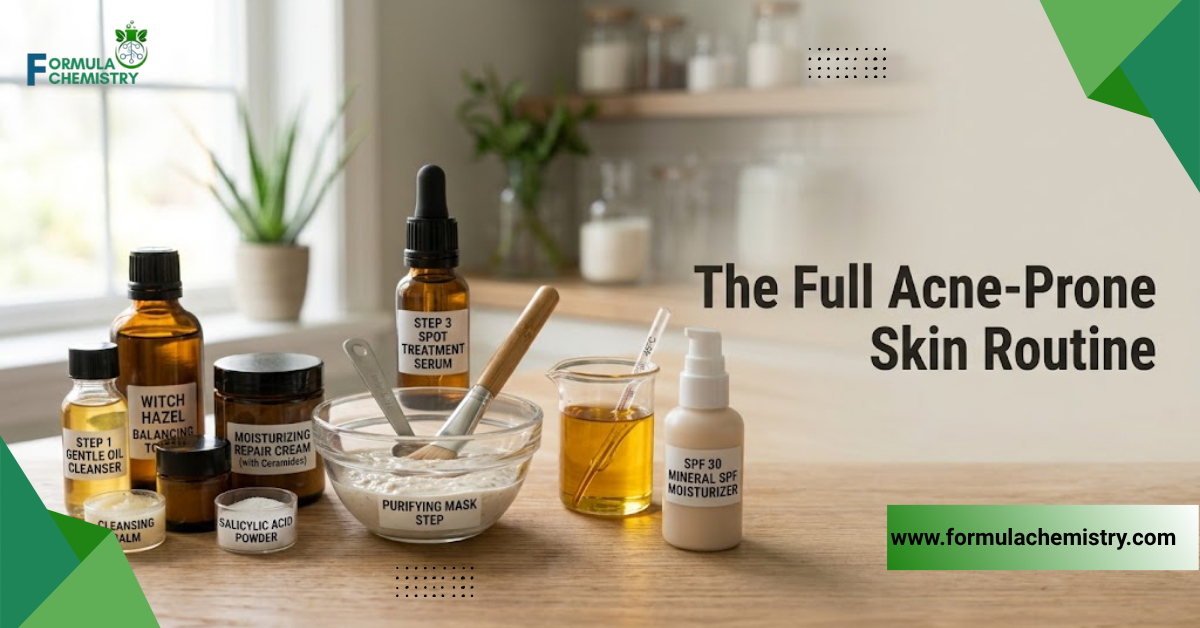
A complete routine for acne-prone skin is simple, gentle, and consistent, with targeted actives rather than a pile of products. Morning protects, evening treats.
Morning Routine
- Gentle cleanser: a mild cleanser, or one with salicylic acid, that does not strip the skin
- Niacinamide serum: to calm, regulate oil, and support the barrier
- Lightweight non-comedogenic moisturiser: hydration without clogging pores
- Broad-spectrum SPF 30 or higher: essential, since acne actives increase sun sensitivity
Evening Routine
- Double cleanse if needed: an oil or balm cleanser first, then a gentle wash
- Targeted active: salicylic acid, benzoyl peroxide, azelaic acid, or a retinoid, on the right nights
- Niacinamide serum: to support the barrier alongside the active
- Non-comedogenic moisturiser: a light gel for oily skin, or ceramide-based if the actives dry you out
Weekly and As-Needed
- Spot treatment: benzoyl peroxide, sulfur, or salicylic acid on individual breakouts
- Gentle exfoliation: kept moderate, never aggressive, to avoid irritation
The routine’s logic is steady and gentle. A consistent base with the right active on the right night does far more than an ever-changing pile of harsh products.
Simple DIY Formulas for Acne-Prone Skin
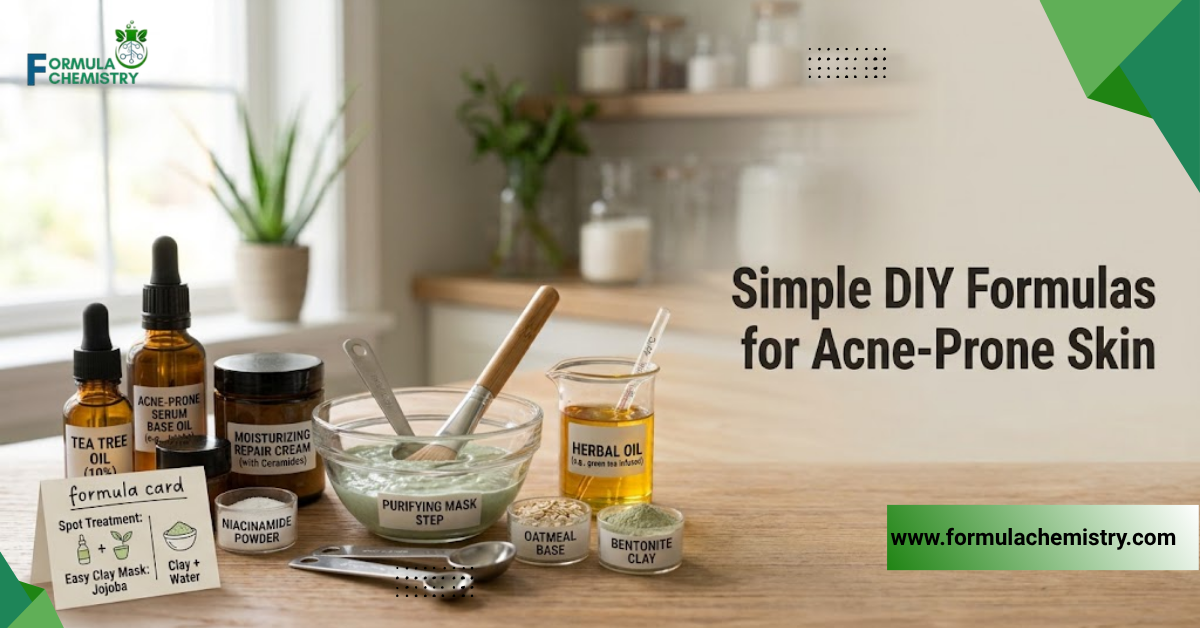
A few DIY skincare formulas for acne-prone skin cover the essentials, built to target breakouts while staying gentle. Treat these as frameworks, and patch test before regular use.
A Salicylic Acid Toner
A gentle exfoliating toner can be built around salicylic acid at up to 2%, in a water base with soothing panthenol or centella and a suitable preservative. Used a few times a week, it helps keep pores clear.
Keep it low and gentle. A modest salicylic acid level used consistently beats a high one that irritates, and pairing it with a soother improves tolerance.
A Niacinamide Oil-Control Serum
A balancing serum built around niacinamide, optionally with zinc, in a light water base calms and regulates the look of oil. It suits daily use morning and evening and layers under other steps.
This is the gentle workhorse of an acne routine, and a serum we build into many reactive-skin formulas at Formula Chemistry. It supports the barrier while other actives do the targeted work, reducing overall irritation.
A Lightweight Non-Comedogenic Moisturiser
A light gel-cream moisturiser with hyaluronic acid, glycerin, and niacinamide hydrates without clogging pores. Built oil-free or with only non-comedogenic oils, it keeps acne-prone skin comfortable.
This is the step acne-prone skin most often wrongly skips. A non-comedogenic moisturiser keeps the barrier healthy so the skin does not overproduce oil.
The Mistakes That Keep Skin Breaking Out
A handful of errors sabotage DIY skincare for acne-prone skin, and each is avoidable. Most come from treating the skin too harshly or too impatiently.
Skipping moisturiser is the most common mistake, often made for fear of grease. Dehydrated skin produces more oil to compensate, which can worsen breakouts, so a lightweight non-comedogenic moisturiser is essential.
Mixing incompatible actives is a second error, such as combining benzoyl peroxide and retinoids or stacking multiple acids. This irritates the skin and can cancel benefits, so separate them by time or night.
Giving up too soon is a third and very common mistake. Acne actives typically take six to twelve weeks to show real change, so constantly switching products prevents any of them from working.
The last mistakes are over-exfoliating, squeezing breakouts, and skipping sunscreen. Each damages or provokes the skin, so gentle handling and daily SPF are part of any acne routine.
Adult, Hormonal, and Post-Acne Concerns
Acne is not only a teenage concern, and different situations call for small adjustments. Recognising yours refines the routine.
Adult and Hormonal Acne
Adult acne, often appearing along the jaw and chin, frequently has a hormonal pattern and can coincide with drier or more sensitive skin than teenage acne. The approach shifts toward gentler actives and more barrier support.
Niacinamide and azelaic acid suit this well, being effective yet gentle, and pairing them with good hydration matters more than for oily teenage skin. Persistent hormonal acne is also a strong reason to see a dermatologist, since it may need targeted treatment.
Fading Post-Acne Marks
Many people find the marks left after a breakout more frustrating than the breakout itself. These come in two main forms, and the approach differs.
Dark marks respond to ingredients that support an even-looking tone, such as azelaic acid, niacinamide, and vitamin C, alongside diligent sun protection. Textural marks are more stubborn and often need professional treatment, so a dermatologist is the right port of call for those.
Keeping Acne Formulas Safe and Effective
Beyond the actives, a few formulation habits keep DIY skincare for acne-prone skin both safe and effective. These protect the skin and the results.
Preserve every water-based product properly, since a contaminated acne product can worsen the very breakouts it is meant to help. Choosing a well-tolerated, acne-friendly preservative is part of responsible formulating.
Keep formulas non-comedogenic throughout, avoiding heavy oils and known pore-clogging ingredients even in moisturisers and sunscreens. This single principle prevents a supporting product from undoing the work of the actives.
Patch testing matters especially with acne actives, which can irritate as they begin working. Introducing one product at a time makes any reaction easy to trace, which is a discipline we hold to at Formula Chemistry when building for reactive, breakout-prone skin.
Building Your Acne-Prone Skincare Routine
Start by identifying your acne type, then choose actives to match: salicylic acid and retinoids for clogged pores, benzoyl peroxide and azelaic acid for inflamed breakouts, and niacinamide throughout for support. Introduce one active at a time and build slowly.
Keep the routine gentle and consistent, never skipping the lightweight non-comedogenic moisturiser or daily sunscreen, and respect the compatibility rules so actives help rather than irritate. Give any routine six to twelve weeks before judging it.
Above all, be patient and gentle rather than aggressive. DIY skincare for acne-prone skin works through consistency, the right actives, and barrier care, not through stripping the skin, so build calmly, patch test, and see a dermatologist for persistent, severe, or cystic acne that needs professional treatment.
Frequently Asked Questions
What ingredients are best for acne-prone skin?
The most effective are salicylic acid and retinoids for clogged pores, benzoyl peroxide and azelaic acid for inflamed breakouts, and niacinamide for oil control and barrier support. Matching the active to your acne type works best. Combination approaches often help most.
Should acne-prone skin use moisturiser?
Yes, always. Skipping moisturiser is a common mistake, since dehydrated skin produces more oil to compensate, which can worsen breakouts. Choose a lightweight, non-comedogenic or oil-free moisturiser with hyaluronic acid, glycerin, or niacinamide.
Can I mix benzoyl peroxide and salicylic acid?
They are generally not used in the same formula and are best not layered together, as this can over-irritate the skin. Use one as your main active and the other as a spot treatment, or at different times. Introduce actives gradually.
What is the difference between comedonal and inflammatory acne?
Comedonal acne means blackheads and whiteheads from blocked pores, which respond well to salicylic acid and retinoids. Inflammatory acne means red, swollen pimples involving bacteria, which respond to benzoyl peroxide, azelaic acid, and niacinamide. Many people have both.
How long does it take for acne skincare to work?
Generally six to twelve weeks, with early improvement around four to six weeks and major change by twelve. A common mistake is switching products too soon. Consistency with the right actives is what delivers results.
Can I use tea tree oil for acne?
Tea tree oil is a natural option with some evidence for helping the appearance of blemishes, comparable to benzoyl peroxide but often gentler. However, as an essential oil, it can irritate sensitive skin. Dilute it well and patch test first.
Why do I need sunscreen with acne treatments?
Many acne actives, including salicylic acid, benzoyl peroxide, and retinoids, increase sun sensitivity. Daily broad-spectrum sunscreen protects the skin and prevents further issues. Choose a lightweight, non-comedogenic formula so it does not clog pores.
Is acne the same as oily skin?
No, oily skin is a skin type defined by excess sebum, while acne is a condition involving breakouts. They often overlap but are not the same, since oily skin does not always break out. Acne-prone routines focus on managing breakouts, not just oil.
Key Takeaways
DIY skincare for acne-prone skin works best by matching actives to your acne type, using salicylic acid and retinoids for clogged pores and benzoyl peroxide, azelaic acid, and niacinamide for inflamed breakouts. A gentle cleanser, targeted active, lightweight non-comedogenic moisturiser, and daily sunscreen form the core routine.
Respecting active compatibility is essential, since mixing benzoyl peroxide with retinoids or stacking multiple acids causes irritation. Introduce one active at a time, start low and slow, and never skip moisturiser or sunscreen, since both protect acne-prone skin.
Above all, be patient and gentle, since real change takes six to twelve weeks and aggressive routines backfire. Build consistently, patch test, and because acne is a medical condition, see a dermatologist for persistent, severe, or cystic acne that needs professional care.