
Quick Answer
Eczema-friendly skincare formulation means building gentle products around barrier-supporting and soothing ingredients while strictly avoiding common triggers.
The most valued ingredients are colloidal oatmeal, ceramides, niacinamide, glycerin, hyaluronic acid, and soothing oils, ideally in rich cream or ointment formats that lock in moisture.
The most important things to avoid are fragrance, essential oils, and harsh surfactants like sulfates, which frequently trigger flares. Eczema is a medical condition, so this guide is educational, and anyone with eczema should work with a dermatologist alongside a gentle skincare routine.
Introduction
Eczema-prone skin is defined by a weakened barrier, which is why formulating for it is really an exercise in barrier support and restraint. The goal of eczema-friendly formulation is to soothe, hydrate, and protect while removing anything that might provoke a flare.
The science here is well established. Skin affected by eczema tends to have fewer ceramides and loses moisture easily, so it needs help holding water and rebuilding its protective layer.
Before going further, an important note. Eczema, also called atopic dermatitis, is a chronic medical condition, and this guide is educational from a formulator’s viewpoint rather than medical advice, so a dermatologist should always be part of the picture.
This guide covers what eczema-prone skin needs, the soothing and barrier ingredients to build with, the triggers to avoid, simple gentle formulas, and how to approach eczema-friendly formulation carefully.
Understanding Eczema-Prone Skin
To formulate well for eczema, it helps to understand what is happening in the skin. Eczema-prone skin has a compromised barrier that cannot hold moisture or keep irritants out as it should.
This barrier weakness has real consequences for formulating. Because the skin loses water easily and lets irritants in more readily, products must both replenish moisture and reinforce the barrier, and they must avoid anything that could slip through and provoke inflammation.
The lower ceramide levels typical of eczema skin point directly at a solution. Replenishing those barrier lipids, and the moisture they help retain, is the foundation of any eczema-friendly product.
Restraint matters as much as active choice. A short, simple ingredient list reduces the chance of encountering a trigger, which is why the best eczema products are often the least complicated.
| Ingredient | Function | Weight % | Amount (g) |
|---|
All amounts are by weight. Weigh every ingredient, including liquids, on a scale accurate to 0.01 g.
The Soothing and Barrier Ingredients
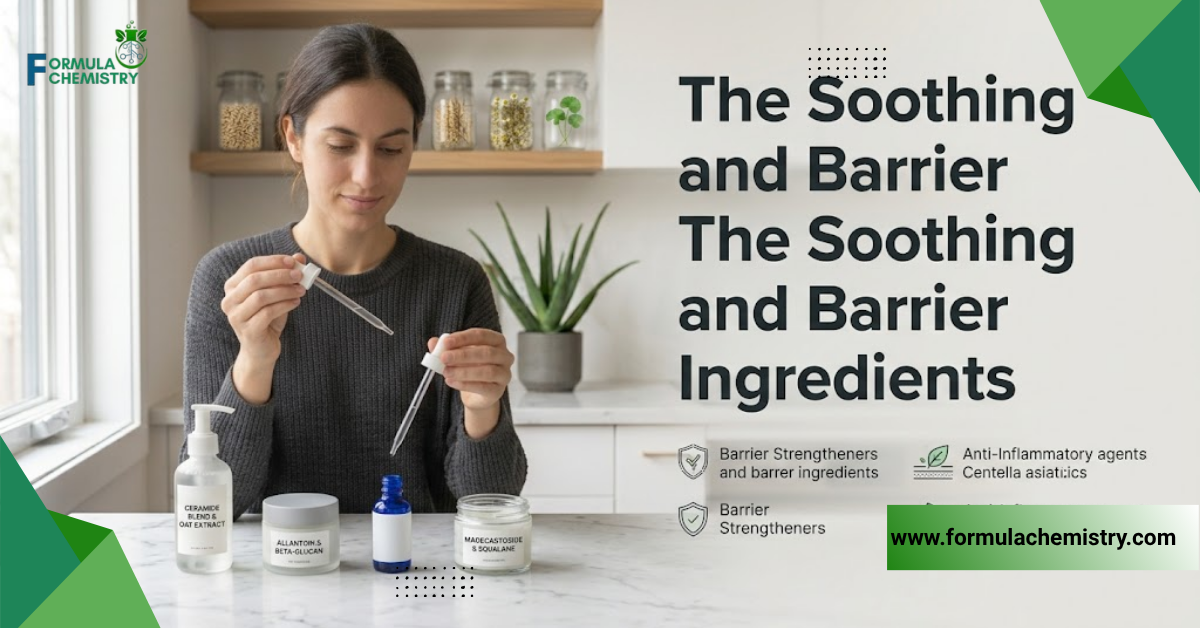
A well-regarded toolkit of gentle ingredients does the real work in eczema-friendly skincare formulation. Each supports the barrier, calms the look of irritation, or locks in moisture.
Colloidal Oatmeal
Colloidal oatmeal is the most recognised eczema-soothing ingredient: finely milled oats that form a protective film on the skin. It helps lock in moisture, shields against irritants, and has calming, anti-inflammatory qualities that ease the look and feel of itch and irritation.
It is well enough established that it is recognised as an over-the-counter skin-protectant ingredient, typically used at around 1 to 5%. For eczema-friendly formulation, it is often the first ingredient to build around.
Ceramides
Ceramides are the barrier lipids that eczema skin tends to lack, which makes them a priority ingredient. Adding them helps rebuild the skin’s protective layer and improves its ability to hold moisture.
Ceramides work best when they are not used alone. Formulating them alongside cholesterol and free fatty acids mimics the natural lipid balance of healthy skin, which helps the barrier recover more effectively than ceramides on their own.
Humectants and Barrier Actives
Several gentle humectants suit eczema skin. Glycerin, hyaluronic acid, and panthenol draw and hold water, supporting hydration without irritation, and niacinamide supports the barrier and calms the look of redness.
These combine well with each other. Niacinamide with colloidal oatmeal, or ceramides with hyaluronic acid, are gentle pairings that cover soothing and barrier support at once.
Soothing Oils and Occlusives
Rich emollients and occlusives seal everything in. Shea butter, squalane, and jojoba oil are gentle, well-tolerated choices that soften and nourish, while heavier occlusives help prevent the moisture loss that eczema skin struggles with.
Other calming botanicals can support a formula too. Allantoin, licorice extract, and centella asiatica are gentle additions associated with soothing the appearance of irritated skin, provided the rest of the formula stays simple.
The Triggers to Avoid
Just as important as what goes in is what stays out. Eczema-prone skin reacts to a predictable set of triggers, and avoiding them prevents many flares.
Fragrance and Essential Oils
Fragrance is the single most important thing to avoid, whether synthetic or natural. Both are leading triggers of irritation and allergic reactions in eczema-prone skin, so eczema products are best kept fragrance-free.
Essential oils deserve particular caution, despite their natural image. They are concentrated and contain volatile compounds known to cause allergic contact dermatitis, and because the eczema barrier is already compromised, these molecules penetrate easily and can provoke flares, so they are best avoided entirely.
Harsh Surfactants and Other Irritants
Aggressive cleansing agents strip the barrier eczema skin cannot afford to lose. Sulfates such as sodium lauryl sulfate and other harsh surfactants are common triggers, so gentle, low-irritation cleansers are essential.
A few other materials warrant care. Drying alcohols, high concentrations of exfoliating acids, and long or complex ingredient lists all raise the risk of irritation, so simplicity and gentleness guide every choice.
Simple Eczema-Friendly Formulas
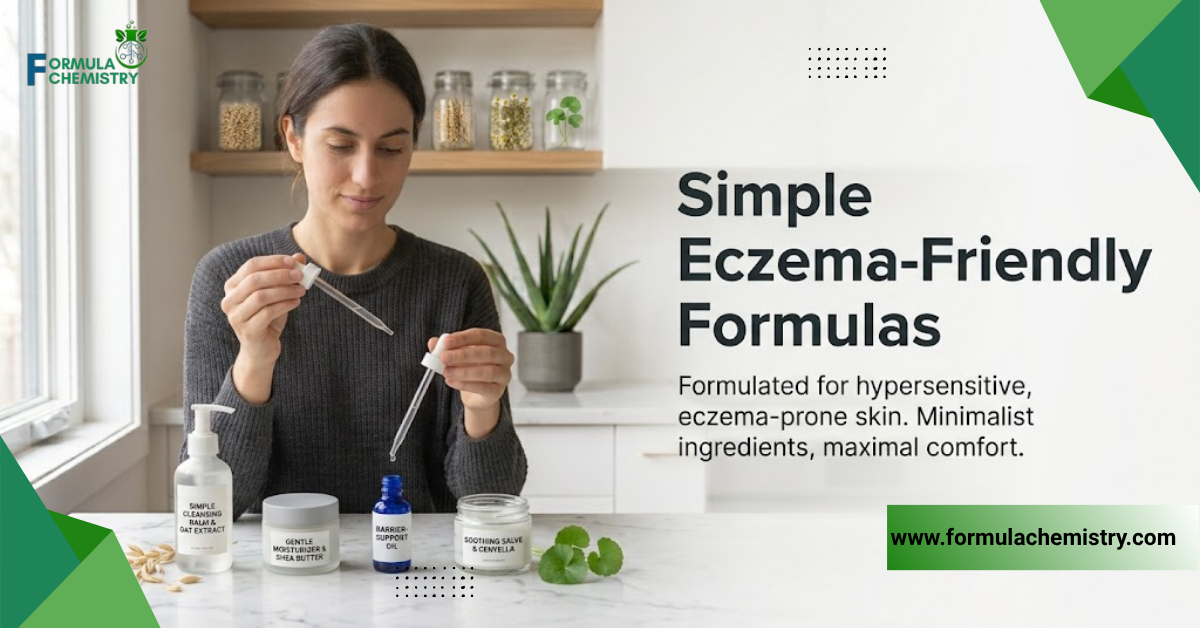
With soothing ingredients chosen and triggers removed, a few gentle formulas cover the essentials. Treat these as starting frameworks to adapt and, where relevant, discuss with a professional.
A Barrier Repair Cream
A rich barrier cream can be built around ceramides, with cholesterol and fatty acids, plus glycerin and colloidal oatmeal, in a simple fragrance-free emulsion. Shea butter and a gentle occlusive lock in moisture.
This kind of cream targets the core eczema needs at once, replenishing lipids, hydrating, and sealing. A thicker cream or ointment format holds moisture better than a light lotion, which suits eczema skin well.
A Soothing Colloidal Oatmeal Lotion
For lighter daily use, a colloidal oatmeal lotion with glycerin, niacinamide, and a gentle oil offers calm, everyday hydration. Kept fragrance-free and simple, it soothes the look of irritation without heaviness.
This is a comfortable option for larger areas or warmer weather, when a heavy cream feels like too much. The colloidal oatmeal carries the soothing role while the humectants hydrate.
A Gentle Cleansing Approach
Cleansing matters as much as moisturising for eczema skin. A very mild, sulfate-free cleanser, or even a gentle cleansing oil or balm, removes the day without stripping the barrier.
Following the soak-and-seal idea, applying moisturiser promptly after gentle cleansing while skin is still slightly damp helps lock in hydration. This simple habit supports the barrier as much as any single ingredient, an approach we build into gentle formulas at Formula Chemistry.
Flare Care Versus Daily Maintenance
Eczema-prone skin has two different states, and a thoughtful approach treats them differently. What the skin needs during a flare is not the same as what it needs day to day.
During a Flare
When skin is actively flaring, inflamed, and reactive, the priority is maximum gentleness and moisture with minimum ingredients. This is the time for the simplest, richest, most occlusive products, and for pausing anything active or potentially irritating.
Heavier balms and ointments come into their own here, sealing in moisture and protecting raw, sensitive skin. It is also the point at which professional care matters most, since a significant flare may need treatment beyond skincare.
Daily Maintenance
Between flares, the aim shifts to keeping the barrier strong so flares become less frequent. Consistent daily moisturising with barrier-supporting ingredients like ceramides and colloidal oatmeal does the quiet work of prevention.
Maintenance is where good formulation pays off over time. A gentle, barrier-focused routine used consistently helps the skin hold moisture and resist triggers, which is more valuable than any single soothing product used occasionally.
Formats, Preservation, and Testing
In eczema-friendly formulation, how a product is built and preserved matters as much as its soothing ingredients. A few practical points keep a formula both effective and safe.
Choosing the Right Format
Format shapes performance for eczema skin. Lotions are light but less protective, creams offer a balance of moisture and wearability, and ointments are the most occlusive and often need the fewest preservatives, which can mean fewer potential irritants.
Matching format to need is part of the craft we practise at Formula Chemistry. A daytime lotion, a richer night cream, and an occlusive balm for flares can all sit in the same routine, each suited to a different moment.
Preservation Without Irritation
Any water-based eczema product still needs a preservative, and the choice matters for reactive skin. Avoiding formaldehyde-releasing preservatives and known sensitisers, while still preserving effectively, protects both safety and comfort.
Patch testing is non-negotiable with eczema. Introducing one new product at a time, and testing it on a small area first, makes it possible to identify a trigger quickly rather than provoking a widespread flare, which is a habit worth keeping for every new formula.
Building an Eczema-Friendly Routine
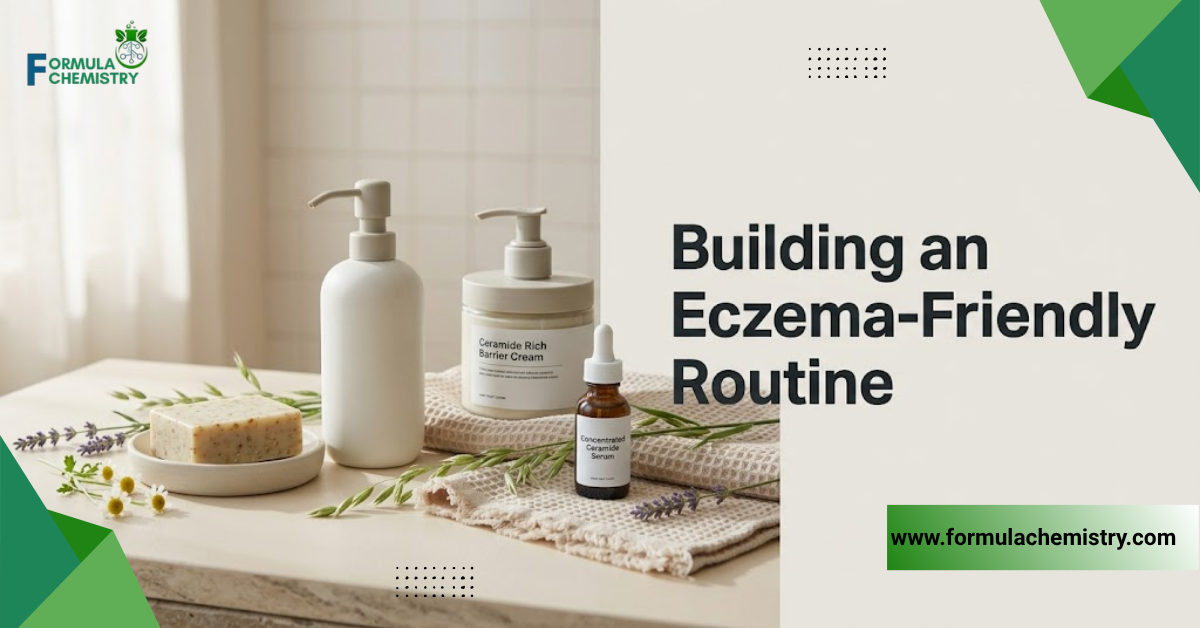
Assembled into a routine, these products form a gentle, barrier-focused regimen. The emphasis is on consistency and simplicity rather than active intensity.
- Cleanser: a mild, sulfate-free, fragrance-free cleanser or gentle cleansing oil
- Humectant layer: glycerin and hyaluronic acid for hydration on damp skin
- Barrier treatment: ceramides with niacinamide and colloidal oatmeal
- Moisturiser: a rich, fragrance-free cream or ointment to seal moisture in
- Occlusive step: a heavier balm over the top during flares or on very dry areas
- Everything fragrance-free: across every product, with no essential oils
This kind of routine keeps eczema-prone skin supported and calm while avoiding triggers. Its gentleness is exactly the point, since with eczema less really is more.
Approaching Eczema-Friendly Formulation Carefully
The guiding principle is gentle support, not aggressive treatment. Build around barrier lipids, humectants, and soothing ingredients like colloidal oatmeal, keep everything fragrance-free, and favour rich formats that lock in moisture.
Simplicity protects eczema skin. Short ingredient lists, gentle cleansing, and prompt moisturising do more than any complex active blend, and they reduce the chance of triggering a flare.
Most importantly, remember that eczema is a medical condition. This guide supports comfort and barrier care, but it does not replace medical care, and dermatologists may prescribe treatments that work alongside a gentle routine.
Patch test every new product, introduce ingredients slowly, and work with a professional, and eczema-friendly formulation becomes a genuinely supportive part of managing sensitive, reactive skin.
Frequently Asked Questions
What ingredients are best for eczema-prone skin?
The most valued ingredients are colloidal oatmeal, ceramides, niacinamide, glycerin, hyaluronic acid, and gentle oils like shea butter and squalane. These soothe the look of irritation, support the barrier, and lock in moisture. Ceramides work best when formulated with cholesterol and fatty acids.
What skincare ingredients should I avoid with eczema?
Avoid fragrance, both synthetic and natural, and essential oils, which are leading triggers of irritation in eczema-prone skin. Harsh surfactants like sulfates, drying alcohols, and strong exfoliating acids are also best avoided. Keeping ingredient lists short and simple reduces the risk of a flare.
Is colloidal oatmeal good for eczema?
Yes, colloidal oatmeal is one of the most recognised soothing ingredients for eczema-prone skin. It forms a protective film, locks in moisture, and has calming, anti-inflammatory qualities that ease the look and feel of irritation. It is recognised as an over-the-counter skin-protectant ingredient.
Why are ceramides important for eczema?
Eczema-prone skin typically has fewer ceramides, the lipids that keep the barrier strong and moisture locked in. Adding ceramides helps rebuild that barrier, and they work best alongside cholesterol and free fatty acids. This combination mimics the natural balance of healthy skin.
Can I use essential oils in eczema skincare?
It is best to avoid essential oils in eczema products. Although natural, they are concentrated and contain volatile compounds that commonly cause allergic contact dermatitis. Because the eczema barrier is compromised, these penetrate easily and can trigger flares.
What is the best product format for eczema?
Richer formats such as creams and ointments generally suit eczema better than light lotions, because they lock in moisture more effectively. Ointments are especially occlusive and often contain fewer preservatives. The right format holds hydration against the barrier weakness eczema causes.
Can DIY skincare help with an eczema flare?
Gentle, fragrance-free, barrier-supporting products can soothe the look and feel of eczema-prone skin and support comfort. However, eczema is a medical condition, and flares may need professional treatment. Always work with a dermatologist rather than relying on DIY alone.
What is the soak and seal method?
Soak and seal means hydrating the skin, then promptly applying a moisturiser to lock that hydration in while the skin is still slightly damp. It is a simple, widely recommended habit for eczema-prone skin. It helps the barrier retain moisture between cleansing and the day ahead.
Key Takeaways
Eczema-friendly formulation centres on supporting a weakened barrier with soothing, replenishing ingredients while avoiding triggers. Colloidal oatmeal, ceramides formulated with cholesterol and fatty acids, niacinamide, glycerin, hyaluronic acid, and gentle oils form the core toolkit, ideally in rich cream or ointment formats.
Avoiding triggers matters as much as choosing soothing ingredients. Fragrance, essential oils, and harsh surfactants like sulfates are leading causes of flares, so eczema products should be fragrance-free, gentle, and built on short, simple ingredient lists.
Above all, eczema is a medical condition, so this guidance supports comfort and barrier care rather than replacing professional treatment.
Build gently, keep formulas simple, follow the soak-and-seal habit, patch test everything, and work with a dermatologist to care for eczema-prone skin safely.