

Quick Answer
Cosmetic regulations in the UK are set by the UK Cosmetics Regulation for Great Britain, enforced by the Office for Product Safety and Standards, and they require every product to have a UK Responsible Person, a Cosmetic Product Safety Report, and notification through the SCPN portal before sale.
Since Brexit, Great Britain runs a separate system from the EU, so an EU CPNP notification no longer covers the British market. Northern Ireland follows EU rules under the Windsor Framework, creating a split that sellers must navigate carefully.
Introduction
Anyone dealing with cosmetic regulations in the UK now faces a system that no longer mirrors the EU, and assuming otherwise is a costly error. Since Brexit, Great Britain has built its own regulatory framework, and the gap between it and the EU has widened every year.
This guide explains the current UK rules in plain terms, though it is general information rather than legal advice, so confirm specifics with OPSS or a qualified adviser before selling.
I have watched brands notify their products on the EU portal and assume Britain was covered, only to find they were selling illegally from day one. The two systems are entirely separate, with no data passing between them.
By the end, you will understand what changed after Brexit, the roles of the Responsible Person and safety report, how the SCPN portal works, and how Northern Ireland fits into the picture.
Cosmetic Regulations UK After Brexit
The defining change to cosmetic regulations in the UK arrived on 1 January 2021, when Great Britain lost access to the EU’s notification system. From that date, England, Scotland, and Wales fell under the UK Cosmetics Regulation rather than EU law.
The framework itself derives from retained EU Regulation 1223/2009, adjusted through Schedule 34 of the relevant UK legislation. So the structure feels familiar to anyone who knows the EU system, even as the two now diverge.
The Office for Product Safety and Standards, known as OPSS, is the primary regulator for Great Britain. Local Trading Standards carry out enforcement, and selling a non-compliant or un-notified product is a criminal offence with real penalties.
The UK Responsible Person
Every cosmetic placed on the Great Britain market must have a UK Responsible Person, and this role sits at the centre of compliance. The Responsible Person must have a UK-established address and take legal accountability for the product, meeting all requirements.
This role can be filled by the manufacturer, the importer, a distributor selling under its own brand, or an appointed representative. For overseas brands, appointing a UK Responsible Person is the first step before any product reaches the market.
The duties are substantial rather than symbolic. The Responsible Person maintains the product file, submits notifications, monitors the product after launch, and reports serious undesirable effects to OPSS within the required timelines.
The UK Cosmetic Safety Report
A Cosmetic Product Safety Report, or CPSR, is legally required for every cosmetic sold in the UK, with no exemption for handmade or small-batch products. It must be completed and signed by a qualified safety assessor holding a degree in pharmacy, toxicology, medicine, or a related discipline.
The CPSR draws on the full formulation, ingredient data, stability results, and, for water-based products, preservative efficacy testing. It sits inside the wider Product Information File, which also holds the formula, manufacturing details, and evidence for any claims.
The Product Information File must be kept in English and made available to OPSS or Trading Standards on request. Manufacturing must follow good manufacturing practice under ISO 22716, and this applies even when products are made at home.
How to Register a Cosmetic in the UK: The SCPN Portal
To register a cosmetic in the UK, the Responsible Person notifies each product through the Submit Cosmetic Product Notification service, known as SCPN. This portal is run by OPSS and accessed using a GOV.UK One Login, and it is entirely separate from the EU’s CPNP.
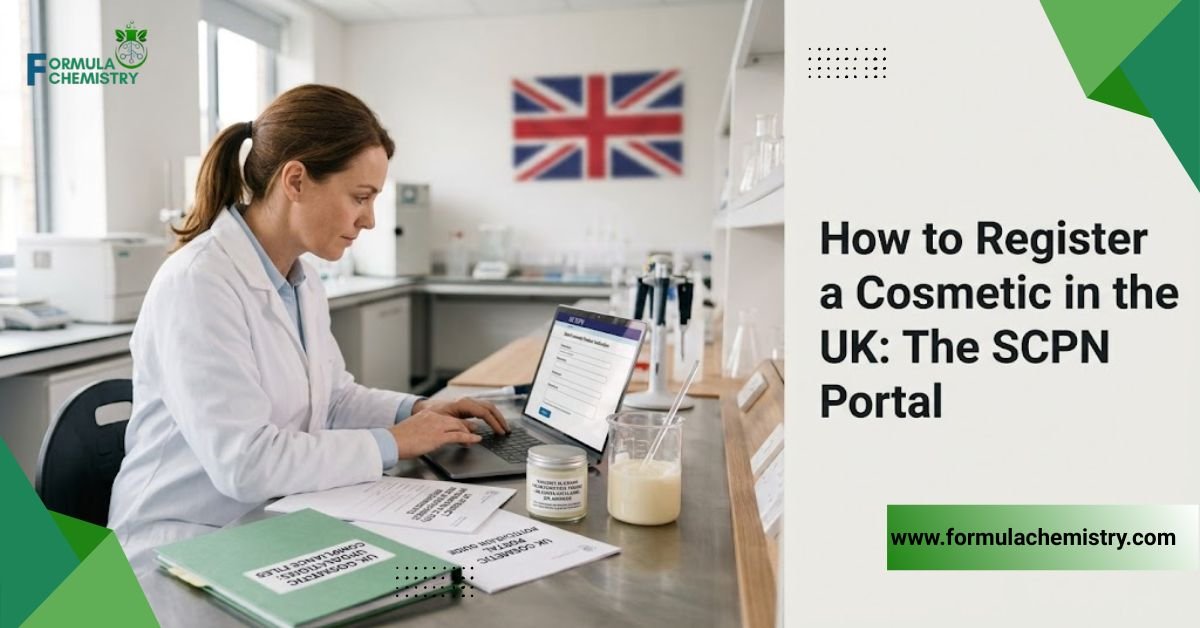
Notification must happen before the product is made available to consumers in Great Britain. Every product and variant needs its own notification, and the record must be updated whenever the formulation or ingredients change.
A critical point trips up international brands constantly. An EU CPNP notification does not carry over to Great Britain, so a product notified only on the EU portal is not legally notified for the British market.
UK Cosmetic Labelling Requirements
UK cosmetic labelling carries specific mandatory elements, and missing any of them can pull a product from sale. The label must show the ingredient list using INCI names, the product function, warnings, a period-after-opening symbol, the batch number, and the nominal quantity.
The UK Responsible Person’s name and address must appear on the label, which is one of the most commonly missed requirements. Imported products must also state their country of origin.
Claims add another layer of care. Medical language that suggests treating or curing a condition can push a product outside cosmetic rules entirely, so claims must describe appearance and feel rather than therapeutic effects.
Northern Ireland and the Windsor Framework
Northern Ireland occupies a distinct position that surprises many sellers. Under the Windsor Framework, cosmetics placed on the Northern Ireland market continue to follow EU Regulation 1223/2009 rather than the Great Britain rules.
This creates a genuine split within the United Kingdom, summarised below.
| Aspect | Great Britain | Northern Ireland |
| Governing rules | UK Cosmetics Regulation | EU Regulation 1223/2009 |
| Notification portal | SCPN, run by OPSS | CPNP, the EU portal |
| Responsible Person’s location | UK-established | Northern Ireland or EU |
| Safety report | CPSR required | CPSR required |
| Oversight | OPSS and Trading Standards | EU rules, with UK safeguards |
The practical effect is that a brand selling across both regions may need two notifications and two Responsible Persons. Northern Ireland goods still require SCPN ingredient notification and an alert to OPSS if a product is found unsafe, adding a further layer for cross-UK sellers.
New UK Ingredient Bans Diverging From the EU
The most important recent development is that Britain now sets its own ingredient rules rather than following the EU automatically. Treating EU approval as proof of UK compliance is increasingly risky as the two frameworks separate.
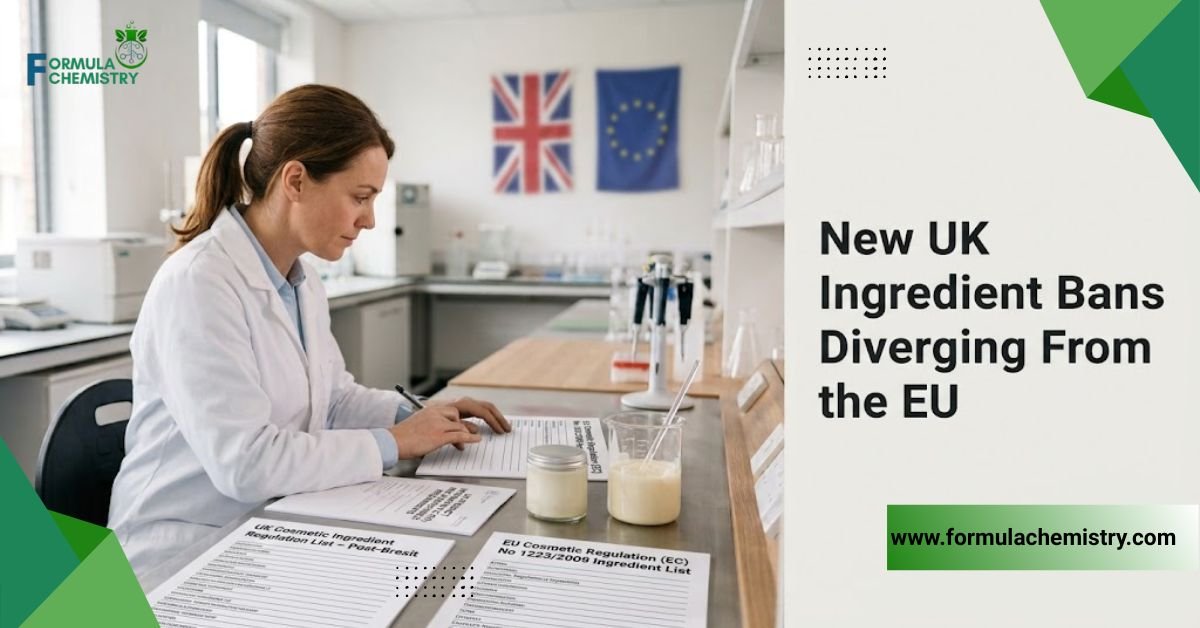
Under new UK legislation in 2026, fresh prohibitions on carcinogenic, mutagenic, and reprotoxic substances take effect in August. A ban on the UV filter 4-methylbenzylidene camphor, found in some sun care and leave-on products, takes effect earlier in the same summer.
The UK has also tightened labelling thresholds, including a lower trigger for formaldehyde warnings. Brands must now check ingredients against the UK annexes directly, since a formula legal in the EU can be prohibited in Great Britain.
Support From OPSS and CTPA
Two bodies matter most when navigating UK compliance. OPSS is the regulator that maintains the SCPN portal and enforces the rules, and it publishes official guidance on GOV.UK for every stage of the process.
The Cosmetic, Toiletry and Perfumery Association, known as CTPA, is the UK industry body. It offers detailed guidance for manufacturers on safety, labelling, and compliance, and it is a reliable reference alongside the official OPSS material, much as resources like Formula Chemistry support formulators on the technical side.
Common Mistakes in UK Cosmetic Compliance
UK compliance tends to fail in predictable ways, and each mistake below has a clear fix. Avoiding them keeps a brand on the right side of OPSS and Trading Standards.
The first mistake is assuming the EU CPNP notification covers Great Britain. It does not, so notify every product separately through the SCPN portal before selling in Britain.
Believing small or handmade products are exempt is a second error. The UK grants no such exemption, so obtain a CPSR for every product regardless of batch size.
Failing to appoint a UK-established Responsible Person is a third mistake. A product cannot legally exist on the GB market without one, so appoint the Responsible Person before market entry rather than after.
Treating Great Britain and Northern Ireland as one regime is a fourth error. The two follow different rules, so map each destination market and notify through the correct portal.
Missing UK-specific labelling is a fifth mistake. Labels frequently omit the Responsible Person’s address or the correct symbols, so build a fully compliant UK label before printing.
The sixth error is assuming EU compliance equals UK compliance. Divergence means new British bans can catch out EU-legal products, so check ingredients against the UK annexes every time.
Which Rules Apply to You
A seller targeting only Great Britain follows the UK Cosmetics Regulation in full. That means a UK Responsible Person, a CPSR for every product, SCPN notification, and compliant labelling before any sale.
A seller placing products on the Northern Ireland market follows EU rules and notifies through CPNP. Selling across both Great Britain and the EU usually means two Responsible Persons and notifications on both portals.
Importers and overseas brands should treat appointing a UK Responsible Person as their first action. Nothing else can proceed until that role is in place.
Small and home-based makers get no reduction in these duties. To move forward, confirm your target market, appoint the right Responsible Person, and complete the CPSR before you notify or sell anything.
Frequently Asked Questions
What are the cosmetic regulations in the UK?
Great Britain follows the UK Cosmetics Regulation, enforced by OPSS, requiring a Responsible Person, a CPSR, and SCPN notification for every product. Northern Ireland follows EU rules under the Windsor Framework. The two systems are separate since Brexit.
Do I need a CPSR to sell cosmetics in the UK?
Yes, every cosmetic sold in the UK legally requires a Cosmetic Product Safety Report. It must be signed by a qualified safety assessor before sale. There is no exemption for handmade or small-batch products.
What is the SCPN portal?
SCPN, the Submit Cosmetic Product Notification service, is the UK’s official notification portal run by OPSS. Every product must be notified through it before being sold in Great Britain. It is entirely separate from the EU’s CPNP.
Who is the UK Responsible Person?
The UK Responsible Person is the individual or company with a UK-established address who is legally accountable for a product’s compliance. It can be the manufacturer, importer, distributor, or an appointed representative. Every product on the GB market must have one.
How do I register a cosmetic in the UK?
The Responsible Person notifies each product through the SCPN portal using a GOV.UK One Login. You must have a completed CPSR and compliant labelling first. Notification must happen before the product goes on sale.
Does the EU CPNP cover the UK?
No, an EU CPNP notification does not cover Great Britain. Great Britain requires separate notification through the SCPN system. Northern Ireland, however, is notified through CPNP under the Windsor Framework.
Do Northern Ireland rules differ?
Yes, Northern Ireland follows EU Regulation 1223/2009 rather than the Great Britain rules. Products are notified via CPNP and need a Responsible Person in Northern Ireland or the EU. Selling across both regions can require dual compliance.
What does OPSS regulate?
OPSS, the Office for Product Safety and Standards, is the primary regulator for cosmetics in Great Britain. It maintains the SCPN portal and oversees compliance. Local Trading Standards carry out enforcement on the ground.
Key Takeaways
Cosmetic regulations in the UK now stand apart from the EU, with Great Britain requiring a UK Responsible Person, a CPSR, and SCPN notification for every product. An EU CPNP notification does not cover the British market, and there is no exemption for small or handmade sellers.
Northern Ireland follows EU rules under the Windsor Framework, so selling across the UK can mean dual compliance. Britain is also setting its own ingredient bans, so EU approval no longer guarantees UK acceptance.
Identify your exact market and appoint the correct Responsible Person before anything else. To act now, confirm whether you are selling into Great Britain, Northern Ireland, or both, then complete your CPSR and notify through the right portal before your first sale.