
Introduction
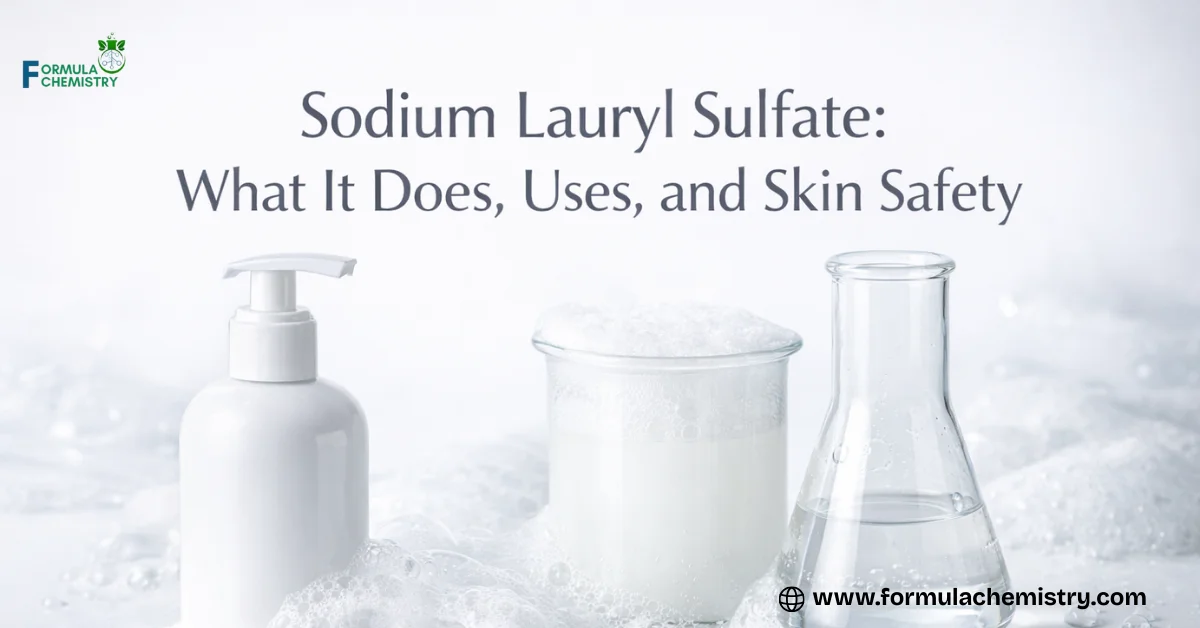
Sodium Lauryl Sulfate (SLS) is perhaps the most recognizable surfactant in the personal care industry. Chemically classified as an anionic surfactant, it is derived from coconut or palm oil through a process of sulfation.
At FormulaChemistry, we focus on understanding the molecular properties of ingredients to guarantee both efficacy and user safety in every formulation.
SLS is primarily valued for its outstanding ability to lower the surface tension of water, enabling the emulsification of oils and the creation of rich, stable foam.
Quick Facts
- What it is: A powerful anionic surfactant used for cleansing and emulsification.
- Who it’s for: Primarily those with oily skin or hair requiring deep cleansing; not ideal for sensitive or extremely dry types.
- How to use: Incorporate into the water phase of surfactant systems, often with heat to ensure full dissolution.
- Typical usage range: 1% to 15% in rinse-off products; significantly lower in leave-on applications.
- pH/Solubility: Highly water-soluble; retains stability in a pH range of 4.0 to 11.0.
- Compatibility: Works well with amphoteric and non-ionic surfactants; incompatible with cationic ingredients.
- Common mistakes: Using it as a primary surfactant at high concentrations without adding “refatting” agents or amphoterics to reduce irritation.
- Safety note: Potential skin irritant if left on the skin for extended periods or used at high concentrations.
Chemical Profile and Mechanism
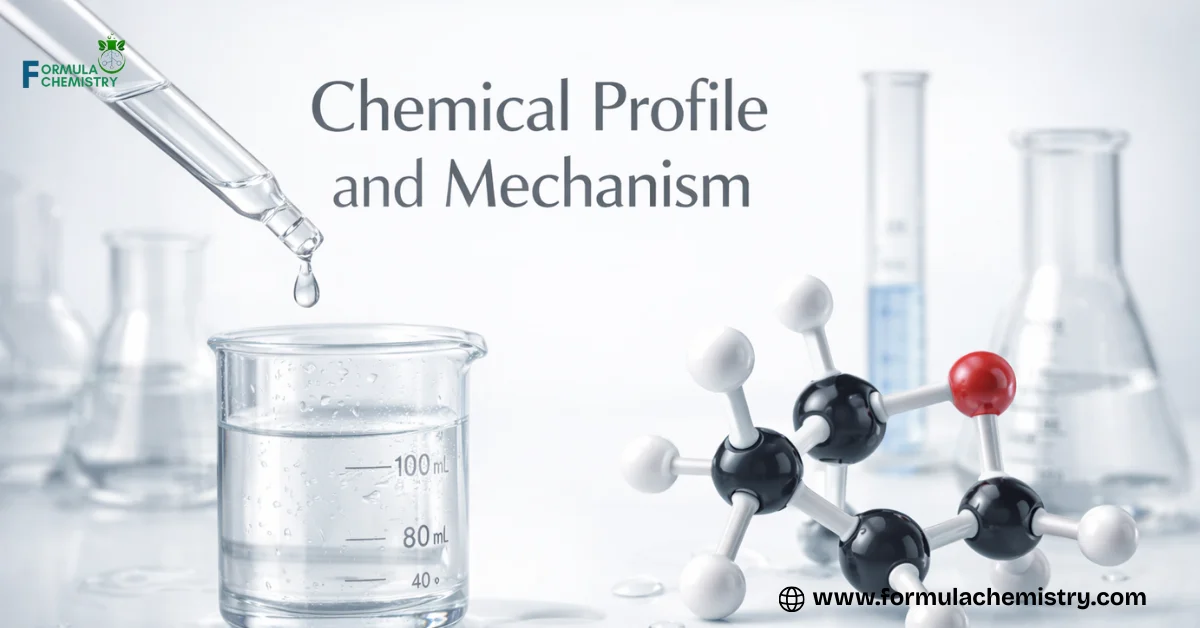
The molecular structure of SLS consists of a 12-carbon tail (hydrophobic) and a sulfate head group (hydrophilic). This amphiphilic nature permits it to trap dirt and sebum within micelles, which are then washed away with water.
While it is highly efficient, its small molecular size allows it to penetrate the stratum corneum more deeply than larger surfactants like Sodium Laureth Sulfate (SLES).
FormulaChemistry provides practical formulation education and safety-forward guidance to help developers deal with these chemical interactions. Understanding the HLB (Hydrophile-Lipophile Balance) of SLS is necessary for creating stable emulsions.
Find out the facts in Can Ingredients in Skincare Products Stunt Growth?
What are the Primary Functions of SLS in Formulations?
Cleansing and Foaming Performance
The most prominent role of Sodium Lauryl Sulfate is providing a high-volume, creamy lather that people often associate with cleanliness.
In shampoos and body washes, SLS acts as the primary detergent, stripping away environmental pollutants, styling product accumulation, and excess sebum. Because of its high “flash foam” capability, it is frequently the benchmark against which other surfactants are measured.
In industrial and heavy-duty hand cleansers, its efficiency is unmatched. However, in modern cosmetic science, it is often blended with secondary surfactants like Cocamidopropyl Betaine to reduce the overall “harshness” of the formula while preserving the desired foam profile.
Emulsification and Solubilization
Beyond its function as a detergent, SLS serves as an effective O/W (oil-in-water) emulsifier. It helps to stabilize mixtures of oil and water that would otherwise separate, assuring a homogenous product.
This is particularly useful in cream bases or pharmaceutical topicals where a consistent delivery of active ingredients is required.
| Feature | Specification for Sodium Lauryl Sulfate |
| Physical Form | Powder, Needles, or Liquid |
| Active Matter | Typically 90%–99% (powder) |
| Cloud Point | < 10°C |
| Usage (Rinse-off) | 3%–15% |
| Usage (Leave-on) | < 1% |
| Primary Risk | Transepidermal Water Loss (TEWL) |
Discover the trending hydration trick in What Is Slugging in Skincare?
Applications and Formulation Guidelines for SLS
Personal Care and Oral Hygiene
SLS is a key ingredient in toothpaste formulations because it helps disperse flavor oils and ensures the paste reaches all areas of the oral cavity through foaming. In hair care, it is the standard for “clarifying” shampoos.
Formulation scientists at FormulaChemistry often recommend SLS for products targeting “heavy” users of silicones or waxes, as milder surfactants may fail to remove these residues.
When formulating water-based products, a preservation reminder is essential: surfactants do not replace the need for a strong preservative system, as water-containing formulas are highly susceptible to microbial proliferation.
Technical Formulation Challenges
Working with SLS in its dry powder form requires specific safety procedures, including the use of respiratory protection to avoid inhaling “dust” particles.
It is also sensitive to water hardness; high concentrations of calcium or magnesium ions can decrease its foaming efficiency.
- Common Problems and Fixes:
- Problem: Formula feels too stripping on the skin.
- Fix: Replace 30% of SLS with a non-ionic surfactant like Decyl Glucoside.
- Problem: Product is too thin/watery.
- Fix: Increase viscosity by adding a “salt curve” adjustment or using thickeners like Xanthan Gum.
- Problem: Irritation in oral care.
- Fix: Reduce usage range to below 1.5% or switch to Sodium Lauroyl Sarcosinate.
Skin Safety and Irritation Mitigation
Understanding the Irritation Potential
The reputation of SLS as a “skin irritant” derives from its ability to disrupt the lipid bilayer of the skin. By removing the natural oils that constitute the skin barrier, SLS can increase Transepidermal Water Loss (TEWL). This is why SLS is actually used as a “positive control” in dermatological patch testing to induce a known level of irritation.
Who should avoid:
Individuals with atopic dermatitis, rosacea, or chronically dry skin should generally avoid high-concentration SLS products.
Key warnings include avoiding use on broken or compromised skin barriers and guaranteeing complete rinsing after application.
Strategies for Safer Formulation
Safety is at the heart of the Formula Chemistry approach. To make SLS-based products safer, formulators utilize “surfactant blending.” By combining SLS with larger, milder molecules, the overall diameter of the micelles increases, preventing them from penetrating the skin too deeply.
Patch testing advice:
Before launching a product containing SLS, it is standard practice to conduct a 48-hour patch test on a small cohort to ensure the concentration and surfactant blend are well-tolerated.
For leave-on products, the usage range should remain extremely low (typically under 1%) to minimize the risk of contact dermatitis.
FAQ about Sodium Lauryl Sulfate: What It Does, Uses, and Skin Safety
Is Sodium Lauryl Sulfate safe for daily use?
Yes, for most people, SLS is safe in rinse-off products when formulated correctly. However, those with sensitive skin may experience dryness or redness with daily exposure.
Does SLS cause hair loss?
There is no scientific evidence linking SLS to hair loss. It can, however, strip natural oils, making hair feel dry or brittle if used without conditioning agents.
What is the difference between SLS and SLES?
SLES (Sodium Laureth Sulfate) undergoes ethoxylation, making it a larger molecule that is significantly milder and less irritating to the skin than SLS.
Can I use SLS in “natural” formulations?
While derived from plant oils, the chemical processing (sulfation) means it is usually classified as “naturally derived” rather than “natural” by most organic standards.
Is SLS carcinogenic?
No. Major health organizations, including the American Cancer Society, have disproved the myth that SLS causes cancer. It is regulated for safety globally.
Why does SLS make my mouth peel?
In some individuals, the concentration of SLS in toothpaste can irritate the oral mucosa, leading to sloughing or canker sores. Switching to an SLS-free paste usually resolves this.
What is the recommended pH for an SLS shampoo?
A pH range of 5.0 to 7.0 is ideal. While SLS is stable at higher pH levels, the hair and scalp prefer a slightly acidic environment to maintain cuticle health.
What are the best substitutes for SLS?
Sodium Coco Sulfate (SCS) is a common alternative, though it still contains SLS. For truly sulfate-free options, consider Sodium Lauroyl Methyl Isethionate or Coco Glucoside.
The editorial team at FormulaChemistry continues to be committed to supplying transparent, evidence-based insights into cosmetic ingredients.
By balancing the high performance of Sodium Lauryl Sulfate with modern irritation-mitigation techniques, formulators can create effective products that respect the skin barrier.