

Introduction
Building an effective skincare routine is less about buying trending products and more about comprehending basic cosmetic chemistry. A functional regimen respects the skin’s biological functions, specifically the acid mantle and lipid barrier.
Treating skincare as a precise formulation protocol secures compatibility between ingredients and maximizes efficacy. Instead of guessing, you must assess how different vehicles gels, emulsions, and anhydrous balms interact with your specific skin physiology.
Formula Chemistry provides practical formulation education and safety-forward guidance to help you construct a regimen based on science, not marketing hype. By selecting ingredients over brand names, you can address concerns like acne, aging, or sensitivity with targeted precision.
Quick Facts
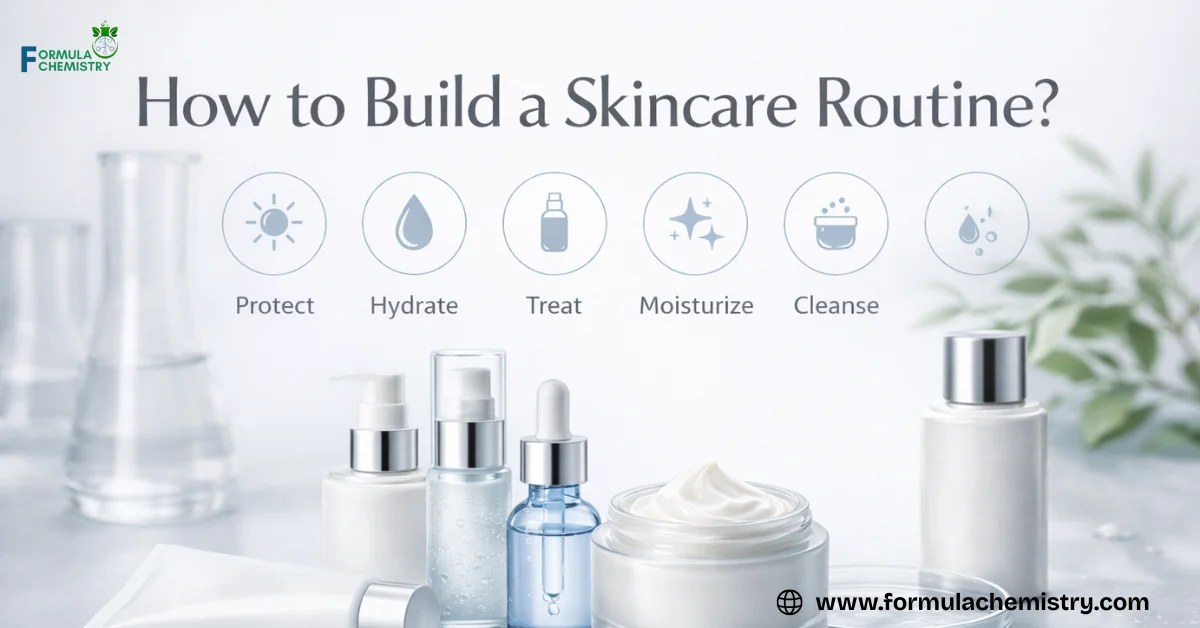
- Core Philosophy: A routine should Cleanse, Treat, Moisturize, and Protect (CTMP).
- Morning Goal: Defense against UV rays and pollution (Antioxidants + SPF).
- Evening Goal: Repair and regeneration (Retinoids + Peptides).
- Order of Application: Always apply from thinnest (water-based) to thickest (oil-based) to ensure effective absorption.
- pH Importance: Apply low pH actives (like Vitamin C or AHAs) immediately after cleansing to prevent neutralization.
- Wait Times: Allow water-based serums to absorb for 60–90 seconds before sealing with a moisturizer.
- Safety Note: Always patch test new active ingredients on the inner arm for 24 hours before facial application.
- Common Mistake: Mixing incompatible actives (e.g., Retinol with Benzoyl Peroxide) which are able to destabilize the molecules or cause irritation.
- Consistency: Cell turnover takes roughly 28 days, so evaluate results after a full cycle.
What Constitutes a Scientifically Well-Structured Routine?
A scientifically well-balanced routine is structured around the principle of preserving homeostasis within the skin’s barrier. It requires selecting products that remove debris without stripping essential lipids.
The foundation of any routine lies in the “Rule of Threes”: a surfactant system (cleanser), a hydration system (moisturizer), and a protection system (sunscreen). Without these pillars, adding high-strength actives will likely lead to Transepidermal Water Loss (TEWL) and irritation.
Identifying Your Skin Histology and Needs
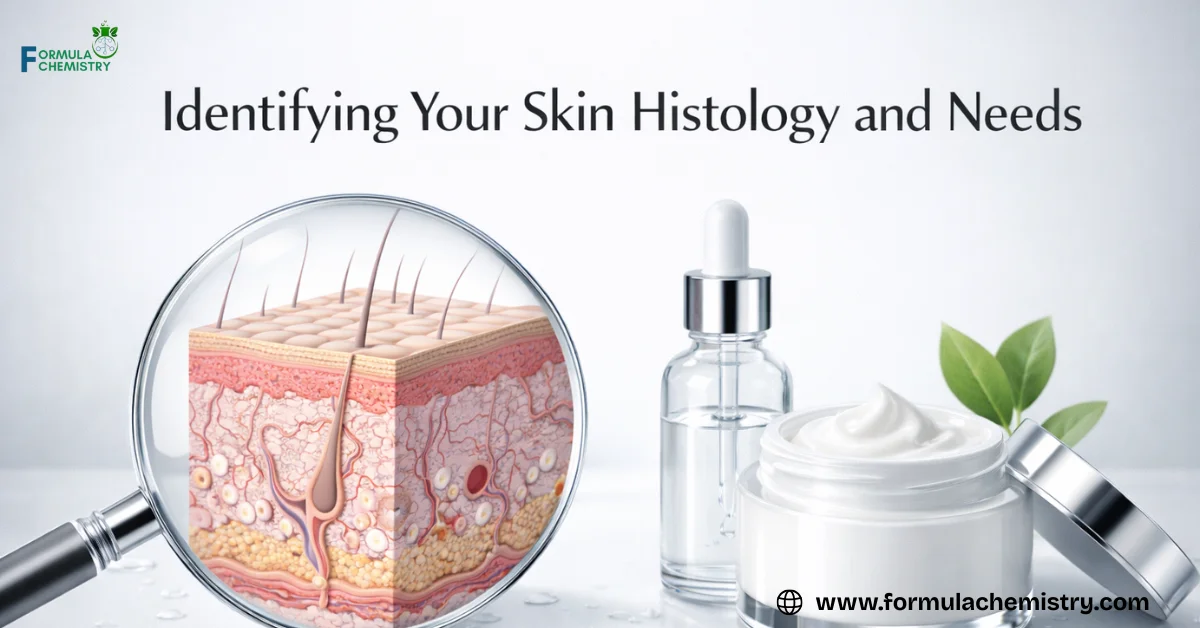
Understanding your skin type is essentially analyzing your skin’s sebum production and hydration levels. Oily skin produces excess sebum and often requires gel-based formulations or surfactants with higher cleansing power.
Dry skin lacks lipids and benefits from W/O (water-in-oil) emulsions or creams rich in ceramides and fatty acids. Combination skin creates a unique challenge, frequently requiring a “zoning” approach where different formulas are applied to the T-zone versus the cheeks.
Sensitive skin requires eschewing potential irritants like drying alcohols, synthetic fragrances, and high concentrations of exfoliating acids. You must diagnose your current skin state not just your genetic type as components such as climate and age shift your formulation needs.
The Chemistry of Layering
Layering is governed by molecular weight and solubility. Water-soluble ingredients (humectants like Glycerin or Hyaluronic Acid) cannot penetrate through heavy oil layers. Therefore, they must be applied first to hydrate the keratinocytes.
Oil-soluble ingredients (like Tocopherol or Squalane) function as occlusives, sealing moisture in. If you apply an oil before a water-based serum, the oil creates a hydrophobic film that blocks the serum from penetrating. Correct layering makes certain that active ingredients reach their target receptor sites within the epidermis.
Discover the difference with our Shower Cream vs. Body Wash guide for a truly nourishing cleanse.
Integrating Actives Based on Formulation Science
Once the basic steps are established, active ingredients act as the “performance” modifiers in your routine. These are chemically potent compounds designed to alter skin function, such as increasing collagen synthesis or desquamating dead cells.
Selecting actives requires knowledge of their stability along with pH requirements. For instance, L-Ascorbic Acid (Vitamin C) creates a potent antioxidant shield but oxidizes rapidly if not formulated at a low pH (below 3.5).
Selecting the Right Delivery System
The “vehicle” or delivery system dictates how deep an ingredient penetrates. Serums are typically lightweight and contain high concentrations of actives in a delivery system designed for rapid absorption. They are the workhorses of a routine for targeting pigmentation or fine lines.
Creams and Lotions, conversely, are designed to stay on the surface layers to soften and protect. When choosing an active like Retinol, an encapsulated serum is often superior to a heavy cream bit guarantee ensures the volatile molecule penetrates before it degrades. Understanding the vehicle helps you place the product correctly in your lineup.
Strategic Ingredient Pairing
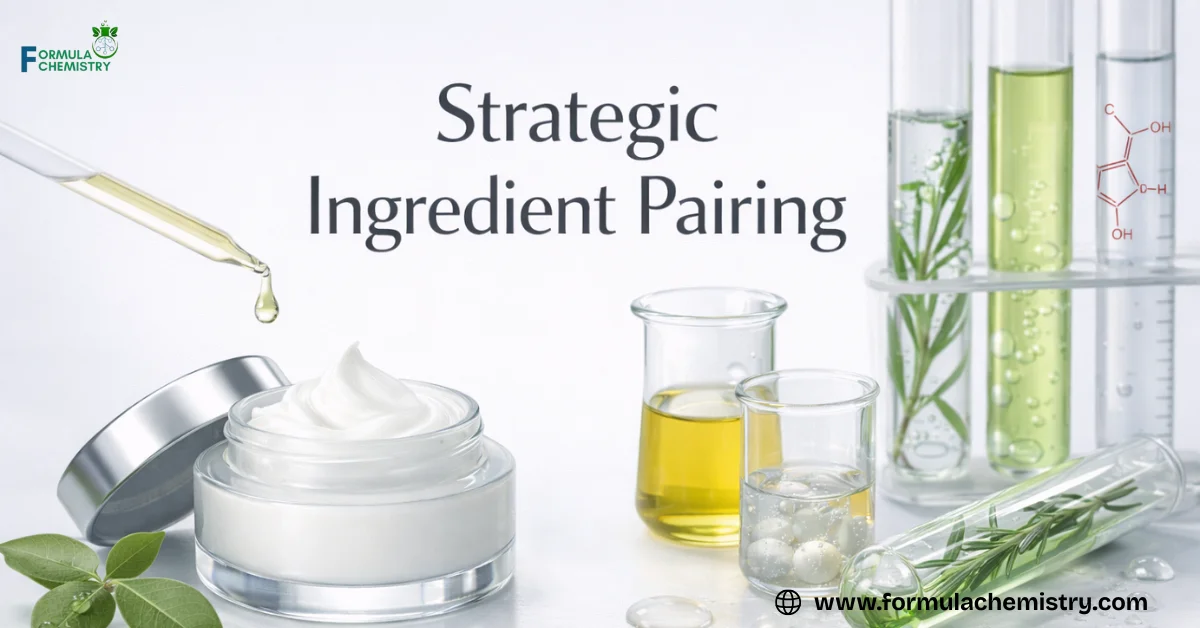
Certain ingredients act synergistically, while others neutralize each other or cause chemical burns. Niacinamide is a versatile stabilizer that pairs well with almost anything, including Retinol and Zinc. It reinforces the barrier while other actives work to resurface.
However, mixing Alpha Hydroxy Acids (AHAs) directly with Retinoids is usually discouraged for beginners. Both increase cell renewal and can compromise the lipid barrier if used simultaneously. Instead, cycle these ingredients: use acids in the morning (or on alternate nights) and retinoids in the evening.
Keep your skin healthy on a tight schedule with Skincare Routine for Busy Professionals.
Monitoring Results and Adjusting Protocols
A skincare routine is not static; it is a dynamic protocol that needs to adapt to ecological changes and skin feedback. Humidity, stress, and endocrine fluctuations alter skin chemistry, necessitating formulation tweaks.
If you experience stinging, redness, or excessive peeling, your skin is showing a compromised acid mantle. This requires an immediate “formulation reset,” effectively stripping the routine back to basics until the barrier heals.
Recognizing Barrier Compromise
A compromised barrier appears as skin that feels tight, looks waxy, or burns when applying inert products like moisturizer. This occurs when the stratum corneum is stripped of its intercellular lipids (ceramides, cholesterol, fatty acids).
To fix this, stop all low-pH acids and high-strength retinoids immediately. Focus exclusively on reparative ingredients like Panthenol (Vitamin B5), Allantoin, and Centella Asiatica. Reintroduce actives only after the skin no longer reacts to basic hydration, usually after 2–3 weeks.
Common Problems and Fixes
Troubleshooting a routine requires identifying which variable—frequency, concentration, or interaction—is causing the issue. Below is a guide to common formulation clashes.
Table: Troubleshooting Skincare Formulation Issues
| Problem | Potential Cause | The Fix |
| Pilling / Balling up | Incompatible film formers (e.g., Silicones vs. Water-based gums). | Wait longer between layers; apply less product; switch to compatible bases. |
| Sudden Breakouts | “Purging” from new actives OR comedogenic ingredients. | If using Retinoids/Acids, wait 4 weeks. If hydrating, check for pore-clogging oils. |
| Stinging Application | Compromised acid mantle or pH mismatch. | Stop acids. Use a pH-balanced cleanser (5.5). Focus on barrier repair. |
| Dull / Gray Skin | Oxidation of Vitamin C or dehydration. | Wash hands after Vit C; ensure you are using a broad-spectrum sunscreen. |
| No Visible Results | Actives are too low concentration or unstable. | Switch to airless pump packaging; check ingredient percentage (e.g., 10-15% Vit C). |
Reveal softer, healthier-looking skin using Thermafoliant Body Scrub: Skin Nourishment.
FAQ’s about How to Build a Skincare Routine?
What is the correct order of skincare products?
The general rule of thermodynamics in skincare is thinnest to thickest. Start with cleanser, followed by water-based toners, then serums (actives), moisturizers (emulsions), and finally oils or sunscreen (occlusives). This secures optimal penetration and sealing.
How long should I wait between skincare steps?
Wait times allow for absorption and pH adjustment. Typically, wait 30–60 seconds between serums. For pH-dependent actives like chemical exfoliants, waiting 10–15 minutes before moisturizing can prevent premature neutralization, though this is optional for modern buffered formulas.
Can I use Vitamin C and Retinol together?
It is chemically safer to separate them to avoid irritation and pH conflict. Use Vitamin C in the morning to fight free radicals and Retinol in the evening for cellular repair. If you must use both at night, space them out by 30 minutes.
How often should I exfoliate?
Over-exfoliation constitutes a leading cause of barrier damage. Limit chemical exfoliation (AHAs/BHAs) to 2–3 times per week. If using high-strength physical scrubs, limit to once a week. Listen to your skin; tightness indicates you should reduce frequency.
Do I really need a toner?
From a formulation standpoint, toners are optional. Modern cleansers are pH-balanced and do not strip the acid mantle like old-school soaps. However, hydrating toners with Glycerin or Hyaluronic Acid can act as a helpful wetting agent for subsequent serums.
When should I start using anti-aging products?
Prevention is easier than reversal. Incorporating Sunscreen (the best anti-aging product) should start in childhood. Introducing antioxidants can start in your early 20s, while cell-communicating ingredients like Retinoids are typically introduced in the mid-to-late 20s.
Why is my sunscreen pilling?
Pilling occurs when the film-forming agents in your moisturizer clash with those in your sunscreen (e.g., oil-based vs. water-based). To fix this, allow your moisturizer to dry completely (5 minutes) before applying SPF, or use a lighter, gel-based moisturizer.
Is a 10-step routine necessary?
No, a 10-step routine is often marketing-driven. A focused 3 or 4-step routine (Cleanser, Active, Moisturizer, SPF) containing the correct percentages of active ingredients is often more effective and less irritating than layering multiple low-concentration products.