

Introduction
Layering skincare correctly is as much a science as it is a ritual. For formulators and skincare enthusiasts as well, understanding the physicochemical properties of products is essential for efficacy.
The fundamental logic of layering relies on viscosity, polarity, and pH levels. If you apply an occlusive oil before a water-based serum, the water-based actives will be repelled and fail to absorb.
Formula Chemistry provides practical formulation education and safety-forward guidance to help you deal with these interactions. By respecting the chemical nature of your products, you maximize their performance and minimize skin irritation.
Quick Facts
- Golden Rule: Always apply products from thinnest (water-like) to thickest (oil-rich) consistency.
- pH Priority: Apply low pH products (acids like AHA/BHA, Vitamin C) immediately after cleansing.
- Water vs. Oil: Water-based serums (humectants) must go before oil-based serums or creams (occlusives).
- Wait Times: Allow 1–2 minutes between actives to prevent “pilling” or accidental neutralization.
- Retinoids: typically applied at night, often after water-based serums but before heavy moisturizers to buffer irritation.
- Sunscreen: This is always the final step in a morning routine, sitting on top to form a protective film.
- Safety Note: Do not layer multiple strong exfoliants (e.g., Glycolic Acid + Retinol) without a patch test or tolerance build-up.
- Common Mistake: Applying facial oils before a moisturizer can prevent the moisturizer’s hydrators from reaching the skin.
What Determines the Correct Order of Application?
The efficacy of a skincare routine is dictated by the ability of ingredients to reach their target site within the epidermis. This is largely governed by the vehicle—the base solution delivering the active—and its molecular characteristics. If a heavy, hydrophobic (water-repelling) film forms on the skin first, lighter, hydrophilic (water-loving) molecules cannot pass through.
Therefore, the viscosity of the formulation acts as the primary guide. Low-viscosity fluids like toners and essences penetrate quickly and prepare the skin’s permeability barrier. High-viscosity creams and balms contain larger molecules and occlusive agents designed to sit on the surface, sealing everything underneath.
The Thinnest to Thickest Rule
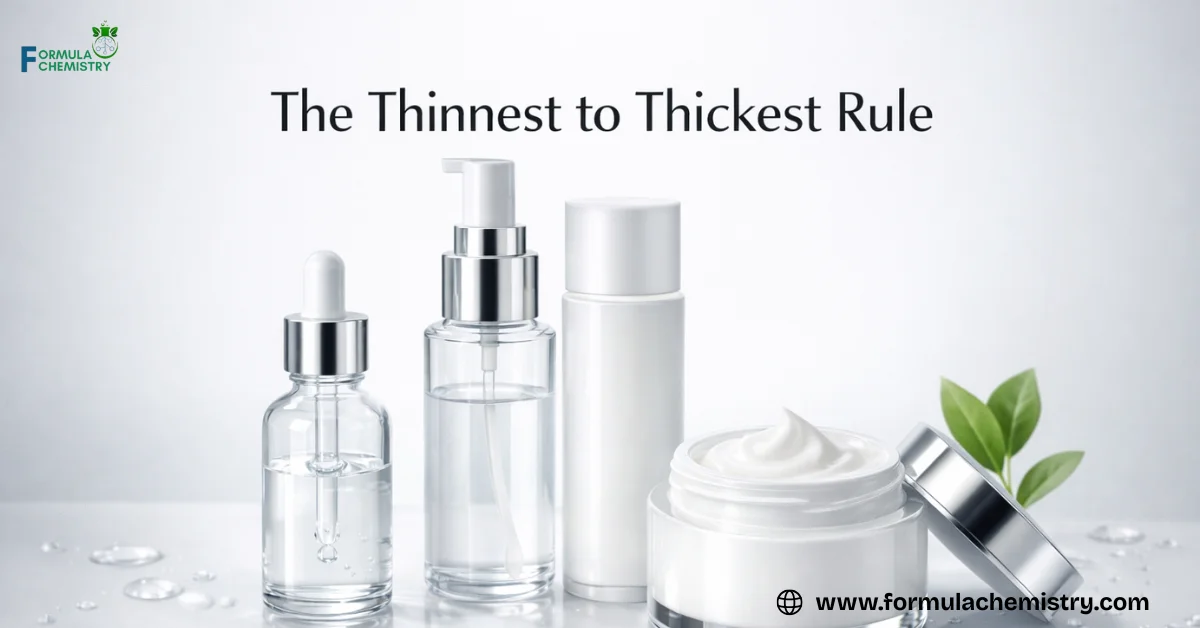
The “thinnest to thickest” rule is the most reliable method for layering. Start with aqueous solutions that have a viscosity close to water. These include toners, essences, and ampoules containing small-molecule humectants like Glycerin or Sodium Hyaluronate.
Follow these with slightly more viscous serums and gels. Finally, seal the routine with emulsions (lotions/creams) and anhydrous products (facial oils/balms). This progression makes certain that the lipid-heavy products do not form a barrier that blocks the absorption of lighter, water-soluble actives.
The Role of pH and pKa
Beyond texture, the acidity of a product dictates its placement. Active compounds such as L-Ascorbic Acid (Vitamin C) and chemical exfoliants (Glycolic, Salicylic Acid) depend on a low pH (typically pH 3.0–4.0) to function. If applied after a neutral or high pH cleanser or moisturizer, their potency is compromised.
These pH-dependent actives should be applied directly to clean, dry skin. This allows the acid to work at its optimal pKa (the pH at which 50% of the acid is free and active). Once absorbed (usually after a few minutes), you may proceed with neutral pH serums (approx pH 5.5) and moisturizers without neutralizing the acid’s initial impact.
Find your perfect match in Best Skincare Products for Every Skin Type 2026.
Strategic Pairing of Active Ingredients
Layering is not only about texture; it is about chemical compatibility. Some ingredients act synergistically, enhancing each other’s effects, while others can cause destabilization or severe irritation. Formulators often create “cocktails” within a single product, but when layering separate products, you must be the chemist.
For example, Niacinamide is a strong ingredient, but applying it simultaneously with highly acidic Vitamin C was once thought to cause flushing (conversion to nicotinic acid). While modern formulations are more stable, it is still often safer to layer them with a wait time or use them at different times of day to ensure maximum efficacy of both.
Combining Water-Based and Oil-Based Actives
Water and oil do not mix without an emulsifier. In a layering context, you are essentially building a temporary emulsion on your face. You must apply water-soluble actives (like Vitamin B5, Peptides, Hyaluronic Acid) first. These ingredients draw moisture into the skin.
Once the hydration is secured, you apply oil-soluble actives (like Vitamin E, Ceramides, Retinol). These ingredients mix with the skin’s inherent sebum and the lipids in your moisturizer. If you reverse this, the water-soluble actives will merely sit on top of the oil layer and eventually evaporate, providing zero benefit.
Controlling Potential Irritation with Buffering
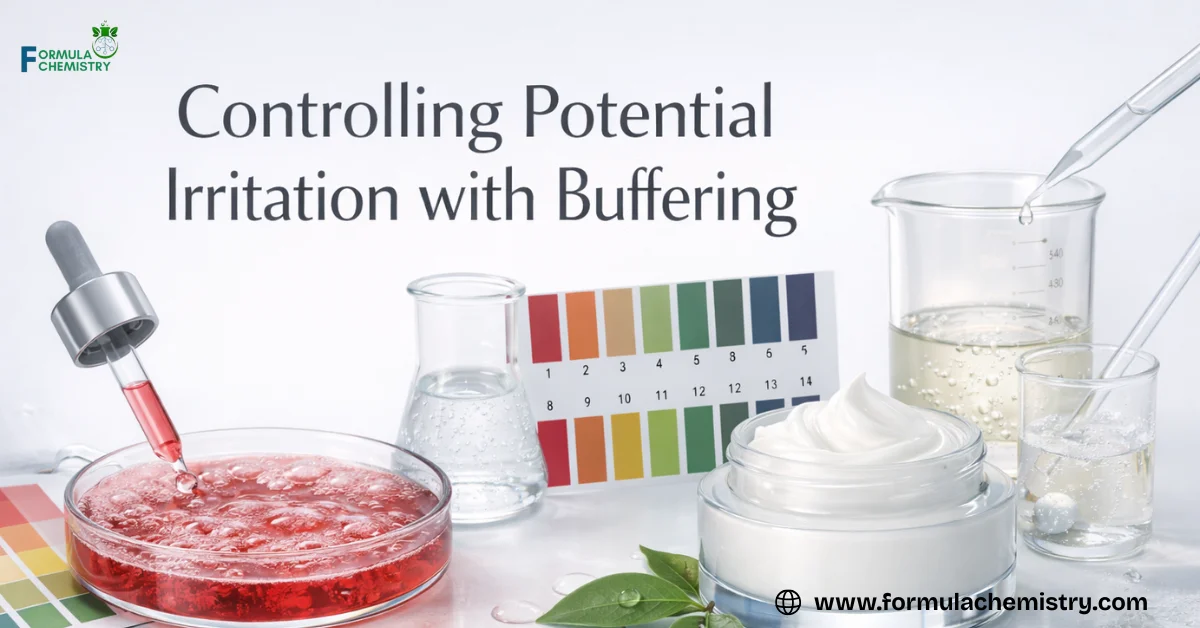
“Buffering” in a consumer context refers to slowing down the penetration of potent actives to reduce irritation. This is particularly relevant for Retinoids (Retinol, Tretinoin). If your skin is sensitive, applying a lightweight moisturizer before the retinoid can dilute the intensity without rendering it useless.
This technique is often called the “sandwich method.” It involves a layer of moisturizer, followed by the active, and then another layer of moisturizer. While this technically violates the “thinnest to thickest” rule slightly, it represents a strategic violation used to preserve skin barrier integrity as still delivering the active ingredient over time.
Common Problems and Practical Fixes
Even with the correct order, users often meet issues like “pilling” (balling up of product) or stinging. These issues usually stem from formulation clashes specifically between film-formers and silicones or a compromised skin barrier.
Determining the root cause of these texture incompatibilities saves product and frustration. Often, it is not the active ingredient that is the problem, but the thickeners and polymers used to create the gel or cream base.
Dealing with Pilling and Texture Incompatibility
Pilling occurs when film-forming agents (like High Molecular Weight Hyaluronic Acid, Xanthan Gum, or certain Silicones) do not absorb but instead dry on the surface. When you rub the next layer on, friction causes these films to roll up into little balls.
Table: Common Layering Conflicts
| First Layer Ingredient | Second Layer Ingredient | Result | Fix |
| Heavy Silicone (Dimethicone) | Water-based Gel | Pilling / Slip | Use water-based gel first. |
| High MW Hyaluronic Acid | Oil-based Serum | Pilling | Pat oil on; do not rub vigorously. |
| L-Ascorbic Acid (Low pH) | Niacinamide (High pH) | Potential Flushing | Wait 10 mins or use AM/PM. |
| Facial Oil | Sunscreen | Dilution of SPF | Let oil absorb fully; blot excess. |
Recognizing Barrier Damage Signals
If your standard moisturizer suddenly stings, your layering routine may be too aggressive. Over-layering acids (AHA/BHA) with Retinoids strips the stratum corneum of its lipid matrix. This results in Transepidermal Water Loss (TEWL) and inflammation.
If this occurs, stop all low-pH actives (acids) and pure retinoids immediately. Revert to a basic routine: gentle cleanser, hydrating toner, and a barrier-repair cream rich in Ceramides, Cholesterol, and Fatty Acids. Do not resume active layering until the skin no longer stings upon application of bland products.
To get the most from your routine, give each product a moment to absorb. Knowing how long to wait between skincare steps helps prevent pilling, boosts effectiveness, and keeps your skin healthy and glowing.
FAQ’s about How to Layer Skincare?
Can I mix my serum into my moisturizer?
It depends. Mixing a few drops of facial oil into a moisturizer is generally safe and effective. However, do not mix sunscreen with anything, as it interferes with the film formation required for UV protection. Avoid mixing low-pH acids into creams, as the pH shift can deactivate the acid.
How long should I wait between layers?
Ideally, wait until the product feels dry to the touch, which usually takes 30 to 60 seconds. For pH-dependent actives like Vitamin C or chemical exfoliants, a wait time of 10–15 minutes allows the active to work at its target pH before a neutral moisturizer restores the skin’s balance.
Does sunscreen go before or after moisturizer?
Sunscreen is always the final step of your morning skincare routine. It is designed to form a continuous shield on top of the skin. Applying moisturizer over sunscreen will disrupt this shield and significantly reduce the SPF protection.
Where do eye creams fit in the routine?
Eye creams should generally be applied before your heavy face moisturizer or oil. Because the eye area is delicate, applying the eye cream first makes sure it absorbs directly. You can then apply your face cream, avoiding the immediate eye area to prevent heaviness or milia.
Can I layer Vitamin C and Retinol?
It is risky for sensitive skin. Vitamin C is best used in the morning (for antioxidant protection), and Retinol is best used at night (due to light sensitivity). Using them together can increase irritation. If you must, space them out by 30 minutes or alternate nights.
Why is my skincare pilling (rolling off)?
Pilling is often caused by applying too much product, not waiting enough time between layers, or incompatible bases (e.g., silicones vs. water). Using products with high amounts of gum thickeners or high molecular weight Hyaluronic Acid is a common culprit.
Do I need to use a toner?
From a formulation standpoint, toners are not strictly necessary if your cleanser is pH-balanced (pH 5.5). However, hydrating toners can act as a “wetting agent,” helping subsequent serums penetrate better. Exfoliating toners serve as a treatment step for texture.
Should facial oil go before or after moisturizer?
Facial oils are occlusive. In most cases, they should go after moisturizer to seal in hydration. However, some lightweight, “dry” oils (like Squalane or Rosehip) can be applied before a heavy cream, or mixed into the cream, depending on personal preference and skin type.