
Introduction
The year 2026 marks a pivotal shift in skincare products of the beauty industry, moving away from 10-step maximalist routines toward “intelligent skincare” powered by precise formula chemistry. Consumers are no longer impressed by flashy marketing; they demand products that respect the skin’s biological integrity and deliver measurable results.
In this era, effective products mimic natural skin structures using advanced delivery systems and sustainable, lab-grown actives. Understanding product chemistry is essential for all skin types.
Before we delve into product specifics, let’s connect the science to practical choices. Here is your comprehensive guide to the top scientifically formulated products for every skin type in 2026, breaking down the science behind the glow.
What Defines the Best Skincare Products in 2026?
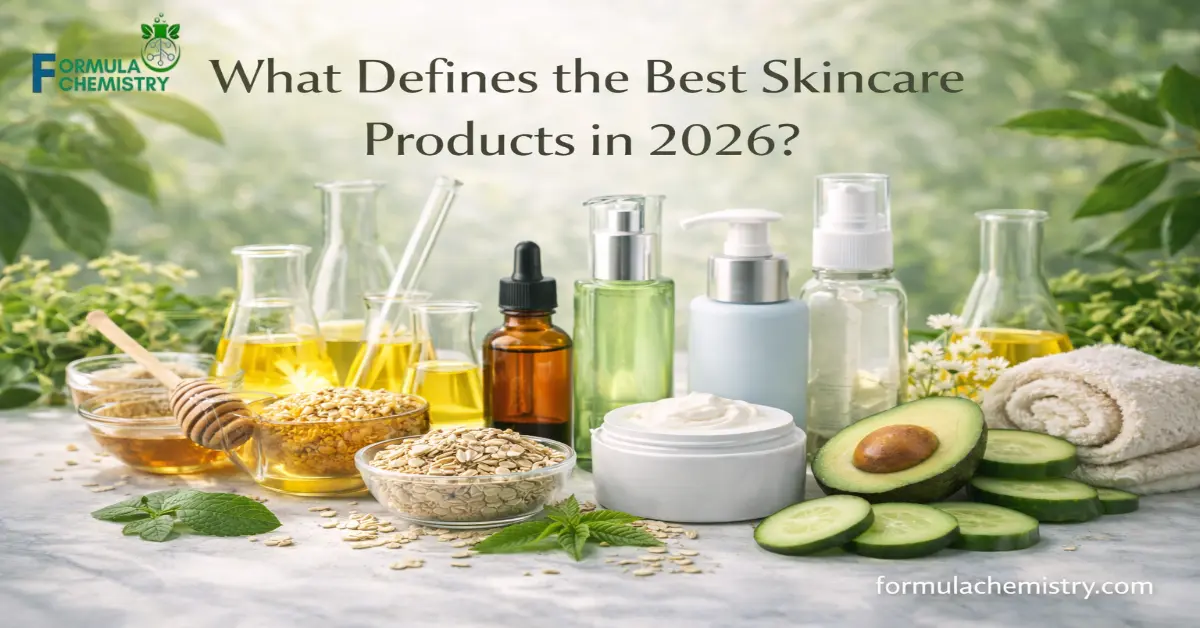
The “best” product is no longer just about feeling good; it is about biocompatibility and the sophistication of the active ingredients used in the formulation.
Bio-Fermented and Lab-Grown Actives
Sustainability has pushed formula chemistry toward lab-grown botanicals (plants grown in a laboratory) and bio-fermented ingredients (ingredients processed using beneficial microorganisms). These processes create potent, stable molecules without the environmental impact of traditional harvesting, ensuring that the chemical formula remains pure and effective.
Barrier-First Philosophy
In 2026, all skin types focus on barrier health. The most effective products now use “skin-identical” ingredients, ceramides, fatty acids, and cholesterol,in ratios that repair the lipid barrier rather than just coat it.
Best for Oily Skin: Sebum Regulation Formulas
Oily skin requires a delicate balance: controlling excess sebum without stripping the skin of essential moisture, which can trigger more oil production.
Niacinamide and Zinc PCA Hybrids
Top 2026 serums combine Vitamin B3 (niacinamide) and Zinc PCA (a zinc salt of pyrrolidone carboxylic acid). This approach targets the sebaceous glands, which produce skin oils, to reduce overactivity while calming inflammation.
Opt for water-based gels that absorb quickly and leave a matte finish.
Postbiotic Gel Moisturizers
Modern moisturizers for oily skin use postbiotics byproducts of healthy bacteria to balance the microbiome, prevent acne, and maintain hydration.
Best for Dry Skin: Biomimetic Lipid Repair
Dry skin lacks the lipids necessary to hold water. The most effective products for this type focus on “biomimetic” replenishment, mimicking the natural oils your skin fails to produce.
Breakthroughs in dry skincare use a 3:1:1 ratio of ceramides, cholesterol, and fatty acids to speed barrier recovery.
Squalane-Based Occlusives
Squalane (from sugarcane or olives) is like human sebum. It acts as a breathable occlusive, preventing Transepidermal Water Loss (TEWL) without clogging pores, making it essential for the richest creams of 2026.
Best for Sensitive Skin: Neurocosmetic Calming
Sensitive skin often suffers from a hyperactive nerve response. The latest products use “neurocosmetics” to lower the skin’s sensory threshold, reducing stinging and redness.
Centella Asiatica and Madecassoside
Also called “Cica,” this remains the standard. Advanced 2026 formulas isolate Madecassoside to boost collagen and repair the barrier.
Minimalist formulas with Colloidal Oatmeal and Allantoin coat and protect sensitive skin, skipping essential oils.

Best for Mature Skin: Next-Gen Retinol Alternatives
Anti-aging in 2026 is about “pro-aging” support,strengthening the skin’s structure without the harsh side effects of traditional retinoids.
Algae-Derived Bio-Retinols
While Bakuchiol remains popular, 2026 highlights algae-derived alternatives. These extracts work like Retinol by affecting cellular genes that control skin renewal and collagen creation, but offer a gentler chemical formula.
Copper peptides support healing and elasticity, boosting firm skin and density in new serums.
Best for Combination Skin: Adaptive Hydration
Combination skin is arguably the hardest to treat, requiring products that can hydrate dry cheeks while matting down an oily T-zone.
Dual-Action Emulsions
Smart polymers release moisture where needed, keeping skin balanced and light in changing humidity.
PHAs like Gluconolactone
Gently exfoliate pores and hydrate dry areas, making them ideal for combination skin.
Formula Chemistry DIY: Customizing Your Routine
Sometimes the best product is the one you make yourself, tailored specifically to your skin’s unique needs using Formula Chemistry DIY principles.
Adjusting pH for Your Skin Type
If you are making a toner, understanding pH is crucial. Oily skin benefits from a slightly more acidic pH (around 4.5) to keep bacteria in check, while sensitive skin prefers a pH closer to 5.5 to avoid irritation.
Selecting the Right Carrier Oils
- Oily Skin: Jojoba Oil or Grapeseed Oil (High Linoleic Acid).
- Dry Skin: Avocado Oil or Sweet Almond Oil (High Oleic Acid).
- Sensitive Skin: Oat Oil or Hemp Seed Oil (Soothing and anti-inflammatory).
The Role of Chemical Formulas in Layering
Even the best products will fail when layered incorrectly. It’s important to understand how product textures and molecules interact.
Thinnest to Thickest Rule
Always apply water-based products first (toners, serums), followed by lipid-based products (creams, oils). This ensures the water can penetrate before the oil seals it in.
Ingredient Incompatibilities
Be careful when mixing actives. For example, mixing Copper Peptides with strong Vitamin C (Ascorbic Acid) can cause the copper to oxidize the Vitamin C, rendering both ineffective. This is a classic chemical formula conflict to avoid.
Sustainable Packaging and Preservation
In 2026, the “best” product also cares for the planet. Airless pumps and biodegradable materials are now standard indicators of a high-quality brand.
Airless Pump Technology
Ingredients like antioxidants are unstable in air. Airless pumps protect the formula chemistry from oxidation, ensuring that the last drop of serum is as potent as the first.
Refillable Systems
Top brands now offer refill pods. This reduces plastic waste and lets you keep the luxurious, heavy outer packaging while simply swapping out the inner chemistry formula cartridge.
Conclusion
Finding the best skincare products in 2026 isn’t about chasing trends; it’s about understanding your skin’s biology and the formula chemistry designed to support it.
By choosing products that strengthen the barrier, use advanced delivery, and balance the microbiome, you can achieve lasting radiance.
Whether you opt for high-tech commercial serums or explore Formula Chemistry DIY, the future of your skin looks bright, balanced, and beautiful.
FAQ’s about Best Skincare Products
What is the number one skincare trend for 2026?
The biggest trend is “Barrier Health First.” Instead of harsh peels and stripping cleansers, the focus is on repairing and strengthening the skin’s natural shield using biomimetic ingredients like ceramides and postbiotics.
Are natural retinol alternatives actually effective?
Yes, ingredients like Bakuchiol and specific Algae extracts have been clinically proven to stimulate collagen production and increase cell turnover similar to Retinol, but without the irritation, making them ideal for sensitive skin.
How do I know my skin type for sure?
Wash your face with a gentle cleanser, then wait 30 minutes before applying any product. If you feel tight all over, you are dry. If you shine on your nose/forehead, you are a combination. If you shine everywhere, you are oily.
Can I mix Niacinamide with Vitamin C?
Yes, stable Vitamin C can be safely used with Niacinamide when the product pH is balanced; together, they brighten skin and strengthen the barrier.
What is the best preservative for DIY skincare?
For water-based Formula Chemistry DIY projects, a broad-spectrum preservative like Liquid Germall Plus or Geogard ECT is essential. Vitamin E is an antioxidant, not a preservative, and will not prevent bacterial growth.
Why is pH balance so important in skincare?
The skin’s “acid mantle” protects it from bacteria and moisture loss. Using products with a high pH (alkaline), such as bar soap, disrupts this mantle, leading to dryness, irritation, and acne.
Do I really need a separate eye cream?
Not necessarily. If your facial moisturizer is gentle and fragrance-free, it can often be used around the eyes. However, eye creams are formulated to be lighter to prevent puffiness and milia in that delicate area.
What is the difference between hydrating and moisturizing?
Hydrating adds water to the skin (humectants like Hyaluronic Acid), while moisturizing adds oil to seal that water in (occlusives like Shea Butter). Most skin types need both steps for optimal health.