
Introduction
Squalene is a lipidic compound naturally produced by human sebaceous glands, serving a vital function in supporting the skin’s barrier function and lubrication.
As we age, the natural production of this hydrocarbon decreases, resulting in dryness and greater susceptibility to environmental stressors.
At FormulaChemistry, we focus on the science of bio-identical lipids to help formulators and aficionados replenish the skin’s moisture levels successfully and safely.
While raw squalene is highly effective, its unsaturated chemical structure makes it prone to rapid oxidation. This led to the development of squalane, the saturated, hydrogenated version that offers superior shelf-life and stability in cosmetic formulations.
Comprehending the distinction between these two forms is necessary for creating high-performance skincare that mimics the body’s natural physiology.
Quick Facts
- What it is: A triterpene hydrocarbon and natural component of human sebum.
- Who it’s for: All skin types, particularly dry, mature, or compromised barriers.
- Primary Benefit: Intense emolliency and prevention of transepidermal water loss (TEWL).
- How to use: Apply as a standalone facial oil or incorporate into emulsions.
- Typical usage range: 1% to 100% (can be used neat).
- Solubility: Oil-soluble; insoluble in water.
- Compatibility: Highly compatible with all lipids, ceramides, and fat-soluble vitamins.
- Common Mistake: Confusing unstable squalene (sourced from olives or shark liver) with the more stable squalane in water-based serums.
- Safety Note: Always source plant-derived versions to guarantee ethical standards and purity.
What is the Science Behind Squalene and Squalane?
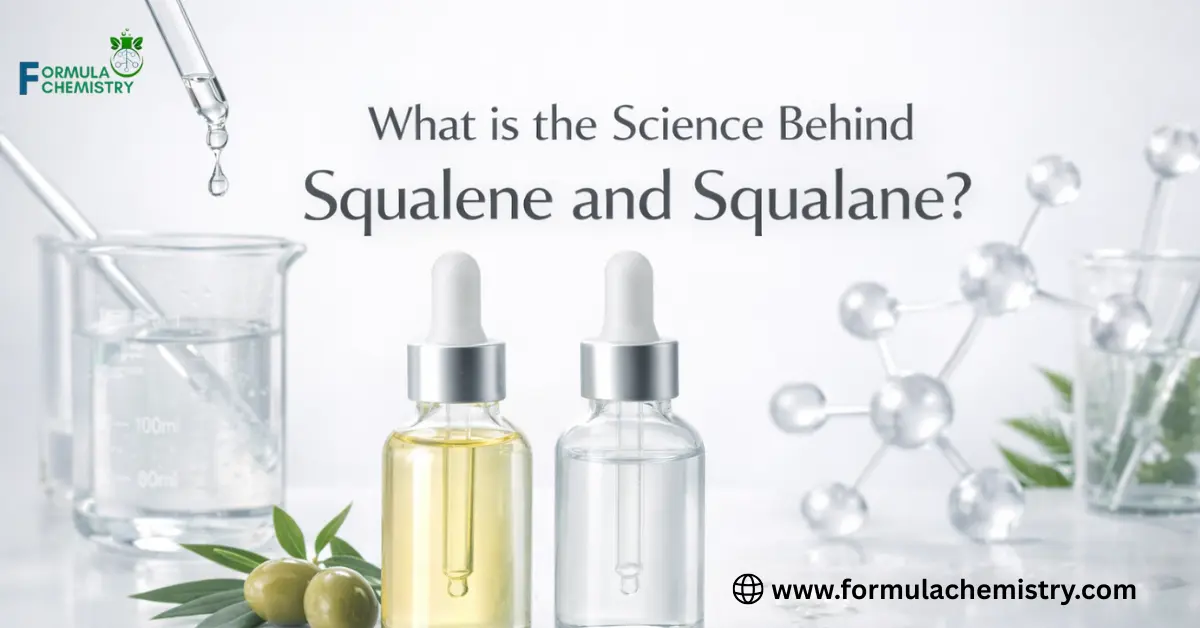
The chemical structure of squalene features six double bonds, making it a highly reactive antioxidant but also making it physically unstable when exposed to oxygen.
In the skin, squalene accounts for approximately 10% to 13% of total sebum. However, for cosmetic manufacturing, the hydrogenated form squalane is the industry standard.
This process removes the double bonds, resulting in a saturated oil that does not oxidize or turn rancid.
FormulaChemistry stresses the importance of understanding molecular stability when selecting raw materials.
Squalane provides the same sensory benefits as squalene lightweight, non-greasy, and fast-absorbing without the risk of comedogenic oxidation products that can irritate the skin.
It acts as a “biocompatible” ingredient because the skin recognizes the molecular structure, enabling deep penetration into the intercellular spaces of the stratum corneum.
Chemical Composition and Skin Compatibility
Squalene’s unique structure allows it to nestle between the lipid bilayers of the skin. This improves skin flexibility and “slip.” Because it is a non-polar hydrocarbon, it is exceptionally stable across a wide variety of environments.
Unlike many botanical oils that contain a mix of various fatty acids (like oleic or linoleic), squalane is a single, pure molecule.
This purity lowers the chance of allergic reactions and makes it a “neutral” base for sensitive skin formulations. It is often used to solubilize active ingredients that are otherwise difficult to stabilize in oil phases.
Ethical Procurement and Sustainability
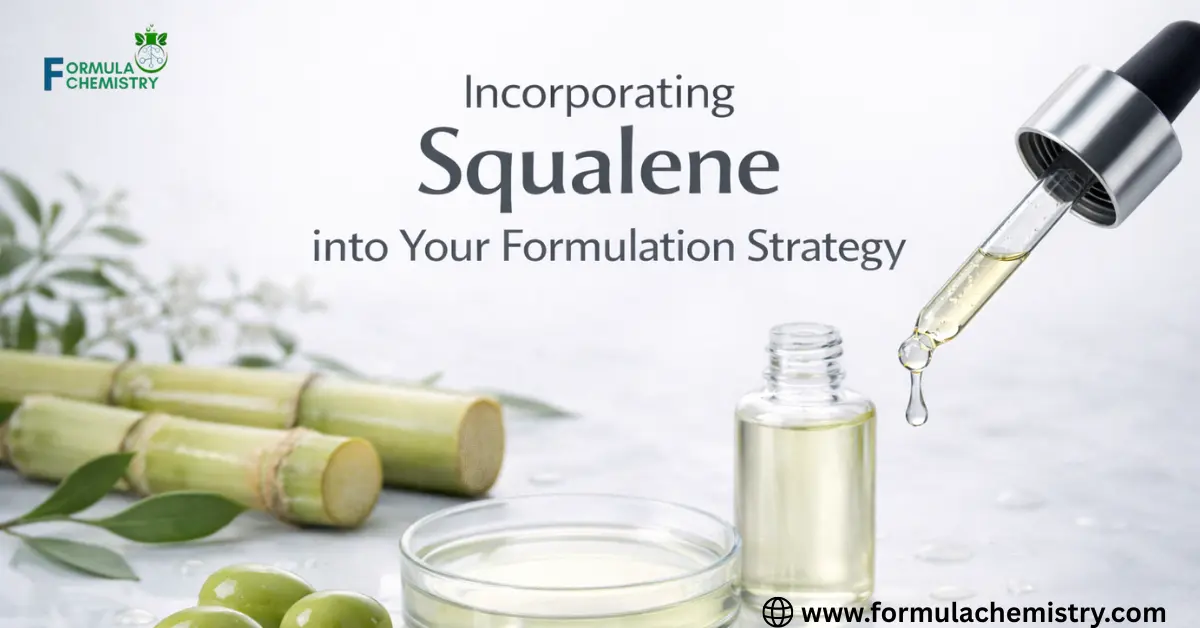
Historically, squalene was harvested from shark livers, which caused considerable ecological threats. Modern cosmetic science has shifted almost entirely to plant-derived sources, primarily olives and fermented sugarcane.
Sugarcane-derived squalane is frequently preferred by formulators for its high purity and consistency.
FormulaChemistry provides practical formulation education and safety-forward guidance, promoting the use of renewable, plant-based hydrocarbons. When selecting a supplier, checking for ECOCERT or similar sustainability certifications ensures that the emollient is both skin-friendly and environmentally responsible.
How Does Squalene Benefit Different Skin Types?
The primary function of squalene in skincare is to mimic the skin’s natural moisture barrier. It is an “occlusive-emollient” hybrid; it smooths the surface of the skin while simultaneously creating a breathable film that prevents moisture from escaping.
This makes it a basic ingredient for treating TEWL without the heavy, greasy feeling associated with petrolatum or waxes.
For those with inflammatory conditions like eczema or psoriasis, squalene provides much-needed lubrication.
It fills the cracks between skin cells, preventing harmful agents from entering the deeper layers of the dermis. Because it is non-comedogenic, it is also one of the few oils that individuals with acne-prone skin can often tolerate well.
Benefits for Dry and Mature Skin
As we age, our sebum production declines sharply after the age of 30. This depletion leads to “crepy” skin and fine lines. Squalene helps “plump” these areas by increasing the water-holding capacity of the skin.
| Property | Squalene (Raw) | Squalane (Hydrogenated) |
| Stability | Low (Oxidizes easily) | High (Long shelf life) |
| Texture | Silky, slightly viscous | Lightweight, thin, dry-touch |
| Usage Rate | 1-5% (in stabilized formulas) | 1-100% |
| Who should avoid | Oily/Acne-prone skin | Generally none |
| Primary Source | Olives, Shark Liver (Rare) | Sugarcane, Olives |
Use Cases for Oily and Acne-Prone Skin
A common misconception is that oily skin does not need added oil. However, when the skin is dehydrated, it may overproduce lower-quality sebum to compensate.
Squalane is highly effective here because its pH notes are neutral, and it does not clog pores.
- Problem: Squalane seems too heavy in summer.
- Fix: Mix 2 drops of squalane with a water-based hyaluronic acid serum to create a micro-emulsion on the skin.
- Problem: Product causing breakouts.
- Fix: Ensure you are using high-purity squalane, as impurities in olive-derived squalene can sometimes trigger sensitivity.
- Problem: Oil sitting on top of the skin.
- Fix: Apply to damp skin immediately after cleansing to facilitate better absorption.
Incorporating Squalene into Your Formulation Strategy
From a formulation perspective, squalane is a “dream” ingredient because of its exceptional stability. It can be heated (in the oil phase) without degrading, and it is compatible with almost every cosmetic ingredient, including high-potency actives like Retinol and Vitamin C. In fact, squalane is often used as a carrier oil for Retinol because it aids in reducing the irritation typically associated with Vitamin A derivatives.
At FormulaChemistry, we recommend using squalane to adjust the “after-feel” of a cream.
If a formula feels too waxy or heavy due to high concentrations of shea butter or stearic acid, adding 5% to 10% squalane can “lighten” the texture and improve the spreadability of the final product.
Formulation Guidelines and Compatibility
Squalane is a saturated hydrocarbon, meaning it is chemically inert. It does not react with surfactants, preservatives, or chelating agents.
- Usage Ranges: Can be used at 1% to 100%.
- Phase: Add to the oil phase (Phase B) of an emulsion.
- Temperature: Heat stable; can be heated to 75°C – 80°C for emulsification.
- pH notes: Squalane is non-ionizable and does not affect the pH of the final formula; however, the final product pH should be adjusted based on other active ingredients (typically pH 4.5 to 5.5).
Safety and Preservation Standards
While squalane itself does not grow mold or bacteria because it contains no water, any formulation containing water and squalane must be properly preserved.
Key warnings include making sure that the squalane used is free from residual catalysts from the hydrogenation process.
Formula Chemistry suggests that users perform a patch test when using a new source of squalane, especially if it is olive-derived, as residual plant proteins can occasionally cause reactions in hypersensitive individuals.
Who should avoid:
While generally safe, those with Malassezia folliculitis (fungal acne) should monitor their skin’s reaction, as most oils even stable ones can occasionally worsen the condition.
FAQs about Squalene in Skincare: The Natural Emollient Your Skin Will Love
Is squalane better than coconut oil for the face?
Yes, for most skin types. Squalane is non-comedogenic (rating of 0-1), whereas coconut oil is highly comedogenic (rating of 4) and more likely to clog pores.
Can I use squalane with Retinol?
Absolutely. Squalane is an excellent carrier for Retinol, as it helps buffer the skin against dryness and irritation while maintaining the stability of vitamin A.
Does squalane expire?
Pure squalane is very stable and has a shelf life of approximately 2 years. However, squalene (with an ‘e’) oxidizes quickly and should be used within 6 months.
Can squalane be used on hair?
Yes. It acts as a lightweight heat protectant and emollient that adds shine and reduces frizz without the buildup associated with silicones.
Is squalane safe during pregnancy?
Yes, squalane is a naturally occurring lipid in the body and is widely regarded as safe for use during pregnancy and breastfeeding.
How is squalane different from sebum?
Squalene is a specific component (about 12%) of human sebum. Sebum also contains wax esters, triglycerides, and fatty acids.
Should I apply squalane before or after moisturizer?
If using it as a pure oil, apply it after your water-based moisturizer to “seal” in the hydration. Alternatively, mix it into your cream.
Is squalane vegan?
Most modern squalane is vegan, derived from olives or sugarcane. However, always check the label to ensure it is not shark-derived.