

Quick Answer
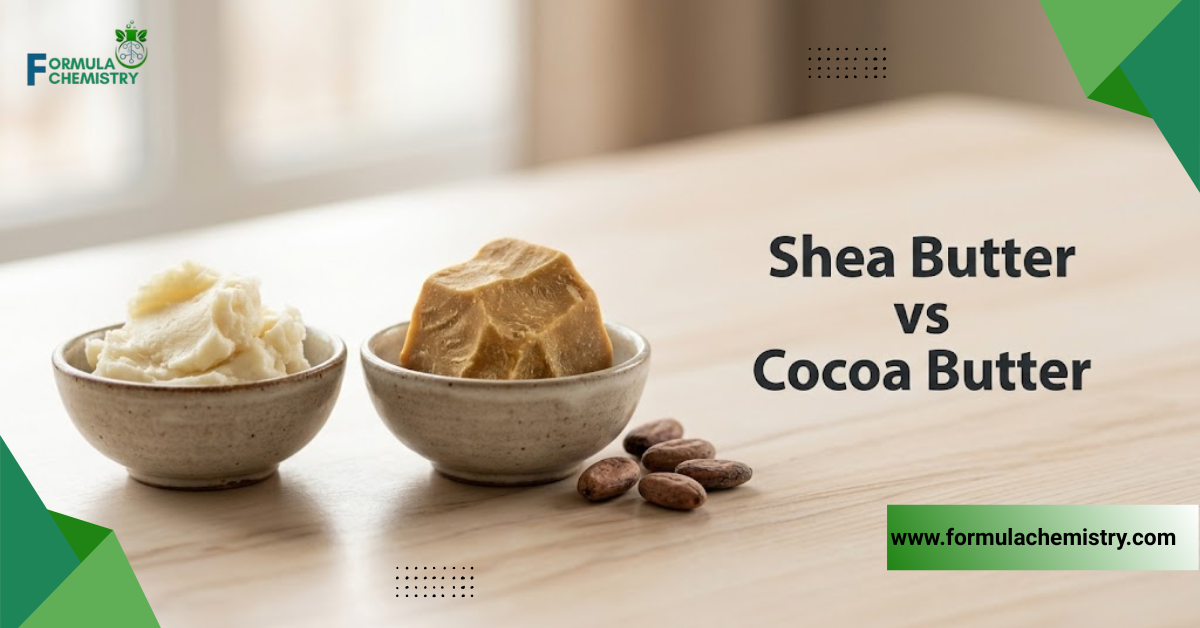
Shea butter vs cocoa butter: both are plant fats used to enrich and structure cosmetics, but they behave differently because of their fatty acid profiles. Shea is softer, higher in oleic acid, penetrates well, and is low on the comedogenic scale, which makes it the better choice for facial products and lighter creams.
Cocoa butter is harder, more brittle, dominated by stearic and palmitic acids, more occlusive, and rated comedogenic 4, which suits it to firm body butters and balms rather than facial moisturisers for congestion-prone skin.
Introduction
Shea and cocoa butter get treated as interchangeable rich butters, and that assumption produces creams that are too greasy, balms that are too soft, and face products that break people out. They share a category and little else once you look at how they perform.
The difference lives in their fatty acids, which decide hardness, absorption, occlusion, and even whether a butter belongs on the face at all. Understanding that chemistry turns a guess into a deliberate choice.
I formulate with both constantly, and I rarely reach for them for the same reason. One softens and sinks in, the other firms and shields, and knowing which is which is the whole game.
This guide covers what each butter is, how their fatty acid profiles translate into real behaviour, the comedogenic difference that settles facial use, the refined and unrefined question, and how to choose and substitute between them.
What Shea Butter Is
Shea butter, INCI name Butyrospermum Parkii, is pressed from the nuts of the African shea tree. It is one of the most valued cosmetic butters because it is rich, conditioning, and unusually versatile across product types.
Its texture is soft and creamy at room temperature, pliable enough to blend straight into a formula without always needing to be melted first. That softness comes directly from its high oleic acid content.
Shea also carries a notably high unsaponifiable fraction, roughly 6 to 17%, which is the portion rich in vitamins and skin-conditioning compounds. This is part of why shea has such a strong reputation for barrier support and comfort on dry skin.
One practical caution matters. Shea comes from a nut, so brands serving customers with nut allergies should flag it, and cocoa butter is often the go-to alternative in that situation.
What Cocoa Butter Is
Cocoa butter, INCI name Theobroma Cacao Seed Butter, is the fat separated from cocoa beans during chocolate production. It is one of the hardest common cosmetic butters and one of the most stable.
At room temperature, it is firm and distinctly brittle, snapping rather than smearing, and it needs melting before it blends into most formulas. It then melts sharply right around skin temperature, which gives products that satisfying solid-to-silky transition.
Its stability is a genuine formulation asset. Cocoa butter is high in saturated fat and resists oxidation well, giving it a long shelf life that can extend the stability of a finished product.
The unrefined form carries an unmistakable chocolate aroma from its residual cocoa solids. That scent is charming in some products and a nuisance in others, which is exactly where the refined version earns its place.
The Fatty Acid Profiles That Explain Everything
Almost every practical difference between these butters traces back to their fatty acids. The table below sets the two profiles side by side, because the numbers predict the behaviour.
| Property | Shea butter | Cocoa butter |
| INCI | Butyrospermum Parkii | Theobroma Cacao Seed Butter |
| Oleic acid | ~40 to 50% | ~35% |
| Stearic acid | ~35% | ~34% |
| Palmitic acid | Lower | ~27% |
| Linoleic acid | ~15% | Low |
| Hardness | Soft, creamy | Hard, brittle |
| Melting point | ~37°C | ~34 to 38°C, sharp |
| Occlusion | Moderate | High |
| Comedogenic rating | 0 to 2 | 4 |
| Scent (unrefined) | Nutty, smoky | Chocolate |
How Each Fatty Acid Behaves
The individual acids each contribute a specific property, and reading them explains the butters. Oleic acid brings softness and helps a fat penetrate, which is why shea, being oleic-rich, feels creamy and sinks in.
Stearic and palmitic acids bring hardness and occlusion, forming a protective film on the skin. Cocoa butter’s high combined stearic and palmitic content is exactly why it is firm, brittle, and more occlusive than shea.
This is the core insight of the whole comparison. Shea leans toward softness and absorption, cocoa toward firmness and shielding, and everything else follows from that single chemical difference.
How They Perform in a Formula
The two butters do genuinely different jobs at the bench, and that is the reason to keep both on hand. Each shapes a product in its own direction.
Cocoa Butter as a Structuring Fat
Cocoa butter raises the melting point of a blend and firms a formula that would otherwise be too soft. In a warm climate, a little cocoa butter can be the difference between a body butter that holds and one that turns to soup.
It also builds a firmer occlusive layer on skin that slows moisture loss more aggressively. That makes cocoa butter well suited to concentrated conditioning of thick-skinned or very dry areas such as heels, elbows, and lips.
Shea Butter as a Softening Emollient
Shea does the opposite job, softening a formula and lending a creamy, cushioned feel that absorbs relatively quickly for a butter. It blends easily, often without melting, which makes it forgiving to work with.
Its lighter, more penetrating character suits lotions, facial creams, and everyday moisturisers where a heavy occlusive film would feel greasy. Where cocoa shields the surface, shea sinks in and conditions.
The Comedogenic Difference and Facial Use
This is the point that settles the most common question, whether either butter belongs in a face cream. The answer depends heavily on which butter you mean.
Shea butter sits low on the comedogenic scale, rated around 0 to 2, so it is far less likely to clog pores. That makes it a sensible choice for facial products across most skin types.
Cocoa butter is rated comedogenic 4, meaning a higher likelihood of clogging pores. For acne-prone or congestion-prone skin, it is generally not recommended as a primary leave-on facial moisturiser, and it is better directed at body use.
Which Butter for Face Cream
For most facial formulas, shea is the safer and more flexible choice. Its low comedogenic rating and lighter feel suit the face, while its conditioning profile supports dry and sensitive skin without a heavy film.
Cocoa butter is not banned from facial use outright, but it belongs in small amounts or in products for very dry, thick-skinned areas rather than as the base of a daily face cream. A patch test is wise before any first facial use, particularly for congestion-prone skin.
Refined Versus Unrefined
Both butters come in refined and unrefined grades, and the choice shapes scent, colour, and active content. This decision matters as much as the choice between the two butters.
Unrefined
Unrefined butters keep more of their natural vitamins, antioxidants, and character. Unrefined shea holds its fuller vitamin content and its nutty, smoky scent, while unrefined cocoa keeps its rich chocolate aroma and pale colour.
The trade-off is that scent. An unrefined butter’s aroma can dominate or clash with a fragrance, so it suits products where the natural smell is welcome or where nothing else is added.
Refined
Refined butters are processed to remove scent and colour, giving a neutral, consistent base. Refined shea is close to odourless and refined cocoa loses much of its chocolate scent, which makes both far easier to fragrance and standardise.
Some beneficial compounds are reduced during refining, so it is a genuine trade between purity of performance and control of scent and colour. Many commercial formulas choose refined for exactly that predictability.
Choosing Between Shea and Cocoa for Your Product
Product type and target skin usually make the decision straightforward. Each butter has clear territory where it is the stronger pick.
- Facial cream or lotion: shea, for its low comedogenic rating and lighter feel
- Rich body butter: shea for creaminess, or a shea and cocoa blend for structure
- Firm balm, stick, or lip product: cocoa butter, for hardness and a clean set
- Hot-climate product: cocoa butter, to raise the melting point and hold shape
- Very dry, thick-skinned areas: cocoa butter, for its stronger occlusive film
- Nut-allergy-conscious product: cocoa butter, avoiding shea’s nut origin
- Neutral scented base: refined grades of either, for a clean canvas
Many of the best formulas use both together. Shea supplies the soft, conditioning body and cocoa supplies structure and occlusion, and blending them lets you tune firmness and skin feel precisely.
Substituting One Butter for the Other
You can swap shea and cocoa butter, but you should expect the texture and behaviour to shift because they differ so much in hardness. This is not a like-for-like exchange.
Replacing Cocoa With Shea
Moving from cocoa to shea softens a formula and lightens the occlusive film. A balm or stick relying on cocoa for structure will lose firmness, so you usually add a harder wax such as candelilla or carnauba, or another firm butter, to hold the shape.
Replacing Shea With Cocoa
Moving from shea to cocoa firms and hardens a product and makes it more occlusive. You may need to increase your liquid oils or a softer butter to restore spreadability, and you should reconsider facial use given cocoa’s higher comedogenic rating.
Treat any butter swap as a small reformulation to confirm. Make a test batch, let it set fully, and check firmness, absorption, and feel before committing, since the right balance depends on your oils, waxes, and the climate the product is made for.
Deciding on Your Butter
If you are formulating for the face or want a lighter, faster-absorbing feel, shea is the natural default, especially for dry or sensitive skin and for anyone avoiding pore-clogging risk. Its softness and low comedogenic rating make it the more flexible everyday butter.
If you need firmness, a clean melt, strong occlusion, or a product that holds up in heat, cocoa butter is the better structural choice, best directed at body products and balms rather than daily facial creams. Its stability and hardness are genuine assets in the right format.
For many products, the smartest answer is a blend, with shea carrying the conditioning body and cocoa adding structure and shelf stability.
Whatever you choose, decide based on fatty acid behaviour rather than marketing, make a test batch, and adjust the butter and oil balance until the firmness, absorption, and finish match exactly what your product needs.
Frequently Asked Questions
What is the difference between shea butter and cocoa butter?
Shea butter is softer, higher in oleic acid, penetrates well, and is low on the comedogenic scale, while cocoa butter is harder, more brittle, dominated by stearic and palmitic acids, and more occlusive. Shea suits facial and lighter products; cocoa suits firm body butters and balms. Their fatty acid profiles explain every difference.
Which butter is better for face cream?
Shea butter is generally better for face cream because it is rated comedogenic 0 to 2 and feels lighter. Cocoa butter is rated 4 and is more likely to clog pores, so it is less suited to daily facial use, especially for acne-prone skin. Cocoa is better directed at body products.
Should I use shea or cocoa butter for body butter?
Both work well for body butter, and many formulas blend them. Shea gives a soft, creamy, absorbent feel, while cocoa adds firmness and helps the product hold shape in warm conditions. A shea base with some cocoa is a common, well-balanced approach.
What are the melting points of shea and cocoa butter?
Shea butter melts at around 37°C with a softer, more gradual transition, while cocoa butter has a sharper melting point around 34 to 38°C. Cocoa’s sharp melt gives the solid-to-silky feel on contact. Cocoa is firmer and more brittle at room temperature.
Is cocoa butter comedogenic?
Yes, cocoa butter is rated 4 on the comedogenic scale, meaning a higher likelihood of clogging pores. It is generally not recommended as a primary facial moisturiser for acne-prone skin. Shea butter, rated 0 to 2, is the safer facial choice.
Can I substitute shea for cocoa butter?
You can, but the texture will change because cocoa is much harder. Replacing cocoa with shea softens the product, so you may need a firm wax like candelilla or carnauba to restore structure. Always confirm the result with a test batch.
What is the difference between refined and unrefined butter?
Unrefined butters keep more natural vitamins and their characteristic scent, such as shea’s nutty aroma and cocoa’s chocolate smell. Refined butters have scent and colour removed for a neutral, consistent base, at the cost of some beneficial compounds. Refined grades are easier to fragrance and standardise.
Which butter is better for dry skin?
Both are excellent for dry skin in different ways. Shea penetrates and conditions for lighter, everyday dryness, while cocoa forms a stronger occlusive barrier ideal for very dry, thick-skinned areas. Combining them covers both needs.
Key Takeaways
Shea and cocoa butter differ because of their fatty acids, with shea’s high oleic content making it soft, penetrating, and low on the comedogenic scale, and cocoa’s stearic and palmitic content making it hard, brittle, and more occlusive. Shea suits facial and lighter products; cocoa suits firm body butters and balms.
Comedogenicity settles most facial questions, since shea is rated 0 to 2 and cocoa is rated 4, making shea the safer choice for face products. Cocoa’s firmness, sharp melt, and stability make it the better structuring and shelf-stabilising fat, best kept to body use and small facial amounts.
Choose from the fatty acid behaviour, use refined grades when you need a neutral scented base, and expect any swap between the two to shift texture. Blend them when you want both conditioning softness and structure, and always confirm firmness and feel in a small test batch before you scale.