
Introduction
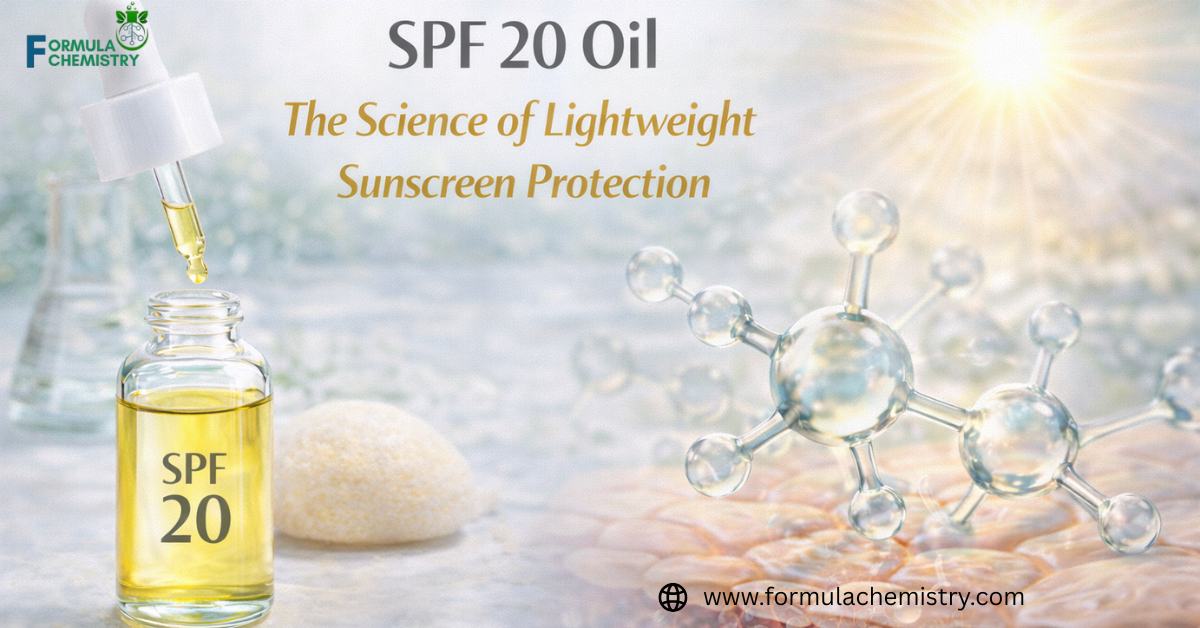
For those who detest the chalky, heavy feel of traditional creams, sunscreen oils offer a luxurious, satin-finish alternative. An SPF 20 oil provides moderate protection while deeply nourishing the skin’s lipid barrier, making it a popular choice for those seeking a radiant glow.
Formulating a transparent, UV-blocking oil requires precise chemistry to keep filters blended and stable within oils.
This guide delves into the molecular science of lightweight sunscreen oils. We will explore how anhydrous (water-free) formulations work, the role of “dry oils,” and how to use them safely within a Formula Chemistry skincare regimen.
What Defines a Lightweight SPF 20 Sunscreen Oil?
To appreciate this product category, we must distinguish it from the heavy tanning oils of the past and the thick lotions of the present.
The Anhydrous Advantage
Unlike lotions, which are emulsions of oil and water, sunscreen oils are anhydrous. They contain zero water.
This chemistry formula creates a product that is naturally water-resistant because oil repels water. It forms a hydrophobic film on the skin that locks in moisture while shielding against UV rays, making it ideal for swimming or sweating.
The “Dry Oil” Texture
Modern consumers demand oils that disappear into the skin. This is achieved using esters and specific carrier oils.
In Formula Chemistry skincare, we use “dry oils” such as Isopropyl Myristate or Fractionated Coconut Oil. These molecules have low viscosity and high spreadability, allowing the product to absorb rapidly without leaving a sticky or greasy residue.
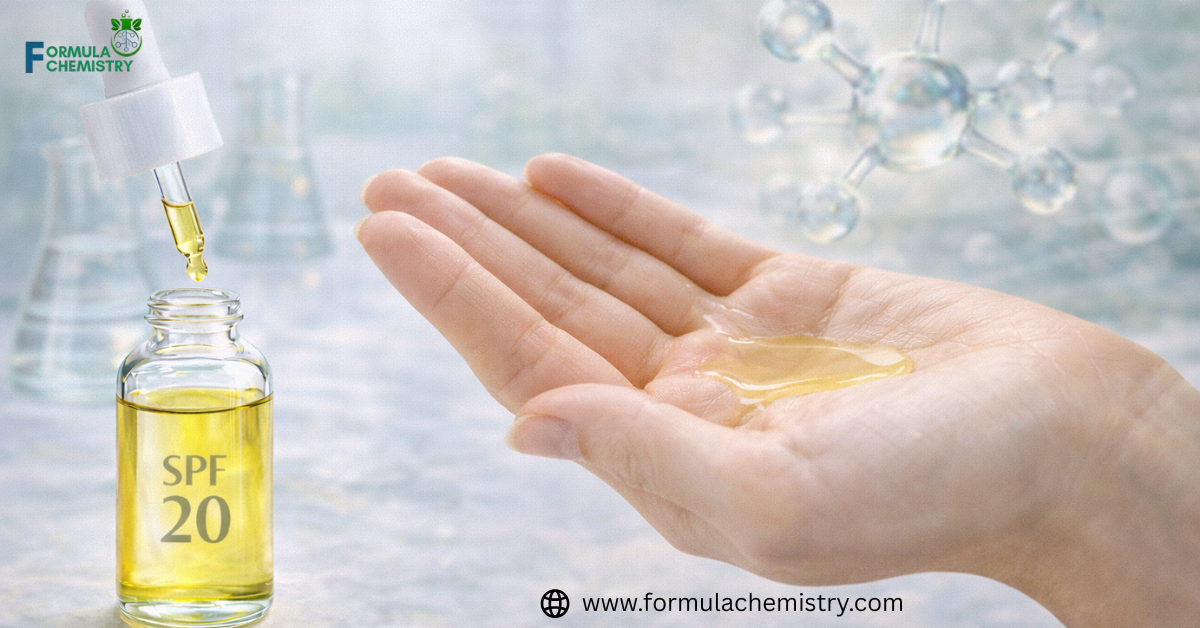
The Chemistry Formula of Oil-Soluble UV Filters
Creating a clear oil requires using UV filters that dissolve completely in lipids; mineral powders would simply sink to the bottom.
Organic Filter Solubility
SPF 20 oils typically rely on chemical (organic) filters such as Octocrylene, Homosalate, or Avobenzone.
These carbon-based molecules are lipophilic. Their chemical formula allows them to integrate seamlessly into the oil base. This results in a product that is crystal clear and leaves absolutely no white cast, regardless of skin tone.
The Stability Challenge
Some filters, particularly Avobenzone (a key UVA blocker), can degrade when dissolved in certain unsaturated vegetable oils.
To maintain the SPF 20 rating, formulators must choose stable carrier oils, such as Jojoba, or add photostabilizers. This ensures the chemistry formula does not break down the moment it is exposed to sunlight.
Optimizing Texture with Carrier Oils
The choice of carrier oil dictates whether the product feels like a luxury treatment or a kitchen ingredient.
Esters vs. Plant Oils
Plant oils (like Olive or Almond) contain heavy fatty acids that sit on the skin.
Synthetic esters are modified oils with lower molecular weights. They improve the “slip” and reduce the heavy feeling. A balanced Formula Chemistry blend often uses 70% esters and 30% plant oils to achieve both elegance and nourishment.
Grapeseed and Argan Benefits
For the plant oil portion, ingredients like Grapeseed Oil are preferred.
They are high in linoleic acid, which is thinner and absorbs faster than oleic acid-rich oils. This reinforces the barrier without clogging pores, aligning with the principles of lightweight Formula Chemistry skincare.
SPF 20: Understanding the Protection Level
It is crucial to understand the mathematics of the Sun Protection Factor to know if SPF 20 is sufficient for your needs.
The 95% Blockage Rate
SPF 20 blocks approximately 95% of UVB (burning) rays.
Compared to SPF 30 and 50, SPF 20 blocks 95% of UVB rays. It offers a balance for moderate exposure or darker skin tones.
UVA vs. UVB Balance
SPF only measures UVB protection. You must ensure your oil is “Broad Spectrum.”
This means the chemical formula also blocks UVA rays, which cause aging. Without broad-spectrum filters, an SPF 20 oil might prevent a sunburn but will still allow serious cellular damage and wrinkles.

Antioxidant Boosters in Oil Formulations
Sunlight causes skin oxidation (aging); adding antioxidants to the oil creates a secondary line of defense.
Stabilizing the Formula
Oils are prone to rancidity (oxidation) when exposed to heat and light.
Vitamin E or rosemary extract in the formula keeps carrier oils and filters stable and fresh by reacting with oxygen first.
Skin Benefits
Topical antioxidants neutralize free radicals generated by the 5% of UV rays that penetrate the SPF 20 shield.
Ingredients like Raspberry Seed Oil or Carrot Seed Oil act as biological boosters. While they have negligible SPF on their own, their high antioxidant content supports the overall Formula Chemistry skincare goal of cellular preservation.
Formula Chemistry DIY: The Risks of Mixing Oils
There is a dangerous trend of mixing “natural sunscreens” at home, but solar protection is a drug, not a recipe.
The Dispersion Problem
If you attempt to add Zinc Oxide powder to an oil at home, it will clump and settle.
Adding zinc oxide powder at home leads to uneven coverage, allowing UV penetration. Lab tools are needed for uniform films.
Misunderstanding Natural Oils
Many blogs claim Coconut Oil has an SPF of 8.
In reality, the SPF of natural oils varies wildly by harvest and is often closer to SPF 1. Relying on plain oils for protection is unsafe. Always use a tested commercial SPF oil or a pre-formulated base.
Application Techniques for Oil-Based SPF
Oils spread thin, which can lead to under-application and a drastic reduction in the actual SPF value on your skin.
The Gloss Factor
To get SPF 20, you must apply 2mg/cm².
Because oils spread so well, people often use too little. Apply enough for a visible, even sheen all over. If skin looks matte or dry, you haven’t applied enough to form the protective film.
Wait and Set
Allow the oil to absorb for 15 minutes before swimming or dressing.
Although water-resistant, the oil needs time to bond with skin. Entering water too soon can cause it to wash off, resulting in less protection.
Who Is SPF 20 Oil Suitable For?
This product is not a one-size-fits-all solution; it serves a specific demographic and skin condition.
Body vs. Face Use
Unless specifically labeled “non-comedogenic,” avoid using SPF oils on the face.
The heavy lipid content can be occlusive, trapping heat and sweat, which may lead to breakouts. Use these oils for the neck, chest, arms, and legs, where the skin has fewer sebaceous glands.
Dry and Mature Skin
SPF oils are a savior for dry, scaly skin.
They replace lost lipids instantly, smoothing out rough texture on elbows and knees. The oil’s refractive index also makes limbs look leaner and healthier, adding an aesthetic benefit to the Formula Chemistry skincare function.
Environmental Considerations and Biodegradability
Using oils in the ocean requires conscious ingredient selection to minimize the impact on marine life.
Bio-Based Esters
Many modern SPF oils use esters derived from sugarcane or coconut.
These are biodegradable and break down naturally in water systems. This is a significant improvement over silicone-based fluids, which can persist in the environment and alter the chemical composition of aquatic ecosystems.
Reef Safety
Check the active ingredients list.
While clear oils usually use chemical filters, avoid Oxybenzone and Octinoxate if you are swimming near coral reefs. Many brands now offer “reef-friendly” chemical filters that provide clarity without the environmental toxicity.
Conclusion
An SPF 20 Lightweight Sunscreen Oil is a sophisticated option for those who prioritize texture and skin conditioning alongside moderate protection.
By leveraging the solubility of organic filters and the nourishing power of plant esters, these products offer a pleasurable application experience rooted in sound formula chemistry.
While Formula Chemistry DIY enthusiasts should stick to customizing body oils rather than synthesizing sunscreens, understanding the science behind these formulations allows you to choose a product that keeps your skin glowing, hydrated, and safe.
FAQ’s about SPF 20 Oil: The Science of Lightweight Sunscreen Protection
Is SPF 20 enough protection for the beach?
It depends on your skin type and the duration of exposure. For fair skin or all-day exposure in the tropics, SPF 30 or 50 is highly recommended. SPF 20 is better suited for incidental exposure, late-afternoon sun, or darker skin tones that naturally have greater melanin protection.
Can I use tanning oil as sunscreen?
Only if it has an SPF rating. Traditional “tanning oils” have SPF 0-4 and are designed to fry the skin. An “SPF 20 Oil” is a sunscreen designed to protect. Always check the label for “Broad Spectrum” and an SPF number of at least 15-20.
Will sunscreen oil stain my clothes?
Yes, oils can leave grease spots, and certain chemical filters (like Avobenzone) can leave orange rust stains on light fabrics. Allow the oil to absorb fully for 10-20 minutes before getting dressed to minimize transfer.
Does sunscreen oil clog pores?
It can. Many oils are comedogenic. If you are prone to body acne (bacne), look for oils labeled “dry oil” or those based on Grapeseed or Jojoba oil, which are less likely to clog pores compared to Coconut or Mineral oil.
How often do I need to reapply oil?
Just like lotions, oils must be reapplied every two hours, or immediately after swimming and toweling off. The sun breaks down the filters, and friction removes the film, compromising the protective chemical formula.
Is SPF oil better than lotion for dry skin?
Generally, yes. Lotions contain water, which evaporates. Oils are occlusive, meaning they trap existing moisture and soften the outer layer of the skin more effectively than water-based emulsions, making them ideal for dry skin types.
Can I add shimmer to my SPF oil?
Yes, adding a small amount of cosmetic-grade mica powder to a store-bought SPF oil is a relatively safe Formula Chemistry DIY hack. It adds a glow without significantly altering the chemical stability of the filters, provided you don’t dilute the product with other oils.
What is “dry oil”?
A dry oil is a marketing term for oils that absorb quickly and don’t leave a sticky residue. These usually contain high levels of esters (such as Coco-Caprylate) or polyunsaturated plant oils (such as Rosehip), which penetrate the skin barrier rapidly.