
Introduction
Salicylic Acid Powder is widely regarded as the gold standard ingredient for treating acne-prone and oily skin. As a Beta Hydroxy Acid (BHA), it possesses unique chemical properties that allow it to penetrate deeper than traditional exfoliants.
For cosmetic formulators, commanding this ingredient is a rite of passage, offering the ability to create high-performance toners, serums, and cleansers. Unlike water-soluble Alpha Hydroxy Acids (AHAs), Salicylic Acid is lipophilic, meaning it is oil-soluble.
This quality allows it to dissolve through sebum and unclog pores from the inside out. Formula Chemistry provides practical formulation education and safety-forward guidance to help you harness the power of this keratolytic agent effectively and safely.
Quick Facts
- INCI Name: Salicylic Acid
- Chemical Class: Beta Hydroxy Acid (BHA)
- Function: Exfoliant, Anti-acne agent, Anti-dandruff, Preservative (in some contexts)
- Typical Usage Rate: 0.5% – 2.0% for OTC face products; up to 3.0% for wash-off or body products (regulations vary by region).
- Solubility: Oil-soluble and alcohol-soluble; very poor water solubility.
- Optimal pH Range: 3.2 – 4.0 (Efficacy drops significantly above pH 4.0).
- pKa Value: 2.97 (The pH at which 50% of the acid is free and active).
- Contraindications: Do not use it if you are allergic to aspirin (salicylates). Avoid during pregnancy unless approved by a physician.
- Safety Note: Always wear a mask when handling the raw powder to avoid inhalation irritation.
What Makes Salicylic Acid Superior for Oily Skin?
The primary distinction between Salicylic Acid and other exfoliants is found in its solubility profile. While Glycolic and Lactic acids function primarily on the skin’s surface, breaking down the glue between dead cells, Salicylic Acid penetrates further.
Its lipophilic nature grants it an affinity for oil, allowing it to travel down the hair follicle and into the sebaceous gland. Once inside the pore, Salicylic Acid exerts a keratolytic effect.
It softens and dissolves the keratin (protein) plugs that trap oil and bacteria, effectively treating comedones (blackheads and whiteheads). This deep-cleaning action also provides a mild anti-inflammatory benefit, soothing the redness and swelling often associated with active acne breakouts.
The Science of Desmolysis and pKa
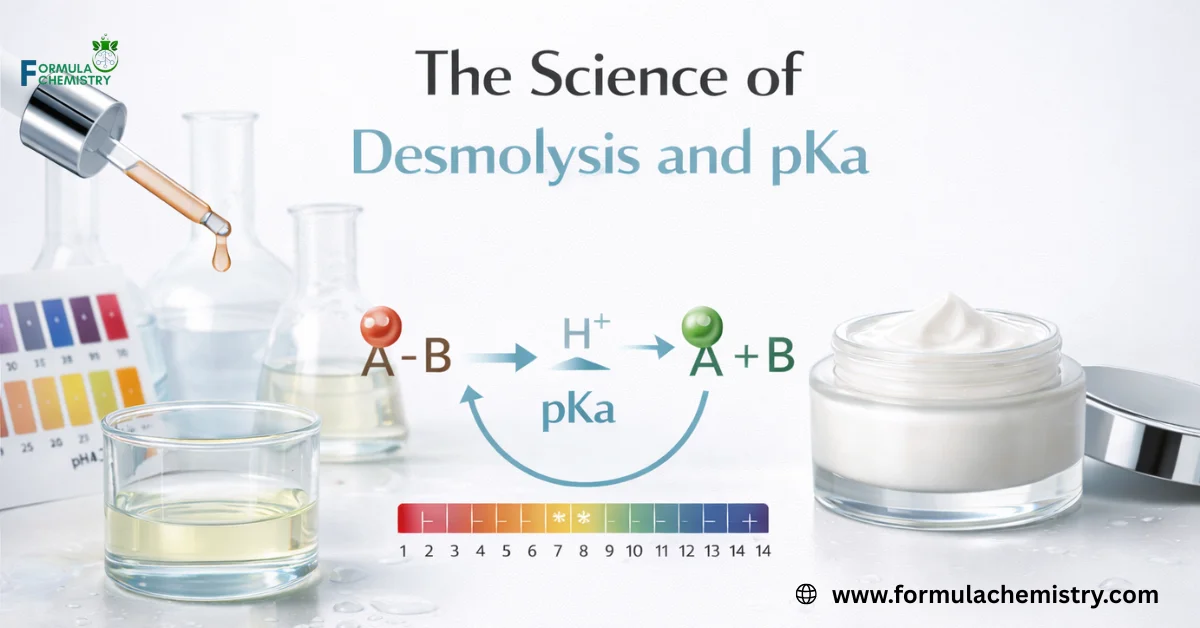
To function as an exfoliant, Salicylic Acid must break the desmosomes the protein bridges holding corneocytes (dead skin cells) together. This process, known as desmolysis, promotes the shedding of the outer layer of skin, revealing a smoother texture and brighter tone underneath.
However, this mechanism is heavily dependent on the pH of the final formulation. Salicylic Acid has a pKa of 2.97. In chemistry, the pKa is the pH level where half of the acid exists in its active “free acid” form, and the other half is in its inactive salt form (salicylate).
If you formulate a product at pH 6.0, almost all the Salicylic Acid converts to salt, rendering it ineffective as an exfoliant. To maintain efficacy with skin tolerance, a final pH of 3.5 to 3.8 is generally ideal.
Formulating with Salicylic Acid: Solving the Solubility Puzzle
The biggest hurdle formulators face with Salicylic Acid Powder is its persistent refusal to dissolve in water. If you dump the powder directly into water, it will float on top or sink to the bottom as jagged crystals. To create a stable serum or toner, you must use a suitable solvent system before introducing any aqueous phase.
Common solvents include Ethanol (Alcohol Denat.), Propanediol, Propylene Glycol, and specialized solubilizers like PEG-40 Hydrogenated Castor Oil. Ethanol is the most efficient solvent, dissolving Salicylic Acid instantly, but it can be drying to the skin. Modern formulations at formula chemistry, often prefer glycols or bio-based diols (like 1,3-Propanediol) to keep the product hydrating while retaining clarity.
Prevention of Crystallization
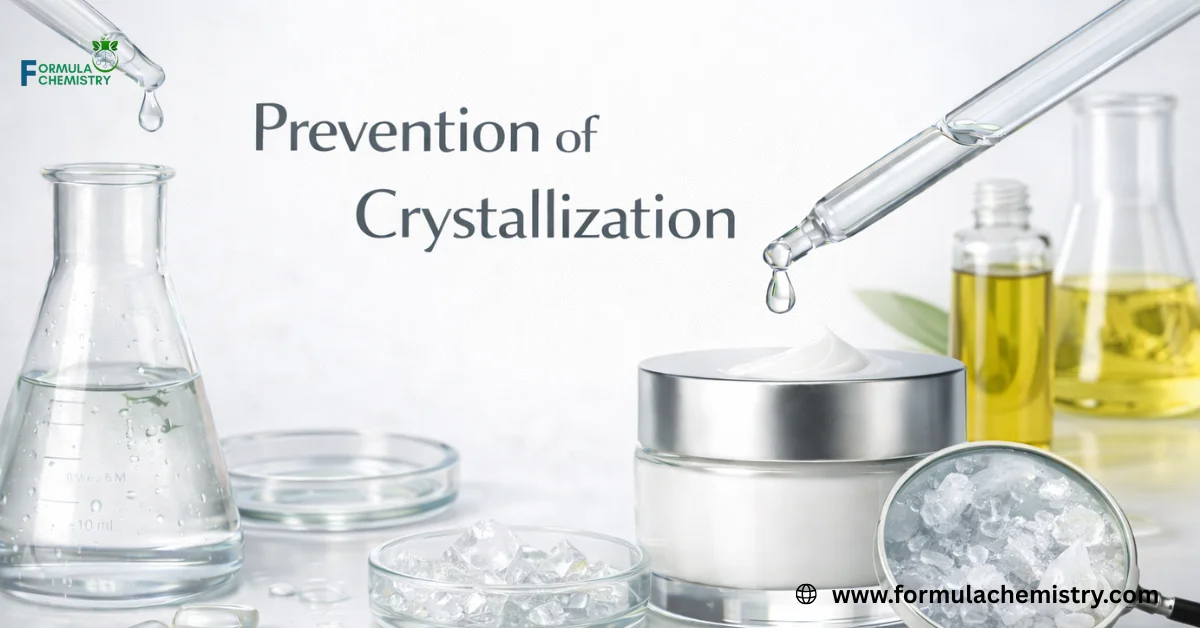
Even after successfully dissolving the powder, Salicylic Acid has a tendency to “crash out” or recrystallize over time, especially if the product is stored in cold conditions.
This appears as needle-like crystals forming at the bottom of the bottle, which can be sharp and damaging to the skin. This phenomenon is known as “shocking” the emulsion or solution. To prevent this, ensure your solvent phase is sufficient (usually a 10:1 ratio of solvent to acid).
Additionally, adding a crystallization inhibitor like Sodium Citrate can help buffer the system and keep the acid in solution.
Common Problems and Fixes
Working with BHA powder requires diligence and exactness. Below are the most frequent issues formulators encounter and how to resolve them.
- Problem: White needles or “shards” appear in the bottle after a few days.
- Fix: Your solvent ratio is too low, or the water phase shocked the acid. Increase Propanediol or add 5% Octyldodecanol.
- Problem: The solution is cloudy or hazy.
- Fix: If using a surfactant/solubilizer like Polysorbate 20, increase the percentage. Ensure all lipids are fully solubilized.
- Problem: The pH is drifting downward over time.
- Fix: Salicylic Acid can lower pH as it stabilizes. Use a buffer like Sodium Citrate or Sodium Hydroxide to lock the pH at 3.5–4.0.
- Problem: Skin irritation or excessive peeling.
- Fix: The free acid content may be too high. Raise the pH slightly to 4.0 or reduce the usage rate to 1.0%.
- Problem: The powder floats and won’t wet out.
- Fix: Do not add to water. Pre-mix in your glycol or alcohol phase first until fully clear.
Creating Stable and Effective BHA Products
When designing a Salicylic Acid product, you must decide between an aqueous (water-based) or anhydrous (oil-based) system. Anhydrous balms or oils are easier to formulate because you don’t have to worry about pH or water solubility issues; you simply dissolve the powder in a compatible lipid like C12-15 Alkyl Benzoate or Octyldodecanol.
These are excellent for gentle, barrier-supporting treatments.However, water-based toners and serums are more popular for oily skin because they feel lighter. For these, a surfactant or solubilizer is often necessary if you are minimizing alcohol content.
A common blend is Salicylic Acid + Propanediol + Dimethyl Isosorbide (DMI). DMI is a powerful solvent that improves penetration, enabling lower percentages of acid to achieve higher efficacy.
Usage Rates and Solvent Compatibility
The table below outlines common solvents and their effectiveness in dissolving Salicylic Acid powder, helping you choose the right vehicle for your formulation.
Table: Solvent Compatibility for Salicylic Acid
| Solvent | Solubility Rating | Sensory Feel | Notes |
| Ethanol (Alcohol) | Excellent | Light, drying | Dissolves instantly; potential irritant for sensitive skin. |
| Propanediol | Good | Hydrating, slightly tacky | Needs heat or time to dissolve fully; great humectant alternative. |
| Propylene Glycol | Good | Light, synthetic feel | Standard industry solvent; widely used in OTC products. |
| Glycerin | Poor | Sticky, heavy | Not recommended as a primary solvent; use as a secondary humectant. |
| Octyldodecanol | Excellent | Oily, emollient | Best for anhydrous facial oils or balm cleansers. |
| Water | Very Poor | N/A | Do not use. Salicylic Acid is only 0.2% soluble in water at room temp. |
Safety and Regulatory Considerations
Salicylic Acid is a regulated substance in many regions. In the USA (FDA) and EU, it is generally permitted up to 2.0% in leave-on and rinse-off cosmetic products designed for acne or anti-dandruff purposes. Higher concentrations (up to 30%) are reserved for professional chemical peels and should strictly be handled by licensed dermatologists or estheticians.
Always perform a patch test before using a new batch. Because Salicylic Acid thins the stratum corneum (the outer layer of skin), it increases sun sensitivity. It is mandatory to include a warning on your label advising users to apply sunscreen and limit sun exposure while using the product and for a week afterwards.
FAQ’s about Salicylic Acid Powder: The Ultimate Exfoliant for Clear, Smooth Skin
Is Salicylic Acid powder safe to handle?
Yes, but with precautions. The raw powder acts as a respiratory irritant if inhaled. Always wear a mask and gloves when weighing and mixing. Avoid contact with the eyes, as the pure acid can cause severe irritation or harm.
Can I mix Salicylic Acid with Vitamin C?
Technically, yes, but it increases the chance of irritation. Both ingredients are acidic and exfoliating. If you choose to combine them, ensure the final pH is within the safe range (above 3.0) and monitor for skin sensitivity.
Is Salicylic Acid safe during pregnancy?
Doctors generally advise avoiding high concentrations of Salicylic Acid (like peels) during pregnancy. Low concentrations (under 2%) in OTC washes are often considered low risk, but it is always best to consult a physician before use.
Why is my Salicylic Acid solution turning pink?
Salicylic Acid is sensitive to metal ions, particularly iron. If your water contains trace metals or if you use metal mixing utensils, a reaction can occur, causing a pink or violet hue. Use distilled water and a chelating agent like Disodium EDTA or Sodium Phytate.
Can I use Salicylic Acid every day?
Yes, widely available 1-2% products are designed for daily use. However, beginners should start 2-3 times a week to develop tolerance. Overuse can damage the skin barrier, bringing about increased breakouts and redness.
Does Salicylic Acid expire?
The raw powder is very stable if kept dry and cool, lasting 2-3 years. However, in a formulation, its stability depends on the pH and preservatives used. If the product changes color or smell, discard it.
What is the difference between Salicylic Acid and Willow Bark Extract?
Salicylic Acid is the pure, active chemical (often synthetic). Willow Bark Extract contains salicin, a precursor that can convert to Salicylic Acid, but the conversion rate on skin is very low. Willow Bark is much milder and less effective for active acne.
Do I need a preservative for Salicylic Acid products?
Suppose the product contains water, absolutely yes. While Salicylic Acid has some antimicrobial properties, it is not a broad-spectrum preservative on its own at 2%. You must add a preservative system to prevent mold and bacterial growth.