
Introduction
A lipstick that crumbles, sweats oil, or drags across the lip is almost always a ratio problem, not a bad ingredient. The whole product balances on three numbers: how much wax, how much oil, and how much pigment.
This lipstick formulation guide explains those three ratios and how to tune them for the finish, payoff, and durability you want. A lipstick is an anhydrous dispersion of pigments held in a blend of waxes and oils, where the waxes give structure, the oils give glide and gloss, and the pigments give colour.
You will learn how to build the wax blend and its melting point, why castor oil dominates the oil phase, how to disperse pigment properly, and how the ratios shift between matte and glossy. The guide then walks through a complete satin lipstick formula with INCI percentages, explained step by step, through to mould pouring.
By the end you will be able to build a lipstick base from scratch, adjust it across finishes, and avoid the cracking, sweating, and dull colour that defeat most first attempts.
Lipstick Formulation Guide: The Three Building Blocks
A lipstick is built from three functional groups, and understanding their balance is the heart of lip color formulation. The waxes form the solid structure, the oils carry the payoff and gloss, and the pigments deliver the colour and coverage.
Because a lipstick is anhydrous, it contains no water at all. That single fact changes everything compared with creams, since there is no pH to balance and no need for a broad-spectrum preservative.
A typical lipstick base formula runs roughly 10% to 20% wax, 50% to 65% oils and emollients, and 5% to 20% pigments and fillers. These ranges are the starting point, and shifting within them is how you move between a hard matte and a soft gloss.
The skill in lipstick recipe development is balancing these three groups so the bullet stays firm in the tube yet glides on the lip. Too much wax cracks and drags, too much oil sweats and slumps, and too much pigment turns the stick dry and brittle.
The finished bullet must also work mechanically in its case. It needs to be firm enough to stand and twist without bending, yet soft enough to deposit colour under light pressure, which the wax and oil ratio controls directly.
The Wax Blend: Structure and Melting Point
The lipstick wax blend is what holds the bullet together and decides how it behaves in heat. Waxes set the hardness, the lipstick melting point, and the resistance to sweating, so the blend is rarely a single wax.
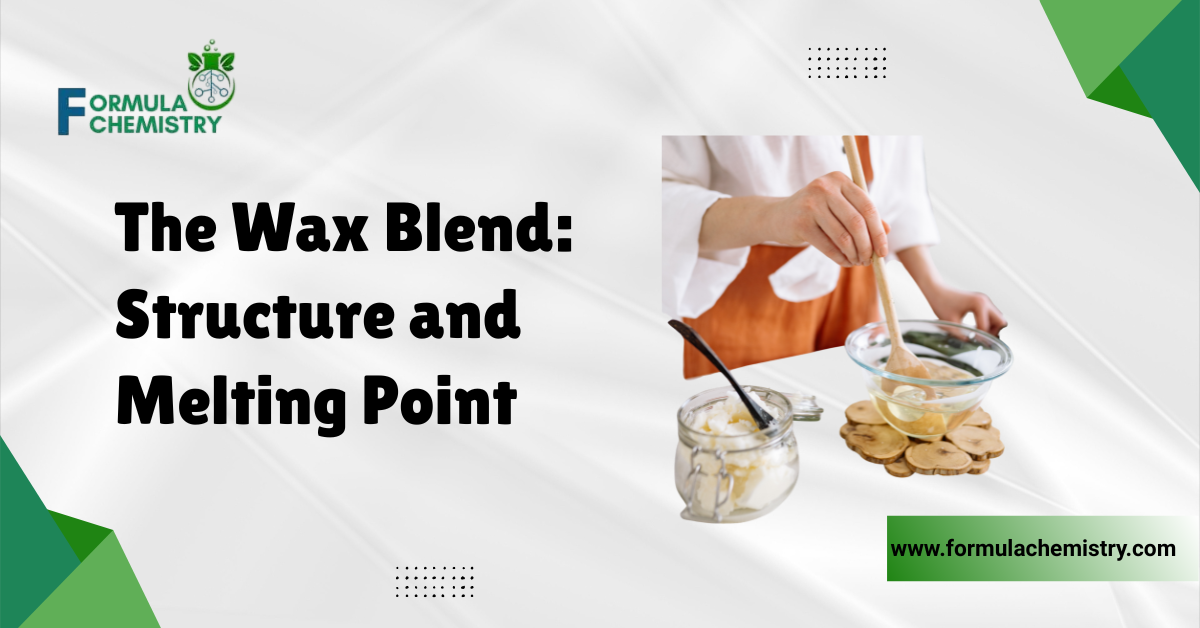
A good wax blend combines waxes with different melting points and properties. The table below shows the common lipstick waxes and what each contributes.
| Wax (INCI) | Approx. melt point | Role in lipstick |
| Cera Alba | 62 to 65°C | Body and a smooth set |
| Euphorbia Cerifera Cera | 68 to 73°C | Structure, hardness, gloss |
| Copernicia Cerifera Cera | 82 to 86°C | High hardness and melt point |
| Ozokerite | 65 to 90°C | Oil binding, reduces sweating |
Candelilla Wax, listed as Euphorbia Cerifera Cera, is a workhorse structuring wax that adds hardness and a natural gloss. It is a plant-derived alternative to beeswax with a slightly higher melting point.
Carnauba Wax, listed as Copernicia Cerifera Cera, has the highest melting point of the common waxes and raises the bullet’s heat resistance. A small amount sharpens the structure and lifts the gloss, but too much makes the stick brittle.
Cera Alba, or beeswax, gives body and a smooth, forgiving set. It is easy to work with and softens the harder waxes into a pleasant blend.
Mineral and synthetic waxes add specific functions. Ozokerite binds oil and reduces sweating, while a microcrystalline wax adds flexibility and gloss, and small amounts of either fine-tune the bullet without dominating the blend.
The target is a finished melting point high enough to survive a warm pocket yet low enough to glide at lip temperature. A blend that melts around 65°C to 75°C stays solid at room temperature and softens on contact with the lips.
The Oil Phase: Payoff, Glide, and Gloss
The oil phase makes up the largest part of a lipstick and controls how it feels and looks on the lip. These emollients carry the pigment, deliver the payoff, and create the gloss.
Castor oil in lipstick is the defining ingredient of the oil phase. Ricinus Communis (Castor) Seed Oil is unusually viscous and polar, which makes it outstanding at wetting and dispersing pigments, and it dries to a characteristic glossy film.
No other single oil matches castor oil for lipstick, which is why it often forms the bulk of the oil phase. Its high pigment-wetting ability is the reason pigments are usually ground into castor oil before the rest of the formula is built.
Supporting emollients rounds out the feel. Caprylic/Capric Triglyceride adds light slip, Octyldodecanol improves pigment wetting and cushioned glide, and a butter such as Butyrospermum Parkii Butter brings a creamy, conditioning feel.
The oil-to-wax ratio sets the payoff and the gloss. More oil relative to wax gives a softer, glossier, higher-payoff lipstick, while more wax gives a firmer, more matte, longer-wearing one.
Volatile and silicone emollients serve specific finishes. A volatile carrier flashes off to leave colour behind for longer wear, while a silicone or a synthetic ester adds slip and a cushioned, non-greasy feel that natural oils alone do not give.
Pigments and Colour: Dispersion and Coverage
Pigments give a lipstick its colour, and how well they are dispersed decides whether that colour is strong and smooth or weak and streaky. Pigment dispersion in lipstick is the step that separates a professional bullet from a grainy one.
Lip colorants fall into a few groups, and only colorants approved for use on lips in your region may be used. The table below shows the main types and their roles.
| Colorant type | Example (CI) | Function |
| Inorganic pigment | Iron Oxides, CI 77491 | Earthy reds and browns, opacity |
| White opacifier | Titanium Dioxide, CI 77891 | Opacity and lightening |
| Organic lake | Red 7 Lake, CI 15850 | Bright, strong shades |
| Pearlescent | Mica, CI 77019 | Shimmer, finish, and filler |
Dispersion matters because raw pigments arrive as agglomerated clumps. Grinding them into a portion of the castor oil, ideally with a three-roll mill or a dedicated grinding step, breaks the clumps and develops the full colour strength.
Poor dispersion shows up as weak colour, visible specks, and a draggy texture. Taking time to grind the pigment into a smooth paste before adding it to the molten base is the single biggest factor in colour quality.
The grinding equipment scales with ambition. A small batch can be ground by hand with a muller or a firm spatula on a tile, while consistent production-quality colour usually needs a three-roll mill that shears the pigment to a fine, uniform particle size.
Titanium dioxide controls opacity and lightens a shade, while iron oxides and organic lakes build the actual colour. Mica adds shimmer and finish, and at higher levels it also acts as a filler that pushes a formula toward a matte look.
Pigment loading carries a texture cost. Every increase in pigment dries the formula and stiffens the bullet, so a deeper shade often needs a small rise in castor oil to stay smooth, which is part of balancing colour against feel.
Fillers and Finish Modifiers
Beyond the three core groups, a few specialised ingredients shape the final finish and wear. Fillers and finish modifiers adjust the texture, the shine, and the staying power of a lipstick.
Powder fillers control finish and slip. Silica and mica absorb oil and soften shine, pushing a formula toward a matte or satin look while also smoothing the application.
Treatment additives improve feel and wear. Spherical powders, such as nylon or silica, improve slip and a soft-focus finish, while a small amount of a film former helps colour cling for longer.
Pearlescent and effect pigments change the visual character. A pearl mica adds shimmer and dimension, and the particle size decides whether the result is a subtle satin or a strong frost.
These add-ons are tuned in small amounts, since a little changes the finish noticeably. The Formula Chemistry approach is to adjust one modifier at a time, so each one’s effect on finish and feel stays clear.
Lip Safety and Colorant Regulations
Lipstick contacts the mouth and is partly ingested over time, so colorant safety is a serious matter rather than a formality. Only colorants approved for lip use in your region may go into a lipstick.
Approved colorant lists differ between regions, and a pigment cleared for eyes or general use is not automatically allowed on lips. Checking each colorant against the lip-approved list for your market is a required step before formulating.
Purity limits also apply to the pigments themselves. Cosmetic-grade colorants carry limits on heavy metals such as lead, so sourcing certified, cosmetic-grade pigments from a reputable supplier protects both safety and compliance.
Documentation supports this safety. Keeping the specification and certificate for every colorant lets you prove the product uses compliant, lip-approved materials at the permitted levels.
Matte Versus Glossy: Adjusting the Ratios
A matte versus glossy lipstick base comes down to the balance of wax, oil, and filler. The same three building blocks shift in proportion to move across the finish range. A glossy lipstick lowers the wax, raises the gloss oils such as castor oil, and keeps fillers low. The result is a soft, shiny, high-payoff bullet that feels cushioned but wears for less time.
A matte lipstick raises the wax and the powder fillers, lowers the gloss oils, and often adds silica or extra mica to absorb shine. This gives a flat, long-wearing finish at the cost of some comfort and glide.
| Finish | Wax level | Gloss oils | Powder fillers |
| Glossy | Lower | Higher | Low |
| Satin or cream | Moderate | Moderate | Moderate |
| Matte | Higher | Lower | Higher |
The formula in this guide sits in the satin range, balanced for comfort and colour. Moving it toward matte or gloss is a matter of shifting these three levers and re-testing the bullet’s hardness and payoff.
Lipstick Formats and How the Formula Shifts
Once you understand the base, you can shift it toward different lipstick formats by changing the ratios and a few key ingredients. The wax level, the oil type, the filler load, and any film former are the main levers.
A cream or satin lipstick, like the formula in this guide, balances wax, oil, and filler for colour with comfort. A matte lipstick raises the wax and powder fillers and lowers the gloss oils for a flat, long-wearing finish.
A tinted lip balm lowers the pigment and wax and raises the conditioning oils and butters, giving sheer colour with high comfort. A long-wear or transfer-resistant lipstick adds a film former and volatile carriers, trading some comfort for staying power.
| Lipstick format | Wax and filler | Oil and gloss | Pigment | Defining change |
| Cream or satin | Moderate | Moderate | Moderate | Balanced base |
| Matte | Higher | Lower | Higher | More wax and powder |
| Tinted balm | Lower | Higher | Lower | Conditioning and sheer |
| Long-wear | Moderate | Lower | Moderate | Film former added |
The formula in this guide sits in the cream-to-satin range. Moving it toward another format is a matter of adjusting these levers and re-testing the bullet’s hardness, payoff, and wear.
The Lipstick Formula: Ingredient Breakdown by Phase
The fastest way to understand how to make lipstick from scratch with INCI is to build one complete formula. The formula below is a satin red lipstick with a balanced wax blend, a castor-oil-led oil phase, dispersed pigments, and a comfortable payoff.
Read the ingredient breakdown before the table. Knowing why each ingredient is present is the purpose of this exercise.
Phase A: The Wax Phase
Candelilla Wax at 8.00% is the primary structuring wax, chosen for its hardness and natural gloss. It forms the backbone of the bullet and holds its shape at room temperature.
Carnauba Wax at 3.00% raises the melting point and heat resistance, kept at a low level so the stick does not turn brittle. It sharpens the structure and lifts the gloss.
Cera Alba at 4.00% adds body and a smooth set, softening the harder waxes into a workable blend. It makes the formula forgiving during pouring and cooling.
Phase B: The Oil Phase
Ricinus Communis (Castor) Seed Oil at 41.00% is the primary oil, chosen for its unmatched pigment-wetting ability and glossy film. A portion of it is used to pre-disperse the pigments before the rest joins the base.
Caprylic/Capric Triglyceride at 9.00% is a light emollient that adds slip and a smooth glide. It lightens the heavy feel that castor oil alone would give.
Octyldodecanol at 6.00% improves pigment wetting and adds a cushioned glide. It supports the castor oil in carrying the colour smoothly.
Butyrospermum Parkii Butter at 5.00% is the conditioning butter, included for a creamy feel and lip comfort. It softens the overall texture of the bullet.
Simmondsia Chinensis (Jojoba) Seed Oil at 3.00% adds a light, non-greasy emollient feel. It rounds out the oil phase and improves the skin feel on the lip.
Phase C: The Pigment Phase
Titanium Dioxide (CI 77891) at 3.00% provides opacity and controls the depth of the shade. It is pre-dispersed with the other pigments in castor oil.
Iron Oxides (CI 77491) at 4.00% build the warm red base of the colour. They are stable, opaque, and approved for lip use.
Red 7 Lake (CI 15850) at 5.00% supplies the bright, saturated red character. It is an organic lake that delivers strength a pigment alone cannot.
Mica (CI 77019) at 8.00% adds a soft finish and acts as a filler that smooths the texture. It also lends a subtle satin sheen to the bullet.
Phase D: The Additive Phase
Tocopherol at 0.50% is the antioxidant, included to protect the oils from oxidation and slow rancidity. It is the key stability additive in an anhydrous formula.
Parfum (Aroma) at 0.50% is optional and held at a conservative, lip-safe level for a light scent or flavour. It is added near the end of processing.
Complete Formula Table
| Phase | INCI Name | Common Name | Percentage Weight |
| A | Euphorbia Cerifera Cera | Candelilla Wax | 8.00% |
| A | Copernicia Cerifera Cera | Carnauba Wax | 3.00% |
| A | Cera Alba | Beeswax | 4.00% |
| B | Ricinus Communis Seed Oil | Castor Oil | 41.00% |
| B | Caprylic/Capric Triglyceride | Light Emollient | 9.00% |
| B | Octyldodecanol | Fatty Alcohol Emollient | 6.00% |
| B | Butyrospermum Parkii Butter | Shea Butter | 5.00% |
| B | Simmondsia Chinensis Seed Oil | Jojoba Oil | 3.00% |
| C | Titanium Dioxide (CI 77891) | White Pigment | 3.00% |
| C | Iron Oxides (CI 77491) | Red Iron Oxide | 4.00% |
| C | Red 7 Lake (CI 15850) | Organic Lake | 5.00% |
| C | Mica (CI 77019) | Mica | 8.00% |
| D | Tocopherol | Vitamin E | 0.50% |
| D | Parfum | Aroma | 0.50% |
| Total | 100.00% |
The percentages are weight-based, so they convert to any batch size by multiplication. For a 100 g batch, each percentage equals its value in grams, so 41.00% becomes 41.00 g. For a 250 g batch, multiply each percentage by 2.5, so 41.00% becomes 102.50 g. Weigh on a scale accurate to 0.01 g for the small additions, and split the castor oil between the pigment grind and the main base.
The Step-by-Step Method
This method assumes a 100 g batch and basic equipment: a water bath, heatproof beakers, a thermometer, a small mill or grinding tool, a stirrer, a scale accurate to 0.01 g, and a lipstick mould. Work clean, and sanitise tools with 70% isopropyl alcohol before starting.
Step 1: Pre-Disperse the Pigments
Combine the titanium dioxide, iron oxides, red lake, and mica with about a third of the castor oil. Grind the mixture into a smooth, lump-free paste using a mill or grinding tool, since this dispersion step develops the full colour strength.
This pigment grind is the most important quality step. A paste with any grittiness will carry that grittiness into the finished bullet.
Step 2: Melt the Wax Phase
Heat the candelilla, carnauba, and beeswax in a water bath to around 80°C until fully molten. Hold the temperature so the higher-melting carnauba dissolves completely.
Step 3: Add the Oil Phase
Add the remaining castor oil, caprylic/capric triglyceride, octyldodecanol, shea butter, and jojoba to the molten waxes. Stir gently at 80°C until the base is uniform and clear.
Step 4: Blend in the Pigment Grind
Stir the pigment paste into the molten base until the colour is completely even. Keep the mixture at 80°C and mix thoroughly, since any unmixed pigment will streak the bullet.
Step 5: Add the Antioxidant and Aroma
Lower the temperature toward 75°C and stir in the tocopherol and aroma. Adding these near the end protects the antioxidant and the volatile aroma from unnecessary heat.
Step 6: Pour the Mould
Pour the molten lipstick into a pre-warmed mould while it is fluid, around 75°C. Pour steadily to avoid air bubbles, and slightly overfill each cavity to allow for shrinkage as it cools.
Step 7: Cool and Unmould
Let the mould cool, ideally with a short period in a refrigerator to set the bullets firmly. Scrape away any overflow, then unmould the lipsticks carefully and seat them into their cases.
Step 8: Flame and Inspect
Pass the bullet quickly through a flame or heat source to melt the very surface, which gives a smooth, glossy finish. Inspect each bullet for air holes, streaks, or grit before considering the batch complete.
Technical Formulation Notes
These notes cover the decisions that turn a working batch into a reproducible, stable product. They are where lipstick recipe development becomes professional.
pH and Preservation
A lipstick is anhydrous, so it has no pH to measure and needs no broad-spectrum preservative. Without water, bacteria, yeast, and mould cannot grow, which is why pH balancing and preservation do not apply as they do to creams.
The real stability threat is oxidation of the oils, not microbial growth. Tocopherol at 0.50% slows that oxidation, and clean, dry processing keeps water out, since introduced water could create a contamination risk in an otherwise self-protecting product.
Stability Considerations
The main lipstick faults are sweating, bloom, and breakage. Sweating is oil seeping from the bullet, usually from too much liquid oil or too little oil-binding wax, and it is corrected by adjusting the wax-to-oil ratio or adding an oil-binding wax such as ozokerite.
Bloom is a dull surface film from wax recrystallising, often after temperature swings. Controlled cooling and a balanced wax blend reduce it, and the surface flaming restores gloss.
Run stability checks before trusting any batch. Hold bullets at room temperature and in a warm place around 40°C, and watch for sweating, bloom, softening, or colour change over several weeks.
Break strength is the other quality every lipstick must pass. A bullet should resist normal application pressure without snapping, which the wax blend and pigment load together determine, so a stick that breaks too easily needs more structuring wax or less filler.
Colour bleed and feathering are wear faults rather than batch faults. A lipstick whose colour migrates into fine lines around the mouth benefits from a film former or a slightly higher wax level to anchor the pigment in place.
Substitution Options and Trade-offs
The waxes are the most sensitive substitution. Swapping one wax for another changes the melting point, hardness, and gloss, so any wax change should be treated as a new formula and re-tested for bullet strength and payoff.
The supporting oils are easier to adjust. You can exchange jojoba or the light emollient for similar esters to tune the feel, though castor oil should remain the primary oil because of its pigment-wetting role.
The pigments can be varied to create new shades, within the limits of lip-approved colorants. Changing the pigment load shifts both the colour and the texture, since pigments dry out a formula, so a higher pigment level may need a little more oil to stay smooth.
Scale-Up Considerations
The formula scales linearly by weight, so the percentages hold from a 100 g test batch to a production run. What changes with scale is the pigment milling, the melt-and-hold, and the pouring logistics.
Larger batches need efficient milling to disperse the pigment evenly, and they hold heat longer, so the pour temperature must be managed carefully. Keep the base molten and uniform during pouring, since a cooling batch thickens and pours unevenly across many cavities.
Quality Checks Before Release
Three checks confirm a lipstick batch: bullet hardness, payoff, and surface quality. Press and draw the bullet to judge its firmness and colour deposit, and inspect the surface for air holes, streaks, or grit.
A short wear test completes the picture. Apply the lipstick to confirm the glide, the colour payoff, and the comfort match your target, since these sensory points decide whether the formula is finished.
Common Lipstick Formulation Mistakes
These are the errors that derail lipstick work most often. Each one names the mistake, explains why it happens, and gives the exact fix.
- Skipping proper pigment dispersion. Beginners stir raw pigment into the molten base and get weak, streaky, gritty colour. Grind the pigments into a portion of castor oil first to break the agglomerates and develop full colour.
- Using too much liquid oil. An oil-heavy formula sweats and slumps because the wax cannot bind all the oil. Balance the wax-to-oil ratio and add an oil-binding wax such as ozokerite if sweating appears.
- Overloading the wax. Too much wax, or too much carnauba in particular, makes the bullet hard, brittle, and draggy. Keep the high-melting wax modest and balance it with softer waxes and oils.
- Pouring at the wrong temperature. Pouring too cool gives air holes and an uneven surface, while pouring too hot can cause shrinkage cavities. Pour while the base is fluid at around 75°C and slightly overfill for shrinkage.
- Using non-LIP-approved colorants. Formulators reach for any pigment without checking its approval for lip use. Use only colorants approved for lips in your region, since the product contacts the mouth.
- Ignoring the antioxidant. Leaving out tocopherol lets the oils oxidise and turn rancid over time. Include an antioxidant in every anhydrous formula to protect the oils.
- Calling a formula finished without stability testing. A bullet that looks perfect on day one can sweat or bloom within weeks. Hold samples at room and warm temperatures and check for sweating, bloom, and breakage before trusting the formula.
Suitability Guide
This formula and the principles behind it suit a wide range of users, but a few cautions apply. Matching a lipstick to lip needs and finish preferences is part of formulating responsibly.
The satin lipstick suits most lips, offering colour and comfort without the dryness of a heavy matte or the slip of a pure gloss. Its conditioning oils and butter make it comfortable for everyday wear.
Dry or sensitive lips may prefer a glossier, higher-oil version. Raising the castor oil and butter and lowering the wax and pigment gives a more comforting, less drying bullet.
Fragrance-sensitive users should omit the aroma entirely. The lipstick performs identically without it, and removing it lowers the irritation risk for reactive skin.
This formula is built as an anhydrous lip colour and is not an emulsion, so its wax and oil principles transfer to balms, sticks, and other anhydrous products rather than to creams. A formulator learning on this lipstick is well prepared to move into balms and solid formats next.
On experience level, this is an approachable intermediate formula. It is achievable for a careful first colour project, while teaching pigment dispersion, wax blending, and mould pouring that professional work requires.
Always conduct a 48-hour patch test with any new formula before wider use.
Frequently Asked Questions
How do you formulate a lipstick from scratch?
You formulate a lipstick by balancing three groups: waxes for structure, oils for payoff and gloss, and pigments for colour. Pre-disperse the pigments in castor oil, melt the waxes, combine with the oils, blend in the pigment paste, then pour the molten base into a mould. Every lipstick formula totals 100% by weight and contains no water.
What is the ideal wax-to-oil ratio in lipstick?
A typical lipstick uses roughly 10% to 20% wax and 50% to 65% oils and emollients. More wax gives a firmer, more matte, longer-wearing bullet, while more oil gives a softer, glossier, higher-payoff one. The exact ratio depends on the finish and hardness you want.
Why is castor oil used in lipstick?
Castor oil is used because it is unusually viscous and polar, which makes it outstanding at wetting and dispersing pigments. It also dries to a glossy film that gives lipstick its characteristic shine. No other single oil matches it, so it usually forms the bulk of the oil phase.
How do you disperse pigment in lipstick?
Disperse pigment by grinding it into a portion of castor oil until it forms a smooth, lump-free paste, ideally with a three-roll mill or grinding tool. This breaks the agglomerated clumps and develops the full colour strength. Adding raw, undispersed pigment gives weak, streaky, gritty colour.
What waxes are best for lipstick?
The best lipstick waxes are usually a blend, since no single wax does everything. Candelilla adds structure and gloss, carnauba raises the melting point and hardness, and beeswax gives body and a smooth set. Combining waxes with different melting points balances hardness, gloss, and heat resistance.
How do you make a matte versus a glossy lipstick?
A glossy lipstick lowers the wax, raises the castor oil and gloss oils, and keeps fillers low. A matte lipstick raises the wax and powder fillers, lowers the gloss oils, and may add silica to absorb shine. The same three building blocks simply shift in proportion.
Do lipsticks need a preservative?
No, a lipstick is anhydrous and contains no water, so it needs no broad-spectrum preservative. Without water, bacteria, yeast, and mould cannot grow. The real protection it needs is an antioxidant such as tocopherol to slow oxidation of the oils.
Why did my lipstick sweat or develop bloom?
Sweating is oil seeping out, usually from too much liquid oil or too little oil-binding wax, and it is fixed by adjusting the wax-to-oil ratio. Bloom is a dull film from wax recrystallising after temperature swings, reduced by controlled cooling and surface flaming. Both are formulation and process issues rather than spoilage.
Key Takeaways
You now have the framework to build a lipstick from three balanced building blocks. These are the points worth carrying into every future formula.
- A lipstick is an anhydrous balance of waxes for structure, oils for payoff and gloss, and pigments for colour, with no water, pH, or preservative.
- The wax blend sets the hardness and melting point, and a finished melt point of 65°C to 75°C stays firm yet glides on the lip.
- Castor oil leads the oil phase because it wets pigments and adds gloss like no other single oil.
- Proper pigment dispersion, by grinding into castor oil, is the biggest factor in strong, smooth colour.
- Matte and glossy finishes come from shifting the wax, oil, and filler ratios, and an antioxidant protects the anhydrous base.
Pre-disperse your pigments, build the wax and oil base to the ratios above, pour at around 75°C, and stability test the bullets, and this lipstick formulation guide will turn wax, oil, and pigment into a finished colour you can reproduce.